Shortly before Halloween last month, a Scottsdale homeowner was victimized by two women who the police say were angling for a big treat: his house. And they might have gotten away with it, if not for a pesky real estate agent.
Now the two women are in police custody and facing multiple felony charges, thanks in large part to the efforts of real estate agent John Rowan, who helped organize a sting operation with Scottsdale police earlier this month.
The saga began on Oct. 27. That day, a homeowner identified as Thomas Growney in court documents contacted Scottsdale police. He’d received a warning from the Maricopa County Recorder’s Office that said the title deed to a property he’s owned since 1994 had been suddenly transferred to a complete stranger whose name he didn’t recognize. That name was Rachael Cossette. Growney, who declined to discuss the case with Phoenix New Times, told police he hadn’t agreed to transfer anything to anyone.
Four days later, on Halloween, Rowan received an inquiry about purchasing the property. This was fairly typical for Rowan, a real estate agent who specializes in buying houses outright. But what followed was anything but typical.
When news happens, Phoenix New Times is there —
Your support strengthens our coverage.
We’re aiming to raise $30,000 by December 31, so we can continue covering what matters most to you. If New Times matters to you, please take action and contribute today, so when news happens, our reporters can be there.
If the women had known Rowan’s background, they might have picked a different mark. After leaving his job as a commercial pilot, he founded a check-fraud protection company that included clients like Berkshire Hathaway and the Department of Defense. “It’s kind of in my blood to look for documents and look for red flags,” he said. He saw several.
The first red flag began flapping when the name on the title — Cossette’s — didn’t match the person he spoke to on the phone. A man initially answered and then passed Rowan off to someone who identified herself as Jennifer Greer. (In court paperwork, her first name is listed as Lezlie.) Greer declined to put Cossette on the phone, saying she “has social anxiety.”
More red flags: Greer also asked for an unusually large sum of money immediately — a non-refundable $10,000 deposit. Rowan also said Cossette’s signature and that of the notary public on their paperwork contained suspiciously similar elements.
Then there was the state of the house. Greer suggested he see the house to appraise whether it was worth the $400,000 she was asking for it. Scottsdale police later learned that one or both of the women had changed the locks on the house and provided a lockbox for prospective buyers.
When Rowan arrived, he opened the door to a dilapidated property. “It’s been abandoned for a long time,” he said. “So when I opened up the door, it has about three feet of garbage all through the house. The ceiling, you can see daylight, and it had been just raining in, and the mold was about four feet up on the wall.”
Rowan said this is typically the type of property targeted by fraudsters: empty and mortgage-free. “These people are looking for minimal review, minimal interaction with minimal number of people,” he said.
Meanwhile, Rowan’s go-to title agent, Tammy Smith, was separately engaged in the usually staid, plodding work of making sure the ownership papers were in order. The Scottsdale property shouldn’t have been any different — except Rowan already had doubts. He told Smith that there might be something off with this one.
And, indeed, something did seem off. Smith’s spidey-sense was tingling.
For one thing, it was the wrong type of deed. Smith was expecting a beneficiary deed, which would have aligned with Cossette’s story about inheriting the property. ”That wasn’t the deed they used,” Smith said. The short, three-week span between the deed being transferred to Cossette and the initiation of the sale was also unusually fast, Smith said.
When Rowan finally followed up with Smith to share what he’d learned, he says she immediately sounded the alarm.
“There’s definitely fraud here,” she said.
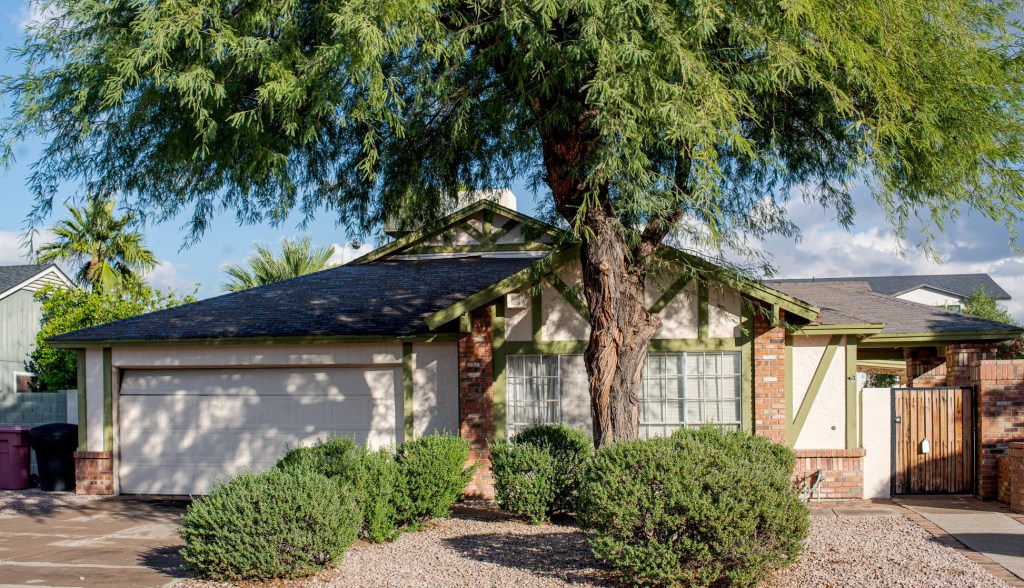 The Scottsdale home that Rachael Cossette and Jennifer Greer allegedly tried to sell in a title fraud scheme.
‘Get her!’
The team’s next move was obvious: After some sleuthing, they identified Growney as the real owner. (Rowan did not want to share Growney’s name, but he is listed as the victim in court paperwork.) They contacted him and learned he had already notified Scottsdale police. Now, the owner filed a police report.
But Rowan was at a loss about what to do next. He and Smith discussed getting the word out to the rest of the local real estate network, especially other title agents. But Rowan felt that wasn’t doing enough. Would the two alleged fraudsters try to sell the property to another investor? He knew he had a tight window before Cossette and Greer were in the wind.
Sounding alarm bells might work, but Rowan liked the idea of playing a more active role in the case. He invited the Scottsdale police to collaborate on a sting. The police said they were in.
Scottsdale police spokesperson Aaron Bolin said that working with civilians in a case like this was unusual, as was the speed with which the sting operation was thrown together. “The situation was unique in that it allowed civilians to be such a close part of what ended up being the arrest of the suspects for this title fraud case,” he said.
That Rowan had already had a meeting arranged with the women was an asset. At 11 a.m. on Nov. 6, Greer and Cossette would meet at Smith’s University Title office in north Phoenix. Smith and Rowan would be waiting, along with a half dozen police officers inside the offices and several unmarked cars outside in the parking lot. Ideally, Cossette would sign the sale documents before the police swooped in.
But something was wrong. Hours passed with no sign of the sellers.
“They kept texting me, and I was calling them. ‘We’re fifteen minutes away, we’re fifteen minutes away,’ and, of course, we’ve got a lot of resources there waiting for these people to show up,” Rowan said. “And at some point, it’s like, OK, they’re probably not gonna come, and they’re playing some game.”
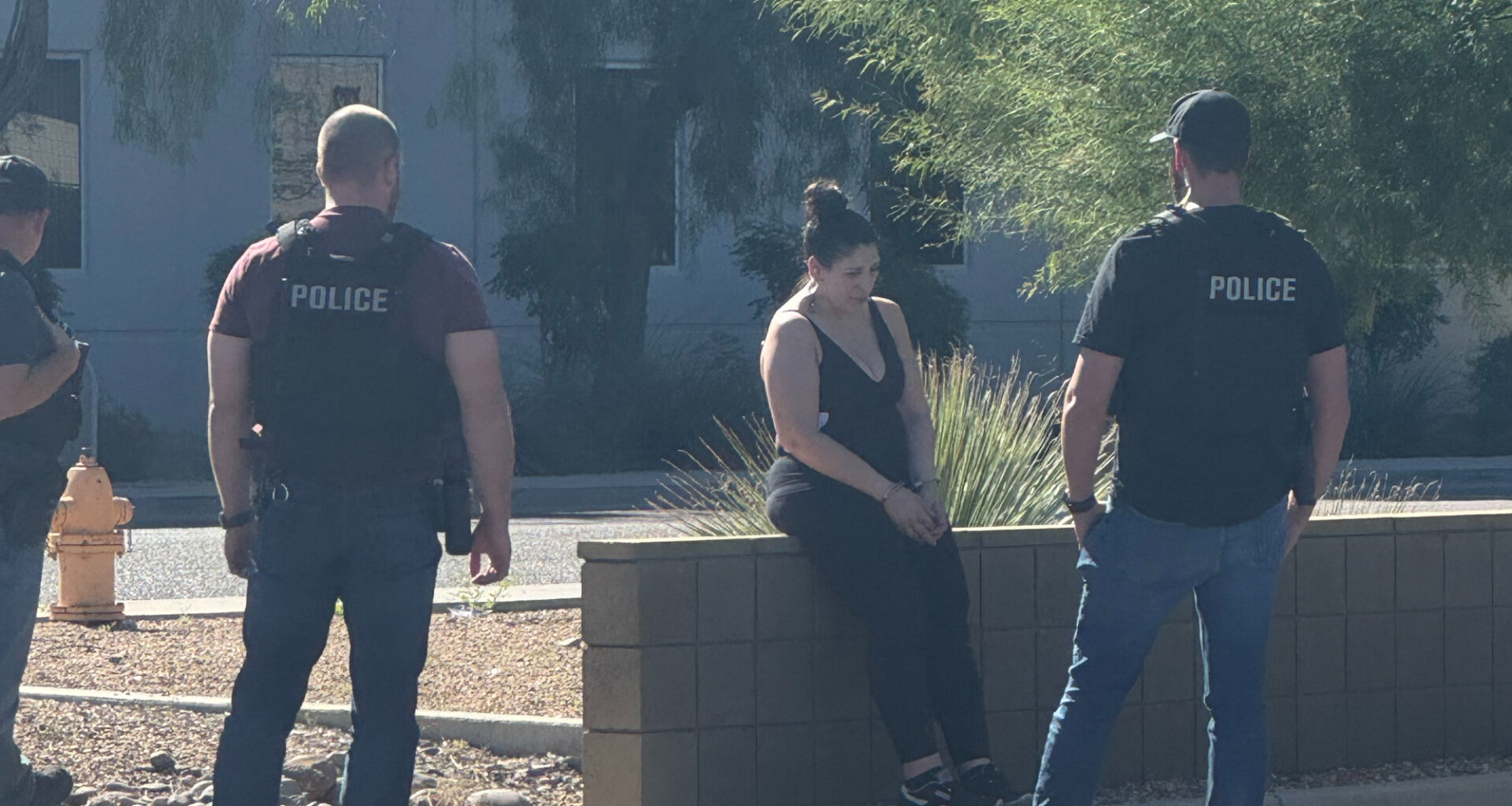
The police were almost ready to call it a day. Uniformed officers broke cover — just as Cossette and Greer arrived. Smith said she later learned from cops watching the parking lot that the suspects had entered and left the lot four times before they swallowed the bait and finally walked through the outer foyer and opened the glass door of the office’s reception area.
Yajaira “Yaya” Ramirez was manning the front desk when Cossette and Greer walked in — and then right back out.
“She was like halfway to my desk and I’m assuming she saw something,” Ramirez said. According to Rowan, that “something” was a uniformed officer in the office at the end of the hallway.
“I knew there was cops inside the building, so I went towards (Smith). I was like, ‘Hey, she just like left the building.’ And from there, I recall one of the detectives or a police officer, she’s like, ‘Get her! get her!’” Ramirez said.
Bolin said the women were able to return to their black SUV, which was driven by a third person, but were eventually nabbed along the road outside Smith’s office.
A grand jury indicted Cossette on four felony counts — two forgery counts and two fraud counts, ranging from class 2 to class 5 felonies. Greer was indicted on felony 2 fraudulent schemes and artifices and felony 3 aggravated taking the identity of another person or entity. Both women also had outstanding warrants and were on probation for fraud and drug offenses at the time of the arrest, per police paperwork. Each was given $10,000 release bond but appear to still be in custody.
 Real estate agent John Rowan.
Title alert
As much of an active role Rowan and Smith took in the bust, both stressed the importance of the Maricopa County Title Alert warning system as the first line of defense for homeowners.
The system debuted in 2023 amid a surge in deed fraud. It requires homeowners to opt in — though registration is free — and sends an email warning when a document is submitted to the county registrar that includes names registered by the homeowner with the system. The email then directs the homeowner to review the changes and provides contact information for local law enforcement if anything appears to be amiss.
Rowan said Growney told him he registered with the Maricopa County warning system after seeing it publicized on TV in 2024.
While deed fraud may be on the rise, it’s still fairly rare. Rowan said even with the thousands of inquiries he’s received over his four years as a licensed agent, he’s run into only six that he suspected were fraudulent.
But this may be changing for the worse. Rowan and Smith said that the rise of deed fraud has been heavily facilitated by emerging technology.
“I think it’s become more prevalent because we don’t deal with people one-on-one anymore. Or face the face. Everything’s done via email, electronic signatures,” Smith said. Rowan suggested that the explosive rise of artificial intelligence will make it increasingly easier to create official-looking documents that could slip by even expert eyes.
In this same vein, both Rowan and Bolin offered warnings about the warnings. Bolin said official-looking emails could actually be fraudulent. Recipients should always verify an email is from an official source — for instance, confirming that an email from a government agency ends in “.gov” — and being very cautious about clicking on any links.
Rowan, on the other hand, warned that the proliferation of phishing scams has conditioned the public to ignore warnings exactly like those from the warning system mentioned earlier, and care should be taken that emails like these aren’t automatically dismissed.
After all, not every homeowner will have a real estate agent waiting in the wings to set up a police sting.