An hour after trustees elected her board president, Tammy Thomas turned to the audience inside Lake Worth ISD’s Administration Building and made a promise for her district’s 3,200 students.
“From our teachers and our support staff to our parents who show up for their children in every way possible, you are the heart of this district,” Thomas said.
Thomas, who was recently reelected, centered her new role around improving Lake Worth ISD academics as it faces intervention — including a possible takeover — by Texas. She and trustees took action Nov. 19 to focus on academics and the district’s turnaround plans.
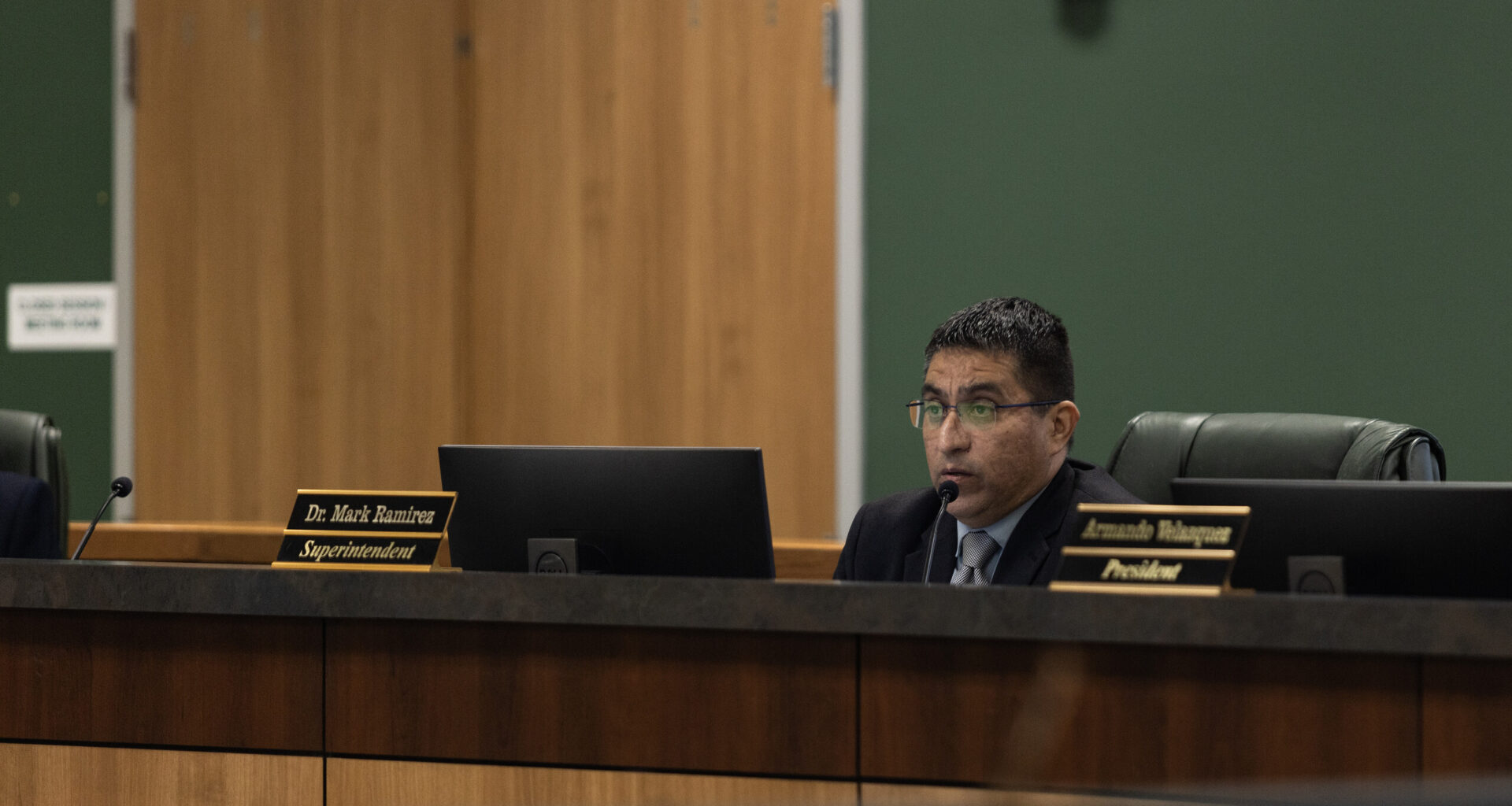
Superintendent Mark Ramirez told trustees he’s had no new updates from the Texas Education Agency since Commissioner Mike Morath’s recent visit.
“Over the past few years, I hoped that our district would improve, but hope doesn’t have a plan,” she said. “Belief has a plan. I believe in the plan Dr. Ramirez has made for this district.”
She wants trustees to work as one united board and strengthen the district’s partnership with the city so that LWISD schools and the community move forward together, she said.
Lake Worth Mayor Walter Bowen, who’s led the city since 1995, attended the Nov. 19 meeting. Bowen isn’t “involved in school business” but came to listen.
“I’m here to learn,” he said, adding that he wishes the district well.
With no new word yet from Morath, Ramirez said the district is staying focused on students and improving learning.
The district faces a possible state takeover triggered by years of low performance at Marilyn Miller Language Academy, which failed state academic standards for five consecutive years, meeting the threshold for intervention under state law.
Ramirez added that, based on conversations with agency officials, it’s “more than likely” the district will hear something in December or January about the state’s next steps.
“Until then, and even after then, I’m going to just say our focus is going to be on our students,” he said.
Academic data shows early gains
Ramirez outlined early-year data trends and new systems for monitoring instruction.
Beginning-of-year test scores show fewer students performing at the lowest levels and more reaching into on-grade-level expectations compared to last year, Ramirez said. The district uses the national NWEA Measures of Academic Progress, or MAP, assessment to track student performance throughout the year.
“That’s what we want to see, and we’re definitely on that trajectory,” Ramirez said.
Collins Middle School Principal Antonio Tijerina pointed to early gains as a sign the campus is moving in the right direction. The district’s long-term goal is to raise the share of STAAR tests scoring at least “meets” grade level 19% to 60% by 2027-28.
By the end of this year, the goal is 35%. The State of Texas Assessments of Academic Readiness, or STAAR, determines how well students are performing on grade-level by categorizing results into four categories: did not meet, approaches, meets and masters.
Tijerina reported that 25% of beginning-of-year math MAP tests scored at least meets — a six-point increase from last year. First-quarter cumulative exams showed similar progress, rising to 26%, a seven-point gain.
“For us to already be at 26% just speaks volumes on the trajectory that we’re at for our target goal, which is amazing,” he said. “It’s a huge win. It’s a huge plus, and we’re gonna continue on going to get that goal.”
Middle-of-year testing begins Dec. 8. Central office leaders expect to spend part of their winter break analyzing results.
Ramirez highlighted two new structures he said are central to the district’s turnaround work: A redesigned campus walk-through system that gives principals more frequent, focused feedback on instruction, and shifting campus instructional coaches back into full-time observations and classroom support.
During the walk-throughs, principals and central office staff look not only at what teachers are doing but at how individual students are engaging with the lesson — whether they’re on task, able to explain what they’re working on and demonstrating mastery of the day’s objective. Ramirez said that level of detail is meant to give campuses clearer snapshots of what students are actually learning.
Instructional coaches — staff who support teachers — model lessons and help strengthen classroom instruction. In recent years, Ramirez said, coaches had been pulled into campus operations and student management tasks, leaving less time to observe lessons or guide teachers.
He reminded trustees that about 60 days of instruction remain before state testing.
“That should make any principal’s heart beat a little faster — maybe even spark a little panic,” he said.
Board approves math adoption, turnaround plans
Lake Worth ISD’s five areas of focus under campus turnaround plans
- Strong daily instruction: Making sure every student gets solid, grade-level teaching every day.
- Consistent teacher-planning time: Teachers meet regularly in small groups to look at student work, adjust lessons and plan upcoming instruction.
- Using the LWISD playbook: Teachers and principals follow the district’s shared approach to lessons, routines and expectations so classrooms look and feel consistent across schools.
- Building leadership on campuses: Training principals, assistant principals and instructional coaches so they can support teachers more effectively.
- Extra support for bilingual learners and students receiving special education services.
Trustees took steps district officials said will help reach those goals.
The board unanimously approved adopting the state-developed Bluebonnet Learning math lessons from kindergarten through Algebra I as the district’s main, everyday math lessons. Neighboring districts, Fort Worth and Eagle Mountain-Saginaw, adopted Bluebonnet math lessons earlier this year.
The state provides $60 per student for districts that choose Bluebonnet Learning — funding the materials themselves and an additional allotment to help cover printing costs. Lake Worth ISD will receive $190,860 for using the lessons.
“It’s like a complete package built out of a day-by-day curriculum for teachers,” said Crystal Deaver, the district’s assistant superintendent of curriculum and instruction.
The board also approved updated turnaround plans for Marine Creek Leadership Academy and Collins Middle School, which have both failed the state’s academic accountability system for at least three consecutive years. The plans lay out five areas of focus — all aimed at getting students stronger, faster.
Those include adding teachers to reduce class sizes and shifting a centralized behavior program into smaller supports at each elementary campus.
State grants will cover most of the work — paying for teacher training, extra coaching and classroom materials, officials said.
“The consistency within our practice amongst the district is what’s making a difference with our already improved results,” said Sylonda Burns, executive director of campus leadership and school improvement.
That theme of consistency — and belief — echoed back to Thomas’ first remarks as president.
“When we believe in the plan and we stand behind it together, that’s when change truly begins,” she said.
Matthew Sgroi is an education reporter for the Fort Worth Report. Contact him at matthew.sgroi@fortworthreport.org or @matthewsgroi1.
At the Fort Worth Report, news decisions are made independently of our board members and financial supporters. Read more about our editorial independence policy here.
Related
Fort Worth Report is certified by the Journalism Trust Initiative for adhering to standards for ethical journalism.
Republish This Story

Republishing is free for noncommercial entities. Commercial entities are prohibited without a licensing agreement. Contact us for details.