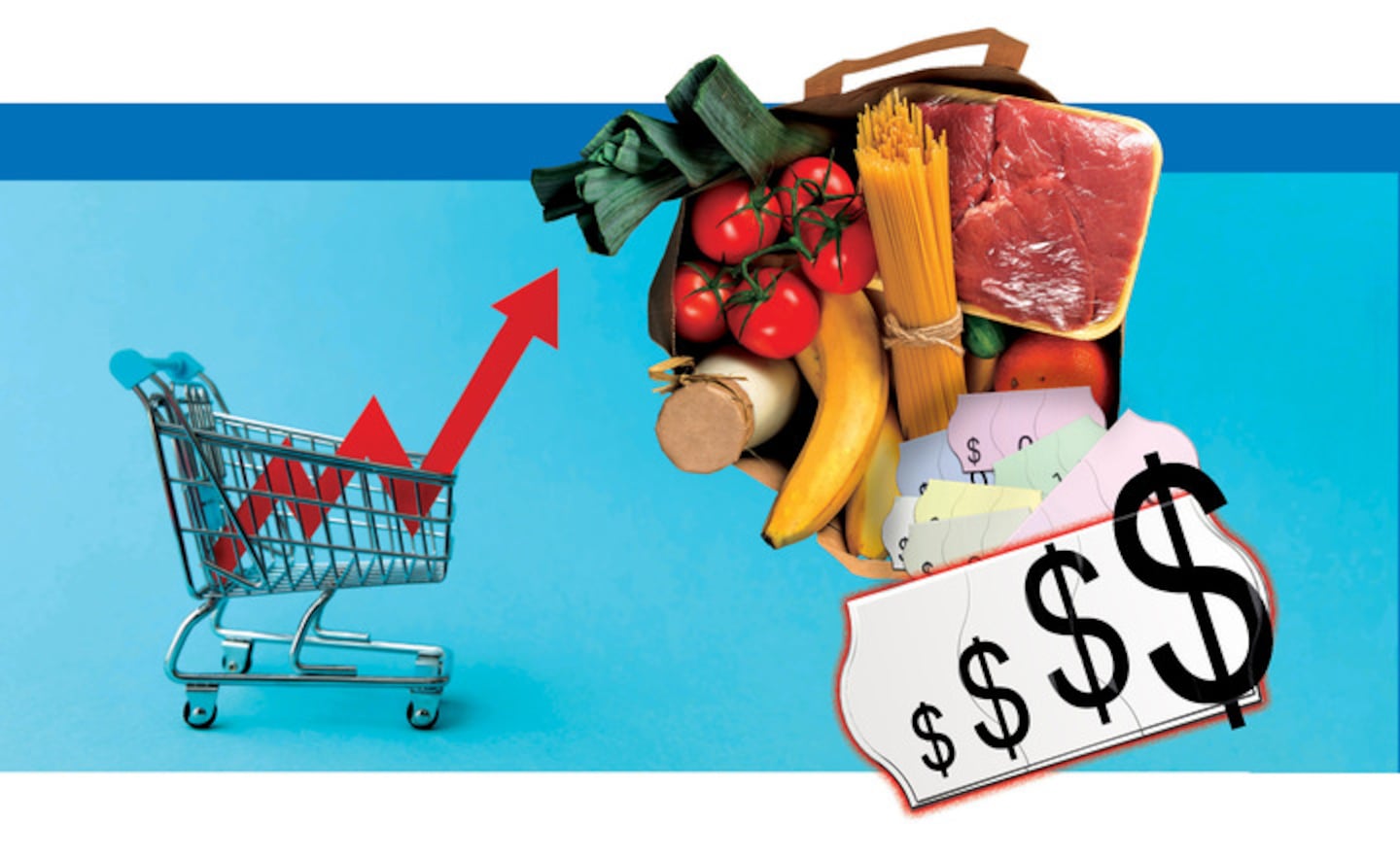
At least for food retailers, inflation hit cheaper products harder than premium varieties of the same products, narrowing the gap between bargain and splurge for shoppers. That was a key finding of a recent study, coauthored by Harvard Business School professor Alberto Cavallo, which dubbed the phenomenon “cheapflation.”
Cavallo, along with a researcher from the Bank of Canada, examined the prices of more than 2 million food items from more than 90 retailers worldwide. They found that, between January 2020 and May 2024, prices for the cheapest product brands in the US rose by 30 percent, while the most expensive brands of those products climbed 22 percent.
“In other words, inflation for cheaper products was 1.4 times higher,” the study found. Even after inflation came back down, the study added, “the relative prices of cheaper options remained permanently higher.”
“This may help explain why some consumers may think that prices are ‘too high,’” said the study, published last year in the Journal of Monetary Economics, “not just relative to the past, but also relative to more expensive varieties.”
Indeed, for shoppers, particularly those in already high-cost regions like Massachusetts, “cheapflation” can make it feel like there’s no longer anywhere to hide from sticker shock.
“It’s just been like a snowball effect of incremental changes,” said Christina Thompson, 31, who is dismayed by higher prices at Aldi for the generic cereal she occasionally indulges in. (The cost of a name brand, like Fruity Pebbles, is “ridiculous,” said Thompson, an analyst who also lives in Lowell.)
The study pointed to a few reasons for this lopsided inflation. One factor is that cheaper products rely more heavily on global supply chains, which are vulnerable to costly lurches like those seen during the pandemic. Bargain goods also often carry lower profit margins than expensive ones, so “retailers lack the ‘buffer’ to absorb additional costs and are therefore more likely to quickly pass on cost increases into consumer prices,” the study said. Meanwhile, as everything gets more expensive, the demand for bargain products often grows, potentially another driver of cheapflation, the study suggested.
What all of it adds up to is a pricing environment that weighs heaviest on low-income shoppers, who tend to rely on the cheapest options to fill their fridges and pantries. They can still spend less by choosing, say, a store-brand gallon of milk over a name-brand, but the savings no longer pack the punch they once did.
“This creates a form of inflation inequality that worsens affordability challenges,” Cavallo, the Harvard Business School professor, wrote in an email.
Edgar Dworsky, a Somerville-based consumer advocate and founder of the website Consumer World, pointed out that the dramatic rise in prices of cheaper items is partly due to their lower starting prices.
“If an item is 50 cents and it goes up to 60 cents, only by a dime, that’s a 20 percent increase,” he said. “But if it’s a $5 item, a 20 percent increase would raise it by $1.”
Even so, he agreed that rock-bottom prices, particularly at grocery stores, have grown increasingly elusive.
“Finding the same bargains of yesterday is just harder,” he said.
It’s a trend some Massachusetts shoppers have taken note of beyond the supermarket.
Kate Lombardi, 38, likes to splurge on a $45 moisturizer from the makeup store Ulta, but often settles for a similar but lower-priced alternative from her local drugstore instead.
But these days, that drugstore “dupe” carries a price tag of $36.49 — making the Ipswich resident more willing to pony up for the real thing.
“It just doesn’t make any sense,” she said, “that I have to pay for the thing I’m settling for.”
Dana Gerber can be reached at dana.gerber@globe.com. Follow her @danagerber6.