All year we have covered the stories that matter most to San Antonio, at no cost to you or the community. Your support fuels our work.
Will you help us make our $95,000 year-end goal to keep us going?
My peers spend hours every day debating issues and policy on social media and posting creatively designed infographics on Instagram and TikTok.
And honestly, it’s exhausting.
My generation talks about changing the world, but until we understand how democracy — this people-driven mechanism — actually works, we’re just yelling into digital storage.
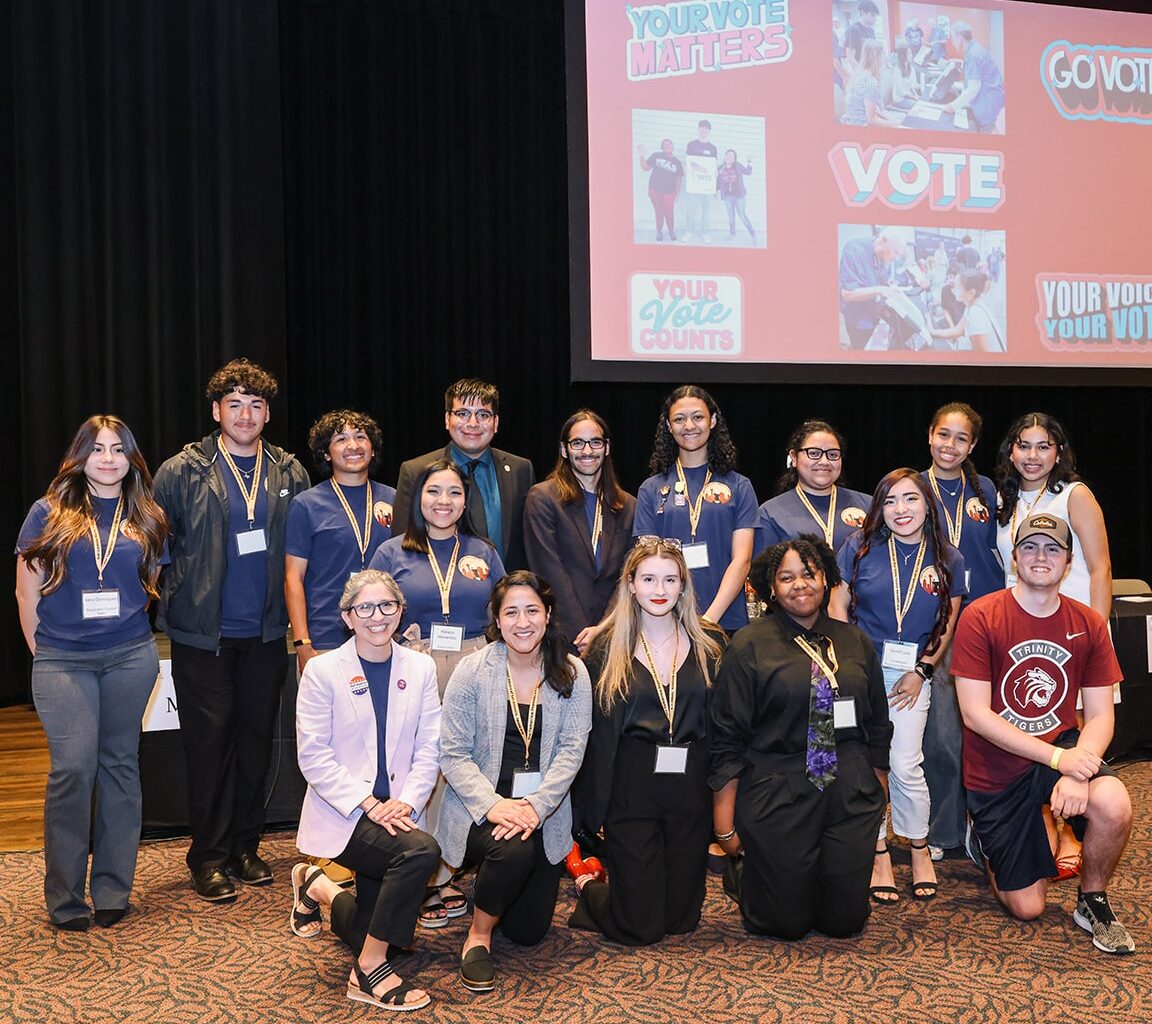
For me, that realization didn’t come from my travels abroad or a political science lecture. It came from standing shoulder-to-shoulder with fellow poll workers in five elections, including the November 2024 presidential and the May 2025 mayoral, as a student election clerk in Bexar County.
Never miss San Antonio Report’s biggest stories.
Sign up for The Recap, a newsletter rundown of the most important news, delivered every Monday and Thursday.
I don’t have a typical “first job” story. My life has always been framed by civic duty. When your mother is the first African American, and woman elected to office in your hometown, you don’t just read history books; you live them.
I smiled in the triumphant photo shots and the celebratory parades, but I also witnessed the brutal, behind-the-scenes reality of governance and the cost of making history.
That’s why when she suggested I get involved — not just to vote, but work the election— it felt less like an invitation and more like an inherited responsibility.
My generation is the beneficiary of the civil rights movement, and our inheritance isn’t just the right to vote; it’s the non-negotiable duty to protect the process for the next generation. That’s what got me started: the firm understanding that a vote, like any right, is useless if it’s not guarded.
The extinction of soft skills
The biggest lesson I’ve learned from working the polls is one that every parent and employer needs to hear: my generation is facing a crisis of soft skills. We are digital natives, masters of the keyboard, the filter and the swipe.
But ask us to look a voter in the eye and troubleshoot a broken machine without looking it up, or manage a four-hour queue without staring at a screen — that’s where we crumble.
The student election clerk role forces you into the deep end of real-world interaction. It’s a masterclass in diplomacy, patience and clear, in-person communication — skills becoming obsolete in our remote, technologized world. In the polling place, you learn to de-escalate a frustrated voter, remain objective when processing paperwork for a candidate you disagree with, and treat every citizen — from the college student glued to his phone to the 90-year-old who remembers segregation — with the same level of dignified service.
The gateway to real power
Everyone throws around the phrase “Youth Voice” like it’s a badge of honor. But what is a voice without a megaphone, and what is the democratic process if not the ultimate megaphone?
The classic warning — that those who fail to learn from the past are doomed to repeat it — is painfully relevant here. Ignorance about the democratic process is not bliss; it’s a guarantee that others will speak for you, and they will speak in their own interest, not yours. You have to know how the process works so that you can navigate your way through it to speak for yourself and others effectively.
When you work an election, you don’t just see the process; you become an integral part of its architecture. You learn the choke points, the vulnerabilities, and most importantly, the mechanics you need to master when it’s time to advocate for the change we all post about online.
The student election clerk opportunity is fantastic, but let’s be clear: it’s just a gateway to real, active civic participation. It’s the absolute starting line. I’ve seen its power firsthand — the first time I worked, I was able to get my peers to come and vote and I helped process several teachers who brought in first-time voters. At that moment, placing that “I Voted” sticker on a newly civically engaged citizen is the real win.
Serving as an election judge for the November 2025 election gave me a perspective worlds apart from my time as a clerk. As a student election clerk, I was on the ground face‑to‑face with voters, troubleshooting machines and learning patience in real time. It was civic duty at the most human level. But as a judge, my responsibility shifted from interaction to oversight. I wasn’t just helping process ballots; I was accountable for the integrity of the polling place.
Every decision carried weight: ensuring compliance with election law, resolving disputes between poll workers and protecting the sanctity of the vote when tensions ran high.
Where the clerk role taught me soft skills, the judge role demanded hard judgment, balancing fairness with authority and knowing mistakes could ripple far beyond one precinct.
That contrast taught me democracy requires both: the empathy of clerks who meet citizens where they are, and the vigilance of judges who safeguard the process from above. Together, they form the architecture of trust that keeps our system alive.
My peers are too well-traveled, too globally aware, and too connected to sit back and watch history unfold without our input. We have inherited the right to vote through the sacrifice of giants.
Now it’s time to stop complaining about the system and start signing up to run it. If you want to change the world, the first step isn’t posting a status update; it’s becoming informed and making decisions for yourself not based on soundbites or snippets.
This effort aligns with the Future Ready Bexar County Plan, a shared community vision ensuring every young person in our region is ready for the future — connected to meaningful education, career and civic opportunities. Through programs like this, students are preparing for college and career success, while also developing the leadership and civic skills our community needs to thrive.
As a Future Ready Partner and strictly nonpartisan organization, Youth Do Vote, works closely with the Bexar County Elections Department to ensure students have the opportunity to experience democracy in action through working elections.
You can learn more about becoming a student election clerk on Youth Do Vote’s website.
Are you doing your part?
You’ve read unlimited of unlimited articles this month. That’s right — we’re committed to providing free, fair journalism for all.
But without donor support, our nonprofit newsroom can’t do its job to inform and empower your community.
Are you in? Your donation of any amount will help keep articles like this one accessible to all San Antonians.