Isabella Decena/The Cougar
Houston is not walkable – and at this point, that is not just a planning failure. It is a safety hazard. If the city does not prioritize pedestrian safety and walkable development, more Houstonians will be put at risk simply trying to move around their own neighborhoods.
Houston’s reputation as a car city did not happen by accident. It was designed, protected and reinforced for decades. From the way the roads were built to the city’s zoning rejections on three separate occasions in 1948, 1962 and 1993.
However, it still relies on a patchwork of regulations, deed restrictions and minimum lot sizes that function like zoning without providing any benefits. Instead of guiding walkable development, Houston’s system enables disconnected growth, reinforces car dependency and leaves pedestrians navigating streets designed purely for vehicles.
Walk score confirms what residents already feel
The impact is visible in the numbers. According to Walk Score, Houston’s overall walkability score is a low 47 – a number that reflects the lived reality of most residents.
Neighborhoods like Pecan Park, Meyerland and Braeswood Place have a score of 57-59, a polite way of saying that walking there is more of a chore than a choice. Long blocks, missing sidewalks and fast-moving traffic practically guarantee that most errands require a car.
Even the Texas Medical Center, one of Houston’s most iconic districts, ranks at 59 for walkability. Its impressive Bike Score of 81 shows that some alternative mobility exists, but honestly, actually walking around the area still feels like navigating an obstacle course.
To be fair, Houston does have walkable areas. According to Walk Score, Neartown-Montrose and Midtown have a walkability score of 86, supported by restaurants, small businesses and a street network that encourages foot traffic.
Fourth Ward, the Museum District, Greater Heights and Upper Kirby all land in the low to mid-70s, giving them the feeling of compact, genuinely connected urban pockets. These neighborhoods stand out not because walkable design is some rare miracle in Houston, but because the city has never made it a consistent priority.
They’re the exceptions that prove the rule. Walkability here isn’t impossible; it’s just been treated like an optional upgrade instead of a basic part of city planning.
Walking shouldn’t feel like a safety gamble
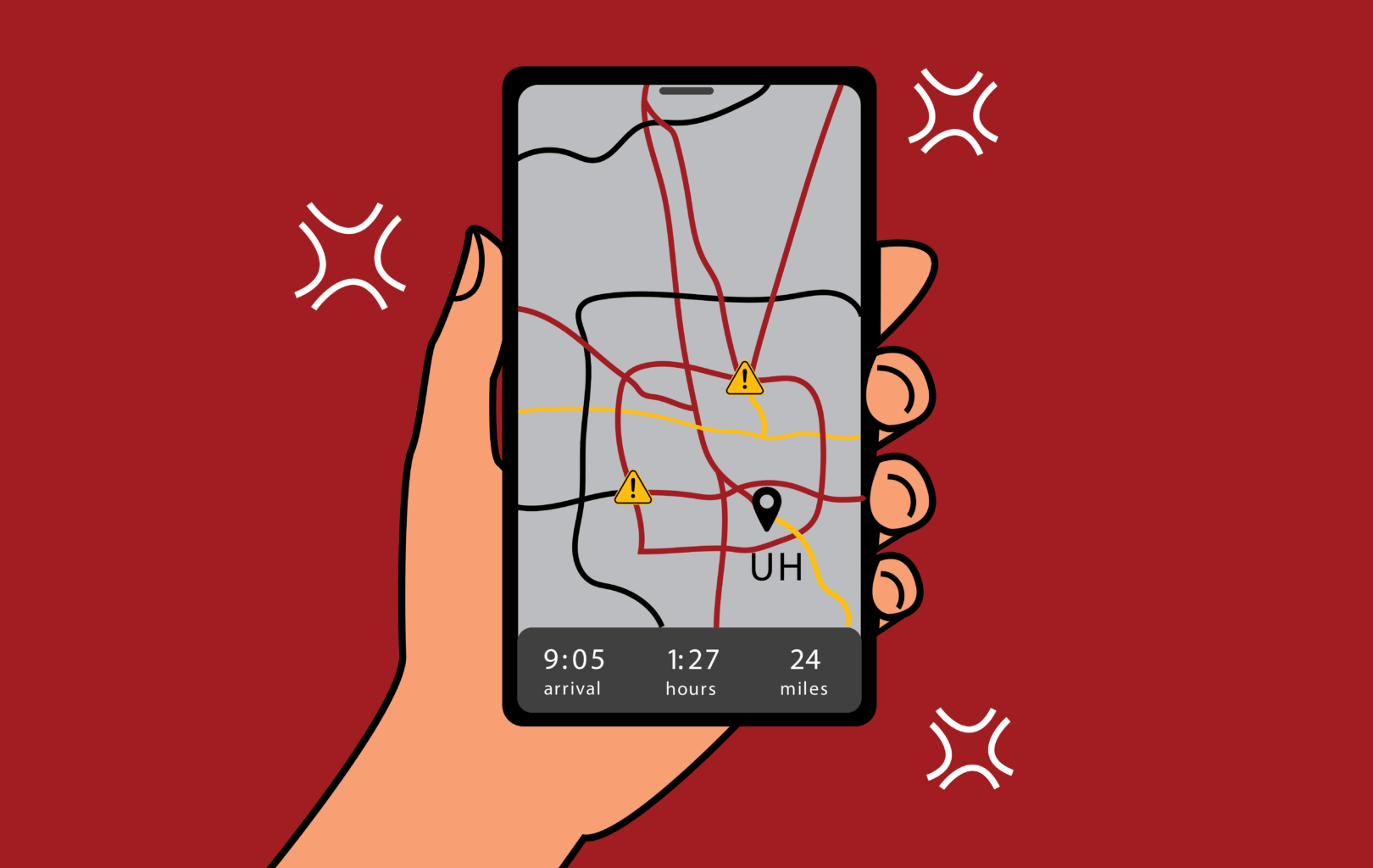
For many Houstonians, walking isn’t just inconvenient – it’s impractical. The city’s sprawling layout means that even short errands can take 15-30 minutes or more, and crossing town during rush hour can take 45 minutes or more. Homes, offices and commercial centers are spread far apart.
This forces pedestrians to navigate long stretches without sidewalks, unsafe intersections and streets with no shade in summer heat, which often exceeds 90 degrees. Low-income neighborhoods are usually hit the hardest, with fewer sidewalks, crosswalks and streetlights, making daily travel even more dangerous and inequitable.
That prioritization matters, especially in terms of safety. Houston consistently ranks among the most dangerous large cities for pedestrians. In 2024, 301 people died in traffic crashes in Houston, according to the Texas Department of Transportation – an increase of 29 deaths from the previous year and a new record for the city, surpassing the previous high of 295 in 2021.
Signs of progress
But there is still hope, and it’s visible. In 2017, the city established its Walkable Places Committee to advocate for streetscape improvements, encourage mixed-use development, and shift outdated planning habits.
One example is the West Gray Street Improvement Project, a multi-faceted effort to enhance mobility and safety between Midtown and the Third Ward.
The West Gray Street project aims to upgrade road conditions, improve lighting and strengthen connections for pedestrians, cyclists and drivers alike. It also includes long-overdue fixes, such as improved stormwater drainage and new traffic signals, which address safety issues the neighborhood has faced for years.
By responding directly to community needs, West Gray shows that Houston can design streets for people, not just cars and offers a glimpse of what a more walkable city could look like.
Walkability is not a luxury – it is a public safety, equity and sustainability issue. Houston’s unwalkable streets reflect its priorities.
Houston has the talent, research and community support to change course. METRO is working to modernize transit. Residents, especially younger generations, are demanding safer, more connected neighborhoods. The city’s own walkability scores show that Houston needs to make it a priority everywhere, not just in areas where development is already dense and profitable.
Houston has always prided itself on innovation, growth and possibility. Now it needs to apply that same ambition to the ground beneath our feet. Every street should be safe, accessible and walkable for all residents – not just those fortunate enough to live in the few walkable areas.
opinion@thedailycougar.com