By Jack Tomczuk
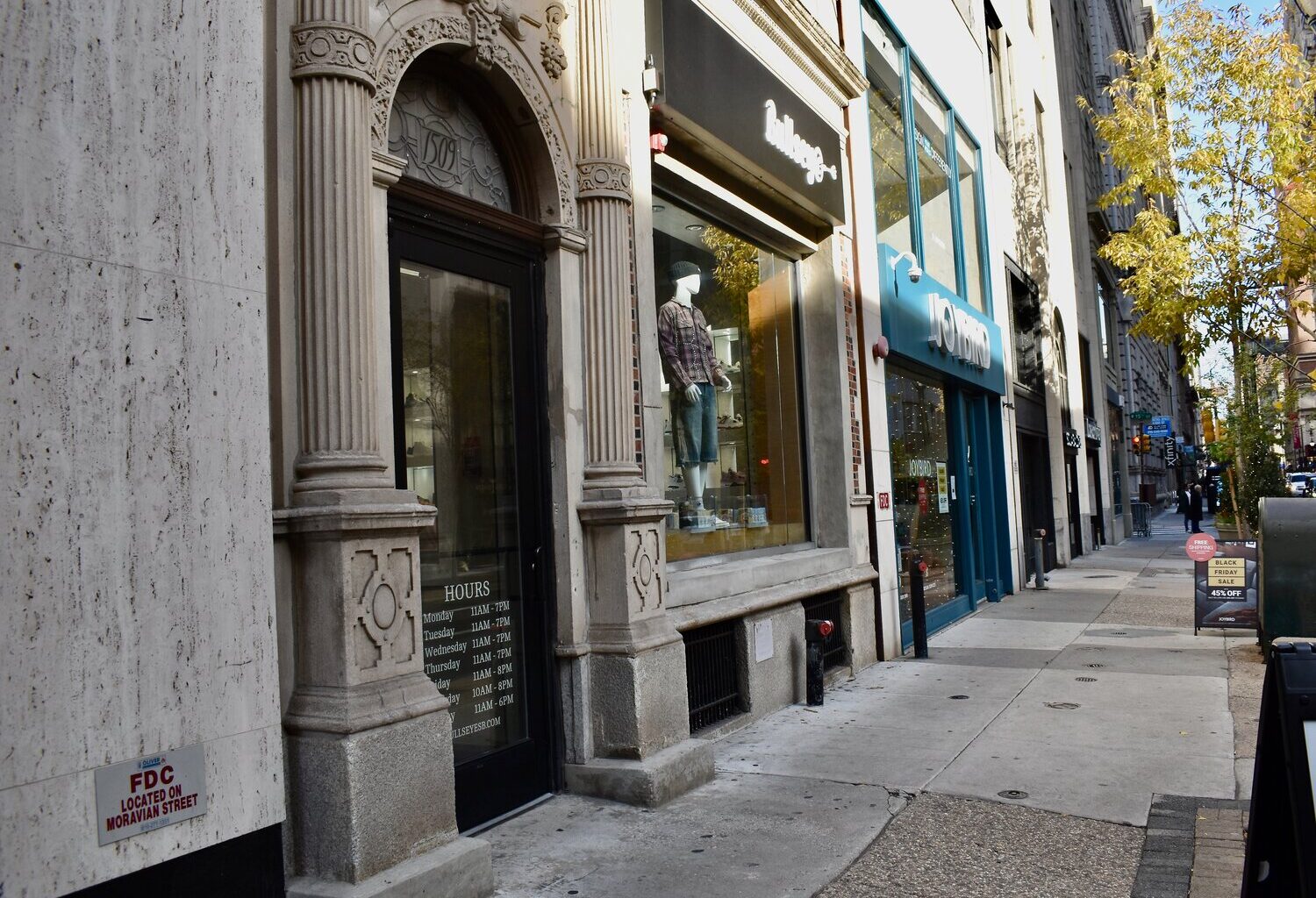
The Center City District wants more national brands to consider opening up locations in Philadelphia’s downtown, and it has the data to back it up.
In a report released this week, the organization, which promotes the area and works to attract new businesses, analyzed Center City’s retail industry, compared it to shopping districts in other major cities and surveyed residents about where they want to spend their money.
“What we’ve seen in our research is there’s such a big gap between the retail that’s offered in Center City and the retail that’s desired by downtown stakeholders,” said Clint Randall, CCD’s vice president of economic development and an author of the report.
A forthcoming survey of around 700 downtown apartment dwellers found that more than half do not own cars. But, of those with vehicles, 72% said they needed them to travel to shopping destinations in the suburbs and elsewhere, Randall said.
The most-requested stores, according to a separate poll of Center City shoppers, are Zara, Nordstrom and Bloomingdale’s. Zara closed a location on Walnut Street in 2019, while the other two brands operate outlet-style versions downtown.
CCD’s report pitches the Rittenhouse Square neighborhood as a particularly enticing spot for companies looking to expand into Philadelphia.
The 19103 zip code is the 10th wealthiest in the nation, and more than 60,000 people live within a 15-minute walk of the Walnut Street shopping district, a higher population than comparable corridors in Boston, San Francisco, Chicago and Washington D.C., according to the analysis.
“I really think that this reinforces that this incredible spending power that we have in Center City is not being entirely captured in Center City,” Randall said.
Randall and the CCD team view Market Street, on both sides of City Hall, as an opportunity for business expansion, potentially for those companies searching for larger footprints.
The corridor is “underperforming,” added Jimmy Salfiti, CCD’s manager of economic development, compared to downtown stretches of Chestnut and Walnut streets, with a storefront vacancy rate of 32%.
Much attention has been paid to Market East, following the closure of the Macy’s in the Wanamaker building and the abandonment of plans to build a 76ers arena at the Fashion District mall. However, West Market Street, in the heart of the office district, has a lower occupancy rate, at just 62%, the report found.
CCD calculates occupancy by number of storefronts, not square footage, and its staff conduct walking inspections of more than 3,600 locations, incorporating upper story retailers, indoor malls and underground concourses, Salfiti, the analysis’s other author, noted.
Overall, more than eight in 10 Center City storefronts are occupied, with Walnut Street being the “star” at 86%, Randall said.
Last year, the organization launched an Open Streets initiative, closing off roadways to cars in the West Walnut area to provide more space for pedestrians. Businesses reported 65% more foot traffic and 39% higher sales volume, according to CCD.
Open Streets is returning Sunday, Dec. 7, from 10 a.m. to 5 p.m. along Walnut from Broad to 19th streets and on 18th Street between Locust and Chestnut streets. CCD leaders plan to expand the initiative in 2026.
Keywords
Center City District,
Retail Industry,
Economic Development,
Open Streets