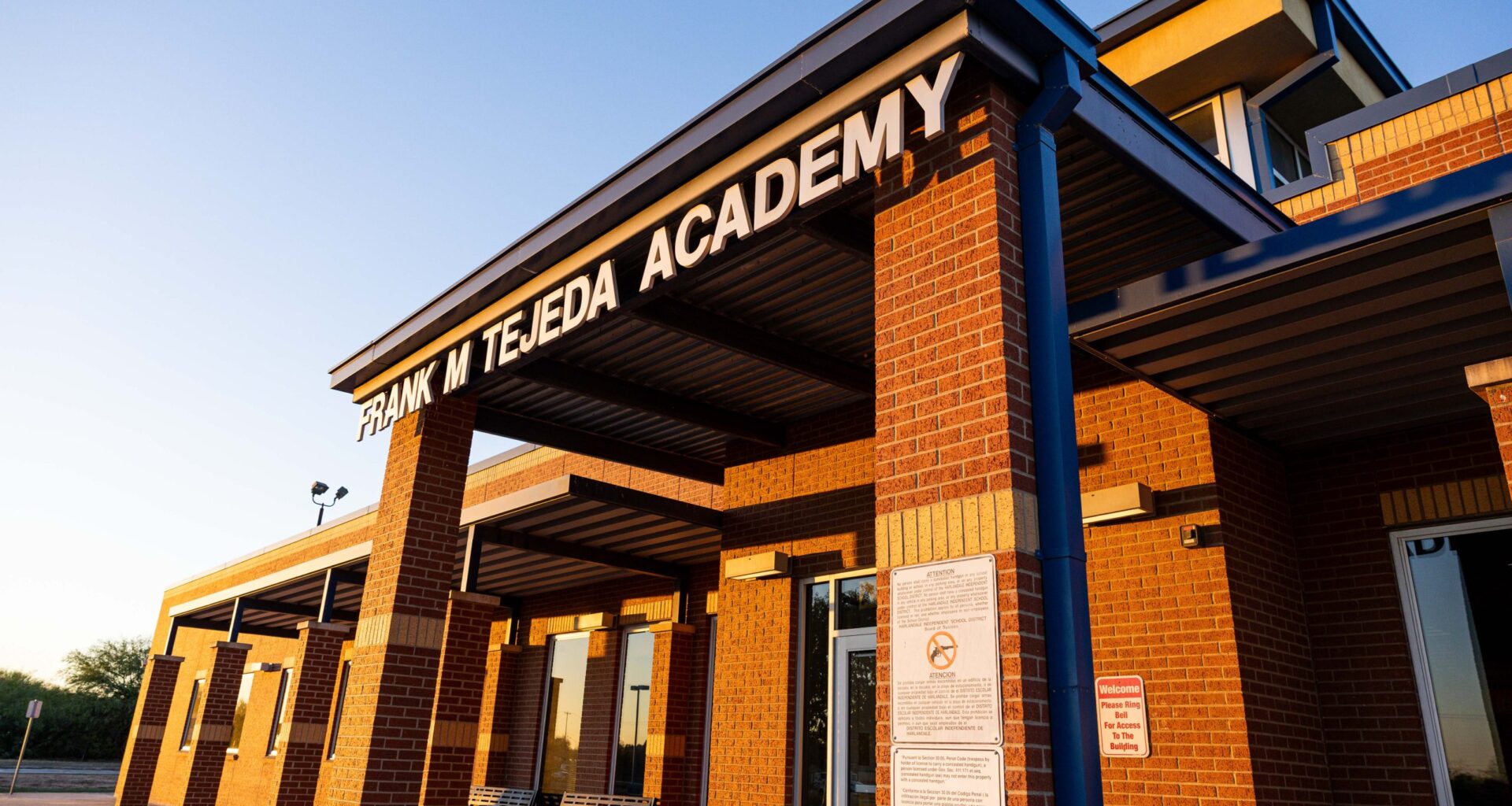
Harlandale Independent School District is reopening its alternative education high school, Frank M. Tejeda Academy, as a second-chance charter school where young adults can finish high school while getting some college credits.
Starting next school year, the campus will enroll students between the ages of 16 and 26 who want to complete a GED or earn a traditional high school diploma and take dual-credit classes through the Alamo Colleges District.
Focused on career pathways, the campus will also offer industry-based certification classes through Palo Alto College.
“We’re looking in our community for any young adults who wants [to attend] college or have a career, which improves our community as well,” said Melissa Casey, Harlandale’s Assistant Superintendent of Curriculum and Instruction.
With Frank Tejeda’s new college and career focus, district officials expect to get an additional $150,000 from the state, said Harlandale spokesperson Melinda Garza. The figure could change based on final enrollment and average daily attendance.
The campus is able to draw extra funds by entering into a Senate Bill 1882 contract with the Institute for School And Community Partnerships (ISCP) at Texas A&M University-San Antonio.
Passed by state lawmakers in 2017, SB 1882 offers school districts more money when they partner with an outside party — sometimes a four-year university, education nonprofit or charter school operator — to take operational control of a campus in hopes of improving student outcomes or implementing “innovative” practices.
District Superintendent Gerardo Soto said the extra dollars would mean more funding per student and could pay for additional wraparound services: more counselors, behavior interventionists or social workers.
Frank M. Tejeda will be Harlandale’s first 1882 campus, but not their first time partnering with ISCP for extra funds. In 2023, ISCP helped the district get $20,000 for its makerspace, a technology hub where students get hands-on learning.
ISCP formed in 2020 to help South Bexar County school districts with school model transformations, early educations services and 1882 partnerships.
The institute, housed at TAMUSA, currently has two 1882 campuses in Edgewood ISD and several other partnerships with East Central ISD and South San Antonio ISD.
“Our organization was built specifically to work with our backyard superintendents and backyard districts,” ISCP CEO Henrietta Muñoz told Harlandale school board members when pitching the partnership in September.
By the 2026-27 school year, ISCP will have “operational control” of the Frank M. Tejeda campus to improve student outcomes by offering dual-credit courses through Alamo Colleges District and certification courses through Palo Alto College.
Muñoz said Frank M. Tejeda students tend to be non-traditional students who struggle in regular classrooms.
Located right next to Loop 410, Frank M. Tejeda serves around 140 students and sits only a few miles from the TAMUSA campus on the South Side. District officials say the school’s small size makes it hard to fund, since the state primarily pays public school based on enrollment and attendance.
From Frank Tejeda’s 2022 graduating class, only 12.3% enrolled in college and 1% earned an industry-based credential in the first year after leaving high school, according to state data. Postsecondary outcome figures are lower in past years, and most students are chronically absent and economically disadvantaged.
Using alternative school rating standards, Frank M. Tejeda was rated a “C” campus for the 2024-25 school year.
Muñoz said the state’s school accountability process will remain the same and expects to serve between 150-170 students per year.
SB 1882 partners also have the power to set a school calendar, make a school open enrollment and hire campus administrators to fit their specific model. Harlandale will keep control of the building and its campus staff.
Harlandale and ISCP are still in contract negotiations, hammering out remaining details. It’s unclear how long the district and ISCP plan to work together, but 1882 contracts are usually renewed every year unless the outside partner doesn’t improve student outcomes.
“The success we’ve seen is growing enrollment and long-term sustainability,” Muñoz said about ISCP’s other 1882 schools. “If ever our work is done here, we’ve left the district in a better place.”