It started in March of last year.
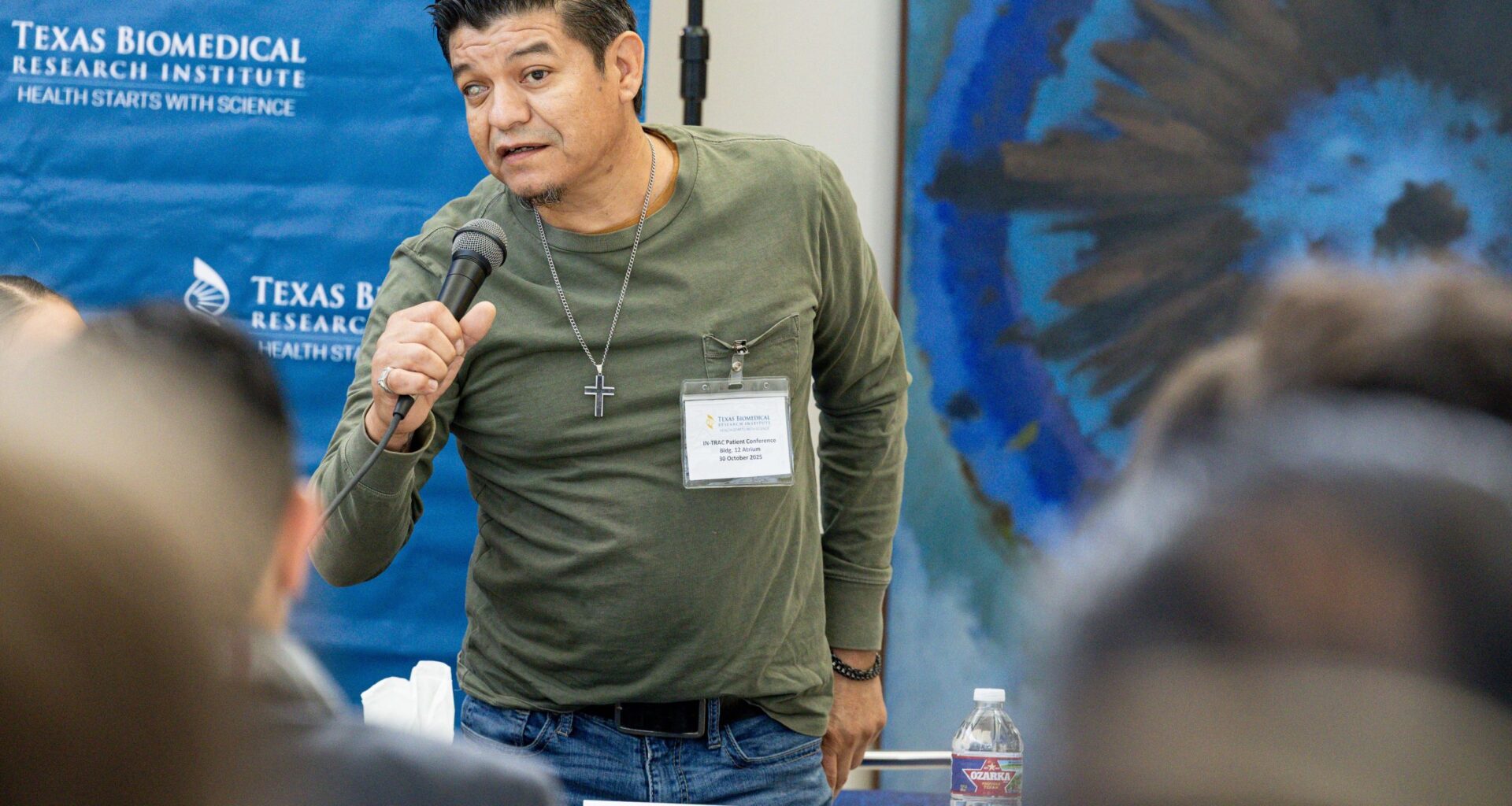
Jorge Sosa Martiareana, a 50-year-old self-employed mechanic in San Antonio, started eating less. During visits, his mother expressed concerns about his lack of appetite and increasingly slim frame.
The weight loss was eventually accompanied by a bad cough, chest pain, night sweats and fatigue. He suffered from the mystery illness into the summer, not thinking too much of it. Maybe it was the flu or COVID-19, he thought. Maybe he was just getting older. “Mexicans never go to the hospital,” he joked.
But by November 2024, Martiareana’s weight had dropped to 104 pounds from his usual 155. “He literally looked like a skeleton with skin,” his wife, Candylove Sosa, said. One day, she found Martiareana doubled over holding his chest. It was time to go to the hospital, where Martiareana was diagnosed with tuberculosis and pneumonia.
Americans typically think of tuberculosis or TB as a disease of the past, something that affected previous generations but has since been eradicated. Though it does have a low incidence in the U.S., tuberculosis kills well over 1 million people around the world every year.
In 2024, over 10,000 cases of tuberculosis were reported in the U.S., about 1,200 of them in Texas, according to the U.S. Centers for Disease Control and Prevention. Texas has the second largest population of tuberculosis patients and has the fifth highest tuberculosis incidence rate in the country.
San Antonio is also home to the last freestanding tuberculosis hospital in the U.S. and a number of scientists researching the disease. That includes scientists at Texas Biomedical Research Institute’s IN-TRAC program, a federally-designated training ground for TB researchers.
In October, the research institute invited Martiareana and two other local TB patients to speak with researchers about their experiences, a disease that comes with a grueling treatment regimen and often a great deal of stigma.
The leading infectious disease killer
Tuberculosis, an infectious disease mainly impacting the lungs, has killed over 1 billion people, since the bacteria that causes the disease was first discovered in 1882. Though it was temporarily surpassed by COVID-19 during the pandemic, TB reclaimed the title of No. 1 infectious disease killer in 2023, when 1.25 million died from the disease.
Symptoms of tuberculosis often include a persistent cough, chest pain, shortness of breath, night sweats, coughing up blood, fever, unexplained weight loss and lack of appetite, among several others.
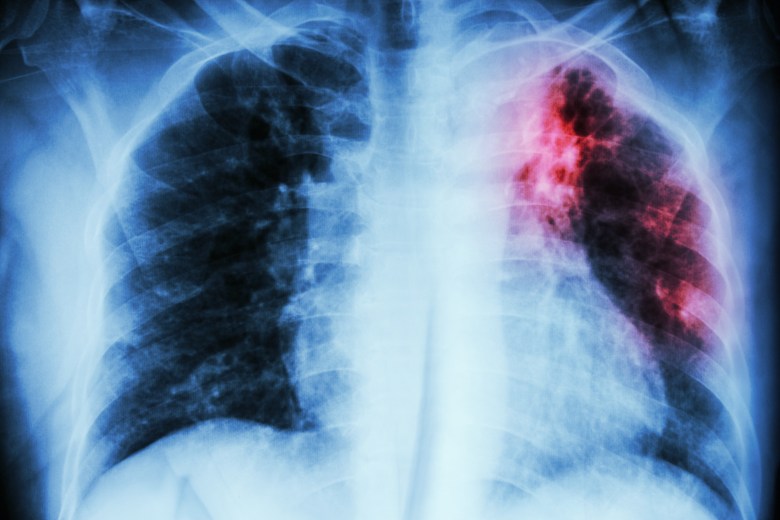 A pulmonary tuberculosis chest x-ray showing interstitial infiltration in the upper left lung due to a tuberculosis infection. Credit: Courtesy / Texas Biomedical Research Institute
Between 5 and 10% percent of people who are infected with TB get the inactive form of the disease known as latent tuberculosis. People with latent TB do not have symptoms and are not contagious, and most of them will never know they have it. The World Health Organization estimates that a quarter of the world’s population, around 2 billion people, have latent TB.
With latent TB, you have “just the right amount of immune response that your body develops to just control the bacteria, and the bacteria just lives happily with your immune system,” said Riti Sharan, an immunologist at Texas Biomed whose research is centered on how HIV and tuberculosis interact.
Having a weakened immune system is a major contributor to developing active TB. That can happen via malnutrition, HIV infections, diabetes, certain cancers and even medications that suppress the immune system, which is why you might hear tuberculosis listed as a side effect in drug commercials.
‘I was completely out’
Sophia Martinez, a Texas A&M University student, had been dealing with back-to-back illnesses — a cold, COVID-19 and upper respiratory infection — during her last semester of college.
She was on the mend after graduating in December 2024, getting ready to start looking for her first big job out of college. Then February came, and she was sick again. And something seemed seriously wrong this time around.
Martinez, who lived an active lifestyle, couldn’t get to the top of the stairs at her parent’s house without being completely out of breath. Doctors first ruled out leukemia, and then found themselves scratching their heads, until Martinez mentioned getting sick during a two-week trip to Bolivia (which has a high incidence of TB).
An X-ray found a lesion on Martinez’s left lung and blood work confirmed that she had active TB. Though relieved to have finally gotten an answer, Martinez left the hospital with a concoction of large pills to swallow every day and a long list of side effects that came with them.
The treatment for TB is long, usually six to nine months, and not particularly pleasant. The most common treatment plans include around 15 medications that need to be taken daily, with side effects such as nausea, fatigue and flu-like symptoms.
Without treatment, the death rate from TB is high, around 50%. But with treatment, 90% will recover.
A small portion of active TB cases are drug resistant, meaning the infection doesn’t respond to two or more of the main medications used to treat TB (isoniazid and rifampin). There are also even rarer cases where nearly all medications are ineffective.
Luckily, Martinez was able to undergo a new shortened treatment plan over four months. The worst part of it was the nausea and vomiting, she said.
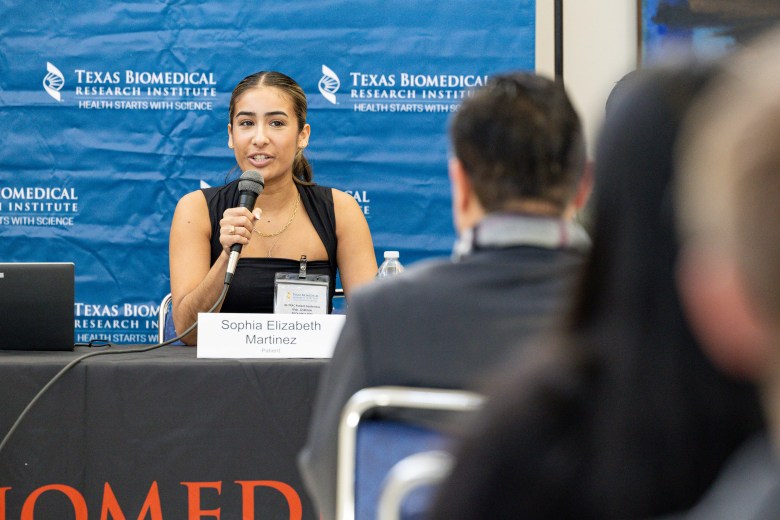 Sophia Elizabeth Martinez speaks about her time battling the respiratory infection and life after tuberculosis during a panel at the Texas Biomedical Research Institute on Oct. 30, 2025. Credit: Amber Esparza / San Antonio Report
“I was completely out,” Martinez said. “I’m 5’1, a little over 100 pounds, so taking 13 pills every single day for four months really affected my body. The first two weeks were very brutal for me. That was probably the worst part of my experience, I couldn’t keep anything down, and it was just very hard on my body.”
For Martiareana, tuberculosis and nine months of treatment also came with a great deal of stress and anxiety around not being able to provide for himself and his family.
Both Martinez and Martiareana also grappled with shame around the disease. There was a sense of embarrassment around TB, which is often associated with poverty. They’re sharing their stories now in hopes to spread awareness of the disease.
Lorenzo Salinas, a truck driver from San Antonio, was also on the panel. He went five years with a bad, persistent cough that he had chalked up as a smoker’s cough. Severe shortness of breath eventually spurred a hospital visit, where he was diagnosed with tuberculosis.
$5 billion funding gap
Before Dr. Larry Schlesinger took the helm at Texas Biomedical Research Institute, he traveled the world early in his career to study tuberculosis. When Schlesinger accepted an innovation award from BioMedSA in October, he spent much of his time on stage talking about how the research institute plans on finding a more effective vaccine and treatments for the disease.
“I became passionate about tuberculosis early in my career,” he said. “I was able to see people who were dying of tuberculosis firsthand. TB became a scientific challenge for me, but also a humanitarian cause.”
One motivation behind the tuberculosis panel was that he wants his researchers to hear from and meet the kinds of people who could benefit from their research. Research moves slowly, sometimes painfully so. “The life of a scientist is not glamorous, and it’s filled with failure,” Schlesinger said.
“I entered the field of tuberculosis in the 1980s, and they said the gap in funding for TB research was in the ballpark of $5 billion a year,” Schlesinger said.
Funding for TB response and research “remains grossly inadequate,” the WHO’s 2025 tuberculosis report states. The WHO set out a goal of $5 billion in annual funding for TB research by 2027. It was $1.2 billion in 2023.
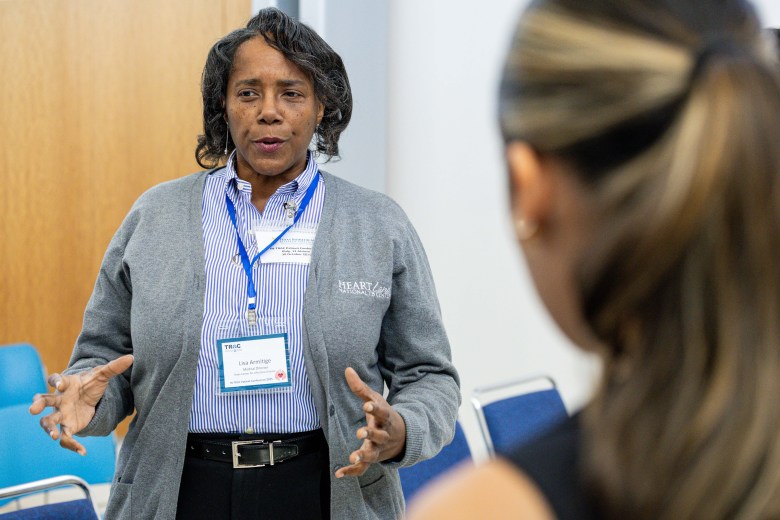 Dr. Lisa Armitige, co-medical director of the Heartland National TB Center, a state-funded tuberculosis clinic, speaks with former TB patients after a panel at the Texas Medical Research Institute on Oct. 30, 2025. Credit: Amber Esparza / San Antonio Report
There is a vaccine for TB, the Bacille Calmette-Guérin (BCG) vaccine. Its effectiveness is largely limited to preventing severe disease in young children, and the vaccine is not routinely administered in the U.S.
In September, a preclinical trial found that a new tuberculosis vaccine under development at Texas Biomed was safe and effective, paving the way for human clinical trials.
Dr. Lisa Armitige, co-medical director of the Heartland National TB Center, a state-funded tuberculosis clinic, said she has a long wishlist of tuberculosis treatment and prevention improvements for researchers. For one, a more readily available and routinely administered test for TB.
“I can screen for 40 different virals, I’ve got a viral panel that’s as long as my arm and I can’t get a simple test that’ll tell me TB or not TB,” Armitige said.
San Antonio is home to the state-run Texas Center for Infectious Disease, as well as San Antonio Metro Health’s Chest Clinic, where TB patients are also treated.
Looking forward, Schlesinger also hinted at a more regional TB program stretching from the Rio Grande Valley to Houston that’s in the works. “We’ve been working for years on developing a more collaborative environment with our folks down at the border as well as in Houston,” he said, “to develop a regional tuberculosis program, which will be very unique in the United States.”
Asked how TB had changed their lives, Martinez and Martiareana said that they had found extra strength from their difficult experiences.
“I’m happy to be alive,” Martiareana said. “I’m happy to be here. A lot of good came out of it. It was a second chance of life for me.”
Martinez is back to her usual active lifestyle. She said her lungs feel better than ever.
“I think it helps you become tougher as an individual,” she said. “And I think moving forward, I’m going to use my experience as a way to just become stronger and really fight through adversity.”