
The Women’s National Basketball Association (WNBA) is hurtling towards a potential lockout or strike with pay talks deadlocked ahead of Sunday’s deadline over the players’ push for a bigger share of the league’s explosive growth in revenue.
The current Collective Bargaining Agreement (CBA) was due to expire on October 31, but has been extended to November 30. However, a deal appears increasingly unlikely, raising the prospect of a work stoppage that could disrupt the 2026 season.
“They’ll probably do another extension, yet if we get to the new year without an agreement, a strike becomes a realistic option,” Daniel Kelly II, an associate dean and professor at New York University who specialises in sports law, said in an interview on Wednesday.
“Historically, that has led to the best deal for players. For the NBA, the 50–50 deal came after the strike in 2011–12. It almost seems like you have to push to the edge to get the deal you want,” he added.
According to local media reports, the league has proposed increasing the maximum salary from US$250,000 to US$1.1 million, raising the average player salary to more than US$460,000 and increasing the minimum salary to US$220,000.
However, WNBA players want more than just salary increases. They believe they should follow the NBA’s path, which began with their first CBA in 1970 and by 2011 had negotiated a 50-50 split of basketball-related income.
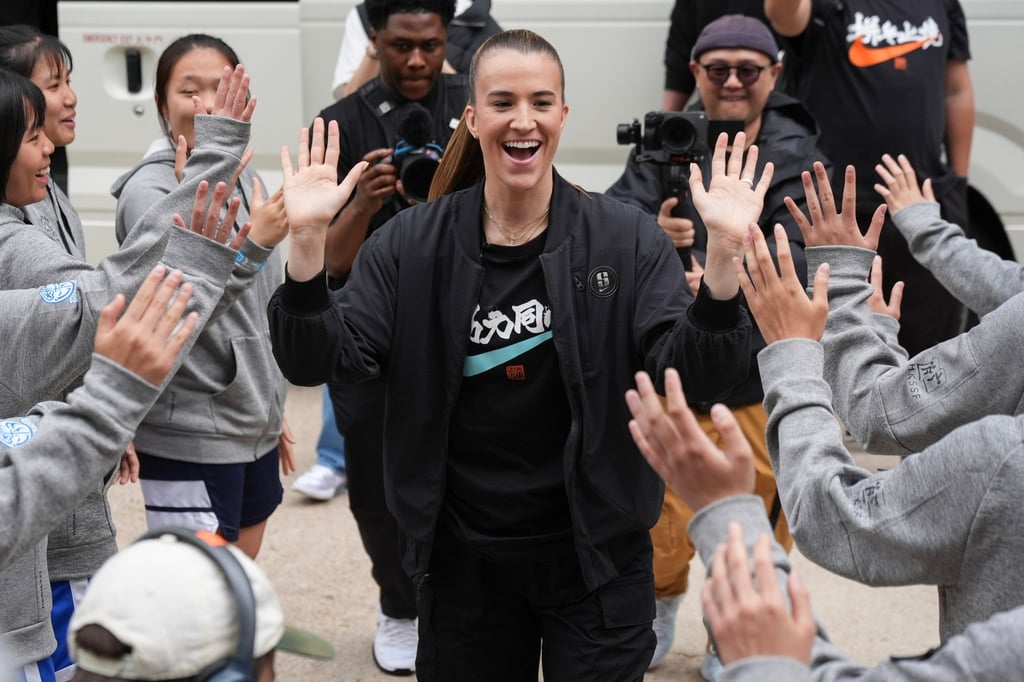 WNBA star Sabrina Ionescu visited Heep Yunn School in Kowloon earlier this year. Photo: Eugene Lee