DCCE pledges stronger adaptation after Hat Yai floods
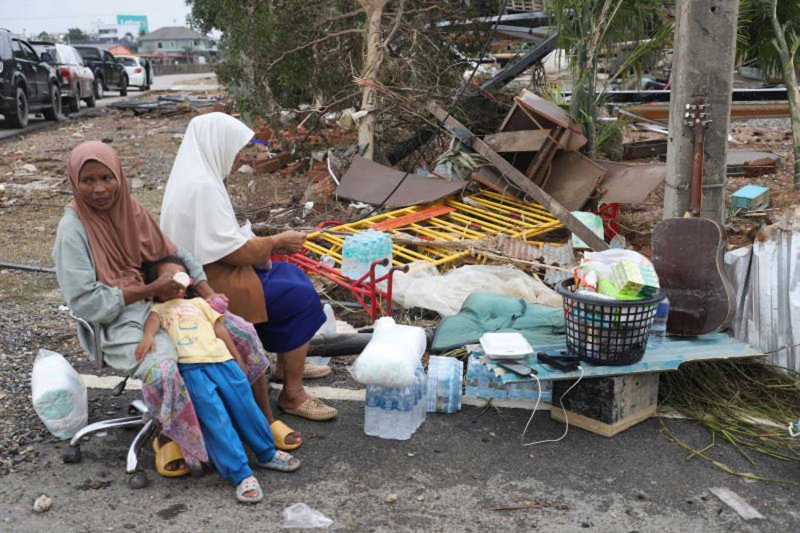
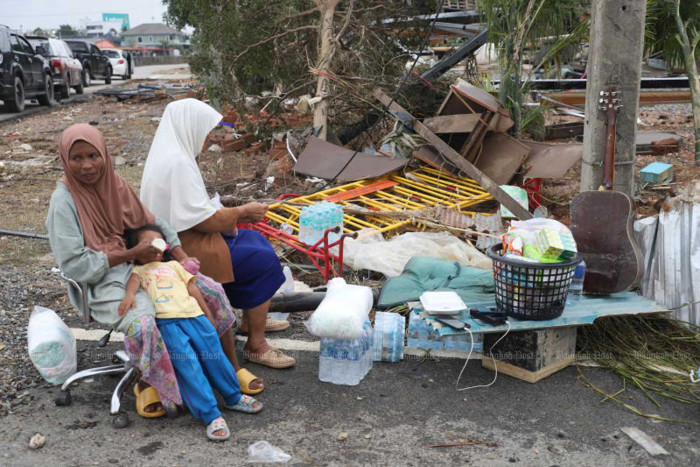
A family feeds a young child after floodwater receded in devastated Hat Yai district of Songkhla on Nov 28. (Photo: Nutthawat Wichieanbut)
Thailand has climbed to 17th among nations most at risk from extreme weather, according to the latest Climate Risk Index (CRI) released by Germanwatch. The Department of Climate Change and Environment (DCCE) said the findings have prompted accelerated upgrades to early‑warning systems and a push for a more integrated resilience framework.
Phirun Saiyasitpanich, DCCE director‑general, revealed the 2026 index on Saturday, noting Thailand’s ranking had leapt from 72nd in 2022 to 17th in 2024, reflecting a sharp rise in vulnerability. Long‑term risk has also worsened, with Thailand now placed 22nd, up from 30th in the previous index.
The CRI, compiled from international data spanning 1995–2024, recorded more than 9,700 extreme weather events globally, affecting nearly 5.7 billion people and causing over 832,000 deaths. Economic losses exceeded US$4.5 trillion (144 trillion baht), with heatwaves and storms accounting for 66% of fatalities.
Floods hit the largest number of people at 48%, while storms generated the highest losses at 58% — roughly US$2.64 trillion. The 10 countries most affected in 2024 were St Vincent and the Grenadines, Grenada, Chad, Papua New Guinea, Niger, Nepal, the Philippines, Malawi, Myanmar and Vietnam.
Mr Phirun said that despite Thailand’s higher development status, the country continues to suffer severe damage from extreme climate events. “The flooding in Hat Yai — where rainfall reached an unprecedented 350 millimetres in a single day, the highest in 300 years — underscored the escalating impact of climate change,” he said. Shifting rainfall patterns are a clear sign of the crisis, prompting the government to prioritise adaptation.
Under its environmental agenda, Thailand has pledged to strengthen early‑warning networks in high‑risk areas and advance its transition to a low‑carbon society, targeting net‑zero emissions by 2050.
The department is intensifying implementation of the National Adaptation Plan in collaboration with six key sectors, local agencies, businesses and civil society.
Efforts include enhancing disaster‑warning systems, improving water management, expanding health, agricultural and infrastructure measures, promoting nature‑based solutions, and strengthening risk databases, funding access and technology‑driven monitoring.
“Thailand is also developing a domestic CRI to guide provincial planning and pushing forward the Climate Change Act to reinforce long‑term adaptive capacity,” Mr Phirun said. Broad public engagement will be essential to ensure the country moves towards a resilient, low‑carbon economy, he added.
In Bangkok, Deputy Governor Thavida Kamolvej said Governor Chadchart Sittipunt had instructed her team to prepare for worst‑case rainfall scenarios of 1,100 millimetres in seven days — a lesson drawn from the Hat Yai floods, she said.