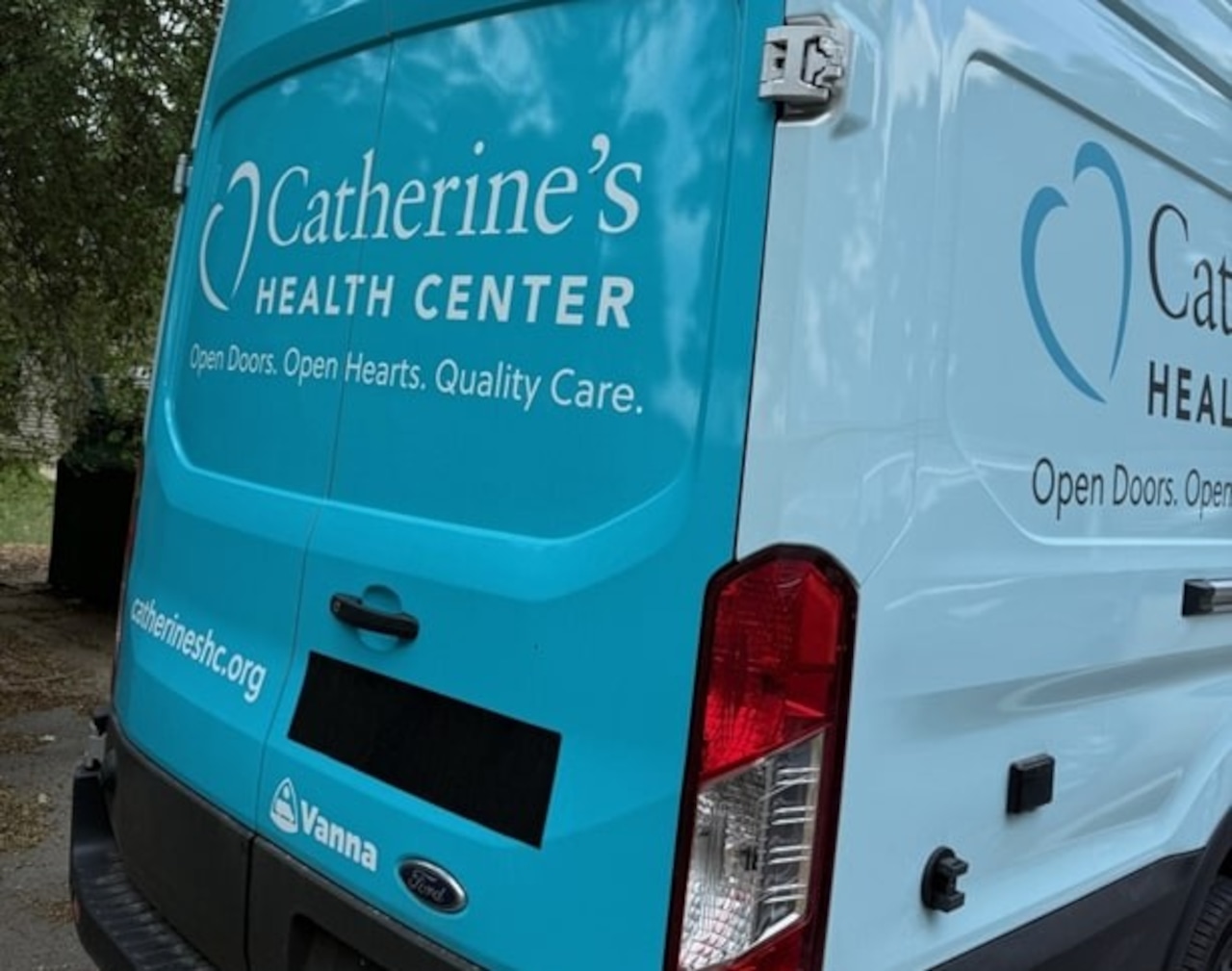
GRAND RAPIDS, MI — Twice a week, a two-person Catherine’s Health Center team fires up a conversion van outfitted with an exam table, sink and medical supplies, and head out to provide on-the-spot care to Grand Rapids’ homeless population.
Their rounds take them to shelters, the library, the Grand Rapids Pride Center and other places unhoused people gather. Once parked, the St. Catherine’s physician and medical assistant open the doors, providing a lifeline for residents who need non-emergency healthcare but aren’t comfortable walking into a clinic.
“Healthcare is complicated,” said Mark Contreras, the chief medical officer at Catherine’s Health Center, which cares for underserved populations in Kent County. “Our patients don’t have to think about a scheduled appointment” or “how they are going to get there.”
Since launching in July, the mobile health unit has treated about 10 patients per day during its twice a week schedule, Contreras said. Care is provided to patients with high blood pressure, wounds, chronic lung disease, substance abuse, mental health disorders and more.
“It’s about to be winter season, so frostbite and trench foot are going to increase,” he said.
The mobile unit was funded through a $500,000 federal grant, as well as assistance from the city of Grand Rapids and private donations.
In addition to an exam table and sink, the van has wound care supplies, testing equipment, and a refrigerator and freezer to transport vaccines and medications, said Ally Stephens, development director at Catherine’s Health Center.
Catherine’s is a federally qualified health center, and it receives funding from the Health Resources and Services Administration and reimbursements from government and private insurance programs. Qualified health centers serve patients regardless of their ability to pay, and charge patients on a sliding scale based on income.
The van complements other services Catherine’s Health Center offers to the homeless population.
In July, it opened a primary care clinic at Mel Trotter Ministries, a rescue mission in downtown Grand Rapids. Open five days a week, the clinic offers primary care, psychiatric services and dental hygiene outreach.
The mobile health unit is designed to serve unhoused residents who “just are not in a space where they’re ready and able to walk through the doors of a healthcare clinic, even if it’s embedded in a shelter,” he said.
Thus far, the mobile unit has generated positive feedback, Contreras said.
He pointed to an example at Degage Ministries, a rescue mission in downtown Grand Rapids, that the van regularly visits. One morning, about a month after the van started serving residents at the shelter, the Catherine’s Health Center team pulled up and found a group of unhoused people waiting for their arrival.
“To me, that behavior conveys that we’re meeting a need and we’re building trust and rapport with the community,” Contreras said.
He noted that Degage staff have told Catherine’s Health Center that they’re “noticing a tangible improvement in the health of their guests.”
Moving forward, Contreras is hopeful the mobile health unit will continue to have a positive impact. He and his staff have been buoyed by the success of patients who have overcome homelessness after seeking treatment through Catherine’s Health Center and other organizations.
He recalled one woman who was addicted to methamphetamine and struggled with psychosis, straining her relationships. After a year of gently encouraging her to seek treatment, she eventually did so and is now employed on a path to recovery.
“The trajectory of her life has completely changed by being able to have access to services,” Contreras said.