APACHE JUNCTION, Ariz. – A multi-state outbreak of an equine herpesvirus continues to spread in Arizona. A fourth case has been confirmed this weekend by the state’s Department of Agriculture.
What we know:
The first three EHV-1 cases in Arizona were asymptomatic horses. But with the latest case, unfortunately, the horse did have neurological symptoms.
Local perspective:
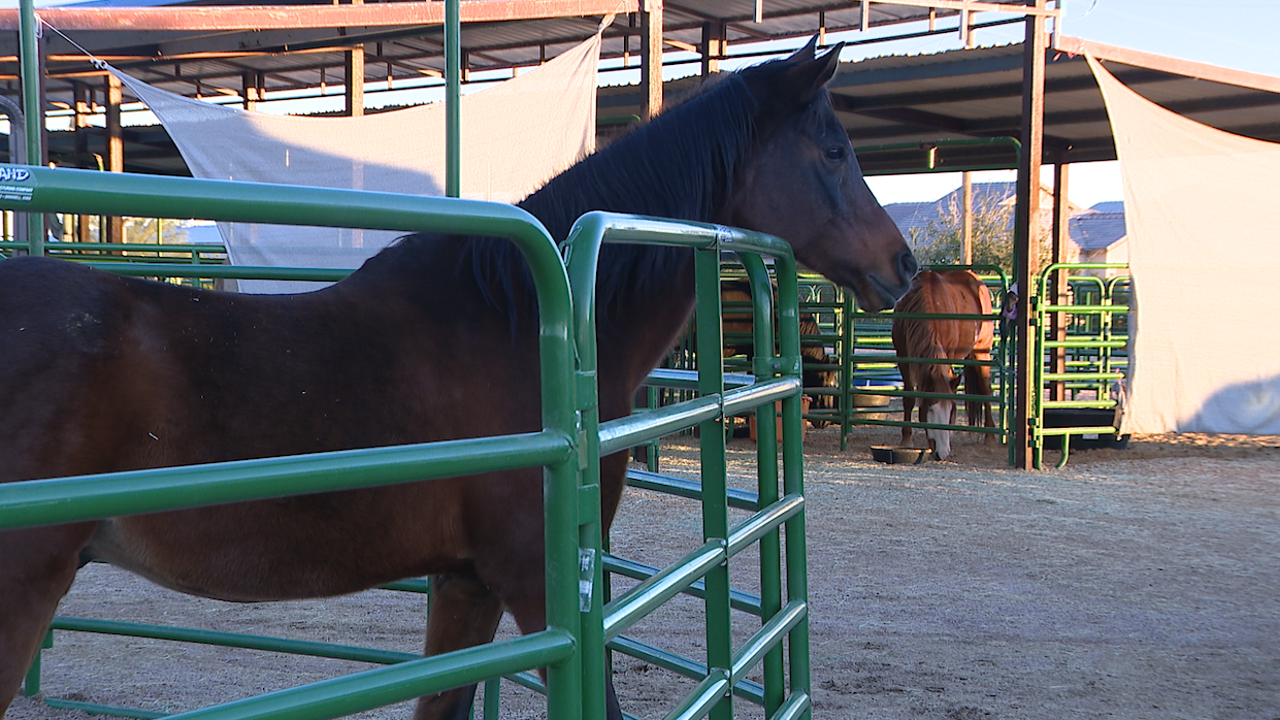
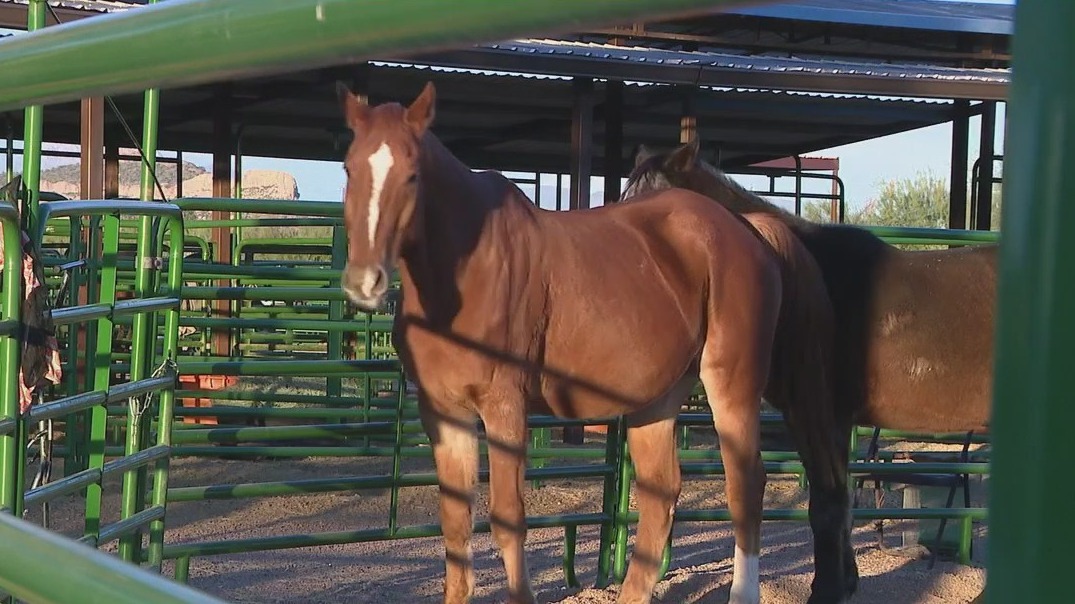
At Good Shepherd Horse Rescue, no horses are being affected by this outbreak, and the volunteers are working hard to make sure it stays that way.
“We’re very, very strict about what we do so we can keep our horses safe all the time and especially now,” said Cindy Campton, President of Good Shepherd Horse Rescue.
Protocols are in place for the 30 horses at the rescue.
“We clean three times a day, we change our water buckets twice a day,” Campton said. “Every one of our horses has their own grooming kit.”
She said that any incoming horse has to be quarantined.
“If we were to bring a horse in, they have to be quarantined, you check their temperature, you have a vet come out, you do your general checks but also bloodworm,” said Campton.
Why you should care:
While these safety measures are standard at the rescue, they take on heightened importance amid the EHV-1 outbreak.
Equine Herpesvirus can affect a horse’s respiratory and nervous system functions, can even be fatal, and can spread easily.
“You can get it on your shoes; your horse can sneeze on you,” Campton said. “You as a person can’t get it, but you can transfer it to another animal.”
Big picture view:
The outbreak originated from events in Texas and Oklahoma earlier this month, leading Arizona to start monitoring cases.
“We’re in the process of tracing back all of the horses that have since come back from events in Oklahoma and Texas,” said Dr. Ryan Wolker, State Veterinarian for the Arizona Department of Agriculture.
Dig deeper:
To limit the threat, a handful of roping events and horse shows across the state have been canceled or postponed, including the Desert Classic Horse Show in Scottsdale that was scheduled to take place this week.
“I know there are people that are pulling out of shows and pulling out of rodeos and things like that,” Campton said. “I probably wouldn’t send my horses to a horse show or rodeo right now just because it’s not worth it to me to put them at risk.”
So far, Arizona has confirmed three asymptomatic cases and one case in Pinal County where the horse showed neurological signs of the virus.
“We have 15 to 20 volunteers a day on a property, so we have to train them and educate them on what to look for because you really have to look at your horse all the time. Do they have a runny nose? Do they have a temperature? Is their back-end sore? You know, all the signs and symptoms of this virus,” Campton said. “Everybody that owns a horse is aware there’s a virus out there. We work closely with our vet, and he tells us if there is anything we need to do over and above what we’re already doing.”
What’s next:
Since the start of the outbreak, the state has also implemented movement restrictions, all to help keep Arizona horses safe.
The Source: This information was provided by the President of Good Shepherd Horse Rescue in Apache Junction and the State Veterinarian for the Arizona Department of Agriculture on Nov. 30.
Pets and AnimalsPinal CountyNewsHealth