By Christopher Kamrani, Stewart Mandel, Chris Vannini
One of college football’s most head-spinning Sundays continued with the firing of Michigan State head coach Jonathan Smith. Spartan fans needed only to wait a few hours before learning of the man in charge of turning things around in East Lansing.
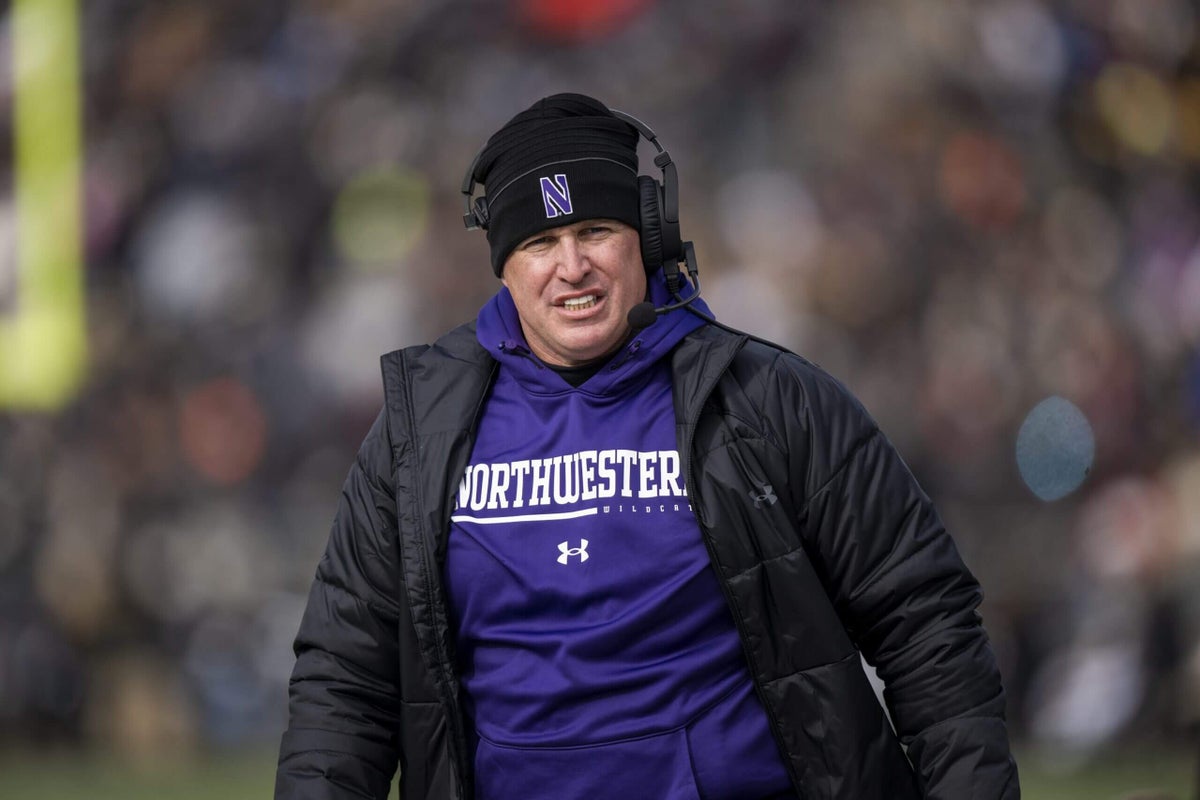
On Sunday, a source briefed on the decision told The Athletic that Michigan State is hiring former Northwestern head coach Pat Fitzgerald. Fitzgerald, 50, went 110-101 during his 17 seasons coaching his alma mater but was fired in 2023 after allegations of hazing in the program during his tenure.
Fitzgerald filed a wrongful termination lawsuit against the university, which was settled in August. Terms of the settlement were not publicly disclosed. In an interview with ESPN in November, Fitzgerald said he felt “fully vindicated” in the wake of the settlement.
Fitzgerald had become so respected for turning Northwestern into a near-annual bowl team that both Michigan and the Green Bay Packers tried to hire him away at various points of his Wildcats tenure. But Northwestern trailed off considerably near the end, finishing 3-9 and 1-11 in Fitzgerald’s last two seasons, 2021 and 2022. The main culprit: an offense that ranked in the 100s nationally in yards per play in each of Fitzgerald’s last five seasons.
He now takes over a Michigan State program that has been adrift since the program’s all-time winningest coach, Mark Dantonio, retired in February of 2020. Michigan State replaced Dantonio with Mel Tucker, who was fired for cause in 2023 amid an investigation into sexual assault allegations against him, and then replaced Tucker with Smith. The former Oregon State head coach failed to make any headway in building the Spartans into a contender, going 9-15 in his two years in East Lansing. The Spartans finished 4-8 this year, including a 1-8 record in Big Ten Conference play.
While the Northwestern fan base was generally pleased just to have a winning season, expectations will be considerably higher at Michigan State, which won three Big Ten championships and reached a College Football Playoff in the 2010s under Dantonio.
The feeling around Michigan State is this hire has re-activated a donor base that had lost faith in Smith. The Spartans have been behind financially for years, and Smith will have a $33 million buyout to be paid (with an offset). But first-year athletic director J Batt is known for his ability to raise money, and having the donors behind his football hire was a must.
What can Fitzgerald do for Michigan State?
Michigan State has lost its way as a program, and Fitzgerald has a chance to not only revive it, but return it to the Big Ten’s upper middle class.
Fitzgerald mixed brains with brawn better than most coaches nationally when he kept Northwestern competitive for much of his 17 seasons as coach. Now that he takes over a program with a higher ceiling, expect Fitzgerald to widen his prospect pool but not his recruiting standards in building a football program. That’s good news in East Lansing.
The Spartans have lacked an identity since Mark Dantonio stepped down as coach after the 2019 season. When Dantonio had Michigan State contending for — and winning — Big Ten titles, there were two truisms about his tough-minded program: The Spartans were physical on offense and elite on defense. Fitzgerald shares that philosophy.
In Dantonio’s golden era from 2010 through 2015, Michigan State finished 65-16 overall and 39-9 against Big Ten foes with three league championships and another division title. The Spartans’ offense averaged 166.2 rushing yards and 30.4 points per game over that six-year period. Defensively, Michigan State gave up just 103.9 rushing yards per game and led the Big Ten in that category every season from 2011 through 2014.
The last four seasons have mocked Michigan State’s tradition and not just become of the 18-30 overall record and 9-27 mark against Big Ten foes. The Spartans have allowed 150.5 rushing yards per game and averaged just 110.2 yards on offense. They have scored just 21.1 points and given 27.9 points per game. There was no identity on either side of the ball, little development and no cohesion.
Smith tried to rebuild through the transfer portal, but his losses were significant. In Smith’s first season, 47 players entered the portal, including quarterback Sam Leavitt (Arizona State), defensive end Zion Young (Missouri) and defensive tackle Derrick Harmon (Oregon). The Spartans never came close to replacing that talent and traditional recruiting took a hit, too.
A return to Michigan State’s roots should help the fan base coalesce around Fitzgerald, who beat the Spartans five times in 14 meetings. Expect better development, targeted recruiting and a return to the chip-on-the-shoulder mentality that allowed Michigan State to thrive against its Rust Belt rivals. That’s no guarantee of championship success, but it should enable the Spartans to contend for quality seasons and perhaps future College Football Playoff berths. — Scott Dochterman