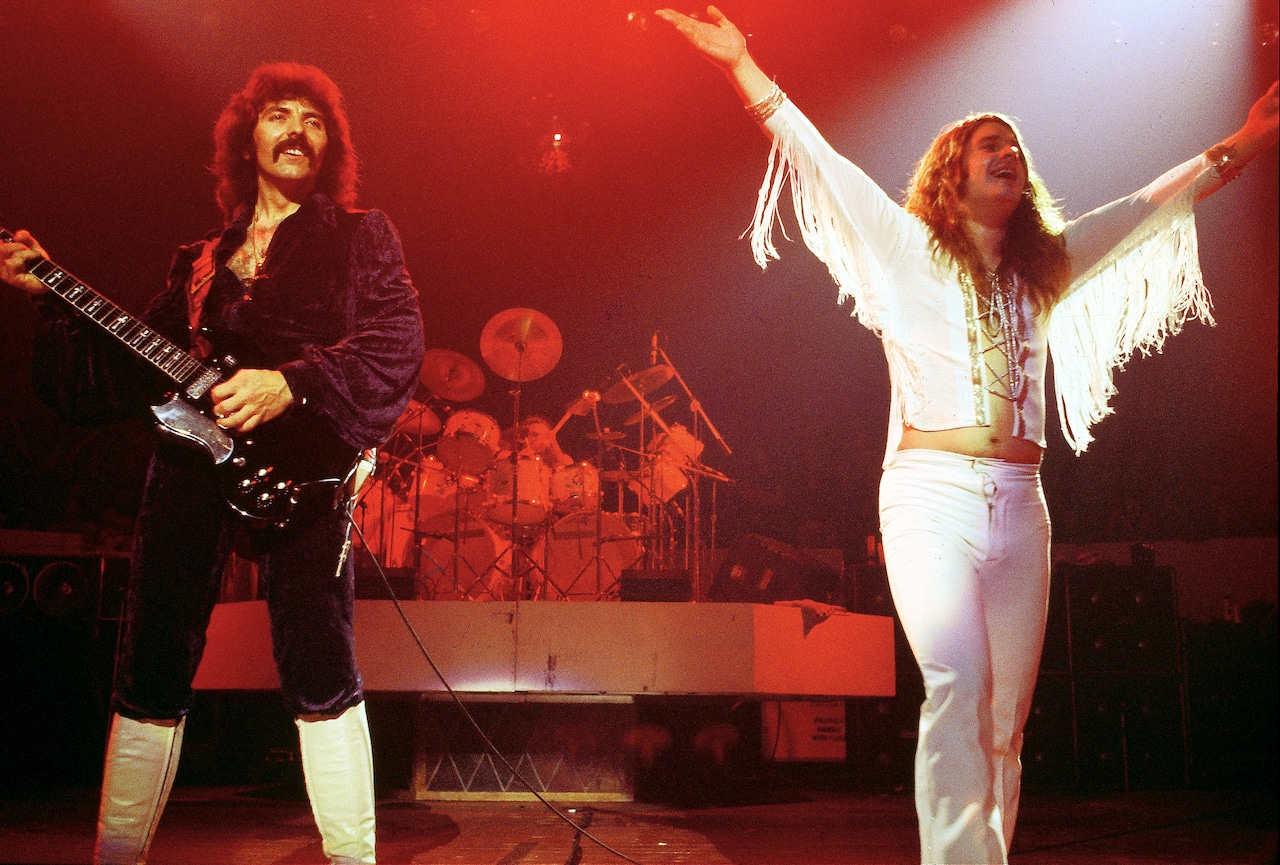
Black Sabbath is dead, and Black Sabbath will never die. Both of these things are true. More than 50 years ago, the Birmingham, England-founded quartet pioneered heavy metal music with songs like “War Pigs,” “Paranoid,” “Iron Man” and spooky self-titled track “Black Sabbath.”
While the band’s name, sound and songs evoked dark imagery, they were really just heavy-metal hippies, not blood-slurping Satanists. Black Sabbath lyrics dealt with themes like ecology, addiction, technology and war, as well as Beelzebub.
Sabbath didn’t just invent heavy metal. They’re hands down the greatest metal band ever, and other bands typically in that discussion, like Judas Priest, Metallica and Iron Maiden, would likely be the first to agree.
This summer Sabbath’s original lineup of singer Ozzy Osbourne, guitarist Tony Iommi, bassist/lyricist Geezer Butler and drummer Bill Ward, played their final concert. About two weeks later, Osbourne, whose health issues relegated him to performing from a chair at the final Sabs show, died at age 76.
That final Black Sabbath show, an all-day hometown concert featuring many of the successful bands they inspired, put the band’s name and music back in mainstream culture. Osbourne’s passing certainly did too, as it goes when a music great dies.
This winter, Osbourne’s longtime solo band guitarist, Zakk Wylde, is performing classic Black Sabbath songs on tour with his band “Zakk Sabbath,” including a sold-out Dec. 3 show at Mars Music Hall in Huntsville, Alabama.
Drive-by rock history too often simplifies a band to its original or classic lineup. But with Sabbath, it’s just not that simple.
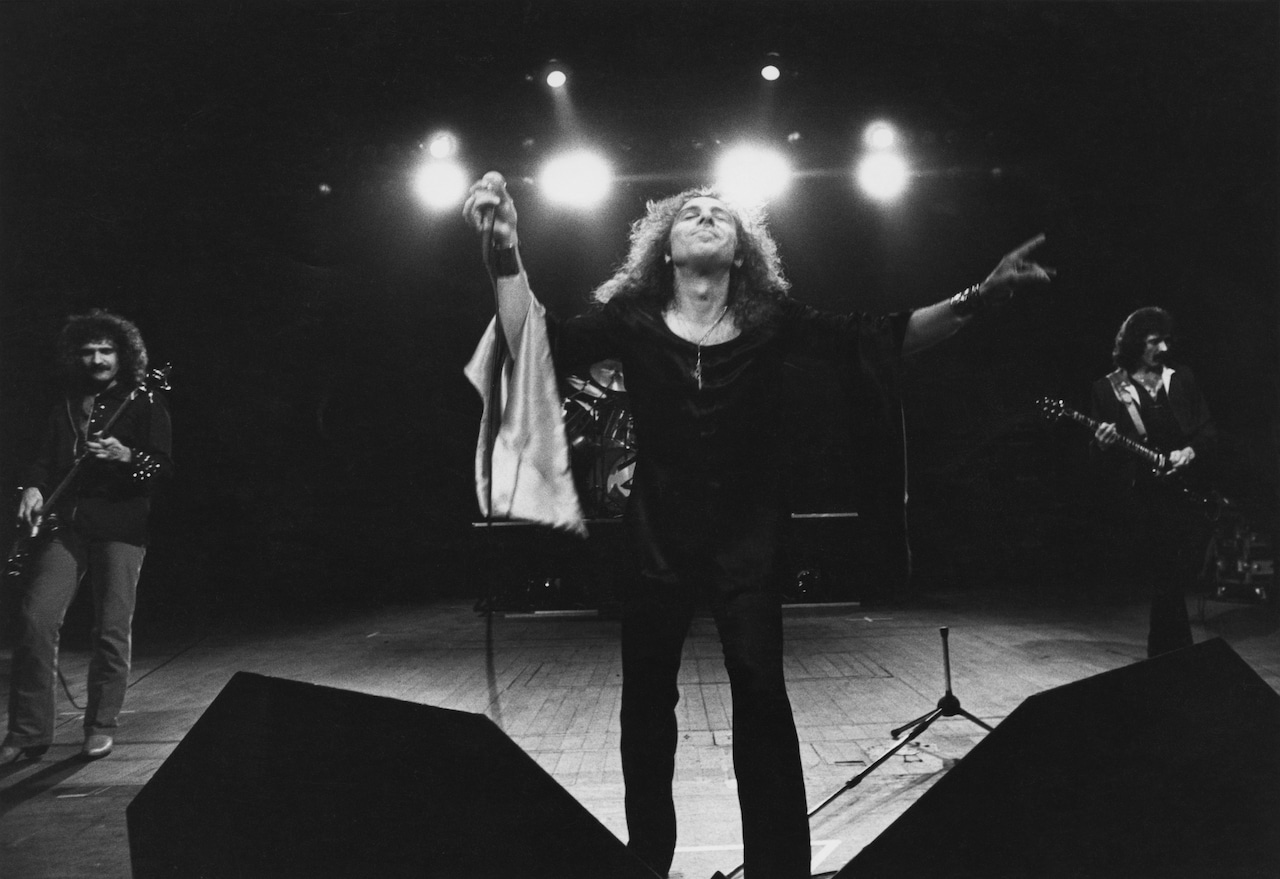 From left, Black Sabbath bassist Geezer Butler, singer Ronnie James Dio and guitarist Tony Iommi on stage during a live concert performance at the Gaumont in London, England, Great Britain, 25 June 1980. (Photo by Fin Costello/Redferns/Getty Images)Redferns
Throughout the decades, Iommi, an all-time riff wizard, has been the lone constant in the band’s myriad lineups. There are many well-known songs from the original lineup and their ‘80s Ronnie James Dio fronted version, too.
But Sabbath’s discography — including lineups with Ian Gillen, Glenn Hughes or Tony Martin singing — contains underrated songs more casual fans should know.
Below are my picks for the 20 underrated Black Sabbath songs. For this list, we’re sticking to one song each from the Sabbath’s 19 studio albums plus one from an album the Dio-era “Mob Rules” lineup released under the name Heaven & Hell.
Of course, this list is subjective. It’s meant to start conversations about underrated Sabbath songs we love.
20. ‘Rusty Angels’
From 1995 album “Forbidden”
Produced by Ernie C., guitarist with rapper Ice T’s punk metal band Body Count and with Iommi as the only original member left, “Forbidden” is widely regarded as Black Sabbath’s album. I prefer to think of it as a meh Dokken album, from which “Rusty Angels” is a keeper.
19. ‘Zeitgeist’
From 2013 album “13”
Black Sabbath’s Rick Rubin-produced final album sorely missed Ward’s drumming. The talented Rage Against The Machine/Audioslave drummer Brad Wilk was brought in. But the chemistry never ignited. No wonder the most enduring cut off “13” is the trippy acoustic track “Zeitgeist,” a spiritual sequel to vintage Sabs cut “Planet Caravan.”
18. ‘Wicked World’
From 1970 album “Black Sabbath”
Sabbath’s self-titled debut album set the blueprint for all future metal to. The title track, harmonica laced “The Wizard” and Black Wedding themed “N.I.B.” are crucial. Don’t sleep on Cream-with-fangs blues-rocker “Wicked World” though.
17. ‘St. Vitus Dance’
From 1972 album “Vol. 4”
The sessions for Sabs’ accurately named fourth album were notoriously cocaine-fueled. Witness, addled throwdowns “Snowblind” and “Supernaut.” “Vol. 4” is best known for tender piano ballad “Changes.” Dig deeper for gems like “St. Vitus Dance,” which alternately shakes hips and bangs heads.
16. ‘After Forever’
From 1971 album “Master of Reality”
“Masters of Reality” is known for weed anthem “Sweet Leaf,” the galloping “Children of the Grave” and doomy “Into the Void.” But “After Forever” is a ripper, too.
15. ‘The Thrill of It All’
From 1975 album “Sabbath Bloody Sabbath”
Shapeshifting epic mixes atmosphere, groove and pow. And the red pants Ward wore on the album cover are immortal.
14. ‘Spiral Architect’
From 1973 album “Sabbath Bloody Sabbath”
Iommi’s circular acoustic intro segues into full-on prog-metal bliss.
13. ‘Hand of Doom’
From 1970 album “Paranoid”
Showcases the underappreciated jazzy counterpoint interplay of Iommi, Butler and Ward. Honorable mention on the essentials-stuffed “Paranoid” album goes to “Rat Salad,” a twisty instrumental Eddie Van Halen and Alex Van Halen later wanted to name their band after, before David Lee Roth suggested they use the brothers’ surname instead. “Paranoid” was Sabbath’s sophomore album. And the second the band released in just a year, 1970.
12. ‘Children of the Sea’
From 1980 album “Heaven and Hell”
After sacking Osbourne, Iommi, Butler and Ward connected with Ronnie James Dio, formerly of the band Elf. Dio brought sky-kissing vocals and swords-and-sorcery lyrics into the mix. The “Heaven and Hell” album is known for the brilliant title track and sledgehammer singles “Neon Nights” and “Die Young.” The windswept “Children of the Sea” is a stunner, too.
11. ‘Seventh Star’
From 1986 album “Seventh Star”
By the recording of Sabbath’s 12th studio album, Iommi was the last man standing from the band’s original lineup. Eric Singer, who later spent decades with Kiss and was member of late ‘80s supergroup Badlands, was now on drums. Mark Spitz was on bass. Geoff Nicholls, with the band since “Heaven and Hell,” on keyboards. And on lead vocals? Glenn Hughes, the force of nature formerly with Deep Purple and Trapeze. Highlights from the “Seventh Star” album include the title track, which evokes Led Zeppelin saga “Kashmir.”
10. ‘Eternal Idol’
From 1987 album “Eternal Idol”
The deck shuffled again for “Eternal Idol.” Ironically, the lineup now included former Ozzy Osbourne bassist/lyricist Bob Daisley. Classic sounding Ray Gillen, later with the aforementioned Badlands, featuring ex-Ozzy guitar hero Jake E. Lee, was initially on vocals. Then, Gillen was out. Treble-scaling singer Tony Martin, who’d end up being Sabbath’s second longest tenured singer after Osbourne, was in for the “Eternal Idol.” Gillen’s vocals can be heard on a 2010 reissue. As long as Iommi’s forging the riffs, it still sounds like Black Sabbath. The title track, which sounds like the soundtrack for an escalator to hell, proves it.
9. ‘Nightwing’
From 1989 album “Headless Cross”
The lineups may change, but Iommi’s six-string spellcasting always makes it Sabbath.
8. ‘Sabbath Stones’
From 1990 album “Tyr”
Yeah, this totally Greta Van Fleet-s “War Pigs.” Still awesome.
7. ‘Evil Eye’
From the 1994 “Cross Purposes”
Butler rejoined the fold for “Cross Purposes” and Bobby Rondinelli, previously with Rainbow, Doro and Quiet Riot, killed on drums. Hot riffage and soloing by Iommi, of course.
6. ‘Zero the Hero’
From 1983 album “Born Again”
After two excellent albums with Dio, Sabbath saw more changes. Dio and Appice were out. Ward was back in on drums and former Deep Purple howler Ian Gillen was on the mic. The resulting album is known for its “Rosemary’s Baby”-evoking cover art. And to a lesser extent, drunk-driving cautionary tale “Trashed.” There’s also a pre-Spinal Tap interlude titled “Stonehenge.” Blurry charger “Zero the Hero” is a real one though. The track’s main riff will sound familiar to fans of “Paradise City,” the Guns N’ Roses smash released four years later.
5. ‘Never Say Die’
From 1978 album “Never Say Die!”
Pop-punk banger with alarmingly uplifting lyrics, and title track to the last album by the Ozzy lineup’s ‘70s run. “Never Say Die” is also the only Sabbath track you could choreograph a cheerleading routine to.
4. ‘Sins of the Father’
From 1992 album “Dehumanizer”
The “Mob Rules” lineup reunited after more than 10 years. Unfortunately this occurred during the early ‘90s grunge boom. Massive sales by young bands like Soundgarden, Nirvana and Pearl Jam led the music industry and mainstream fans to unfairly treat veteran metal acts, even legends like Sabbath, like lepers. In hindsight, the band’s “Dehumanizer” album contains some cool stuff, like “Sins of the Father,” a supersonic track evoking Iommi bestie Brian May’s band, Queen.
3. ‘Slipping Away’
From 1981 album “Mob Rules”
By the time of Black Sabbath’s second studio album with Dio, Ward had departed. Vinnie Appice, younger brother of Vanilla Fudge, Cactus, Jeff Beck and Rod Stewart drummer Carmine Appice, was a great fit. See incendiary tracks like “The Mob Rules” and “Turn Up the Night.” And certainly shout-along stutter-stepper “Slipping Away.”
2. ‘It’s Alright’
From 1976 album “Technical Ecstasy”
If piano-based “It’s Alright” would’ve been sung by Osbourne instead of drummer Bill Ward, it would be a “Changes” level classic. As it is, it’s still a majestic and sorely underrated tune, Sabbath or otherwise.
1. ‘Bible Black’
From 2009 Heaven & Hell album “The Devil You Know”
A rare example where a legacy-rich singer’s final work is worthy of their classic material. “Bible Black” is off “The Devil You Know,” the last album Ronnie James Dio released before he died of cancer in 2010. After Sabbath reunited with Dio following their aughts reunion with Ozzy, they used the band name Heaven & Hell, a nod to the first Dio-era Sabbath album, instead of Black Sabbath and only played songs from the Dio era live during their reunion shows. But the lineup of Dio, Iommi, Butler and Appice is Black Sabbath in everything but name. “Bible Black” is a batwing epic with supernatural Dio vocals. It slots comfortably among Dio’s ‘80s Sabbath records and those of his other well-known bands, Dio and Rainbow. Rest easy, dragon-slaying prince.