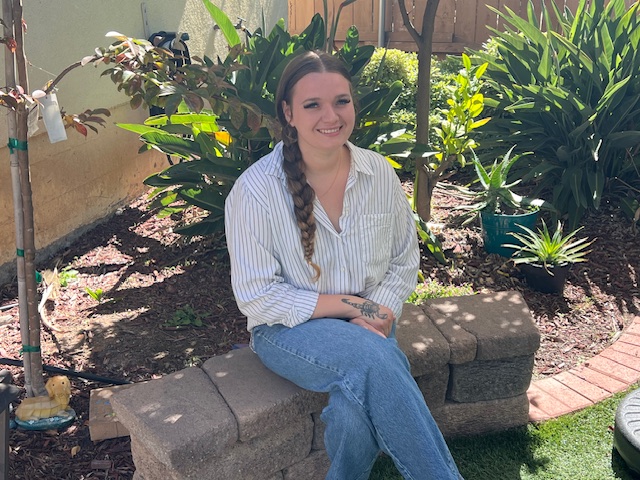
On March 9, 2022, Victoria Morris, 24, sat alone in a hotel room on her daughter’s third birthday, crying and getting high. Her daughter had been taken away and Victoria had just been evicted from an inpatient drug treatment facility.
“My social worker had made it clear there were no more chances,” she said. “I was at rock bottom.”
But later that day she found a path upward.
Born in 1998, Morris and her three siblings were raised by their single mom.
Morris’ older brother died in a car accident when she was 12. Her mother was distraught and moved the family from Washington to Chula Vista, where she had been raised. With her mother working to support the family, Morris said she “had a lot of free time and got out of control.”
Between ages 12 and 18 she was in and out of Juvenile Hall, spending cumulatively about one year and nine months in custody. Each time she was released, she said she would “just take off, living on the streets or with friends.”
“It was dangerous and I had to fight a few times. But I was rarely alone.
“I started drinking alcohol and taking drugs at 12, beginning with weed, then cocaine and acid at 13. I started with PCP at 15. For food, I would mostly steal it. Life was cloudy between 12 and 18. I was depressed and never thought about my future as I wasn’t sure I would have one. I gave up on life.”
Things changed when at age 19 she had a baby girl.
“I wanted to get on the right path,” she said, “but didn’t know what that path looked like.”
Her daughter was 2 when she was taken away by Child Welfare Services and placed with Victoria’s mom.
She tried to get her back through dependency court but failed. “I was disgusted with myself and cried a lot,” she said. “I would take PCP because I knew it would take me out of reality.”
In what she believed to be a final effort to get her daughter returned, Morris entered a residential treatment facility in January 2022. But she relapsed and was evicted, leading her to the motel room on her daughter’s third birthday, March 9, 2022.
Later that day, at a friend’s urging, Morris visited New Entra Casa, a six-person residential treatment program in North Park specializing in helping mothers. It was exactly what she needed given her fractured home life.
“I found myself stepping into a place that felt different — a place that felt like home, not a big facility,” she said. “It was a house, with warmth and kindness. The moment I walked in, I felt in my heart that I was where I needed to be.”
Although it was difficult to fight the urge to relapse, Morris, with much effort, determination and support from New Entra Casa counselors, has been clean and sober ever since.
“It has to come from within,” she said, explaining that her child was a motivating force. “What turned me around was the hopelessness I felt. I was done with it. Instead of trying to escape reality, I decided to recreate it to something I wanted to be a part of.”
Her efforts were rewarded when she was reunited with her daughter. “At first, my mom was not supportive,” she said. “But when she saw I was serious about changing, she supported it.
“I’m proud of turning my life around.”
She says she and her mom have a good relationship and share a family life in Tierrasanta.
Her daughter is now 6 and attends grade school. “I love things like [doing her hair] and getting her ready for school,” she said.
She is also on a career path having earned certification from California Mental Health Services Authority as a peer support specialist. She works at New Entra Casa providing support and mentorship for mothers facing life challenges similar to those she faced and overcame.
“I tell clients I know exactly how they feel,” she said. “I’ve been in their shoes.”
About this series
Goldsmith is a Union-Tribune contributing columnist.
We welcome reader suggestions of people who have done something extraordinary or otherwise educational, inspiring or interesting and who have not received much previous media. Please send suggestions to Jan Goldsmith at jgsandiego@yahoo.com