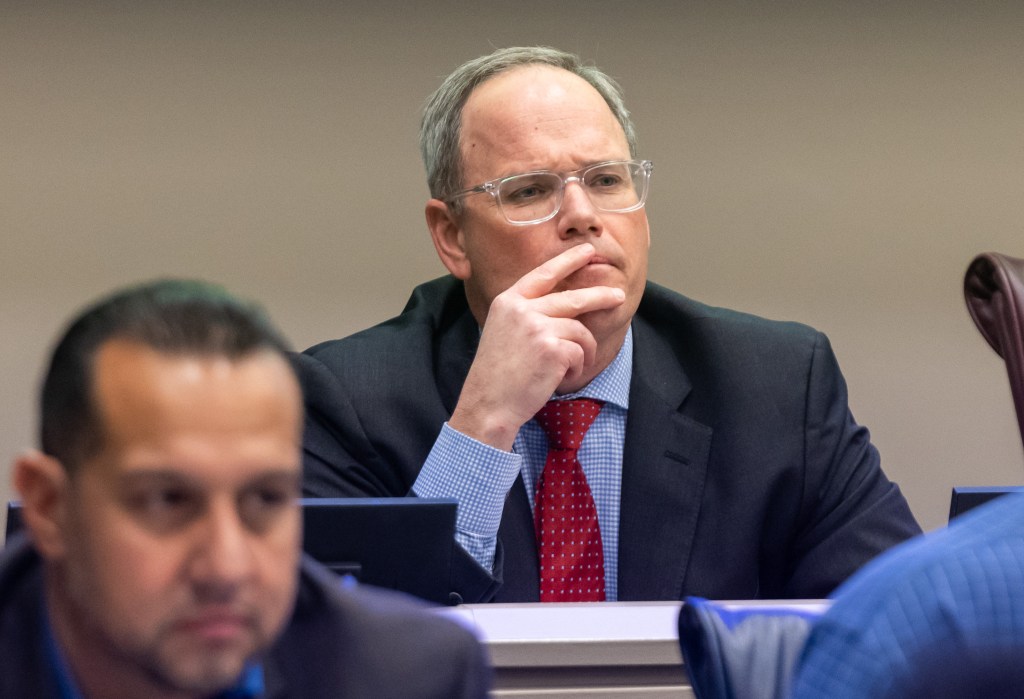
A broad ban on hemp products in Chicago advanced in the City Council Wednesday, teeing up a vote that could suddenly shutter the burgeoning industry.
Proponents argue the proposed ban would make Chicago safer by speeding up a pending Congressional prohibition on the products that get users high. But Mayor Brandon Johnson’s administration has urged aldermen to rework the ordinance with narrower regulations.
Hanging in the balance are dozens of small businesses like Rubina Mirza’s Ukrainian Village shop, Kizmah CBD.
“This proposed ban on these products will put me out overnight and destroy all the hard work I spent with my family building a small business,” Mirza told aldermen as the meeting started in a room packed with hemp supporters.
But a majority of the License and Consumer Protection Committee was unconvinced, as aldermen voted 10 to 6 to advance the ban. The full City Council could cast a final vote as soon as next Wednesday.
Southwest Side Ald. Marty Quinn, sponsor of the proposal, derided hemp shops as “shady operations” in opening remarks. And he shot down Johnson’s calls for changes to the blanket ban, such as carveout to allow craft breweries selling hemp beverages to continue operating.
“These are weak and bad arguments no matter how you look at them,” Quinn told aldermen before the vote. “There’s a strong coalition behind this ordinance that can move it forward.”
Ivan Capifali, Johnson’s Business Affairs and Consumer Protections commissioner, countered that the city does not have the resources to effectively enforce a complete citywide shutdown of hemp product sales. It would also cost the city around $10 million in sales tax revenue and harm the industry that now helps support 10,000 jobs, according to Capifali’s department.
The “expansive prohibition” could go beyond its apparent intended target of intoxicating hemp to unintentionally wipe out a far range of products, like drinks, foods and skincare products, Capifali said. And as the final version of the impending national hemp ban passed last month as a part of Congress’s shutdown-ending spending plan remains broadly undetermined, the city should instead help shape federal standards, he added.
Capifali urged aldermen to not vote on the broad ban and instead first pass a ban on hemp sales to minors. The City Council could then work toward regulations like packing standards and location restrictions, he said.
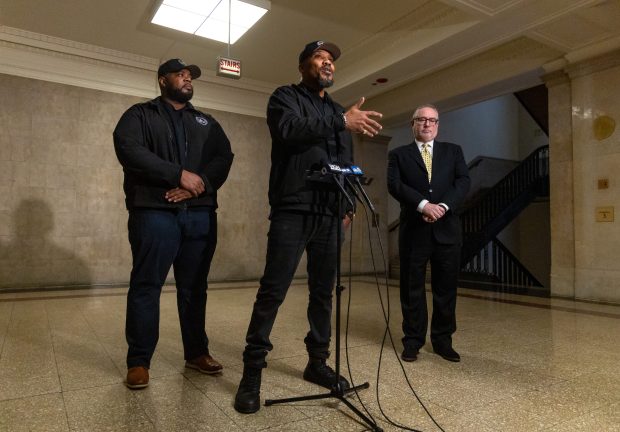 Illinois Black Hemp Association co-founder Tyrone Muhammad speaks while co-founder Samuel Wilson, left, and Craig Katz, president of board of Illinois Healthy Alternatives Association, look on during a press conference discussing a proposed hemp product sales ban by the City Council on Dec. 3, 2025. (Dominic Di Palermo/Chicago Tribune)
“The ordinance would inflict economic harm, is operationally unsound and it’s premature during federal policy development,” Capifali said. “We stand committed to work collaboratively.”
The debate Wednesday marked yet another turning point in a fierce City Hall debate over hemp’s legality heightened by dueling, well-organized lobbying efforts: on one side, hemp sellers, and on the other, cannabis business owners who hold the rare, coveted licenses to grow, distribute and sell legalized marijuana. Cannabis companies argue hemp products skirt the regulations and taxes applied to cannabis while selling similar products, undercutting their businesses.
After efforts to create hemp regulations failed amid gridlock earlier this year, seven aldermen banned hemp from their wards. Three more plan to enact ward-level bans soon, Capifali said.
Advocates for the hemp industry have said they are in support of regulations that do not fully ban their products, including a ban on sales to minors and packaging restrictions.
Johnson at first counted on regulating and taxing the city’s legally-gray hemp products to bring in $10 million when he released his 2026 spending plan in October. But he halted his regulation efforts and stopped counting on the money weeks later after the so-far undefined federal ban passed weeks later.
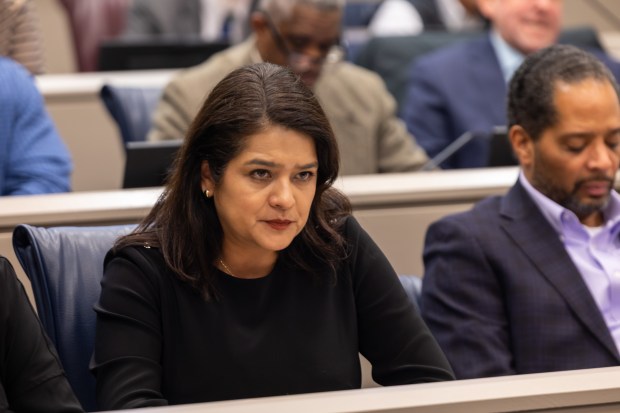 Ald. Silvana Tabares listens to community members during a City Council hearing discussing a proposed hemp product sales ban on Dec. 3, 2025, at City Hall. (Dominic Di Palermo/Chicago Tribune)
During Wednesday’s meeting, Southwest Side Ald. Silvana Tabares referred to the products affected by the ban, some of which do not get users high, as “dangerous narcotics” while arguing the tax money from hemp sales should not be a focus of debate. “Unregulated, intoxicating hemp” is available all over the city, from convenience stores to smoke shops, she said.
“Public health is not for sale,” Tabares, 23rd, said. “This is not about generating revenue. It is about ensuring the safety and well being of children by preventing them from accessing these harmful products.”
But while a majority of the committee’s aldermen opted to send the ordinance to the full council, some advocated for them to slow down. South Side Ald. David Moore, who voted against the ban, called the measure “extreme.”
“We have to find that sweet spot in terms of making sure our children are protected, but we cannot throw the baby out with the bathwater when we have legitimate businesses doing the right things,” Moore, 17th, said. “So let’s be fair about this. Let’s take that time.”
North Side Ald. Debra Silverstein, the committee’s chair, similarly urged Quinn to further discuss the ordinance with hemp-selling business owners. But that compromise deal should have been proposed earlier, she said while urging aldermen to pass the measure.
“We need to for the safety of our children and our community,” she said. “We don’t have another two, three months to wait on this.”
After the meeting, Quinn called the vote a “good first step.” Asked if he was open to changes to his ordinance, he said he is “not as worried” about non-intoxicating hemp products. His next moves will be determined by how many aldermen support the current version, he added.