Dallas Fort Worth International Airport is gearing up for its next growth phase. The airport expects to hit 100 million passengers by 2030 and is in the middle of significant infrastructure upgrades.
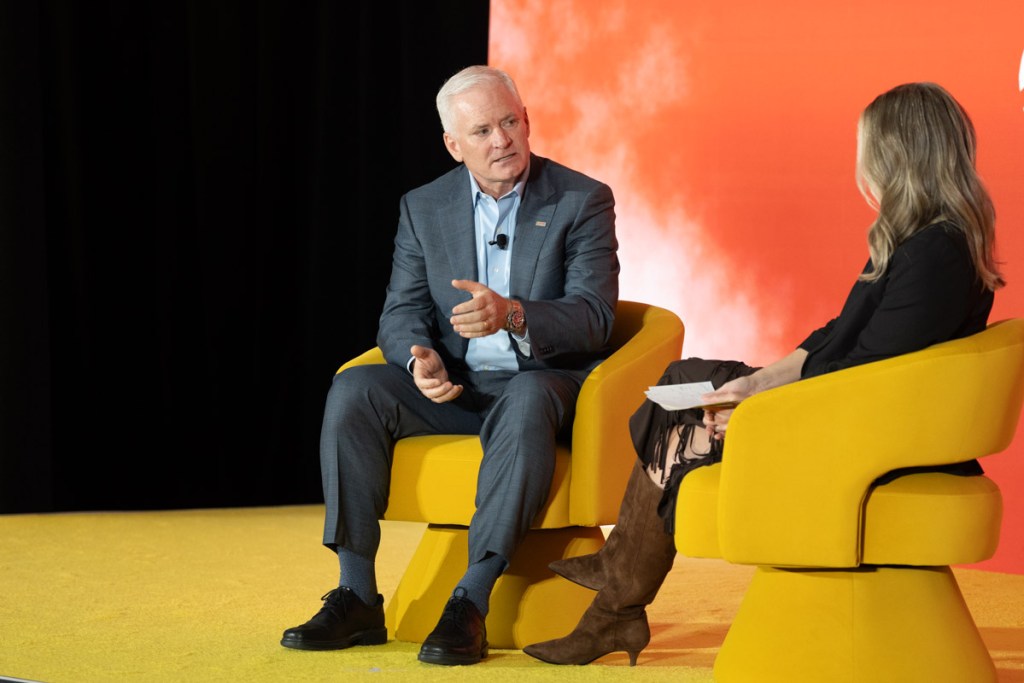
Chris McLaughlin, the airport’s CEO, discussed the role DFW plays in the region with Editor-in-Chief Sarah Kopit at the Skift Aviation Forum in Fort Worth, Texas. They also touched on preparations for the World Cup, why the airport thinks far out into the future, and how DFW is using AI to become more efficient.
Watch the Conversation
Full Transcript
Sarah Kopit: Thank you very much for being here today. I’m so excited. I’m excited to talk to you. So you’re the new guy.
Chris McLaughlin: I’m the new guy.
Kopit: How long has that been?
McLaughlin: Just over six months.
Kopit: Yeah, how’s it going? Boy
McLaughlin: Boy, it’s been really a pretty great six months. This is a role that, you know, I’ve been excited about for a long time, and over the last six months, I’ve had a chance to really, really dig in, get to know the community better — a community that we just love serving. Focus on stakeholders in a different way. It’s just been a great experience.
Kopit: So 2025 has been kind of a tough year for the travel industry. In some ways, the airline industry — in a lot of ways, you know, there’s been some airline accidents. There’s been a government shutdown. How have all of these challenges, you know, manifested in your role? How’s it affecting DFW?
McLaughlin: Yeah. I mean, there’s nothing like taking a new job at a time of turmoil, right? No. I mean … It’s interesting that over decades, we see, you know,
Kopit: Baptism by fire.
McLaughlin: It’s an industry that over decades we see … it’s never going to be a straight line industry. It’s always going to be kind of a sawtooth approach to growth, and we’ve certainly seen that this year.
The tragic accident in January, impacts of tariffs, demand based somewhat on political decisions, government shutdowns. Even in November, where we see record rain in a month. But we do see silver linings, right?
So we’ve seen, for example, at DFW, an increase in international traffic year-over-year, which is impressive, and part of that’s based on, you know, growth and new service that we’ve added. We’ve seen some impact from demand domestically. We’ve seen a little bit of a downturn. But from a trajectory, we’re growing really well, and we expect to hit at DFW 100 million passengers by 2030, which is just four years from now.
Kopit: Amazing. It’s only four years from now. Let’s talk a little bit about infrastructure. My favorite airport is in Abu Dhabi. And I just love it. I love it because you get to go through customs there. It’s so nice. It’s like, got a mall.
Talk to me about American infrastructure. What do you think is happening there?
McLaughlin: I mean, I think especially when you talk about a place like Abu Dhabi, where they’ve seen so much recent growth, they had the benefit from building off of what generations of airports before them have done, so certainly like DFW as an example.
And again, I’ll speak for DFW. We’re one airport, believe it or not. We’re one of the youngest major airports in the country, and we’re 51 years old. So that gives you some perspective, right?
And so we’re in a phase where we have to refresh our infrastructure. Our infrastructure was built for a generation of airplanes and a method of flying that is quite different today. So that’s why we’re in the middle of this significant, for us, $12 million upgrade to our infrastructure, which includes everything from modernizing our oldest terminal, terminal C, adding gates to Terminal A, adding more gates to terminal C, building out a brand new Terminal F, that I think we’ll take a look at later, I think. And even our roadways and all other aspects of the airfield.
Kopit: So we talked a little bit about this backstage. What do you think DFW means to this larger community of Dallas-Fort Worth?
You know, we were talking about how sometimes the airport is, you know, just another place in a town. But for DFW, that’s not the case. Tell me a little bit about that.
McLaughlin: Yeah. I mean, absolutely. And look, and I will speak about DFW, also recognize, really, this is really a global conversation. I think all airports play a similar role. But what’s really struck me in the role as CEO is the impact we have on the community, and how much the community truly relies on us. And for me, that really means kind of North Texas. Today, we’re going to announce some new numbers, right?
So every five years, we do an economic impact study. We use the Pearman group — Ray Perryman, who’s kind of world known and an expert in this field, and we’ve been using him since 2014. So the numbers you’re looking at there show incredible growth.
The one I want to focus on primarily is on the gross product. Think about it as GDP, where we’ve grown from $46 billion of impact to this region in 2014 to 78 billion.
And you know, think about some other numbers, like one that’s important is personal income. So 28 billion in income. People that live in North Texas in 2014, and now almost $50 billion in income. And that’s about 685,000 employees across North Texas that, in one way or another, are connected to our airport. That’s the definition of community.
We know that the decisions we make every day at DFW affect real lives, real families, our neighbors and our friends across this region, and we take that very, very seriously. And again, I’ll just kind of say, as proud as we are of what we’re doing here, we know that all airports have a similar impact on the communities that they serve.
Kopit: So next year, in 2026, we’ve got this little thing called the World Cup coming to Texas. What? Nine, nine matches. You guys ready?
McLaughlin: We are so ready. I think Friday, we’ll announce kind of who we get. But man, we’ve been preparing for a long time. Members of my team that have been leading that charge are in the audience.
Kopit: Who are you? Raise your hands.
McLaughlin: We have Sharon, right there, Megan, who are really driving the charge, but it’s a full team. Yeah, right. So from a passenger perspective, from making sure that you know our roadways are ready. We’re adding clubs. We’re doing things like making sure yesterday our board heard in committee meetings, and will likely approve tomorrow, technology that will allow our police officers to understand 50 different languages through the use of their on-body cameras.
So everything from the carpeting in the customs hall to the roadways through our airport to make sure that we’re ready to welcome guests from all over the world.
Kopit: I haven’t heard of that, the translation through body cam.
McLaughlin: Yeah, it’s a brand new feature, and we’ll be rolling it out here.
Kopit: So when you have something like the World Cup, how is that different than preparing for any other large event? Are you doing some things that are like brand new?
McLaughlin: So we are doing some small things that are brand new, but really what I would think about just kind of think about it from an exponential perspective, right? You host one Super Bowl. You’re hosting one Super Bowl. In this case, it’s nine matches. But it’s not just nine matches, because we’re also hosting teams here. And then, by the way, because of the connectivity through DFW, where we can hit virtually anywhere in the U.S. in less than four hours. Canada and Mexico, not much further. We know that we will be a major connecting hub for teams all over the continent, and it will happen over the period of several weeks. And by the way, we’re also hosting the entire media center here in the region. So it is not a sprint. It really is America for us, and we’re going to be, you know, on our toes for several months.
Kopit: Are you worried at all about some of the political shenanigans going on in Washington and how that might affect what ultimately are the matches?
McLaughlin: So, of course, I’m worried about it, and I would just say that I hope, from a point of national pride, that we step up and we make sure that we’re doing what we need to do as a country, to put our best foot forward as we welcome the world onto our stage.
Kopit: Here. Here. Very good. Me too.
Okay, so I wanted to talk a little bit about AI, which is kind of like a Rorschach test, I feel now. So, when I say, “Tell me about AI.” Like, is it the end of the world? Is it the best thing that’s going to happen? Is it going to help humanity? or are we all going to, you know, become slaves to the computers? What do you think of AI, and what is DFW doing to employ it?
McLaughlin: So we really, you know, have leaned in. We started with small bets, right? We made a series of small bets on a variety of different areas with AI, and have really decided that it’s time to lean further forward. So we embed aspects of AI into virtually everything we do. The passenger experience all the way through. How do we manage work orders?
So an airport our size sees hundreds and hundreds and hundreds of work orders a day. We’ve built a product in house, enabled by AI that’s allowing us to become about 30% more efficient in how we dispatch our technicians to a variety of maintenance-required needs. We use AI in our security processes. We use AI to help manage, you know, back office paperwork.
And what we think about is in terms of human versus machine. Is it really a machine enabling the human? We believe that we’re in a period of growth where all our employees, and we have just over 2000 employees at DFW, if they use the tools properly, right? We just get better at what we do. We allow ourselves to grow into the future.
As I said earlier, 100 million passengers by 2030. We’re adding about 20% to our gate capacity, so we’re going to need more people. But we’ll want them to have the right tools to enable them to do their work more efficiently.
Kopit: Do you think the White Collar bloodbath that we’ve heard so much about in the press is coming because of AI?
McLaughlin: The word bloodbath, I hope, is not right. But I absolutely think that there will be an impact from a productivity perspective, right? A lot of white collar jobs will… I think, be impacted from … the technology will help that work get much faster.
And so if there isn’t enough work for folks, you know, we talked backstage. We both have kids. Mine are a bit older, and we want to make sure that they’re focused on the jobs that will be right for them into the future.
Kopit: And so if there isn’t enough work for folks, you know, we talked backstage. We both have kids. Mine are a bit older, and we want to make sure that they’re focused on the jobs that will be right for them into the future. Yeah. So well.
Kopit: First of all, I want to say, if you have any questions for Chris, this would be a great time to get out the app and send them on over. I can read them here as they come on in, and I’m happy to ask. It’s so fun having a real high-level industry group because you guys have fantastic questions and insights.
But when we talk about AI and and I’m really thinking about future proofing. Like, how do I future-proof my 11-year-old? How are you future-proofing DFW?
Like, when you look 30 years like, you’re making decisions now for 30 years in the future, when absolutely we don’t even know what our robot overlords will want from us. So, how are you thinking about that? What are you doing?
McLaughlin: Well, look, first, I’m glad you brought that up in terms of 30 years. So we actually think out as far as 50 years, right? I mean, we’re just we’re 51, and we’ve got to be making decisions that the people that come after us say, “Man, they didn’t screw it up. They did it right?”
And so when we think about AI, and we think about our future, what we also know is we’ve got to maintain our cost profile. We’ve got to make sure that we can continue to be efficient and effective as the airlines continue to grow through airports like ours.
And so it’s really ensuring that we’re one, not hiding with our head in the sand. And again, that’s why we went from small bets to full on investment in the process and making sure that we’re, you know, front of the class in terms of buying into AI.
Thinking about it, from every aspect, from the pure operational aspects of the airport to the back office tasks, from white collar to blue collar, where all the areas where AI can again, enable us to be stronger, more effective and more efficient into the future.
Kopit: So tell me about Terminal F, the clandestine Terminal F,
McLaughlin: Well, I would love to tell you about Terminal F. We’re really excited about Terminal F, as I said earlier. You know, we’ve got a huge capital program in play right now. It involves both terminals and things behind the scene, like the airfield, things that have a real personal impact on our local residents, the roadways, the roads that our folks drive into the airport on, where we’re turning left hand exits that have been kind of what we’ve been known for for 50 years into right hand exit.
Kopit: Is that good or bad that you’ve been known for that?
McLaughlin: I think it’s good that we’re going to right hand exit, like the rest of very diplomatic, very different. So I think it’s a good move. But look the crown jewel will be Terminal F. And we’re so, so grateful that that about a year ago, we actually, less than a year ago, we made a decision to move from a first phase of F to a full belt, built out terminal with its own dedicated head house, 31 dedicated gates, eight of those being wide body capable. We’ll have a standalone FIS in the terminal. It will be a really great customer experience. I heard David earlier talking about one-stop security, which is an initiative that we’re really excited about. We’re ensuring that the terminal is built to spec support important initiatives like that. Just across the board, this terminal will really, really help us to get into the 2030s and beyond. We’re really excited about it.
Kopit: So everybody’s kind of trying to get this high yield international customer to come. You know, through you’re going to hear a lot about premium today, you’re going to hear a lot about, Is this one of your bids to attract that?
McLaughlin: Yeah. I mean, absolutely. I mean, if you think about again, I’ve said it a couple times, but it’s worth repeating for DFW as we sit right here in the heart of the United States, we serve 269 destinations across the globe. 79 of those are international. Many of those are widebody international. This year, we’ve brought in great new service from Hong Kong with Cathay Taipei with EVA. We’re starting Royal Jordanian in the spring. American keeps adding exciting destinations like Zurich and Athens, and so the more of these destinations we can attract into DFW, and then connect them anywhere again in the United States in less than four hours I think sets us up for success.
Kopit: All right, we got a few questions. We’re gonna we’re gonna do it. Rapid fire here. Tell us how one-stop security is working at DFW.
McLaughlin: Well, one-stop security, I think, is a brilliant initiative. It took us about seven years to get there with the federal government. Now we’re doing it. And what it means is this the first customer off an international inbound flight from Heathrow can clear customs and be back in the sterile area in seven minutes. The last customer off the airplane can do it in 35 minutes. We survey a good number of these customers, close to 100% confirm that the process saves them time, and more than 60% tell us that they’re going to spend that time in our shops and in our restaurants. It’s a win for us. It’s a win for the customer. It’s a win for the federal government.
Kopit: Is DFW at all concerned about the new McKinney airport opening?
McLaughlin: So I had the opportunity to talk to some folks from McKinney, and I say this with love in my heart, but no, I’m not concerned.
I mean, if you think about major metroplexes around the country, they’re often served by multiple airports. And I think that we’re in a good place to remain competitive for the long haul.
Kopit: What do you want DFW airport to be known for? Do we have a vision, like we see in some airports, like Singapore and Abu Dhabi?
McLaughlin: There’s a couple things that I want us to be known for, first and foremost: resilience and longevity. I mean, I love Changi. I think it’s a great airport. They’ve got a really nice fake waterfall. We have a real one. On our 27 square miles, we have a real waterfall. Not many airports can say that. In 50 years from now, can we still say it? Is it a preserved piece of nature that people are proud of, or is it covered with concrete? So those long-term decisions, those ones that protect us into the future, I’m really, really focused on.
Kopit: How much will landing fees go up as the result of the $12 billion investment?
McLaughlin: Is American still here? No. Look. We cover your ears. No, no. I say that in jest, we have worked very closely with all of our airline partners. Obviously, American is our largest, and American stepped up and said, “We want to make this investment.”
We have a strong financial plan that goes out many, many, many years, and even with the changes we’re making, we’re remaining consistent with our plan. Obviously, you can’t add billions of dollars in scope without increasing cost. But we’re also increasing opportunities with more aircraft, and we think that will manage those costs well over the decades to come.
Kopit: What is DFW doing to boost its operational resilience today and in the future, both for weather, climate and other disruptive events?
McLaughlin: Well, so and again, I heard David talk about some of the things American is doing. On that front, we’re also doing some really innovative things. I talked about a product that we built in house that affects kind of our work orders.
Another cool feature that we’ve just built is a product that allows us to monitor and predict traffic flows through the airport based on things like passenger patterns, but also disruptions like accidents or weather events. We use all kinds of different, from a weather perspective, we use multiple weather services to evaluate weather on its way in, and how do we handle that on its way out? I mean, again, across the board, we lean into today’s operation to make sure that we’re ready for whatever comes our way.
Kopit: Will DFW become the busiest airport in the USA in the next five years?
McLaughlin: Did Joel ask that question?
I don’t think so. I don’t think that’s right. I mean, I think from a passengers through an airport, I don’t think that will happen in five years. I think there are other metrics that I’m really excited about for DFW, like again, the ability to hit any destination in the States within four hours, and across the world, and domestically, we continue to fly to more independent markets than any other airport. I’m really excited about that. Butts in seats. I think Atlanta probably still has us in five years.
Kopit: Okay, what do you think of eVTOLs?
McLaughlin: So you know eVTOLs … everyone likes to talk about eVTOLs, I think they’re definitely going to happen. We’re seeing them get closer and closer right there.
Kopit: When would you guess they go up like for real?
McLaughlin: I think we’ll see eVTOLs go up for real by the end of this decade. I think they’ll still have a pilot in them. And I don’t think they’ll have a commercial impact on, in a material way, for airports within that timeframe.
I think at DFW we’re making — I’ve used this term before — but small bets. So we’re building out some landing pads for eVTOLs right now. Okay, so that we are ready when they’re ready, and we’ll evaluate. But again, these are small aircraft. And we see, if my math is right, and you’ll fact check me on it, but I think we see 12,000 taxis and Ubers and Lyfts a day, 12,000. It’ll take a long time for eVTOLs to challenge that.
Kopit: All right. So now a more personal question. I’m curious, if you could go back 20, 30 years, maybe, would you still go into the aviation industry?
McLaughlin: Well, I mean, yes. I fell into this industry. I literally took a job because I needed insurance on the ramp in Aspen, Colorado. I’ve got an Aspen colleague here with me, and I thought I was going to do that job for the winter. I said to the hiring manager, “Hey, hire me. You don’t even have to fire me in the spring, because I’m out.”
And I fell in love with this industry, and I’ve become more in love with it kind of every day over the last 25 years, and I would not imagine doing anything else.
Kopit: Awesome. Chris, thank you so much.