Provided
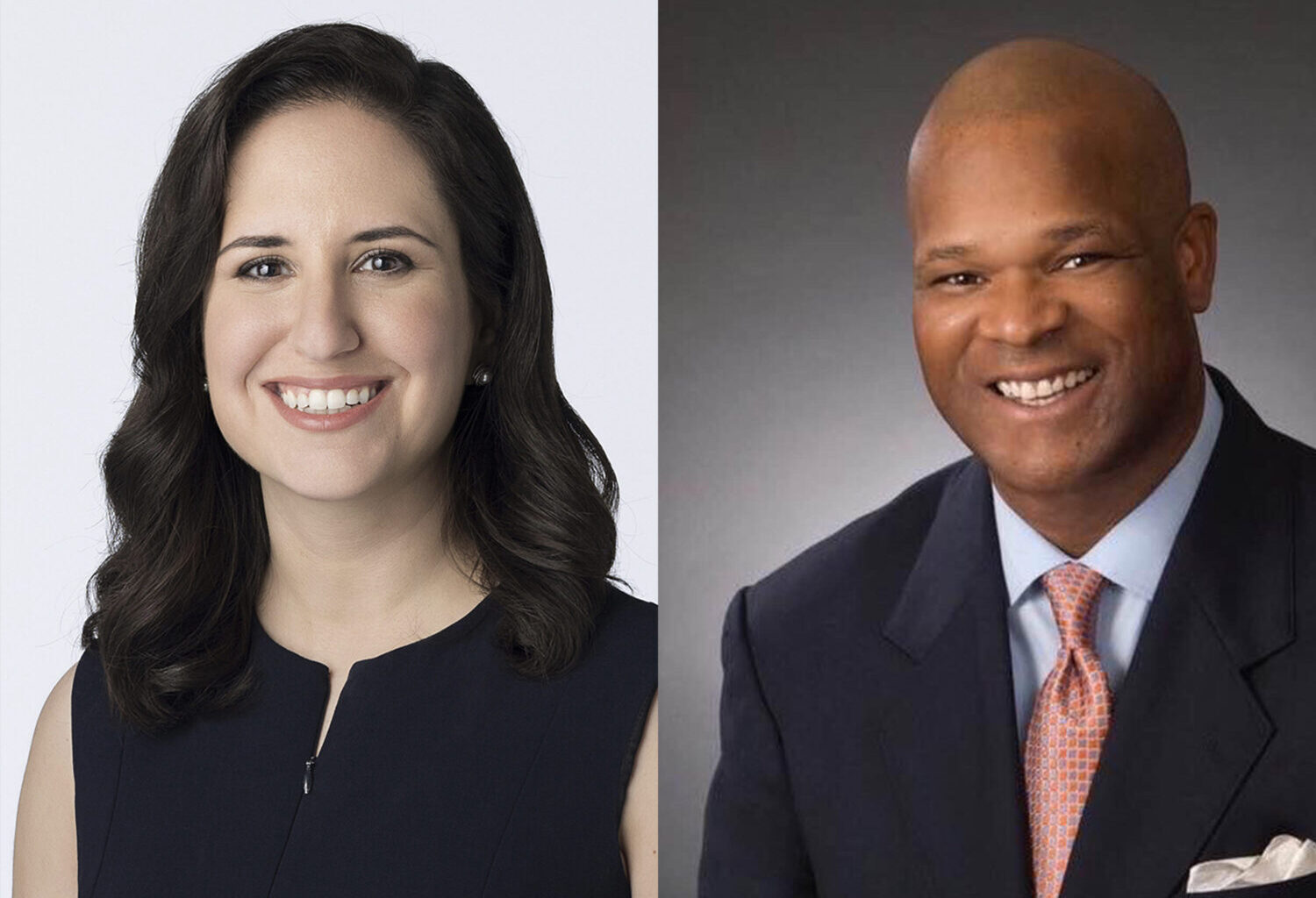
In November, trial attorney Alejanda Salinas celebrated with supporters as she emerged at the front of the 15-candidate field for a vacant at-large city council position with more than 21% of the vote.
“I’m a first-time candidate running against someone with strong name ID,” Salinas said on election night. “We had a lot of work to do over the past four months, and the position we’re in, I think, is a testament to the work of not only myself, but the hundreds of people that have volunteered on our campaign.”
Former District D council member Dwight Boykins had name recognition, but Salinas had money — with more than $500,000 in contributions to his $140,000.
Sign up for the Hello, Houston! daily newsletter to get local reports like this delivered directly to your inbox.
About 140 of her 560 donors were from out of state — including many of her coworkers at the Susman Godfrey law firm, who gave more than $200,000.
“I’m fundraising from the exact same people all of my opponents are — their family and friends and people that believe in their campaign,” Salinas said. “All that reflects is that I’ve lived all over this country, and I want to take the lessons I’ve learned from all over the country and make this city better.”
“You know, I don’t have a law firm to give me all that money,” Boykins said, “but it doesn’t matter.”
Salinas ran on a decidedly progressive platform for voters dissatisfied with status quo politics — advocating for legal action to fight against the Republican-controlled state government and calling for multimodal transportation options. Boykins, by contrast, positioned himself as a pragmatic moderate operating outside partisanship.
“Everybody — Democrats, Republicans, gay, straight, black, white, Hispanic, Pakistani and Asian — they all came and said, ‘Dwight, we’re with you,'” he said.
Boykins emphasized his willingness to work with Mayor John Whitmire and his experience representing District D in South Central Houston on the city council. He received about 20% of the vote.
The moderate versus progressive dynamic is familiar, but the election itself is unusual.
It’s the first city election in which a candidate, Boykins, acknowledged using ChatGPT to write his priority platform after Salinas accused him of plagiarizing hers. To date, the platforms have remained almost identical.
More importantly, it’s an off-year for local elections. The citywide, at-large city council seat is only on the ballot because Letitia Plummer is stepping down for a bid to replace Harris County Judge Lina Hidalgo. Plummer declined to make an endorsement in the race to fill her position.
“It’s hard to get people to vote in a period when it’s not a traditional election cycle,” said political science professor Brandon Rottinghaus with the University of Houston.
He argued emotion could play a role in who turns out to vote — specifically, negative emotions.
“Anger is a tremendous motivator in politics,” he said. “That is not uncommon in most elections. It’s a little different and unusual to have it in a city election where typically the issues aren’t quite so firebrand.”
Political scientist Mark Jones with Rice University said the national context is important.
“The anger and desire to actively be pushing back against the Trump administration that exists among many Harris County Democrats, particularly the most active ones, should work in Salinas’ favor more than Boykins’,” Jones said.
One of those national issues is playing out at the local level — through the Houston Police Department’s coordination with Immigration and Customs Enforcement. According to Mayor John Whitmire’s administration, officers, under state law, must notify federal officials when they encounter someone with an immigration warrant.
Plummer, who currently occupies the at-large seat, has advocated for a change in city policy intended to curtail that collaboration — without much success.
RELATED: Proposal to reduce HPD cooperation with ICE fails to gain steam among Houston city officials
Asked about the coordination on Houston Public Media’s Hello Houston talk show, Boykins deferred to the administration.
“You need to follow the law,” he said. “That’s just the bottom line with that, and I’m okay with that.”
Salinas wanted the city to do more.
“Where the law is wrong, we need to fight back and bring litigation,” she said.
Jones said some voters are looking for that fight.
“That could work to her favor,” Jones said. “If what she’s able to do is mobilize progressive anti-Trump Democrats to turn out and vote for her as a way of signaling their disapproval of the Trump administration and the Whitmire administration’s ICE policies.”
Salinas’ willingness to fight ran parallel to the third-place candidate in the November general election — Jordan Thomas, the progressive urbanist who positioned himself as a counterweight to Whitmire and garnered 16% of the vote. Asked this week who he would encourage his nearly 29,000 supporters to back, he declined to make an endorsement.
Other prominent politicians and labor groups have been more willing to throw their weight behind the two candidates, including multiple city council members divided between the two.
Boykins received the backing of former mayor Lee Brown, former city controller Ronald Green and former U.S. Congressman Beto O’Rourke, among several current and former elected officials.
Along with support from powerhouse labor unions like the Texas Gulf Coast AFL-CIO and the Houston Federation of Teachers, Salinas received endorsements from Harris County Judge Lina Hidalgo and Harris County District Attorney Sean Teare. She also picked up the support of the Houston Chronicle’s editorial board, which backed Thomas in the general election.
Early voting runs through Tuesday, Dec. 9, and election day is slated for Saturday, Dec. 13.