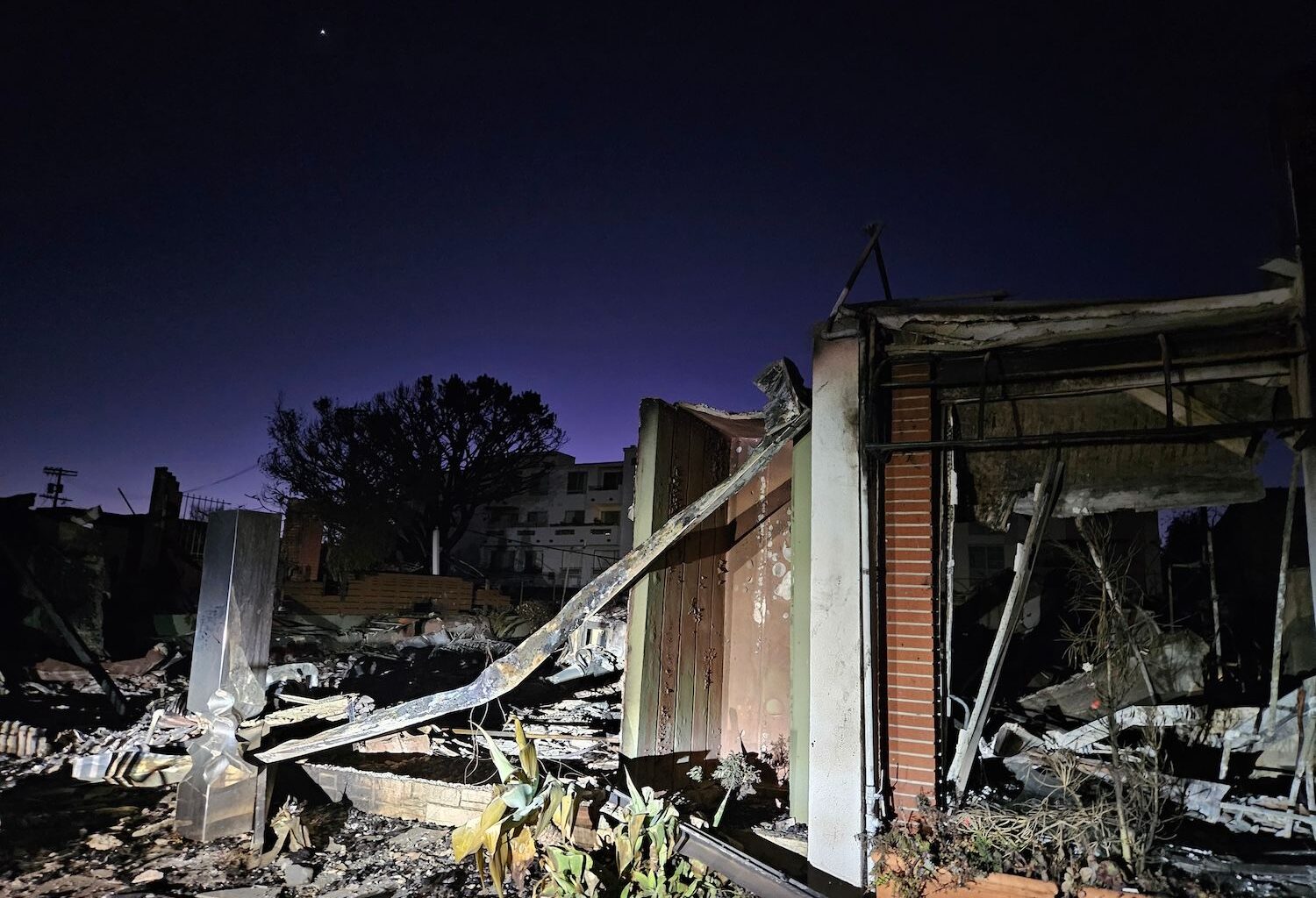
As Los Angeles grapples with the aftermath of January’s wildfires, the LA City Council has postponed a decision on waiving rebuilding fees for affected properties, leaving homeowners and business owners in limbo while further analysis is conducted.
In the wake of the devastating wildfires in January, which ravaged through the Pacific Palisades and surrounding areas, the Los Angeles City Council found itself at a standoff this week over whether to waive the rebuilding fees for those affected. With the potential costs ranging from $86 million to $278 million, the Council deferred making a final decision, opting to send the matter back over to the Budget and Finance Committee for further review.
The debate centered around two proposals – one modest and one far-reaching. The Budget and Finance Committee had recommended waiving permit fees for single-family homes and duplexes, but only for rebuilds up to 110% of the original structure size. This approach would cost the city roughly $86 million. The more expansive proposal from the LA Recovery Ad Hoc Committee, led by Councilmember Traci Park, aimed to waive the fees for all structures affected by the fire, inducing commercial properties and multi-family homes. The broader proposal would amount to a much higher cost and could reach as much as $278 million.
Park, whose district includes the fire-ravaged Pacific Palisades, argued that the more comprehensive fee waiver was necessary.
“Absolutely nothing about this rebuild is voluntary,” Park said. “These aren’t people trying to rebuild for profit. They are trying to rebuild their lives.”
Park said that the destruction had impacted all types of housing, from luxury single-family homes to rent controlled apartments and mobile homes parks.
However, concerns over the city’s financial health led some Council members, like Budget and Finance Committee Chair Katy Yaroslavsky, to caution against rushing into such a costly commitment.
“This isn’t funny money, it’s not theoretical money,” Yaroslavsky said. “I would like to, before we vote on an amendment, understand what the fiscal implication of that is, at a moment when we are already after our first FSR (Financial Status Report), at least $80 million in the hole for this fiscal year.”
A key sticking point in the debate was the inclusion of business in the fee waiver plan. Councilmember Bob Blumenfield stressed that waiving fees for commercial properties could lead to a significant financial burden.
Scroll to continue reading
“The fee-waiver concept is a tricky one, because there’s really no such thing,” Blumenfield said. “It really just means the General Fund is paying those fees … at a time that we are really struggling financially.”
Park’s proposal sought to broaden the relief, extending eligibility to multi-family buildings, mobile homes, and other residential structures. She also introduced an amendment to ensure that the fee waiver would not be capped for those looking to rebuild larger structures. Her amendment also included provisions to extend the waiver for up to five years, allowing homeowners more time to navigate the rebuilding process.
Meanwhile, concerns about potential abuses of the fee waiver led some Council members to propose a condition that would require property owners to repay the city if their property was sold within five years of them rebuilding it.
The matter now returns to the Budget and Finance Committee for further analysis, including updated cost estimates and also clear guidelines on eligibility. While the temporary suspension of rebuilding fees remains in place under a mayoral executive order, homeowners and business owners are left in uncertainty as they await a more definitive resolution.