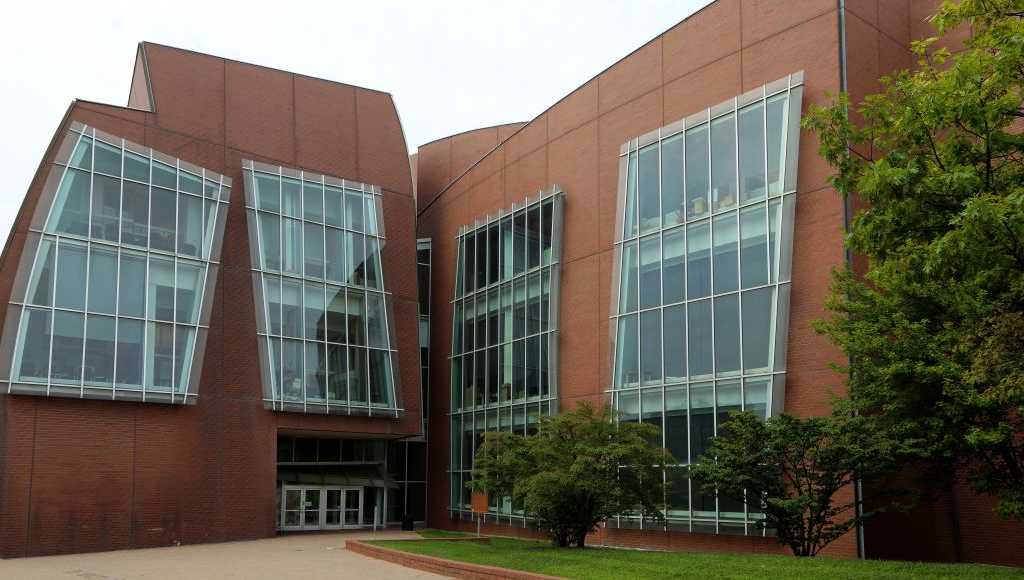
Famed architect Frank Gehry died this week — This building on UC’s campus was one of his creations
How do you, how do you create feeling with. inert materials. Now the Greeks knew how to do it. I’ve got *** picture of the charioteer 500 BC. When I saw it when I was 40 years old, I started crying and I thought. That’s what I wanna do. I wanna be able to build *** building that makes people. Moves them 500 years from now. What is it that made me want to come into this profession? In high school I took shop. And build things and I did well in that and loved it, making things with your hands. I looked at the professions one could go into and I remember looking at architecture at that time and architecture curriculum was to build *** Cape Cod house or something, you know, it was, was not very interesting, so I closed the book on that and didn’t even pay attention, but I did go to the lecture series on Friday nights at the University of Toronto and there was *** guy. From Finland showing his buildings and furniture and that guy turned out to be Alvarato. So I was kind of peripherally interested. I didn’t know I was interested. I was intrigued by the way things were built. When I got to LA, I went to night school at LA City College. I took *** ceramics class. With Glenn Lukins, who was *** well-known service. And he’s the one that After *** year, told me not to stay in ceramics. He said, you’re not gonna like this. I think you should look at architecture. He was building *** house by Rafael Soriano. I visited the site. Rafael Soriano was telling people to move beams around and it was kind of exciting. I guess I, my eyes lit up. The first buildings I designed look like Rafael Soriano. He got to me. My mother took me to concerts when I was *** kid in Toronto and I’m still to this day very Interested in the topic buildings for music because you get *** relationship between the Orchestra members, so they hear each other and it’s comfortable. They hear each other in *** way that is uh substantial and. Uplifting, you create *** relationship between the orchestra and the audience that’s palpable that they both feel. If you do it right, they both feel it so music stuff is really exciting and my belief that people talk to each other through the arts led me to the Devon Orchestra with Daniel Barenbo that he and Edward Said created an orchestra where Palestinians, Syrians, Lebanese. Egyptians play in an orchestra with Israelis and so I designed their 700 seat concert hall in Berlin as *** gift to the orchestra. And It really works. So that’s the music stuff. The art stuff is also there, uh. Bilbao was *** working relationship with *** genius museum director, Tom Krantz, and it’s that collaboration that led to the Project that we built, which was *** very inexpensive building compared to Museum buildings. Bilbao was built for $300 *** square foot. So it’s uh and it came in slightly under budget, and it’s return on investment has been beyond everybody’s wildest dreams. I mean, if you start to use curves, you think it’s more expensive than *** box, right? But we’ve developed with our French friends who build airplanes with their software, we were able to demystify shapes. So you could build them cheaply and we built it like *** warehouse, *** big warehouse. Every contract has *** 15% layaway for for change orders. If you show people exactly what to do, demystify the way you build something. They don’t get the 15%. So we did *** 76 story tower in Manhattan. The exterior skin is all wiggly wobbly, everybody would say that’s too expensive. We built it with zero change orders, so the amount of money that you save actually went into the building instead of. Waste. So we experiment with. The feelings generated by material. In Bilbao, Since it was *** museum and not *** lot of windows, the exterior scan became. The building, it’s *** rainy climate and so. Stainless steel went dead. Stainless steel is exciting in California because you got *** lot of sunlight. By accident, I had *** piece of titanium. And I looked at it and I put it out on *** post and it rained and it turned golden and it felt right and so I said that’s what we gotta use when you go to Bilbao and it’s it’s cloudy skies the thing turns golden and it’s really beautiful. In oral, France, we’re just completing *** building for *** special lady Maya Hoffman. And It’s where Van Gogh did Starry Night, and I’ve always wanted to paint on *** facade with natural light and we. Built blocks that are covered with stainless steel and they’re set at slightly different angles and when you go there with the sun it changes all day long so it’s like *** watercolor it was beautiful.
Famed architect Frank Gehry died this week — This building on UC’s campus was one of his creations

Updated: 6:23 PM EST Dec 6, 2025
Famed architect Frank Gehry died on Friday.According to associates, the dual American-Canadian national died at the age of 96 after battling a brief respiratory illness that he recently came down with.Gehry leaves behind a legacy of hundreds of well-known buildings that he designed across the world, including the Guggenheim Museum in Spain, the Walt Disney Concert Hall in California, and the Art Gallery of Ontario in Canada.However, included in Gehry’s work is one that was built locally in Cincinnati: The Vontz Center for Molecular Studies on the University of Cincinnati’s Medical Campus in Corryville.The building was designed by Gehry in 1999 and houses many of the university’s biomedical labs.The building’s unique design once earned it a spot on a list of the 50 most architecturally interesting university buildings across the United States.The Guggenheim Museum’s website mentions the Vontz Center, where it describes its architectural style in further detail.”Gehry’s laboratory building provides an animated welcome at the main entrance to the campus for the University of Cincinnati Medical Center,” the description reads. “Although the brick cladding (unusual in Gehry’s work) is a link to the staid university buildings nearby, the tilting and bulging forms demonstrate the architect’s ability to coax unexpected results from even the most conservative materials.””The sense of a building in constant movement is magnified by the roofline’s angled planes and the pronounced multistory windows that provide views of the activity inside,” the description continues. “State-of-the-art labs are organized along the building’s north-south axis; offices occupy the smaller east-west axis. At the center of the cruciform plan, large skylights flood the central atrium, which includes meeting areas for staff.”See pictures of the Vontz Center below.
CINCINNATI —
Famed architect Frank Gehry died on Friday.
According to associates, the dual American-Canadian national died at the age of 96 after battling a brief respiratory illness that he recently came down with.
Gehry leaves behind a legacy of hundreds of well-known buildings that he designed across the world, including the Guggenheim Museum in Spain, the Walt Disney Concert Hall in California, and the Art Gallery of Ontario in Canada.
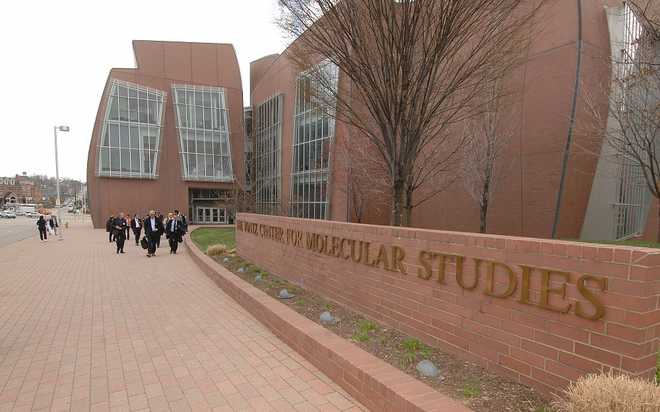
However, included in Gehry’s work is one that was built locally in Cincinnati: The Vontz Center for Molecular Studies on the University of Cincinnati’s Medical Campus in Corryville.
The building was designed by Gehry in 1999 and houses many of the university’s biomedical labs.
The building’s unique design once earned it a spot on a list of the 50 most architecturally interesting university buildings across the United States.
The Guggenheim Museum’s website mentions the Vontz Center, where it describes its architectural style in further detail.
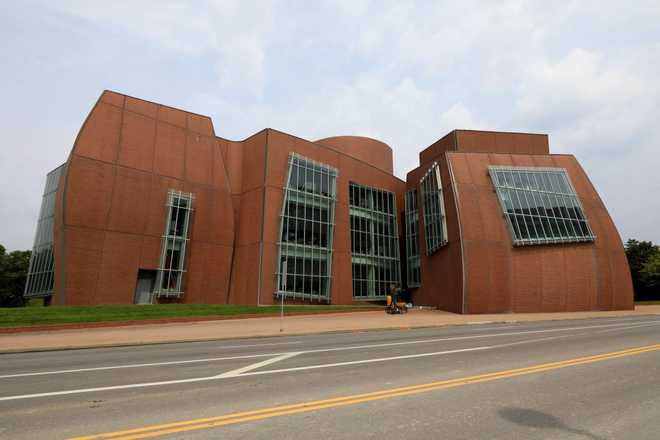
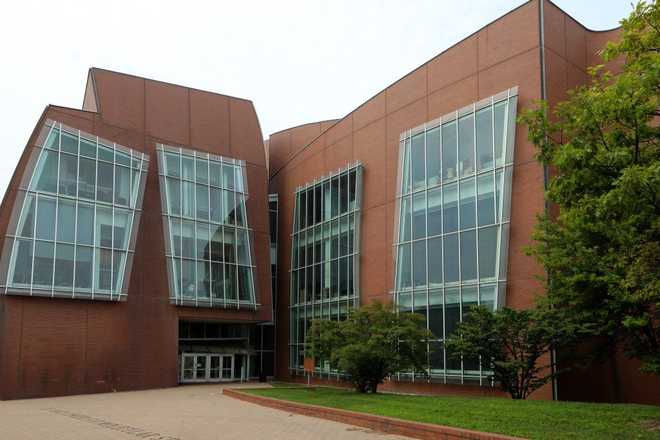
“Gehry’s laboratory building provides an animated welcome at the main entrance to the campus for the University of Cincinnati Medical Center,” the description reads. “Although the brick cladding (unusual in Gehry’s work) is a link to the staid university buildings nearby, the tilting and bulging forms demonstrate the architect’s ability to coax unexpected results from even the most conservative materials.”
“The sense of a building in constant movement is magnified by the roofline’s angled planes and the pronounced multistory windows that provide views of the activity inside,” the description continues. “State-of-the-art labs are organized along the building’s north-south axis; offices occupy the smaller east-west axis. At the center of the cruciform plan, large skylights flood the central atrium, which includes meeting areas for staff.”
See pictures of the Vontz Center below.
University of Cincinnati
The Vontz Center for Molecular Studies
Raymond Boyd
The Vontz Center for Molecular Studies
Raymond Boyd
The Vontz Center for Molecular Studies
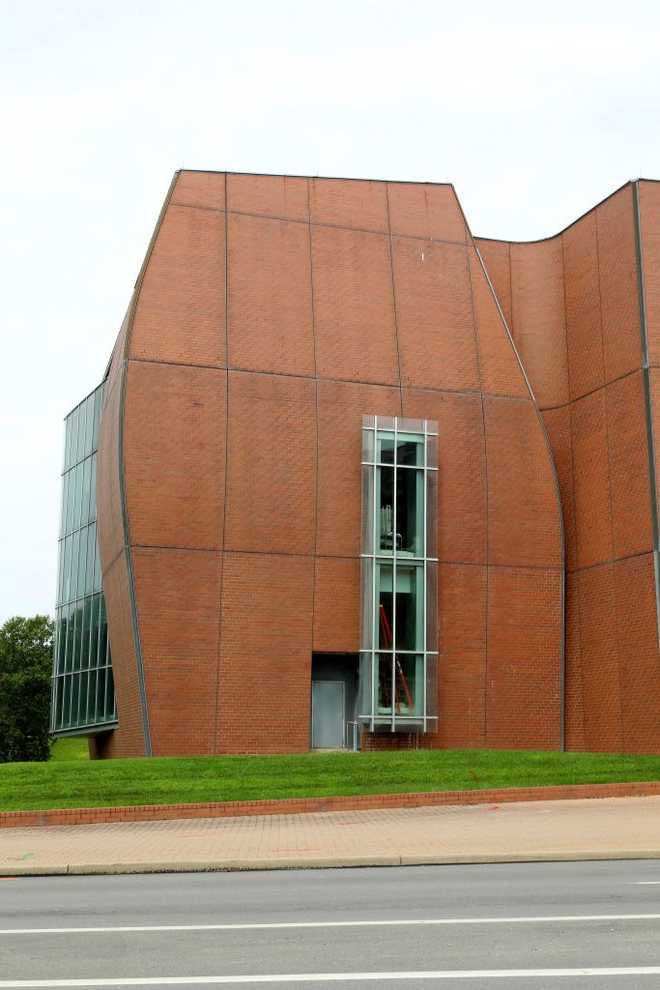
Raymond Boyd
The Vontz Center for Molecular Studies