Operation Midway Blitz flooded Chicago with federal immigration agents, fueled frequent protests and — to policing experts — offered something else.
The operation showed how not to police.
In incident after incident, experts said, immigration and Border Patrol agents routinely took actions that not only infuriated civil libertarians and everyday residents but broke urban policing protocols meant to limit danger for suspects, protesters, passersby and even officers themselves.
“They haven’t done anything that is anywhere close to a standard police practice,” said former Customs and Border Protection Commissioner Gil Kerlikowske, a former Seattle police chief and an Obama-era appointee.
Added former Chicago police Superintendent Eddie Johnson: “In my humble opinion, it’s a breeding ground for disaster, the way they apply their tactics and methods. … From what I see, they just seem to be just really reckless.”
A Tribune review of the feds’ policing tactics follows a scathing, 233-page opinion by U.S. District Judge Sara Ellis that called out many of the federal agents’ tactics from a constitutional perspective. And the subsequent release of footage from agents’ body cameras late last month not only contradicted claims they made in use-of-force reports but chronicled some of the chaos on the streets.
While some of that chaos for sure could be blamed on the actions of some protesters and arrest targets, career urban policing leaders blamed much of that chaos — in both incidents cited by Ellis and others — on what the leaders described as shoddy policing tactics shunned by more advanced big-city police forces.
The questionable tactics were on display in ways big and small, experts said, from the way agents regularly tossed tear gas, to how they pointed guns at protesters and the media, sped around town and handcuffed arrestees.
They were on display in incidents from the most violent, including when a man was shot and killed as he tried to flee. And they were on display in the most banal exchanges, including when a caravan of agents was confronted by angry protesters at a gas station where their commander was trying to get a snack and use the bathroom.
When asked about criticism of its policing tactics, DHS said its agents are well-trained and did what they could to “mitigate dangers” in a place where it said agents routinely were assaulted as they fought “rioters” and “domestic terrorists.”
“The disgusting attempts by the media and ‘experts’ to say these agents are not trained to enforce the law is shameful and laughable,” according to a statement by DHS spokesperson Tricia McLaughlin issued Nov. 26, about two weeks after many federal agents left Chicago for other operations.
The face of Operation Midway Blitz, Border Patrol Cmdr. Gregory Bovino, argued that his agents showed expertise and restraint in the face of constant confrontation with angry Chicagoans — one of whom allegedly put a bounty on him.
“Definitely Chicago — it’s a pretty tough place. But you know, the border, it’s a tough place also. That’s why we do so well here,” he told reporters during that gas station stop, as protesters gathered near his agents outside.
But those with deep experience in urban policing say the growing pains appeared obvious, as many agents were dropped into a city most didn’t know well and told to do policing tasks most had little experience doing, in a political environment their bosses helped stoke to produce the confrontations.
“I’m not blaming the majority of these agents,” said Kerlikowske, who also testified in federal court on the Chicago tactics. “I’m blaming the lack of supervision, the lack of training, the lack of leadership for this.”
Johnson said the tactical concerns are separate from the goals of immigration enforcement, which — while controversial in a polarized America — had been going on in Chicago for decades before the blitz, albeit more strategically and quietly: “It’s not always what you do. It’s how you do it. … Sometimes law enforcement can create their own chaos.”
Granted, Illinois Democrats have claimed that Trump’s DHS has purposely tried to stoke chaos as a pretext to justify sending in troops — something DHS denies but shows just how toxic the politics have become.
Regardless of motives, unnecessary chaos can lead to tragic outcomes, experts said, and not just of the supposed “bad guys.” Cops and innocent civilians can get killed too.
“There’s a way for (DHS) to do it better, to do it smarter, where fewer people get hurt, that they get the same result in terms of the people that they want to arrest,” said Kenneth Corey, a former top New York City police leader. “When you use proper tactics, things don’t escalate into uses of deadly force when they don’t need to.”
Fatal shooting
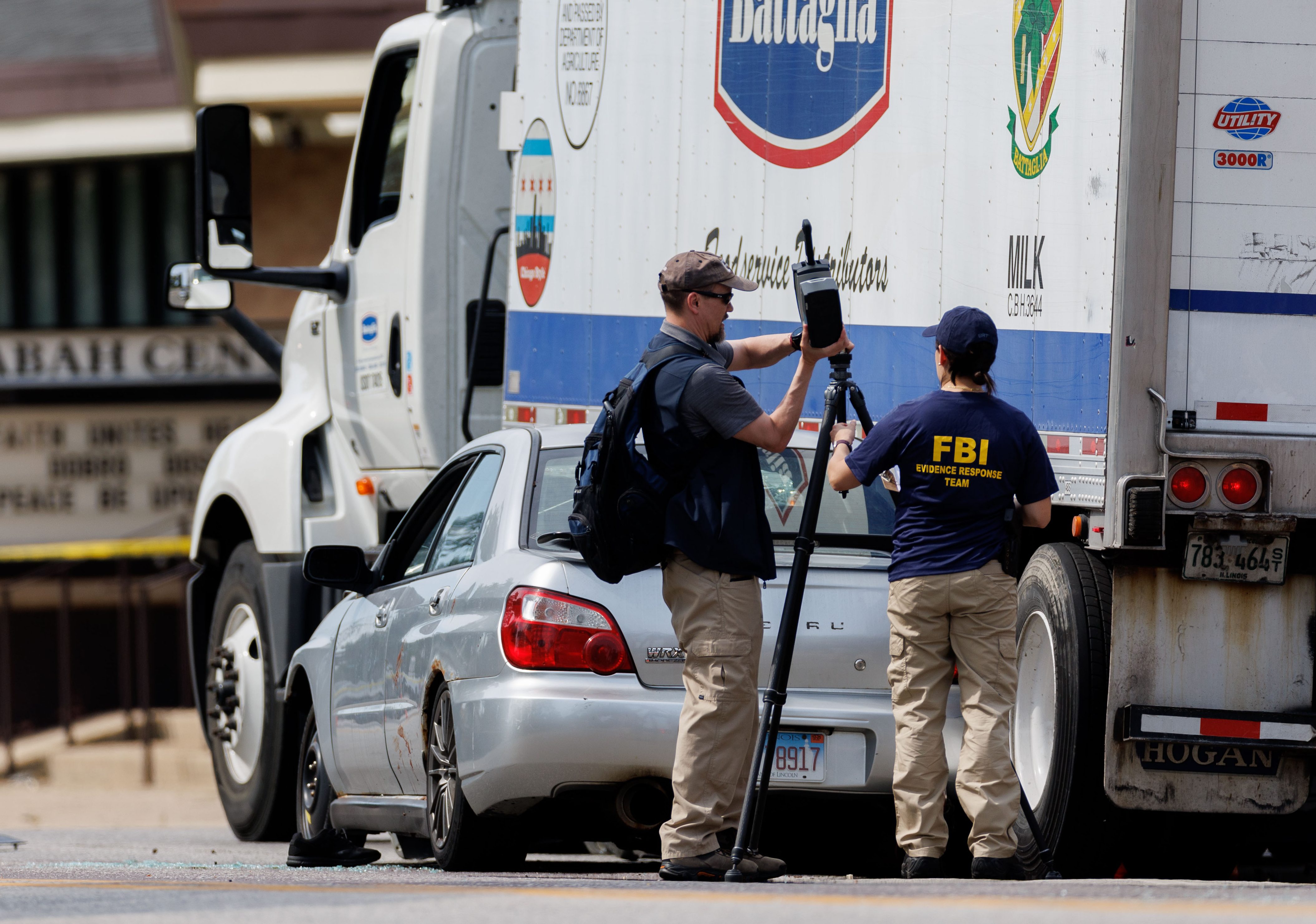
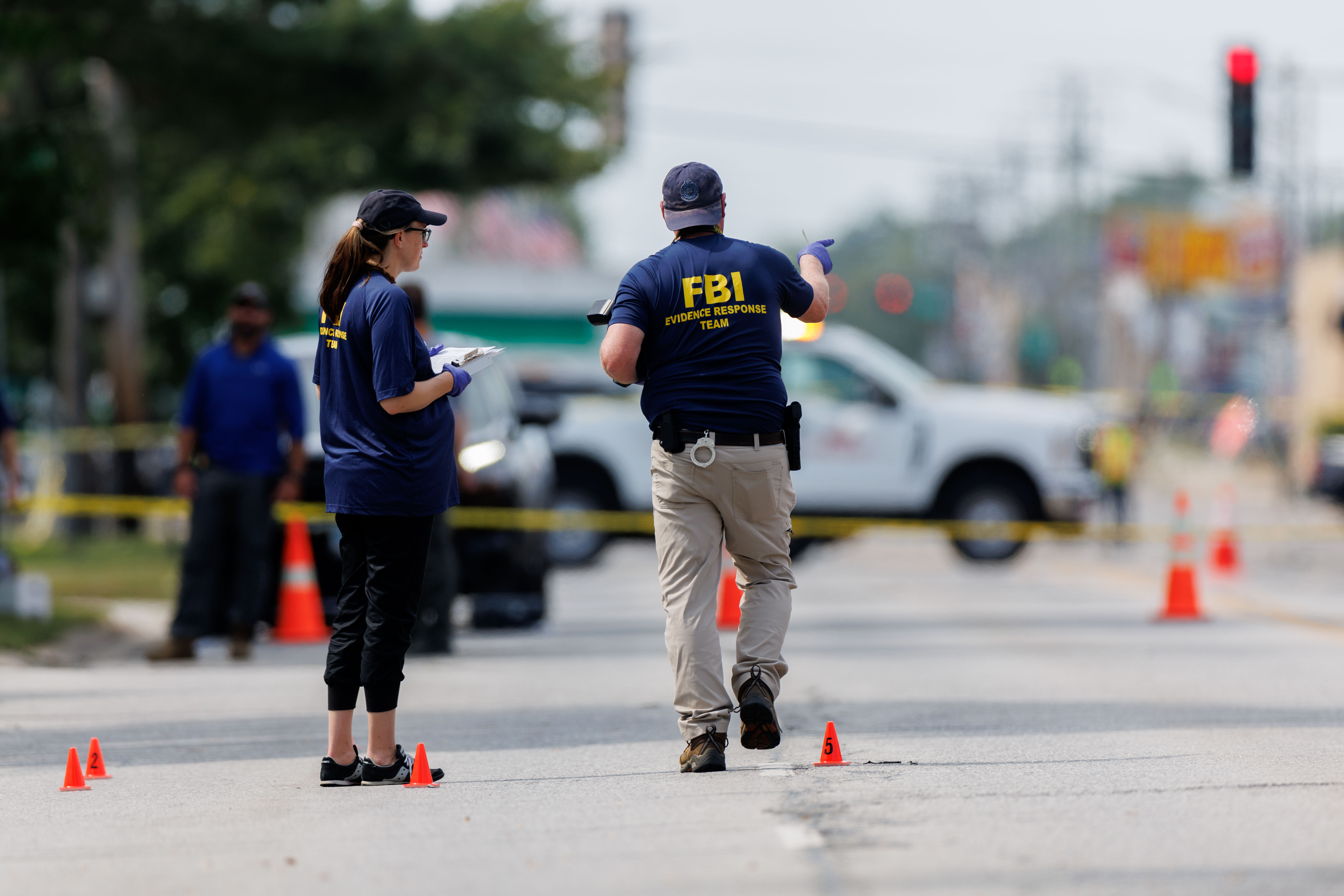
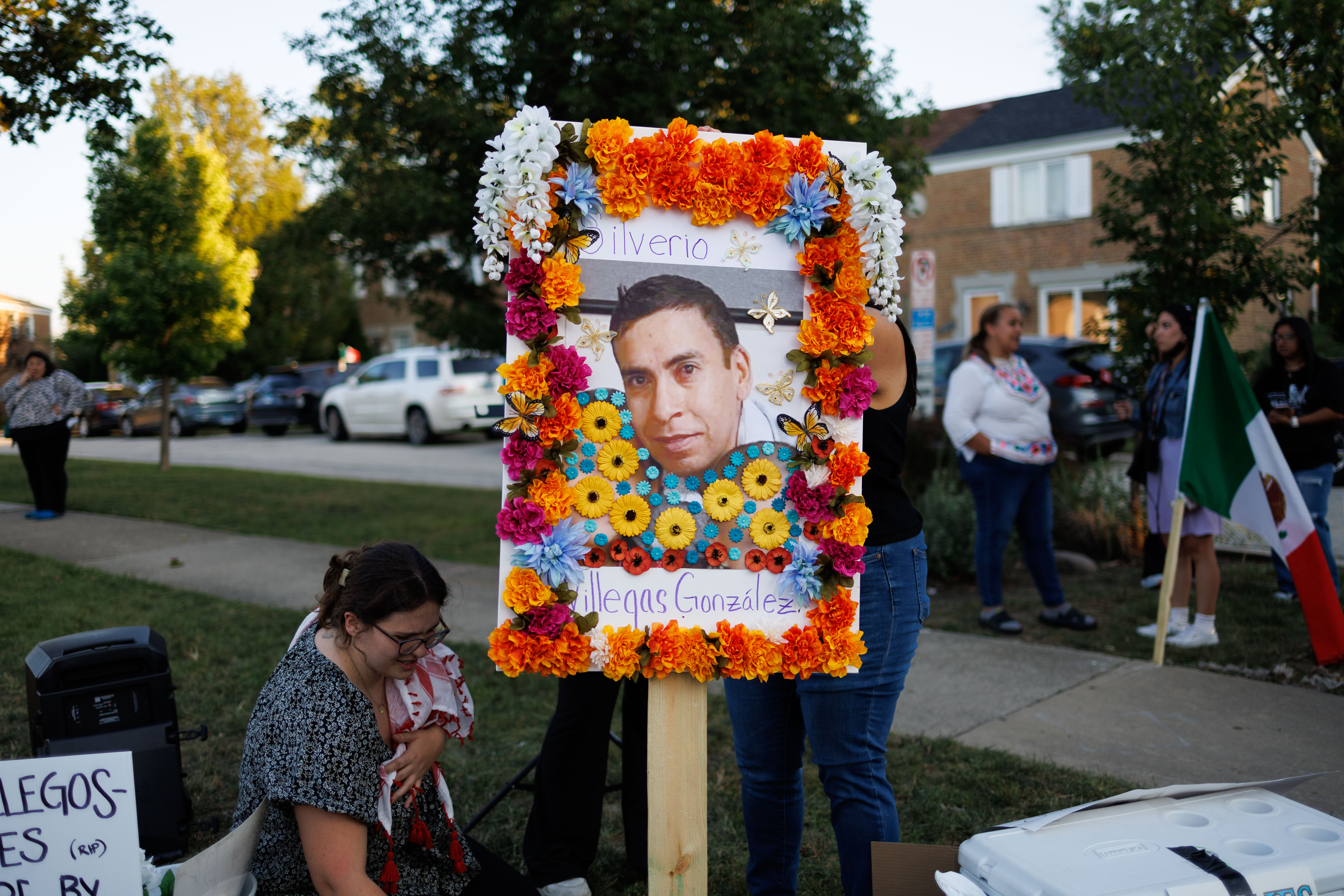
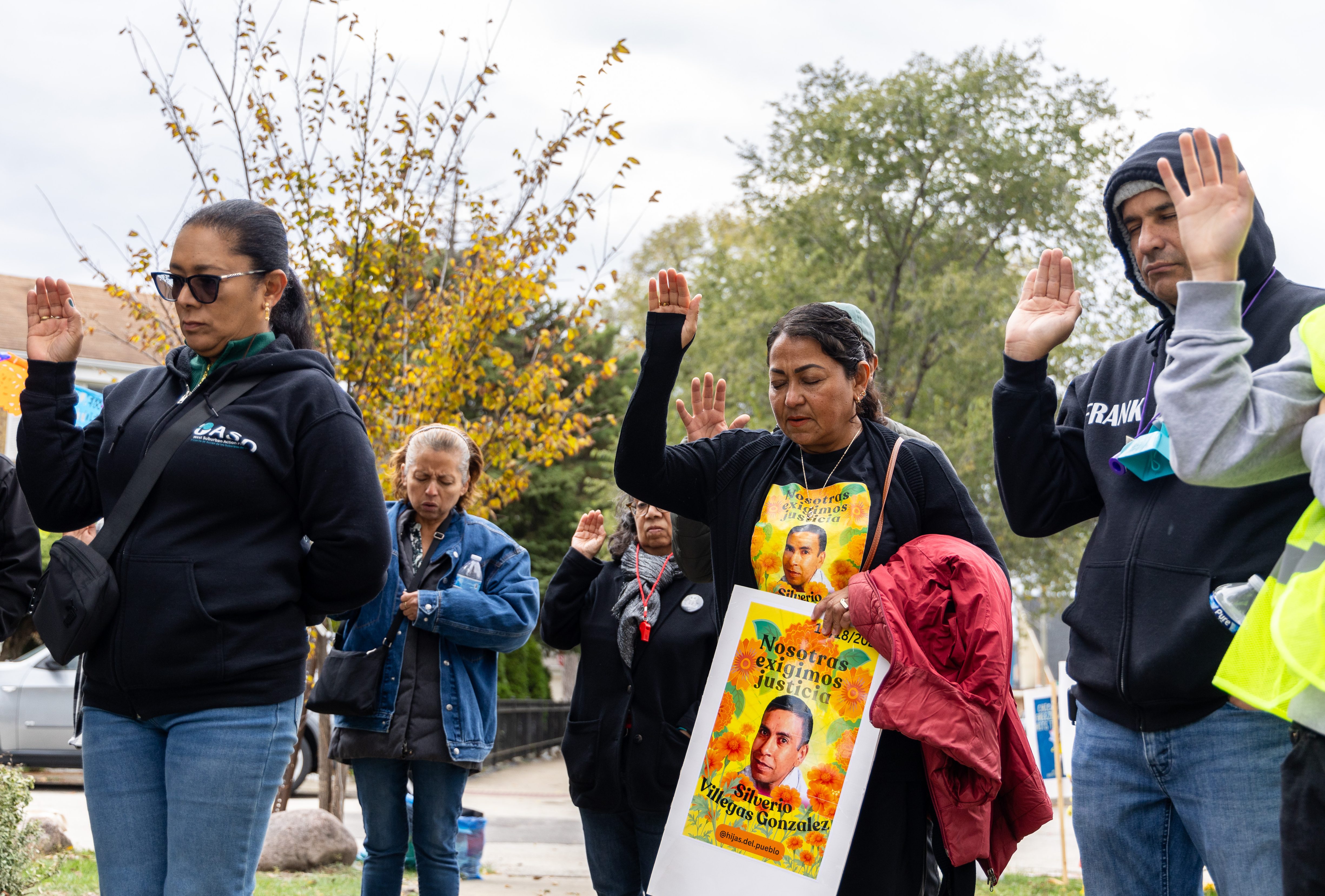
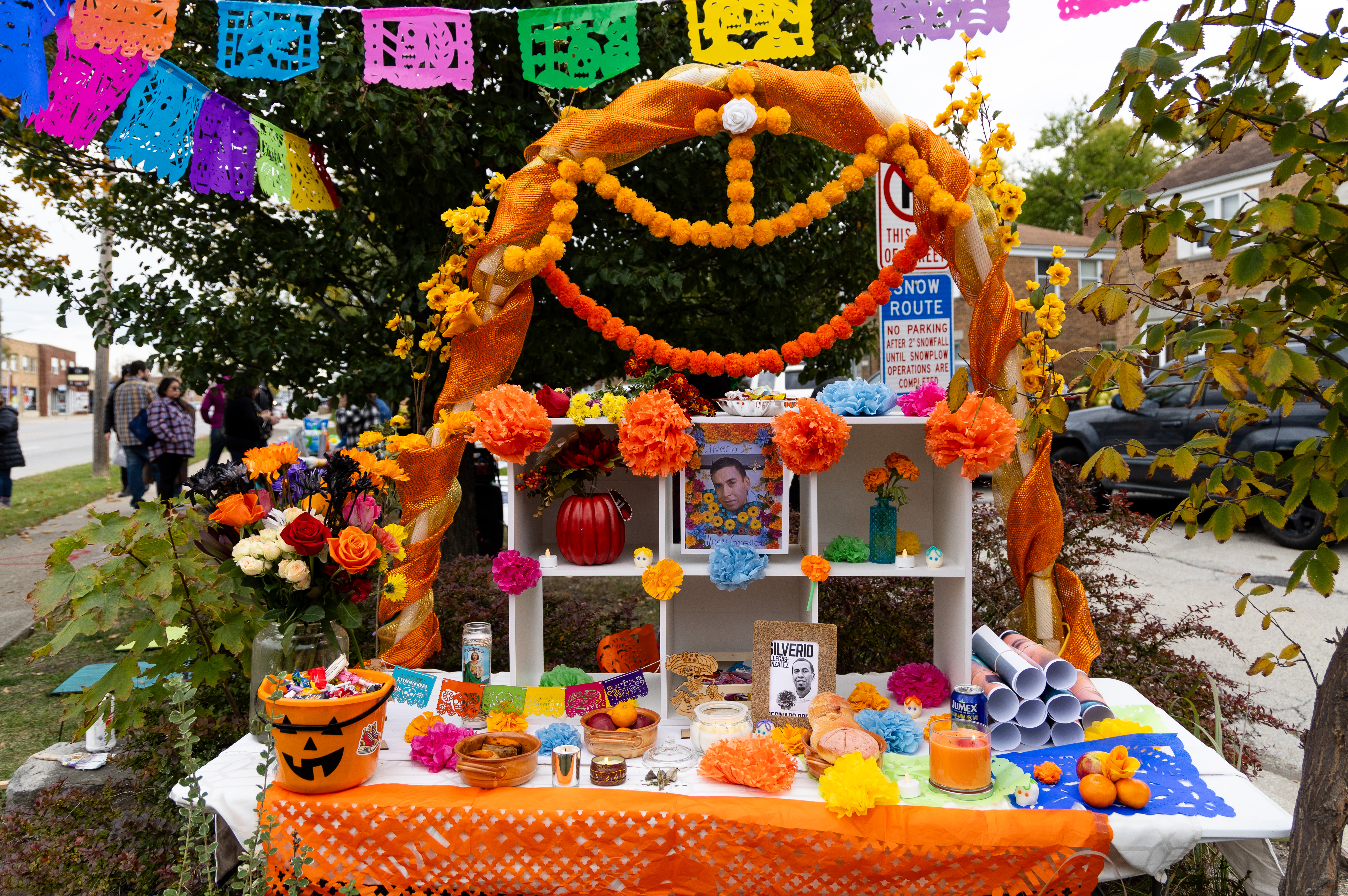
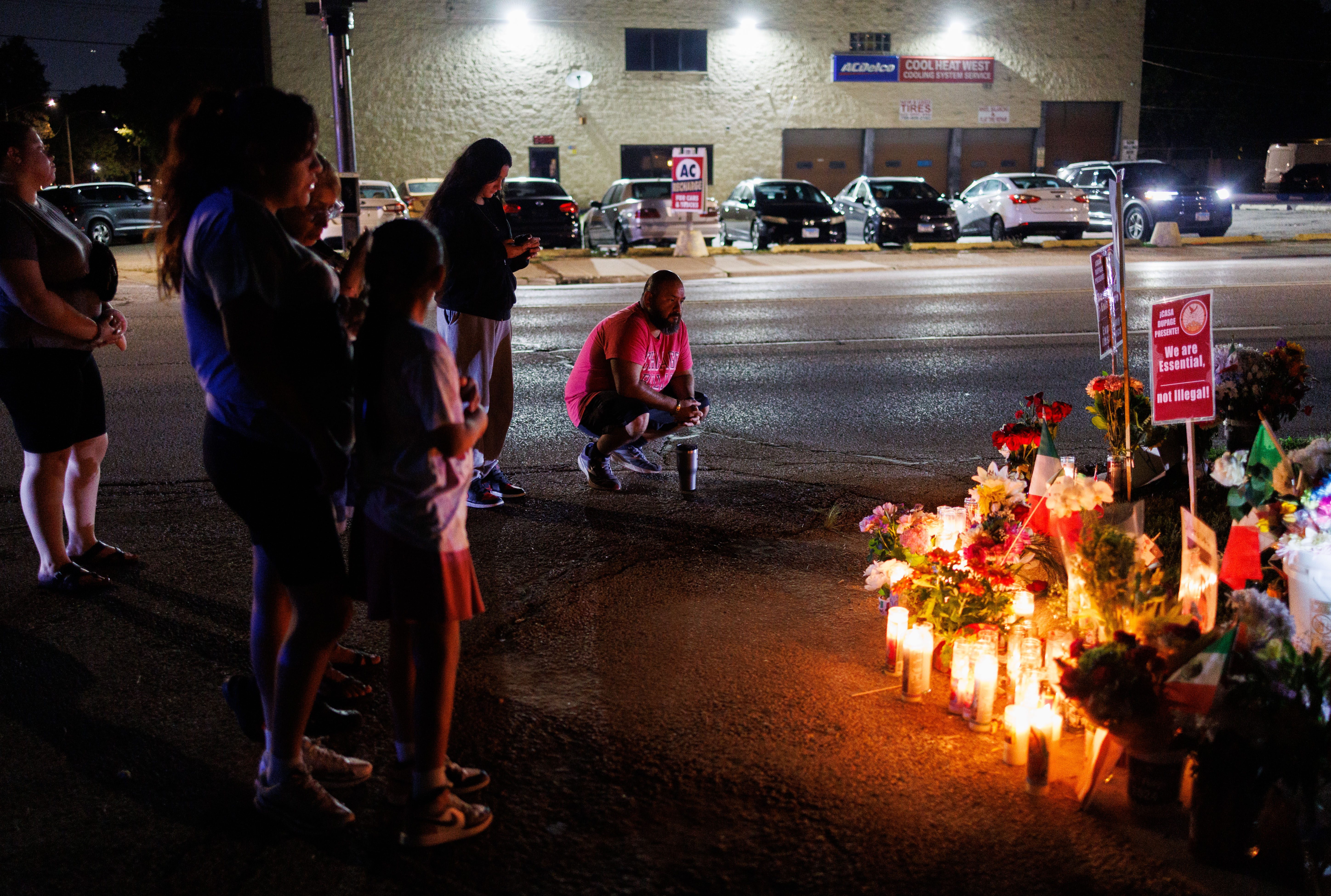
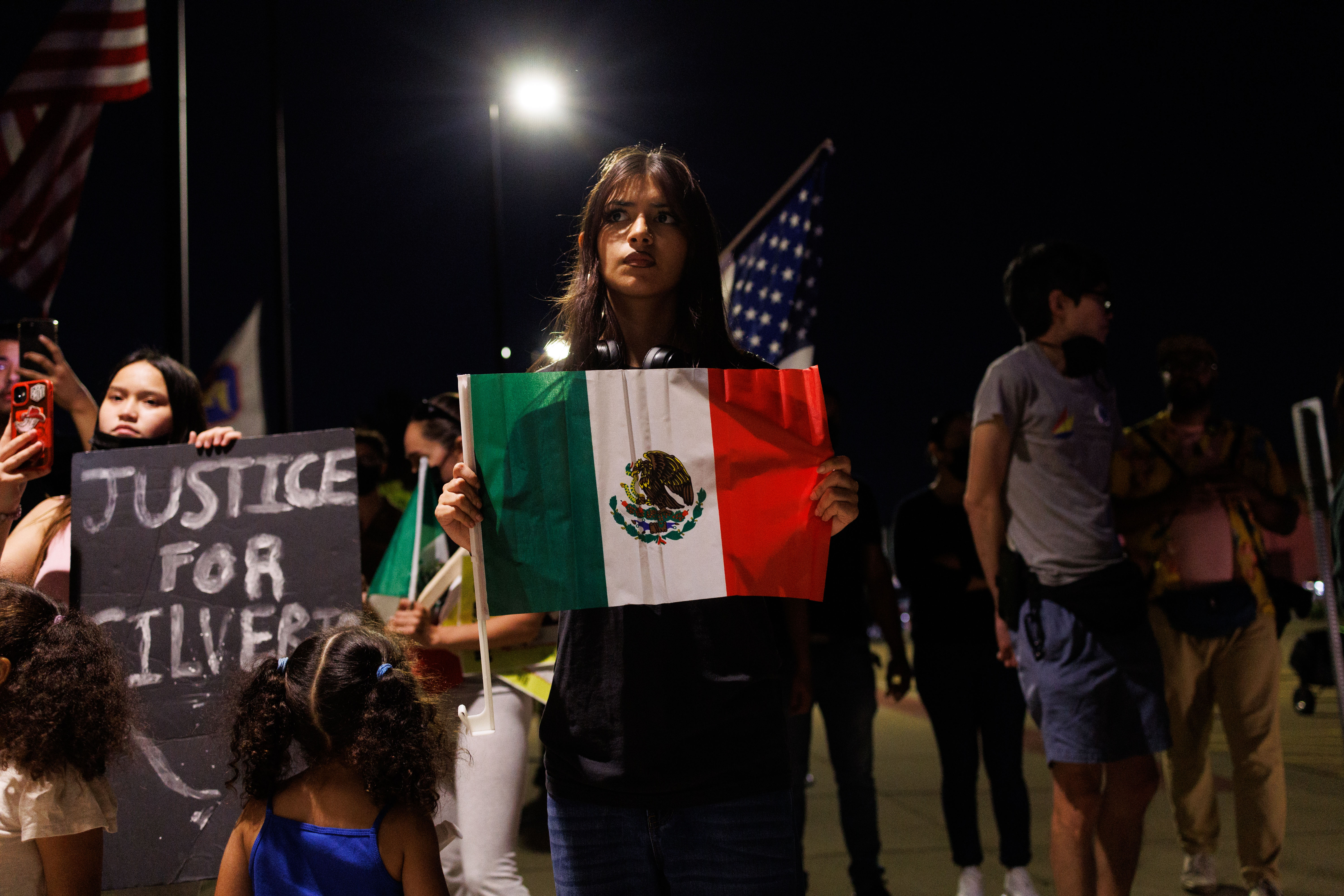
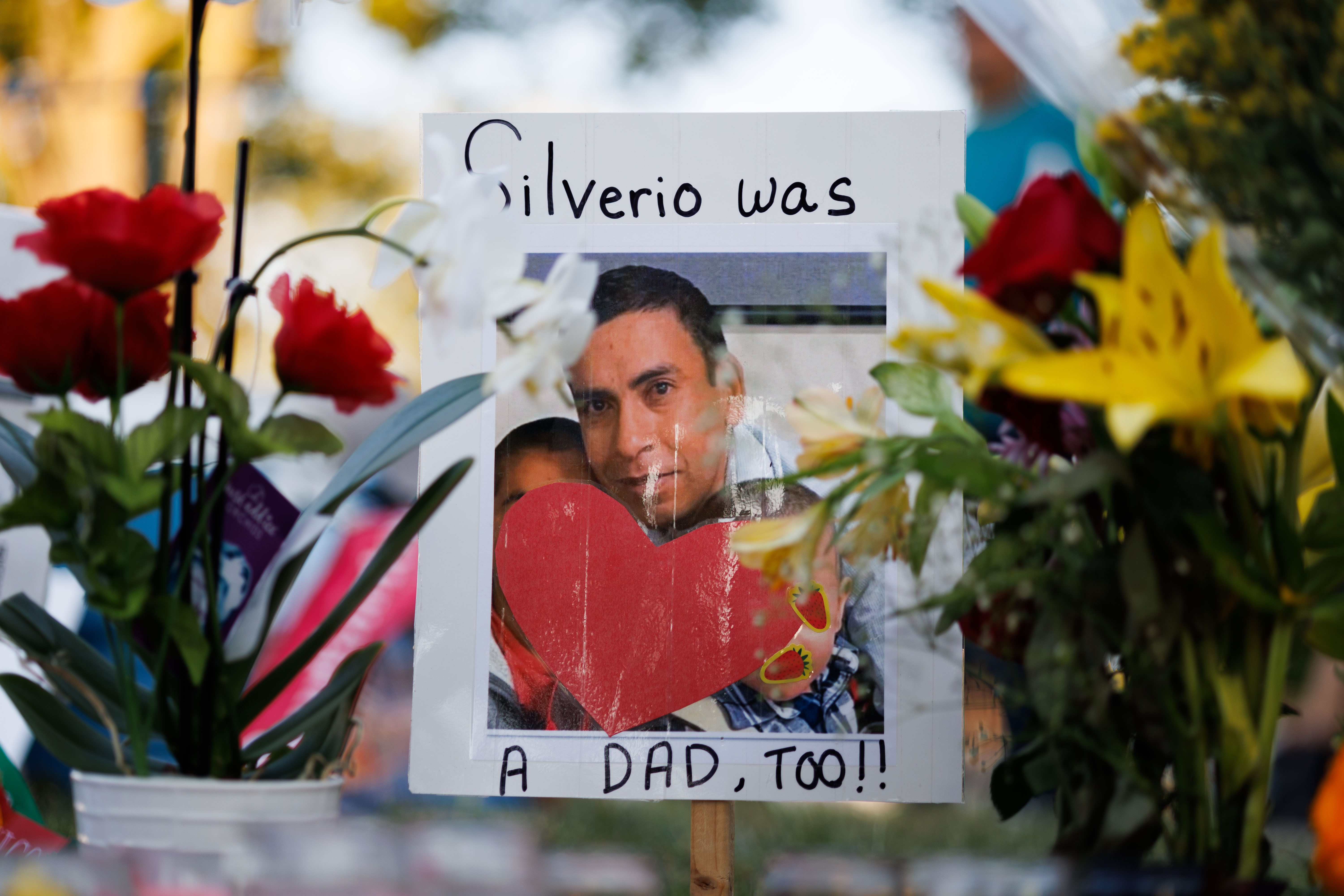
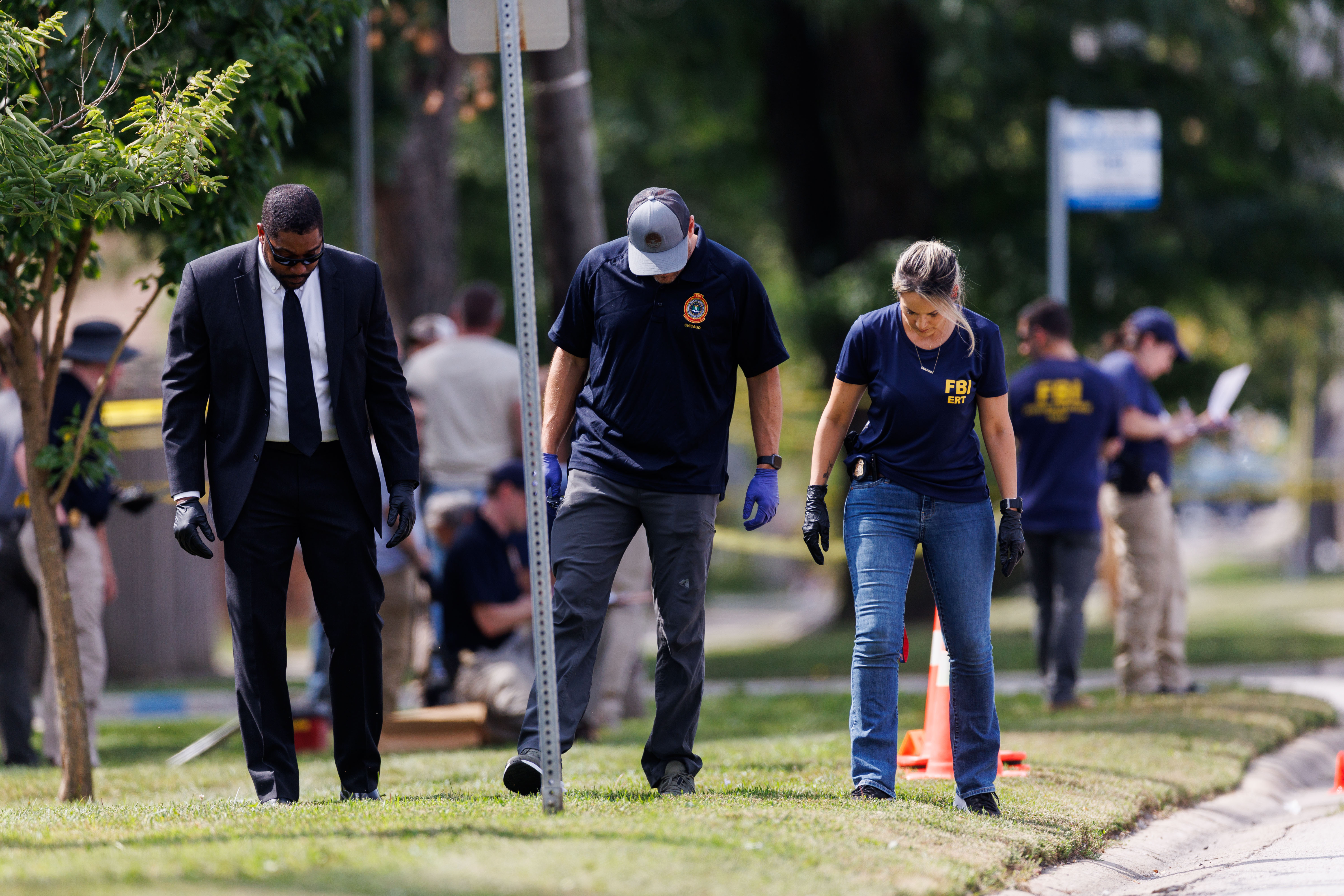
Five days into Operation Midway Blitz, and as part of a stated mission to hunt “the worst of the worst,” U.S. Immigration and Customs Enforcement agents targeted Silverio Villegas González Sept. 12 for what DHS described as “a history of reckless driving.”
Two agents, in a Jeep with flashing lights, got Villegas González to pull his car to a curb in Franklin Park, but then chose to pull their Jeep in front of the car at an angle, presumably to keep Villegas González from driving forward.
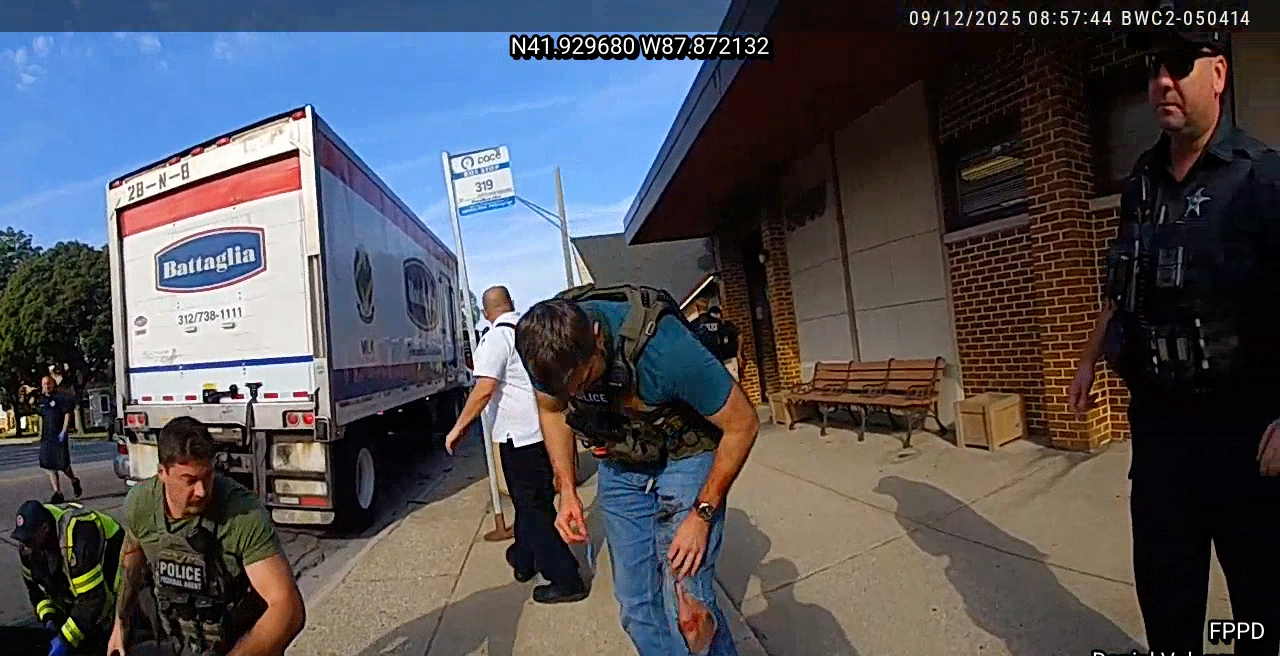
Franklin Park police body-camera footage captures the aftermath of an Immigration and Customs Enforcement agent shooting that killed Silverio Villegas González on Sept. 12, 2025. (Village of Franklin Park)




Show Caption
1 of 22
Franklin Park police body-camera footage captures the aftermath of an Immigration and Customs Enforcement agent shooting that killed Silverio Villegas González on Sept. 12, 2025. (Village of Franklin Park)
But that’s a key tactical mistake because it endangers law enforcement, experts pointed out. If Villegas González had a weapon, he would have had an easier shot at an agent. Plus, as agents walked back to each side of his car, it meant one was in a clear path to be hit if Villegas González tried to flee.
“You never put yourself in front of the vehicle,” Kerlikowske said. “Every police officer knows you don’t put yourself in harm’s way.”
A video broadcast by CBS 2 shows Villegas González backed up, as agents ran beside his car, and then swerved out of frame to try to get around the agents’ Jeep. According to the initial report from DHS, the agent said Villegas González tried to run him over and dragged him.
That leads to a second tactical mistake: Presumably, in order to be dragged, an agent had to have reached into the car in some way — a basic no-no of a traffic stop, experts said, because it puts an officer at risk of getting tangled in the vehicle’s movement.
So when the agent was dragged, he faced a tough, split-second decision to assess if his life was in danger, in which he chose to shoot Villegas González in the neck.
Regardless, even if the agent’s fear in the moment was reasonable, experts said, that shot itself put the public at serious risk: by creating, in essence, an unguided missile on a public roadway. After all, a 2013 report commissioned by DHS noted that a “½ ounce (200 grain) bullet is unlikely to stop a 4,000 pound moving vehicle.”
That means if a driver loses control, a runaway vehicle could careen into other law enforcement arriving to help. Or other cars driving on the street. Or people waiting at a bus stop. Or even moms pushing strollers.
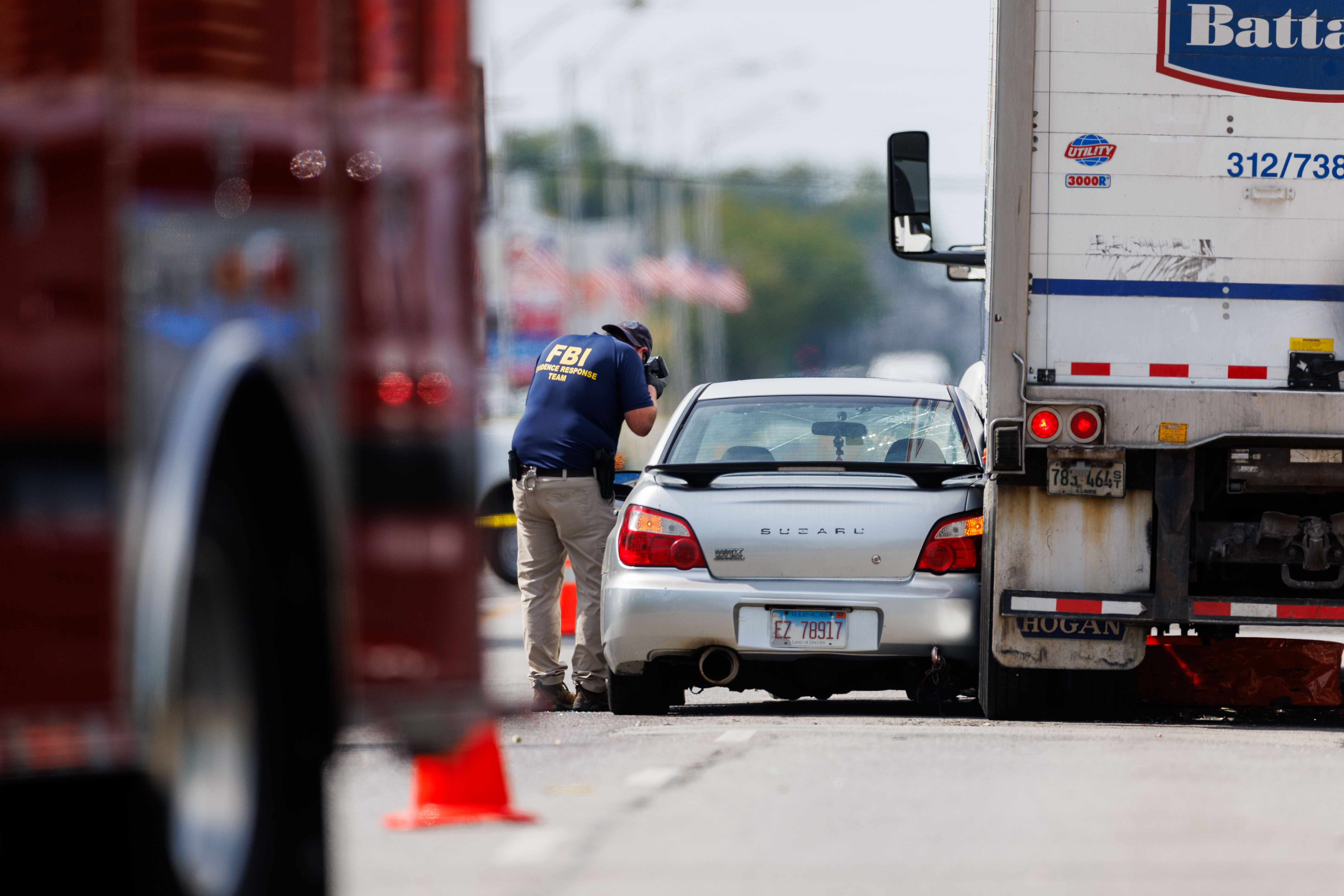
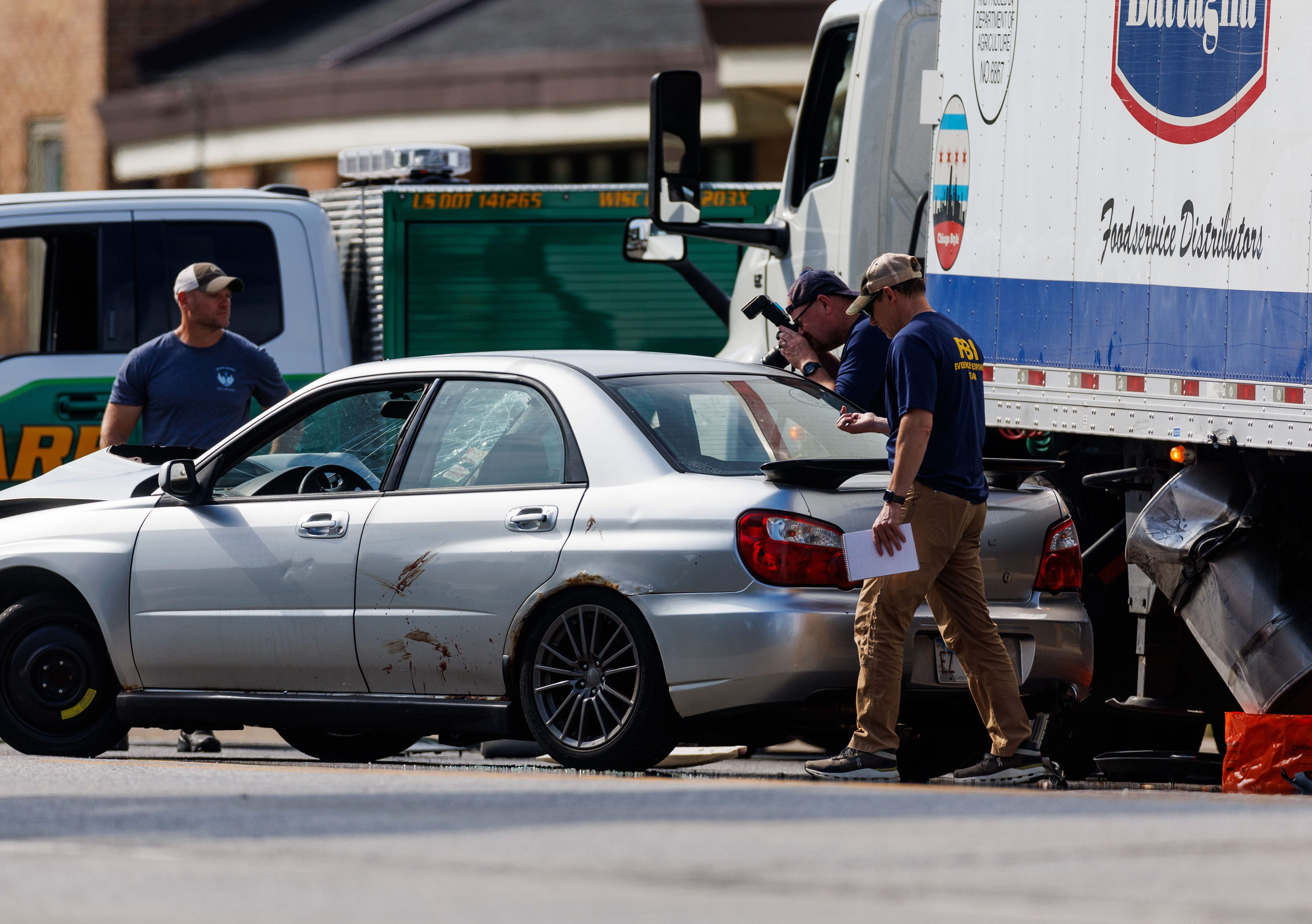
In this case, as Villegas González began bleeding out, his car ran into the side of a stopped tractor trailer — luckily blocking its path from more vulnerable traffic or pedestrians and avoiding more injury or loss of life.
Loop patrol
Nearly three weeks into the operation, U.S. Customs and Border Protection decided to march dozens of agents in military gear through the Loop in what Bovino told WBEZ was a “regular patrol” to scout for any immigrants in the country without legal permission.
The Sept. 28 march was controversial for a number of reasons; the mayor and governor said it was meant to intimidate the city’s mostly-Democratic residents, and WBEZ reported that Bovino said agents decided who to stop, in part, based on how they looked. The operation included arresting a family agents came upon in Millennium Park.
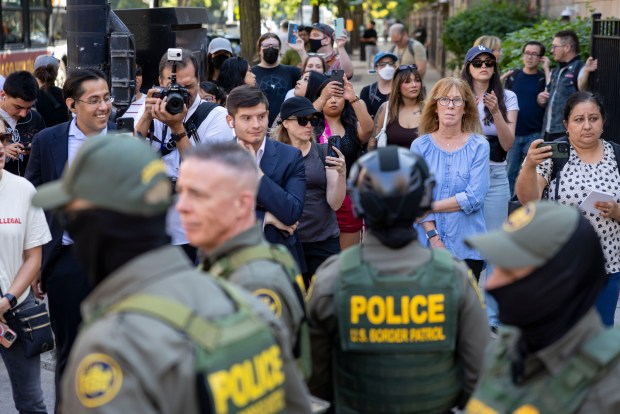 People watch as federal agents march near the Newberry Library in Chicago’s Gold Coast on Sept. 28, 2025, after walking through downtown as part of an immigration blitz show of force. (Brian Cassella/Chicago Tribune)
But, from a tactical perspective, policing experts questioned why agents would be randomly roaming around a busy area, without any idea of a more precise location of legitimate targets and no apparent strategy on how to use vehicles to help box in fleeing suspects deemed a threat.
“You’re just going to walk through the Loop hoping to, at random, run into people? I mean that’s a poor use of resources. You’re not going to get a lot of return on your investment,” said Corey, who works with the University of Chicago Crime Lab’s Policing Leadership Academy. “But that wasn’t the intention. To me, this is clearly intended for the media shock value. And that’s all it was.”
The tactical flaws emerged in what became a viral video of one aspect of the operation, when a cyclist taunted agents gathered at the corner near the Dearborn Street Bridge by calling out that he wasn’t a citizen and daring agents to arrest him. The cyclist then appeared to drop something and scoop it up as one agent, then others, started to give chase.
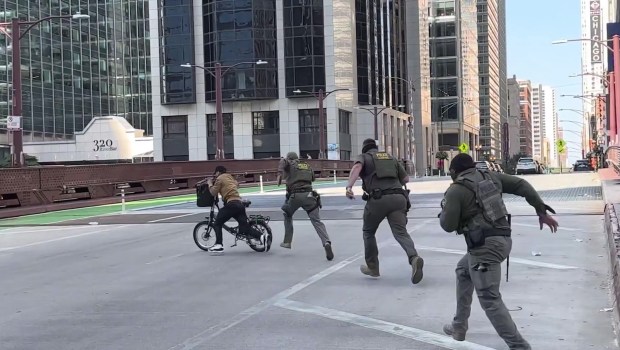 In an image from video posted on X, Border Patrol agents chase a bicyclist who had a verbal altercation with the agents as they patrolled in Chicago on Sept. 29, 2025 (Christopher Sweat)
With agents all on foot, and no apparent contingency plan on how to box in anyone fleeing on a bike, the cyclist rode away faster than agents trying to catch him, some agents sprinting for a few seconds while others are closer to a trot, including one agent whose tactical gear that day included a white cowboy hat.
“It was comic relief,” Johnson said. “Tactically — don’t get me wrong, things can spring up on you on a moment’s notice that you’re not exactly prepared for. … (But) they clearly weren’t coordinated on what they were doing.”
Protests spurred
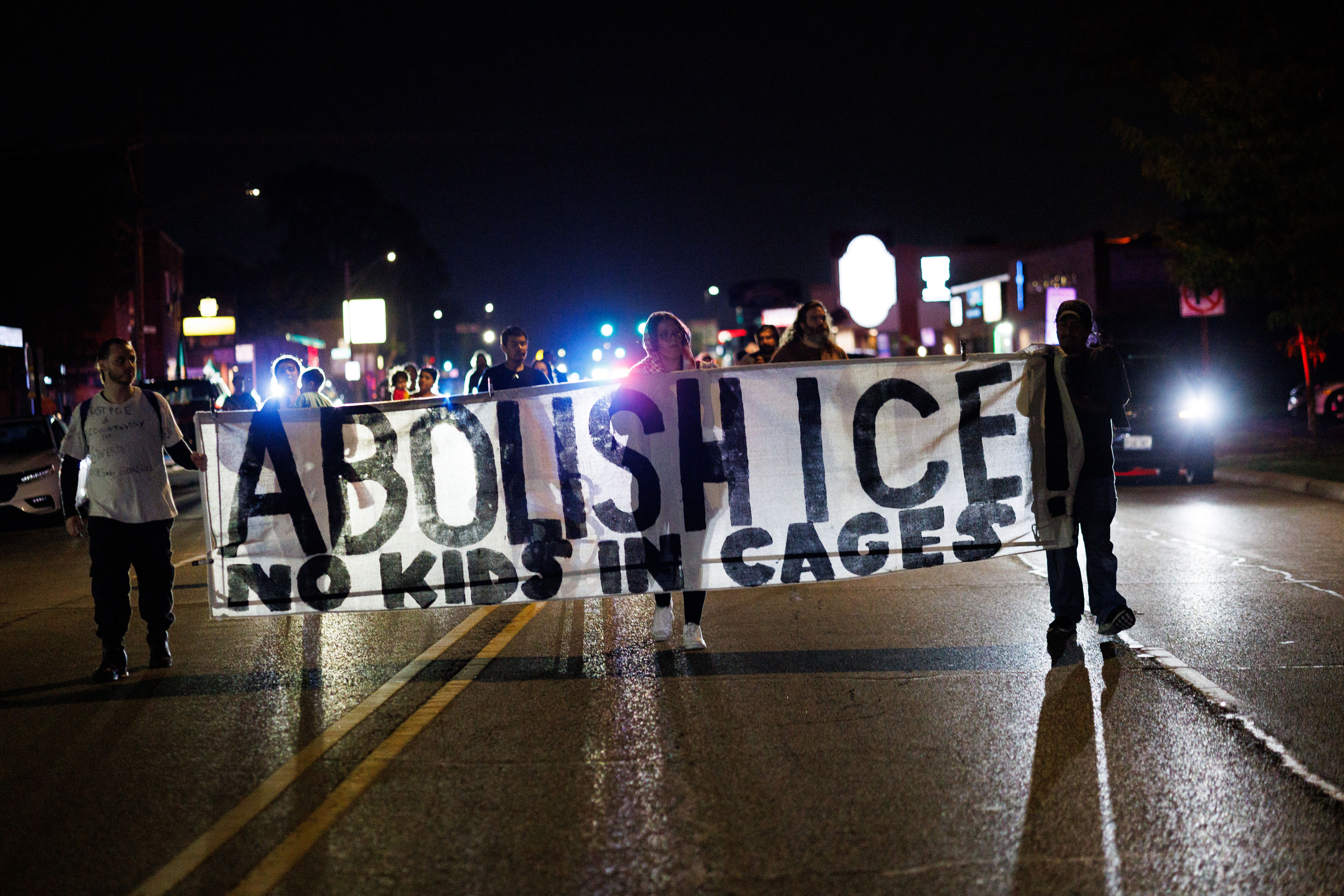
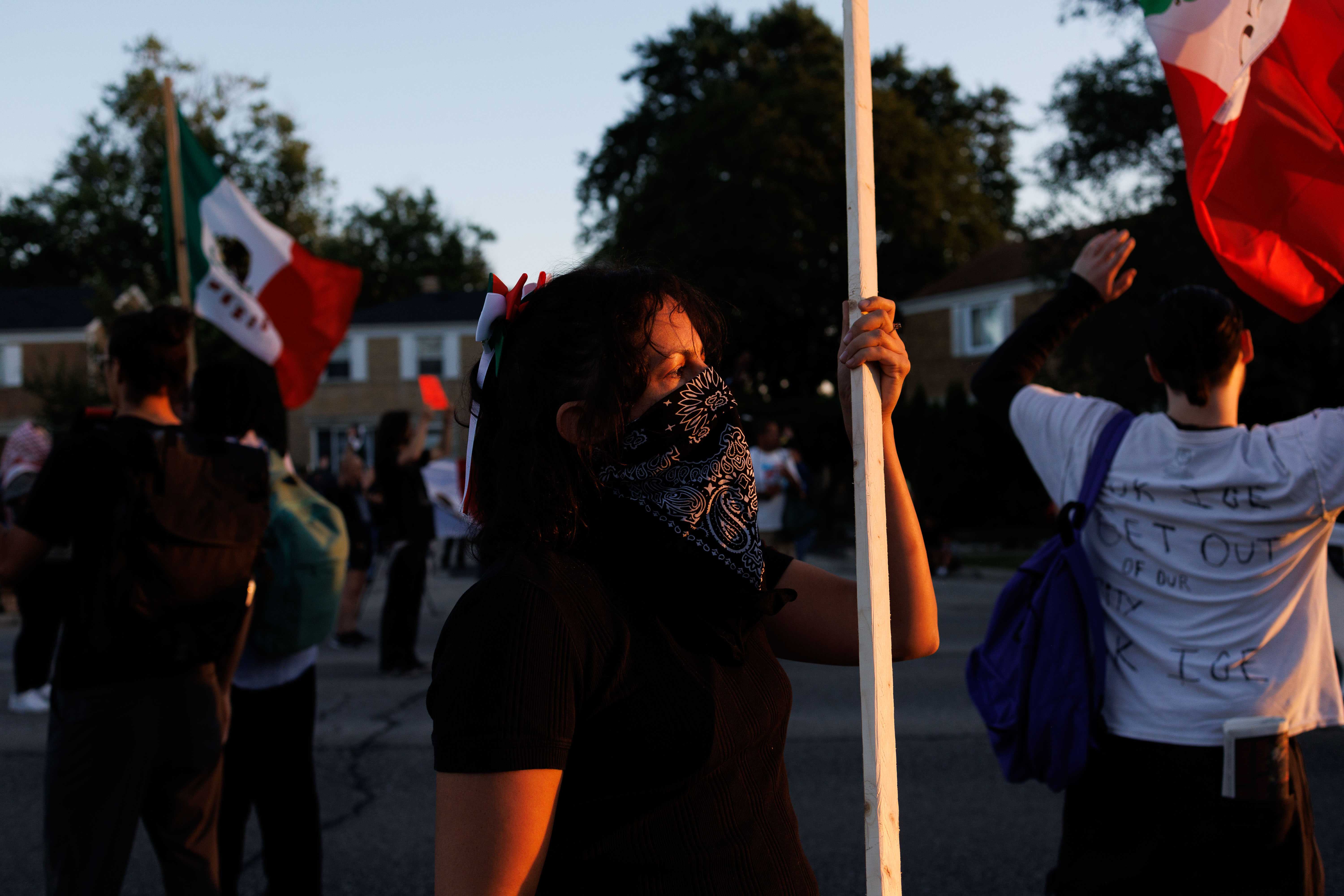
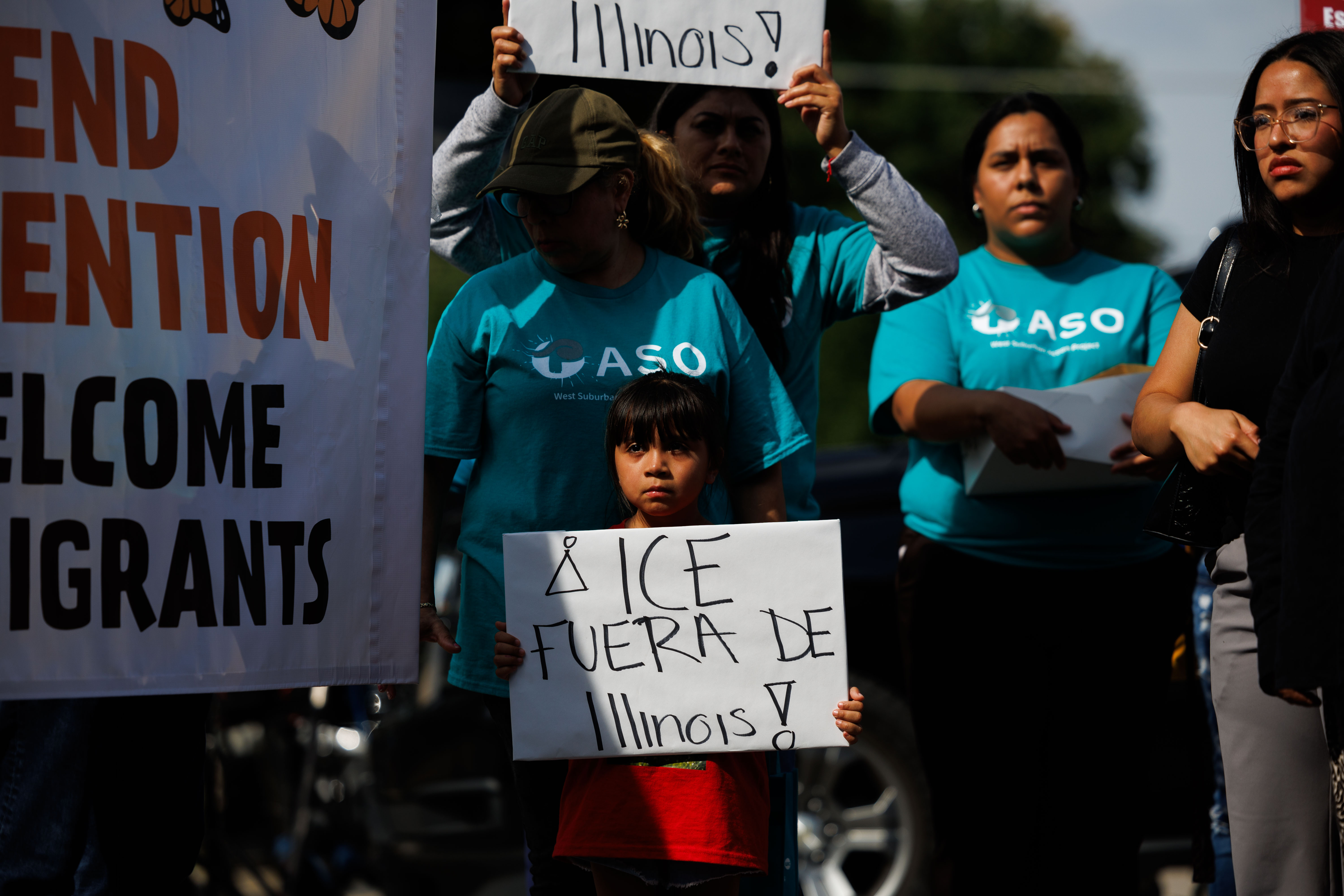
A tough-talking DHS courted massive publicity for the operation, which helped fuel protesters bent on disrupting it, and that created potentially dangerous scenarios of convoys of agents on missions being trailed by caravans of protesters honking horns and blowing whistles, experts said.
The scenario led to an agent pumping five bullets into a protester Oct. 4 in Brighton Park.
There are conflicting stories about what happened. Agents said the woman sideswiped their SUV and tried to run over an agent who got out. Her attorney said the agents steered into the woman then shot her unnecessarily as she tried to flee the danger that agents caused — buttressed by body camera footage that her lawyer said shows one agent, moments before the crash, saying “Do something bitch.”
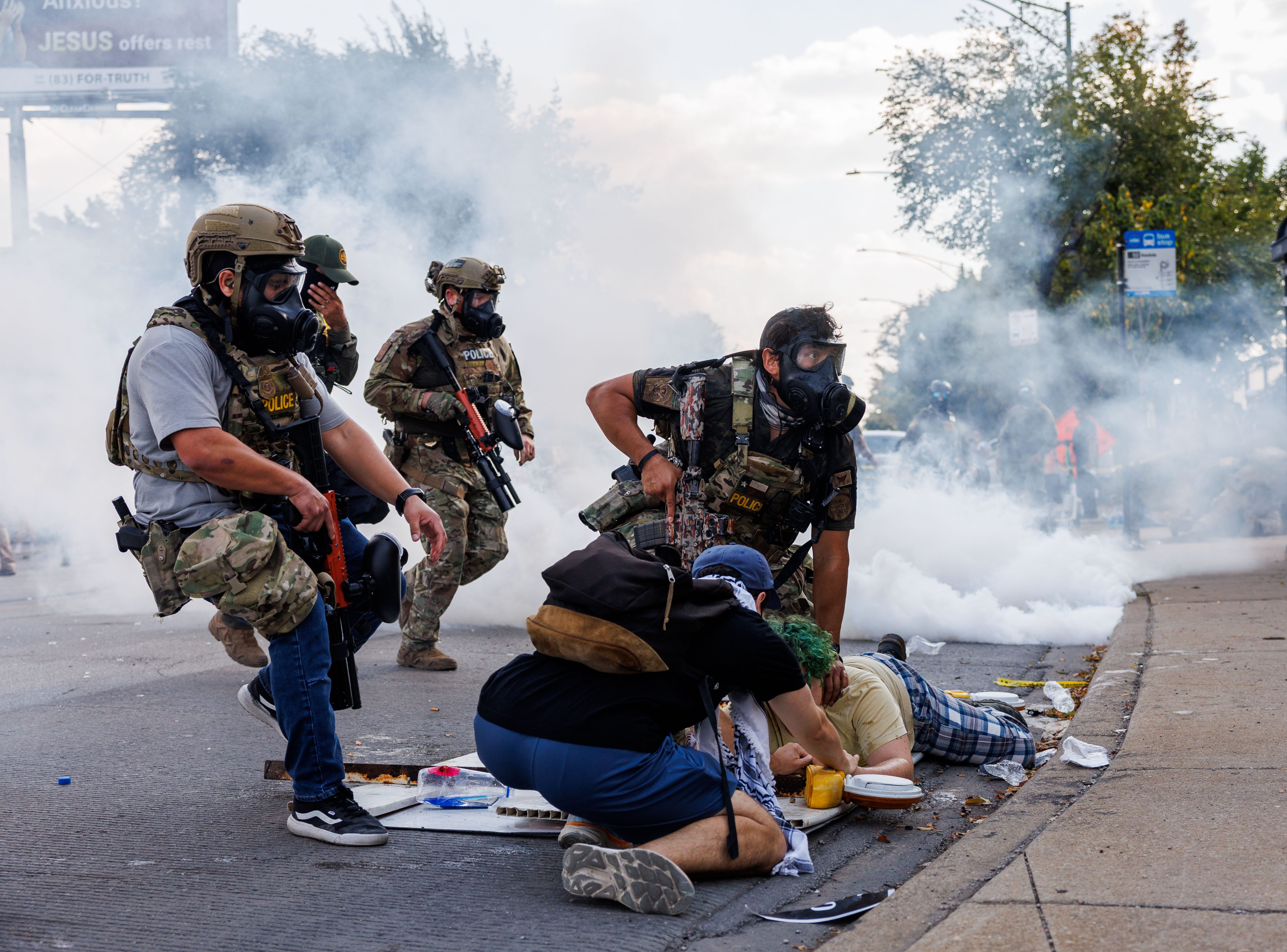
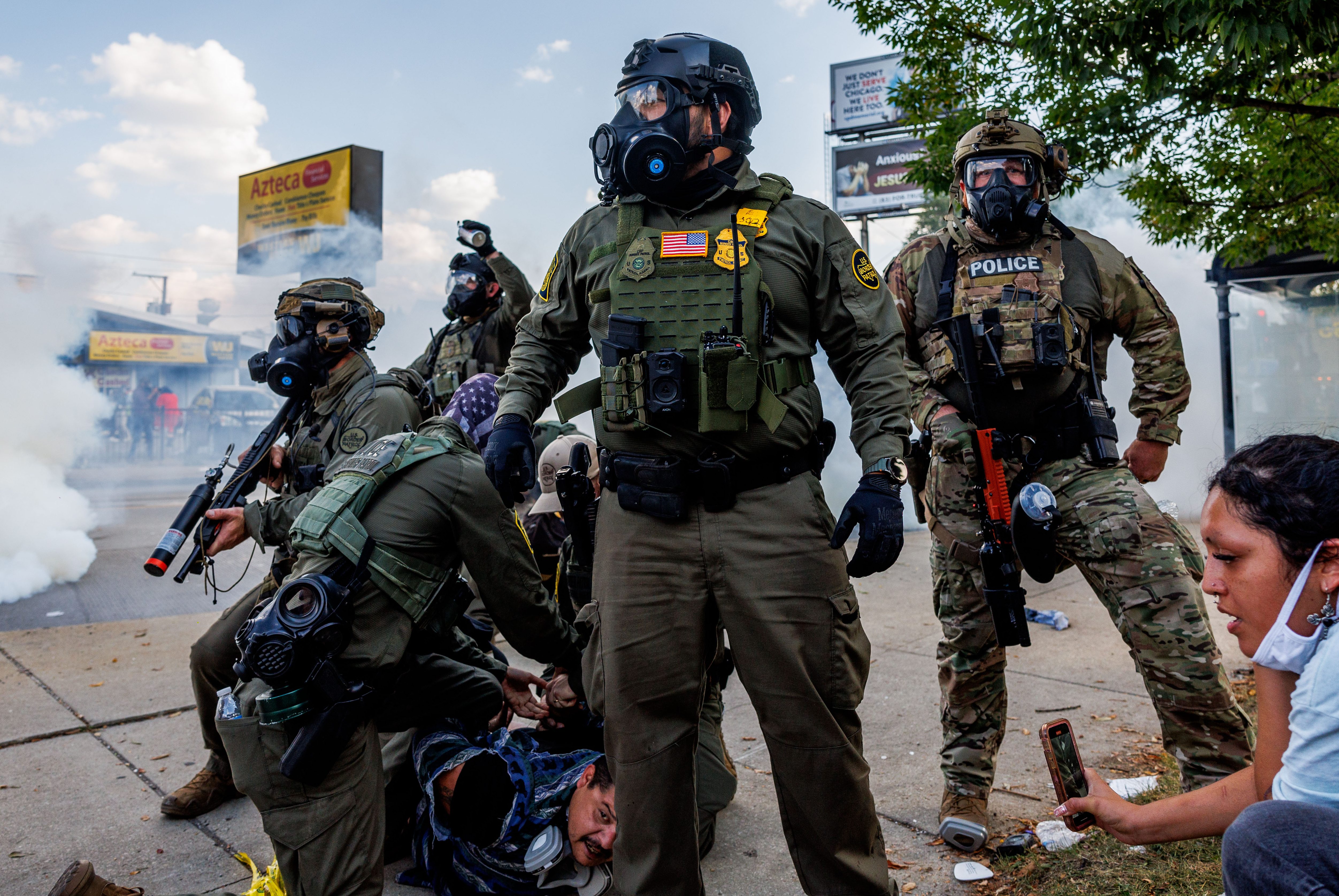
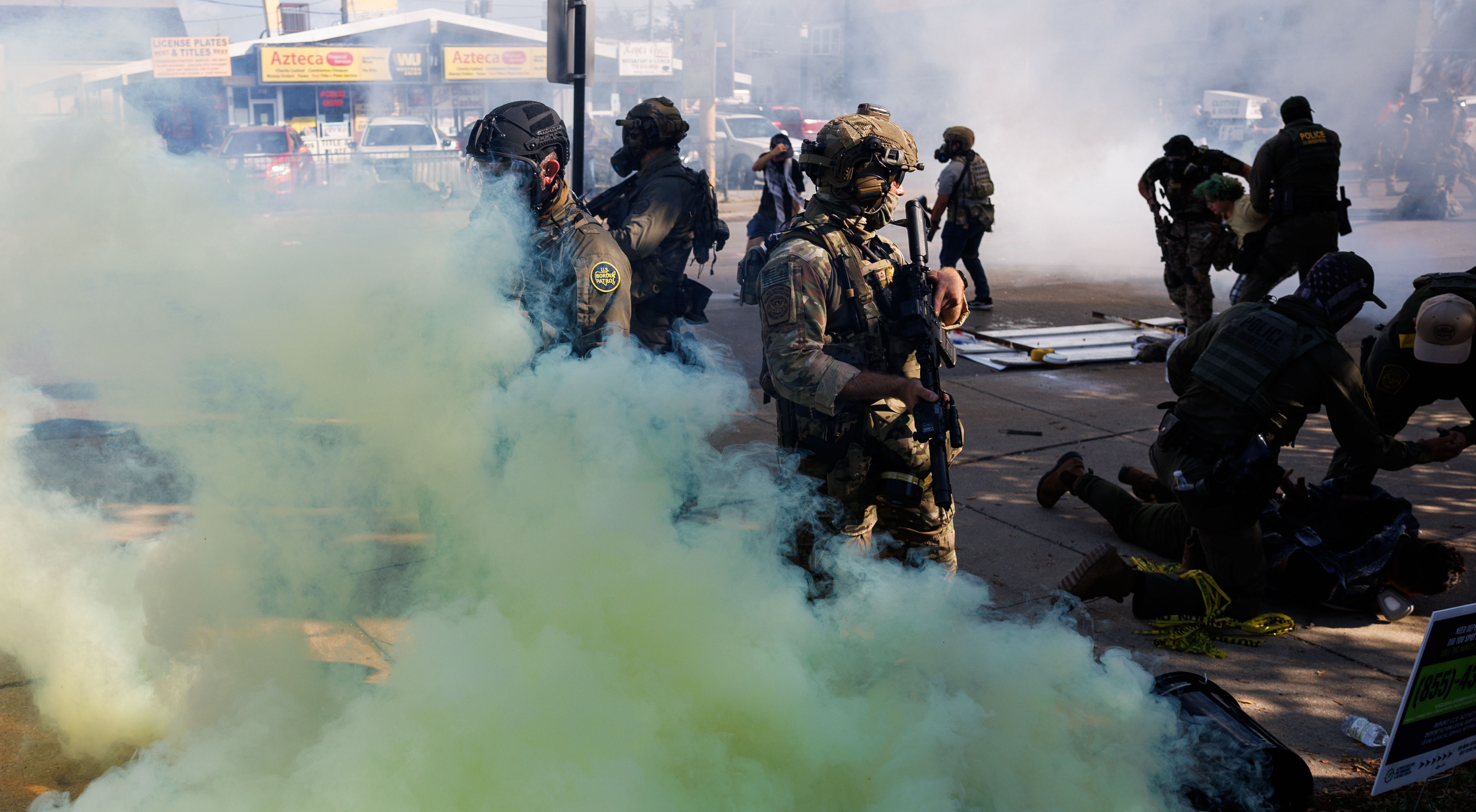
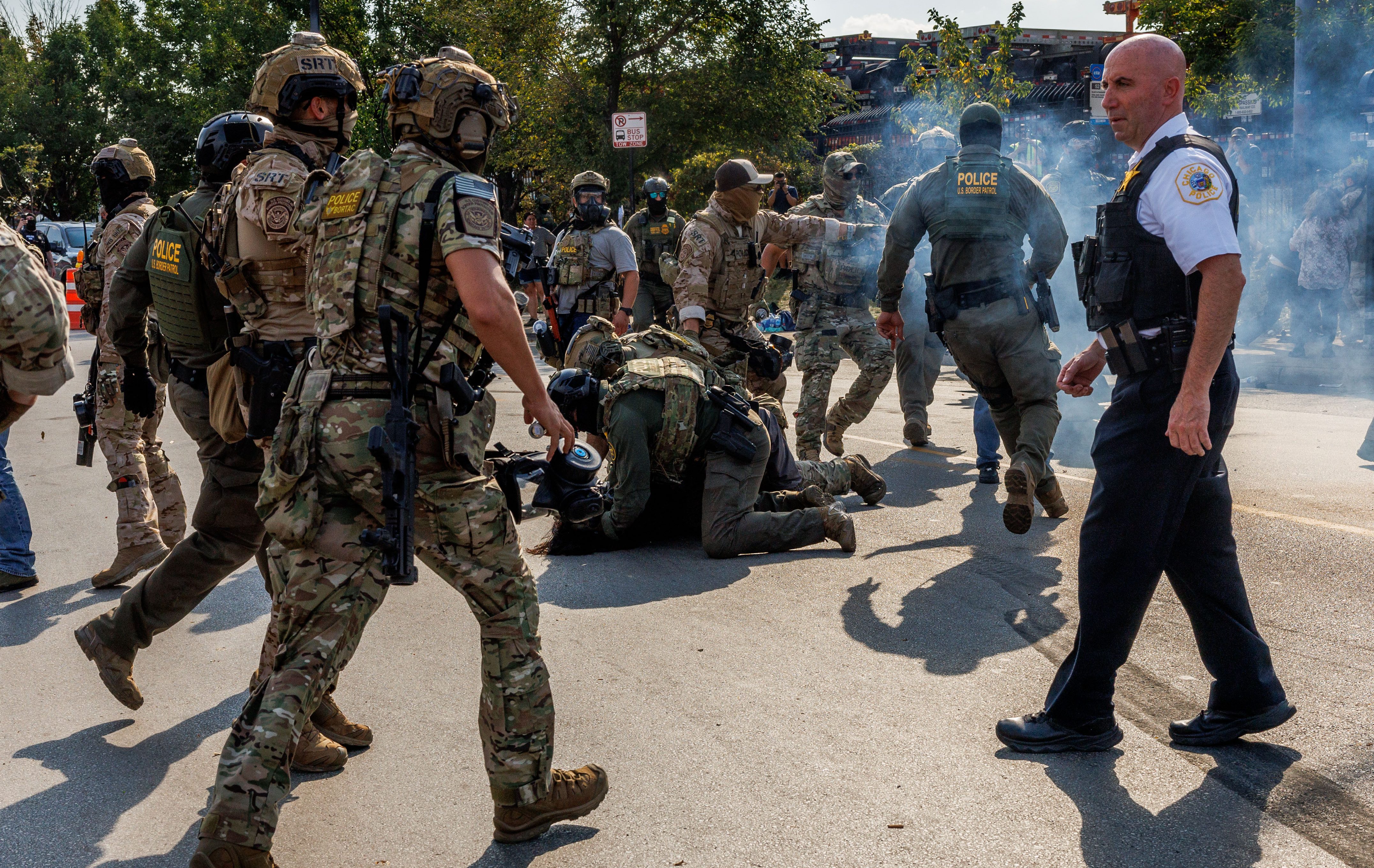
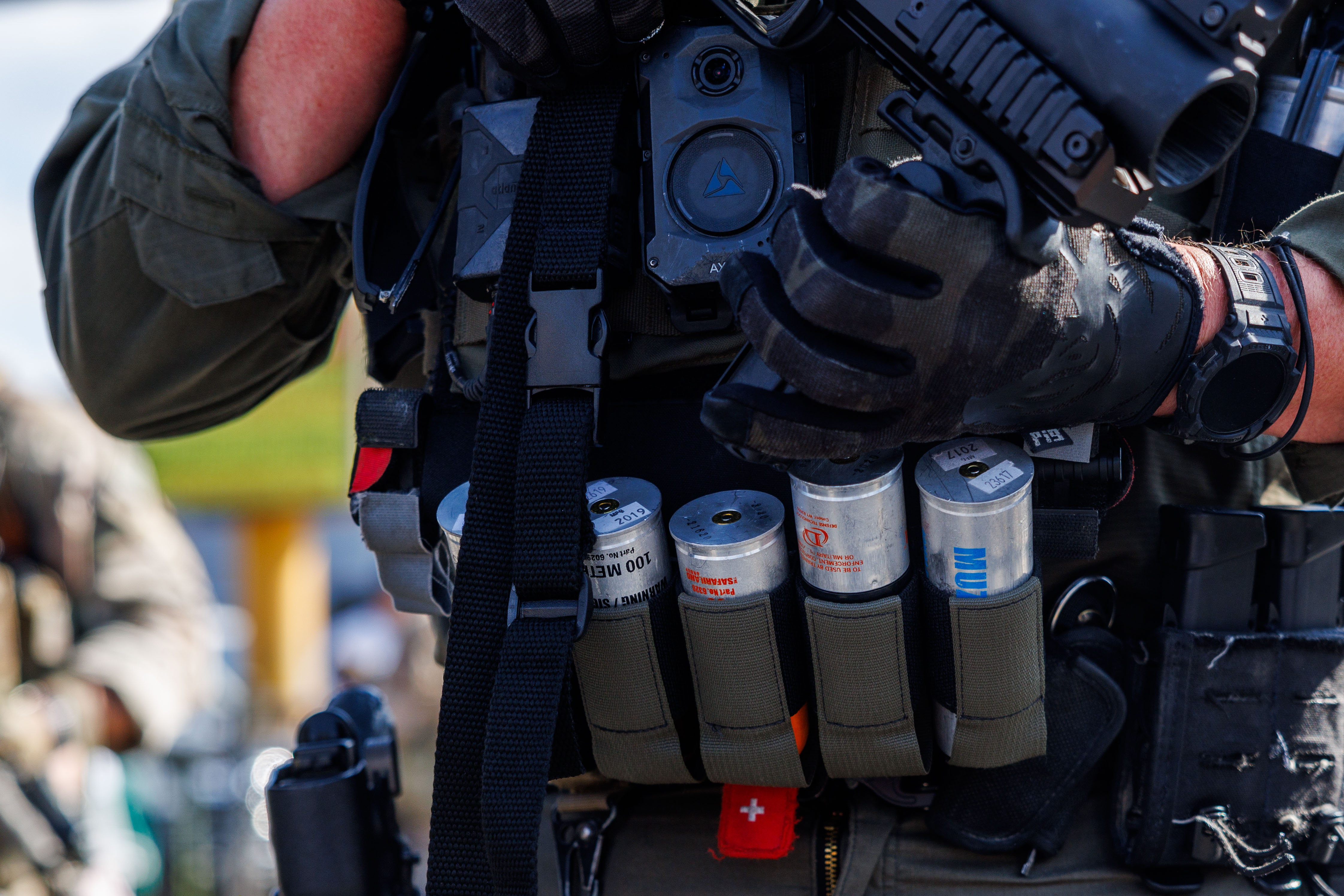
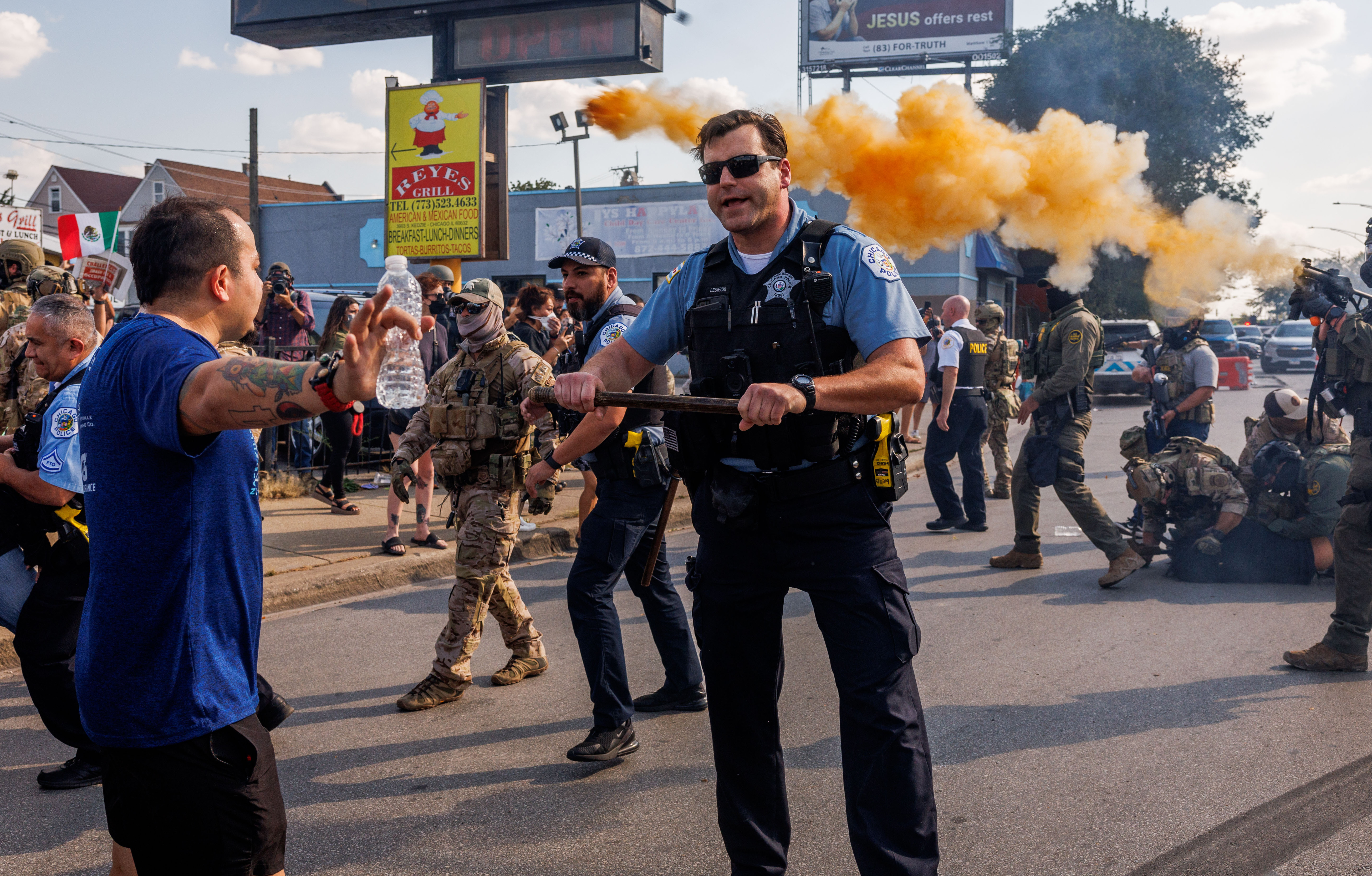
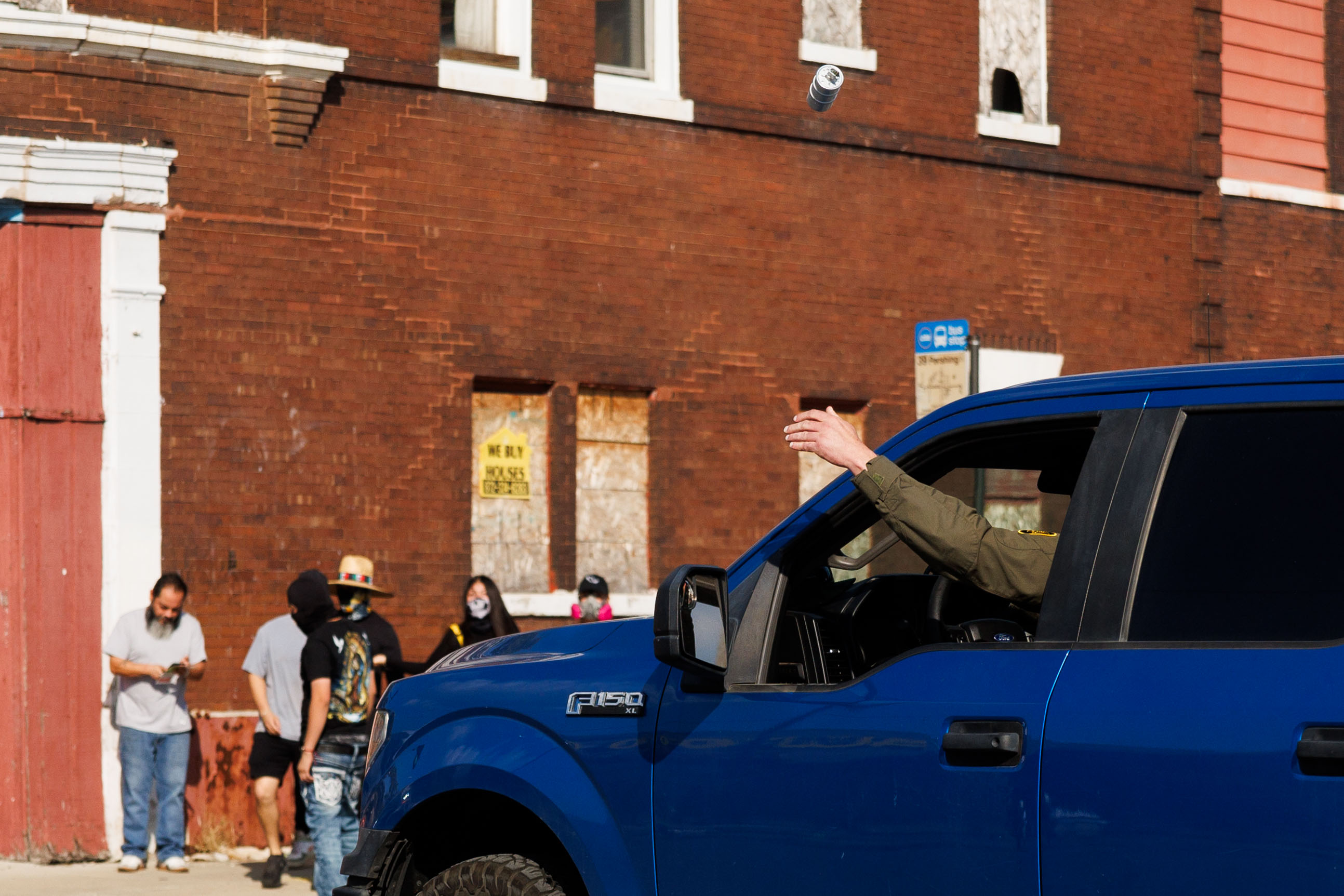
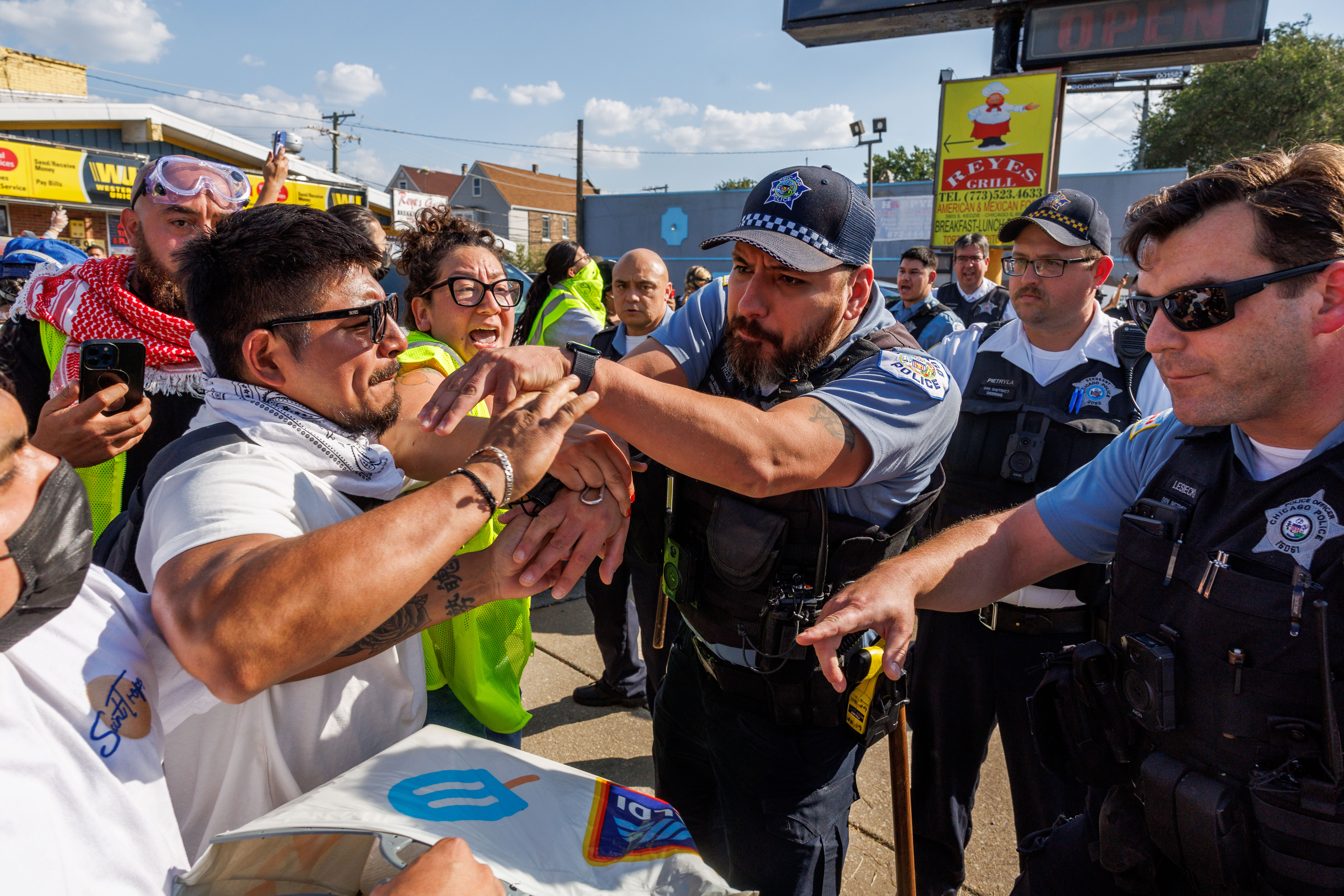
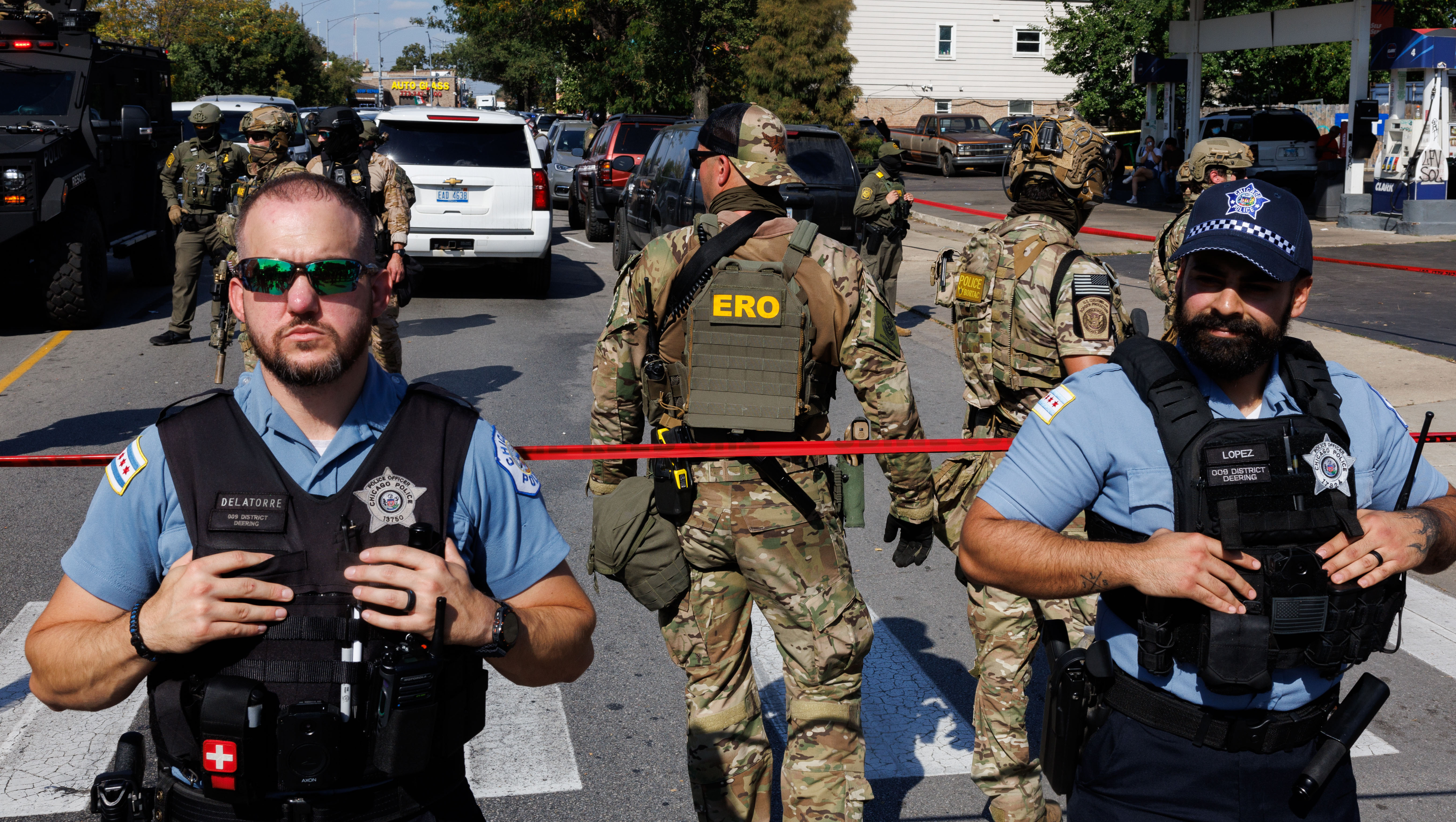
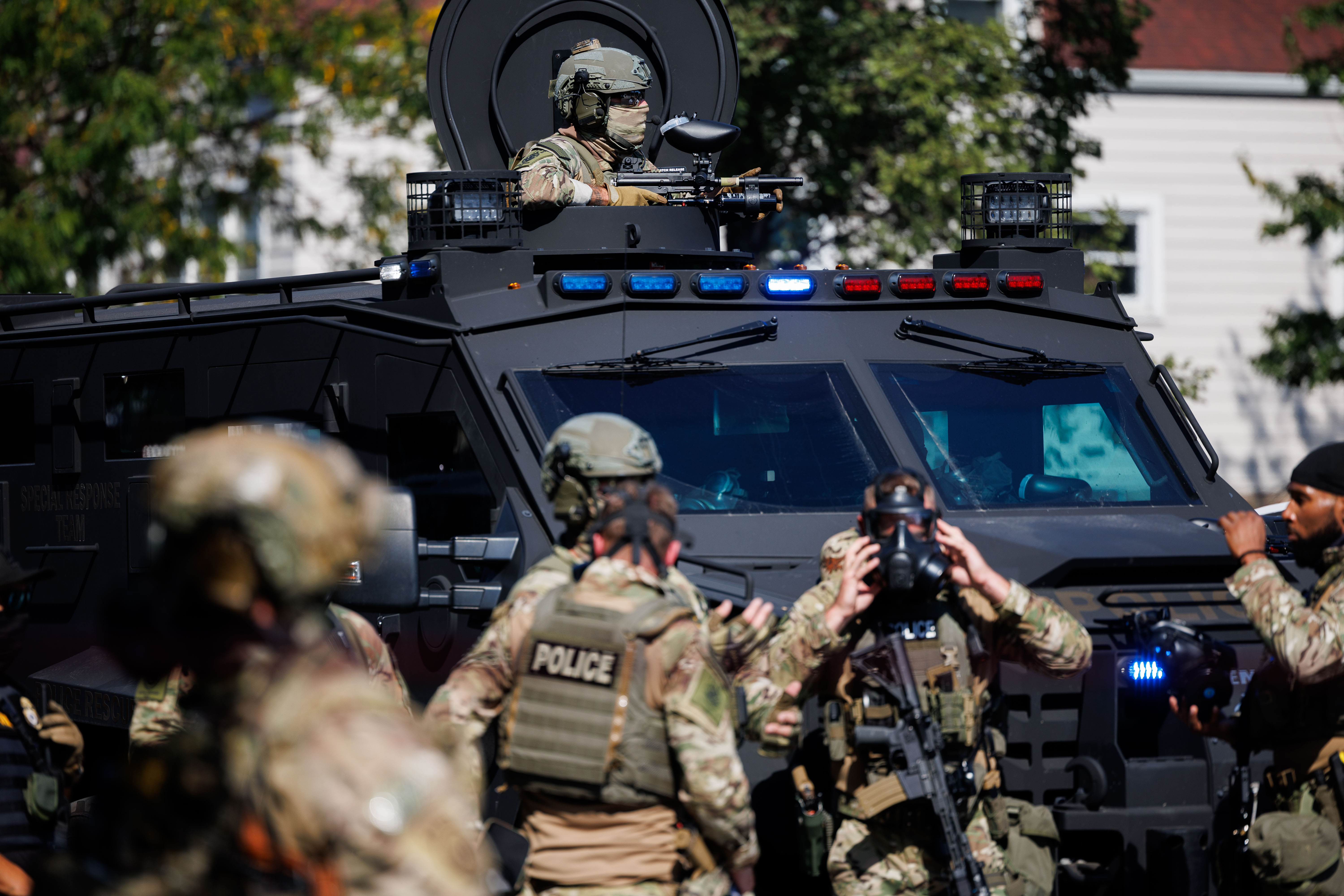
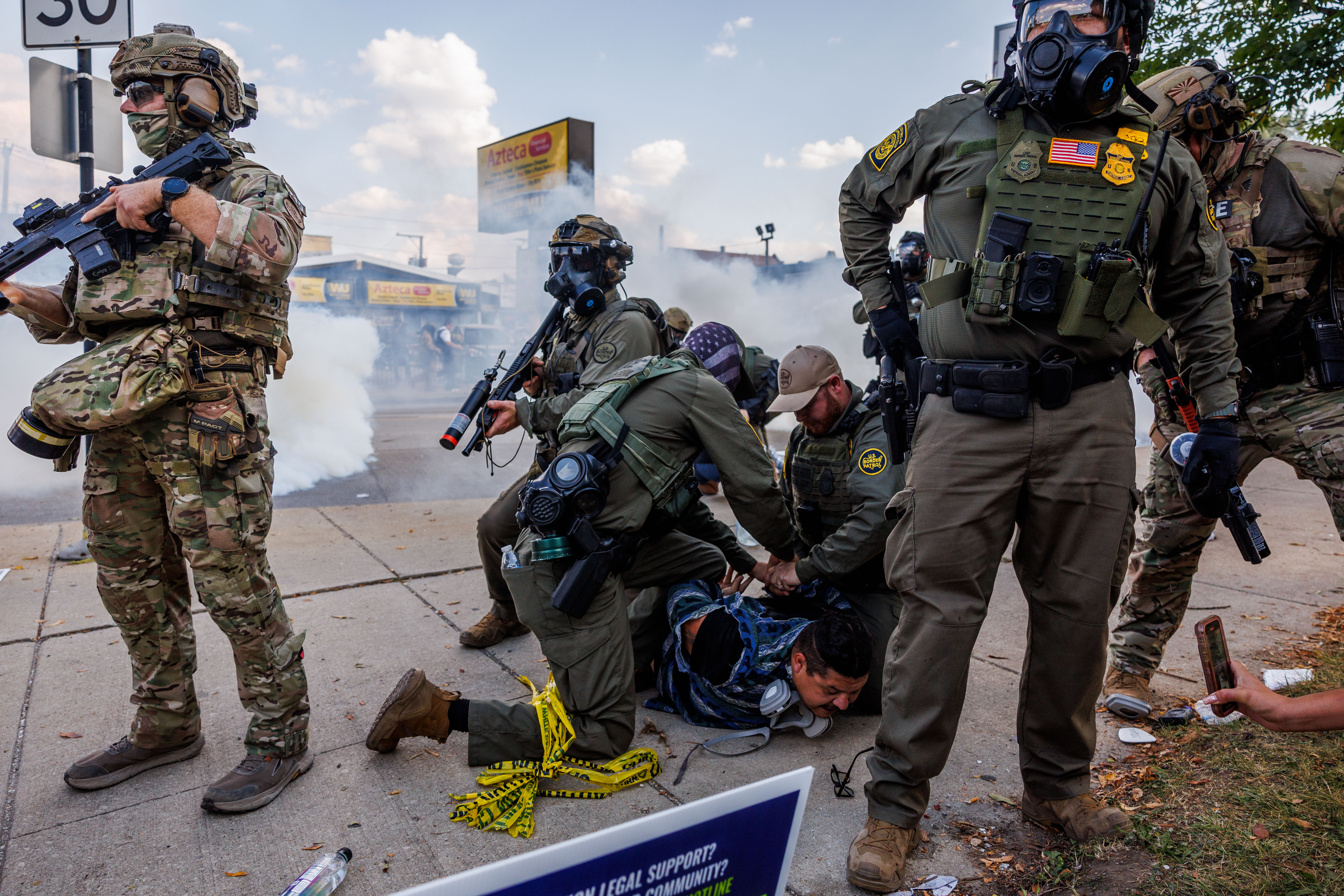
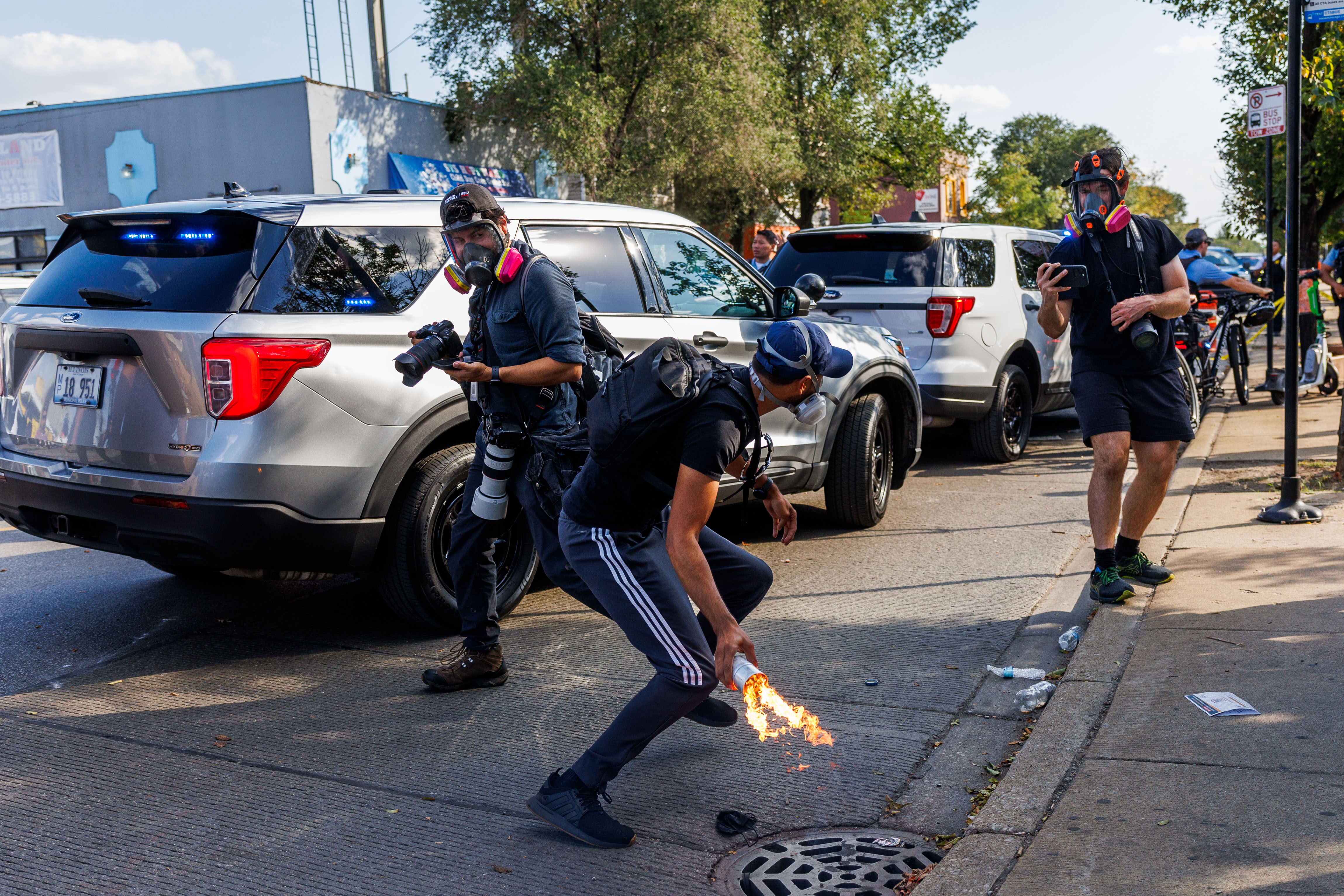
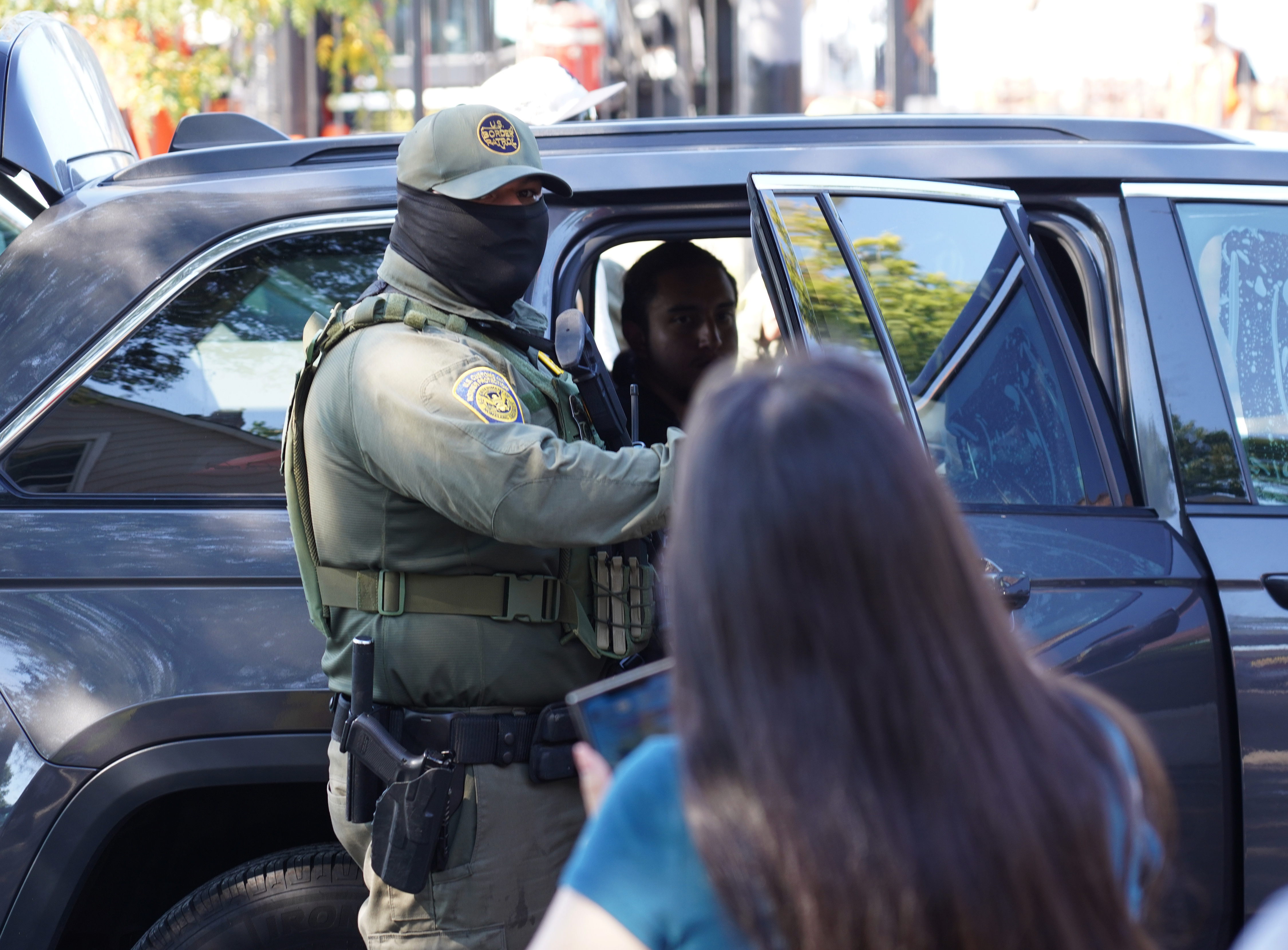
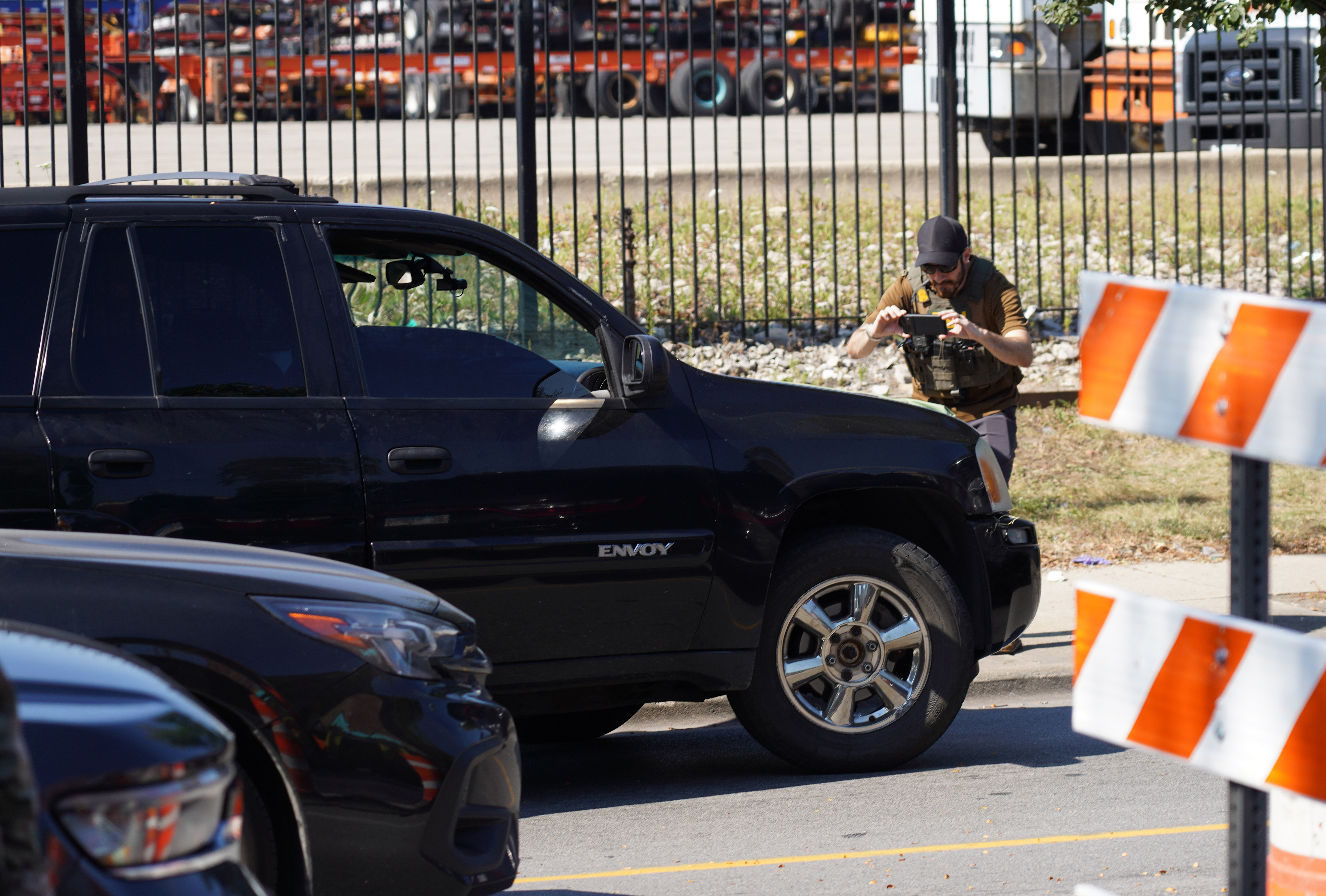
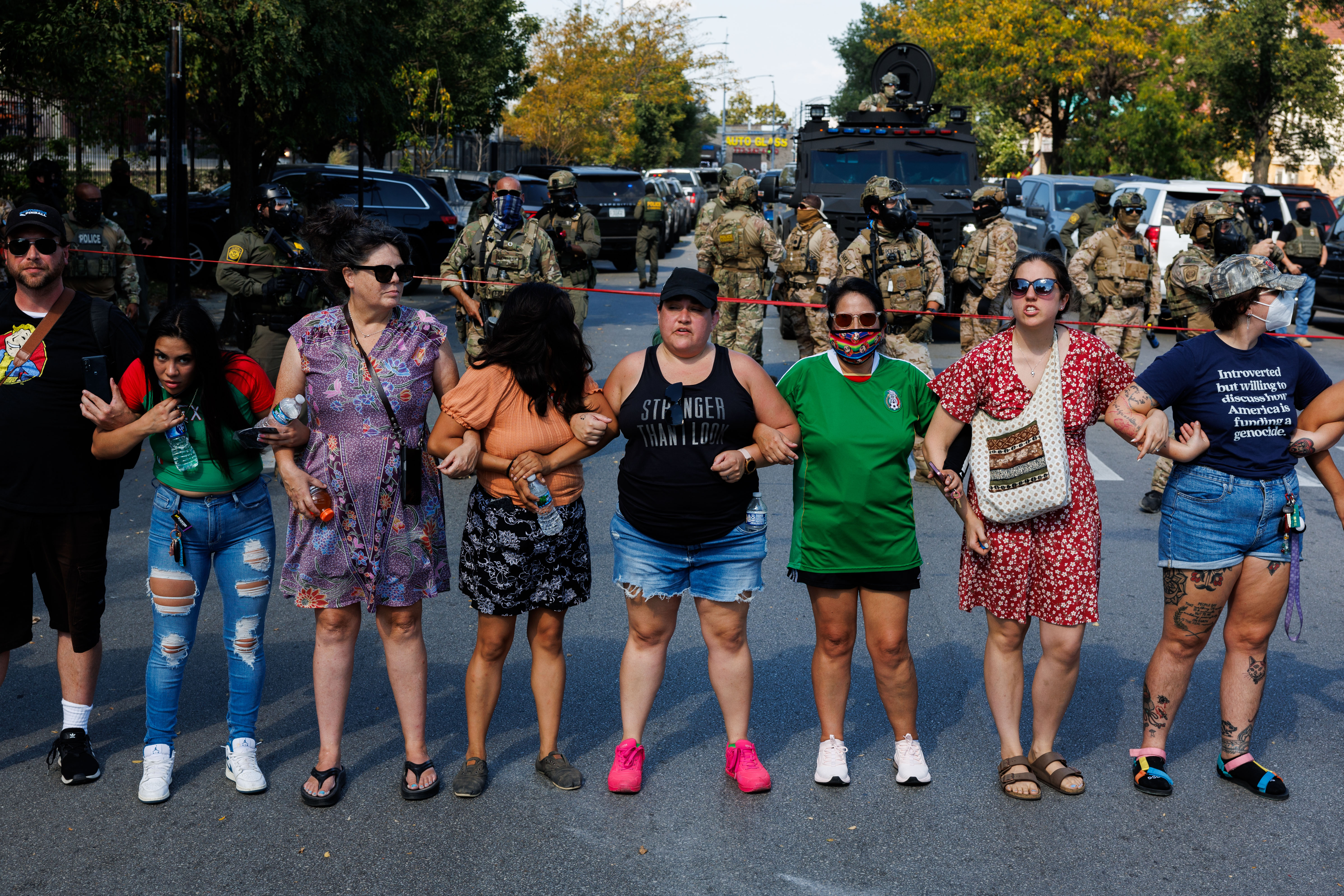
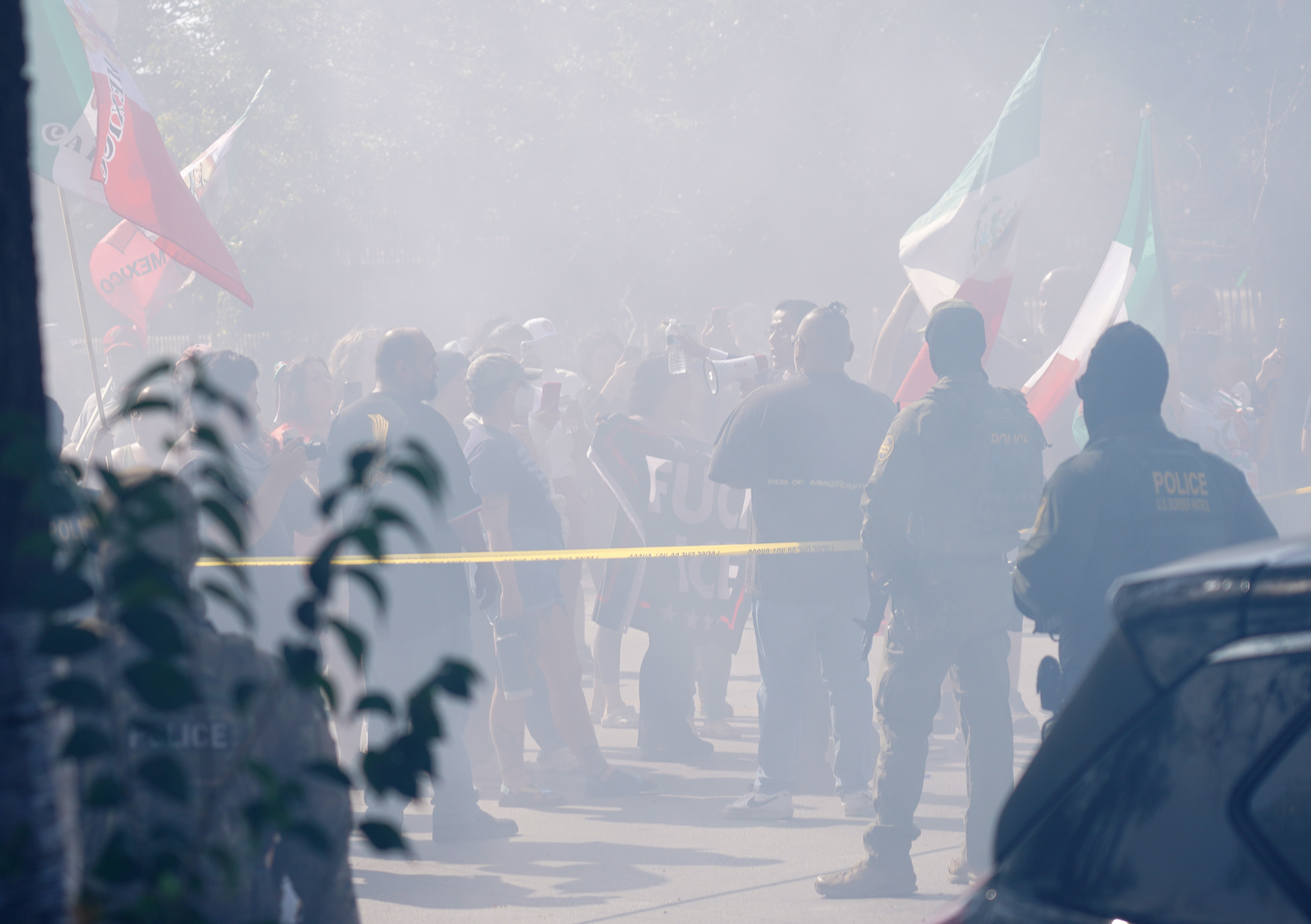
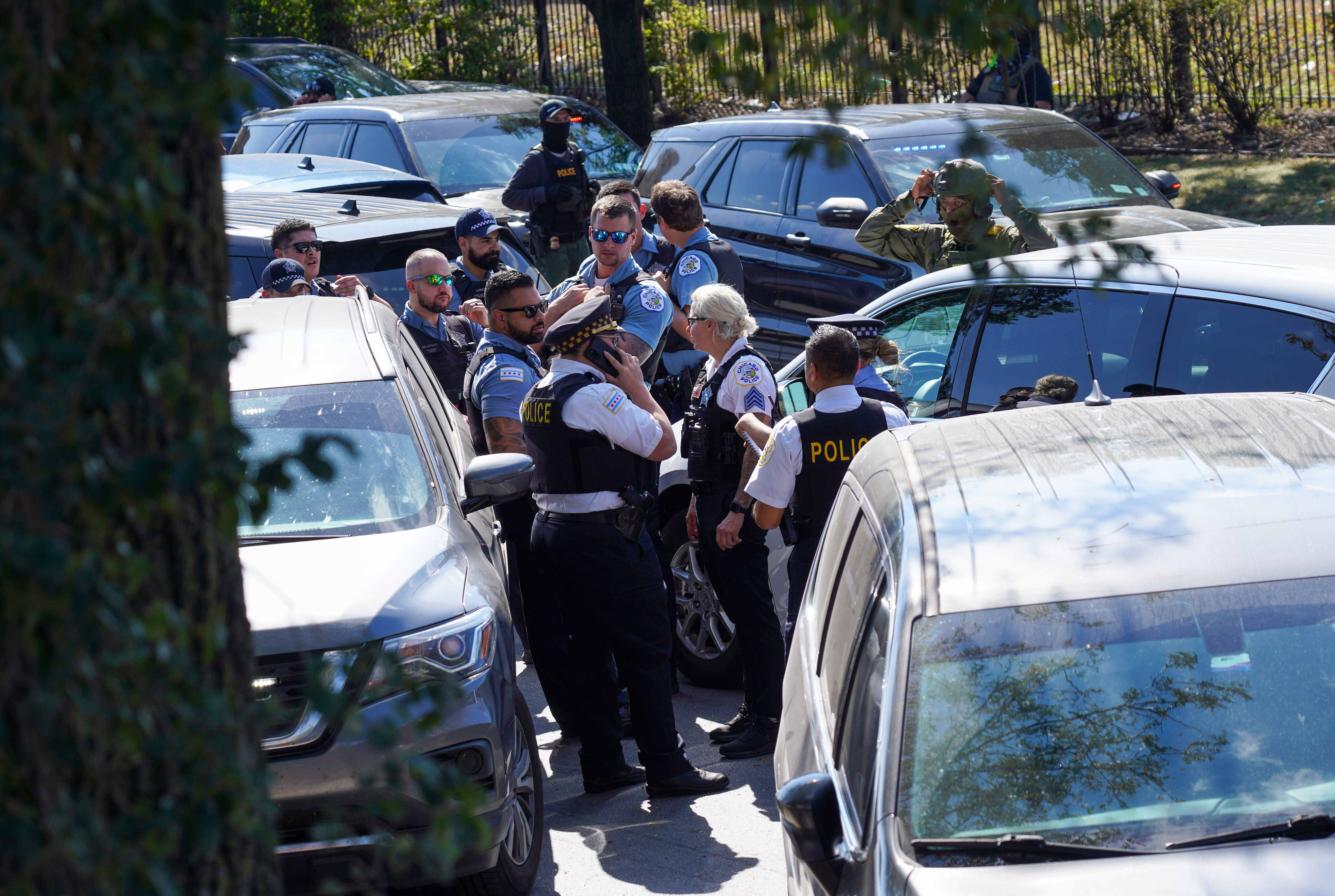
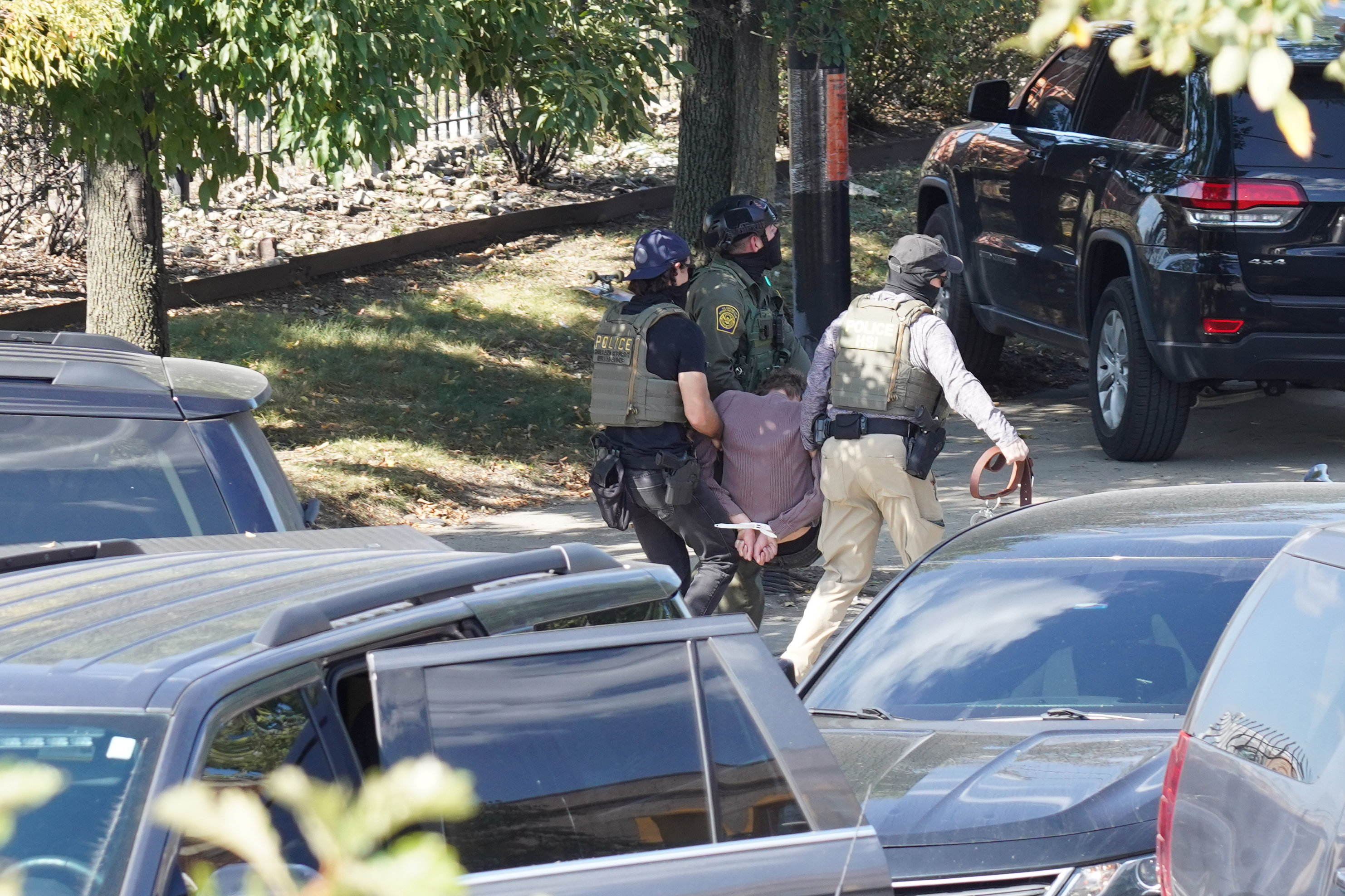
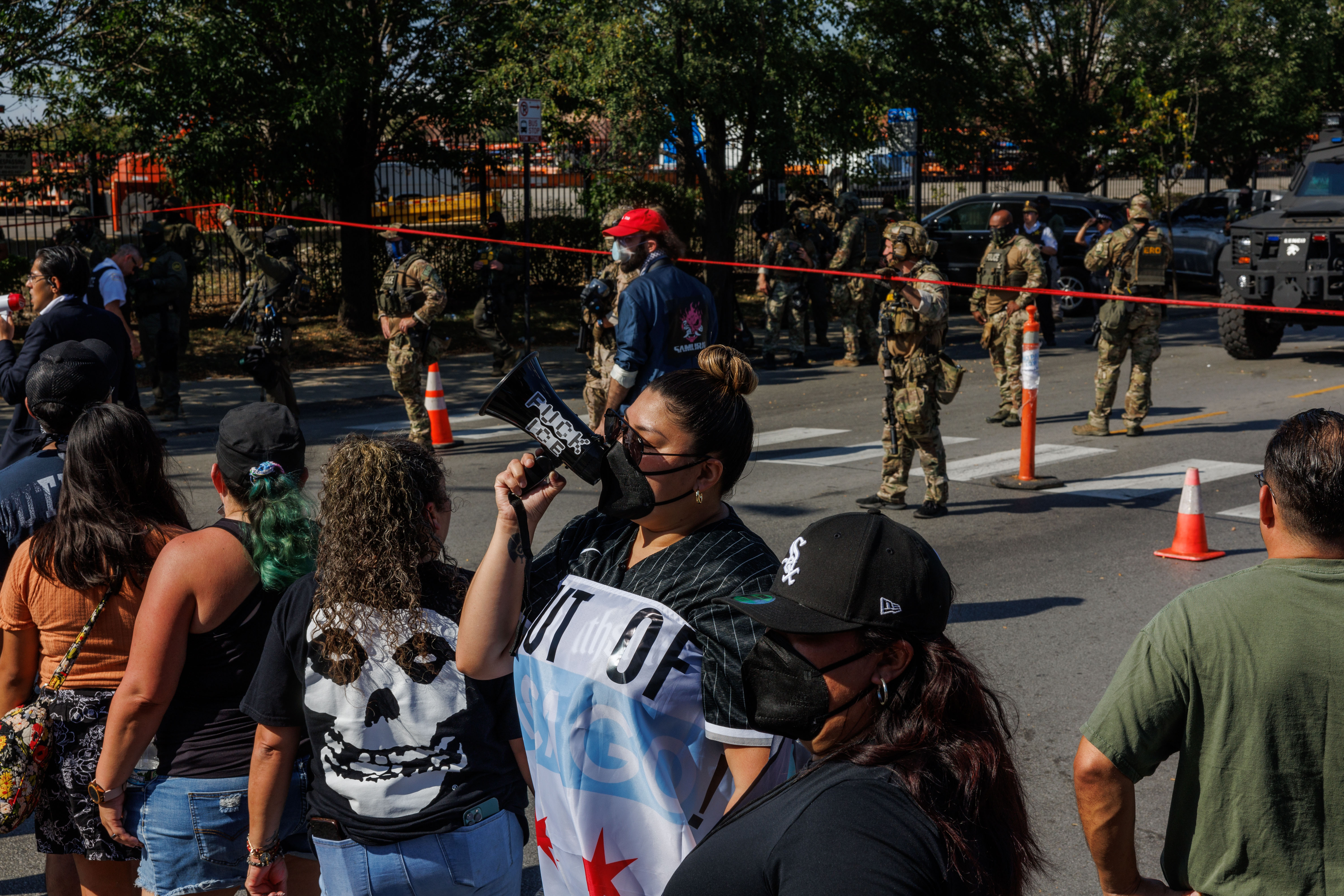
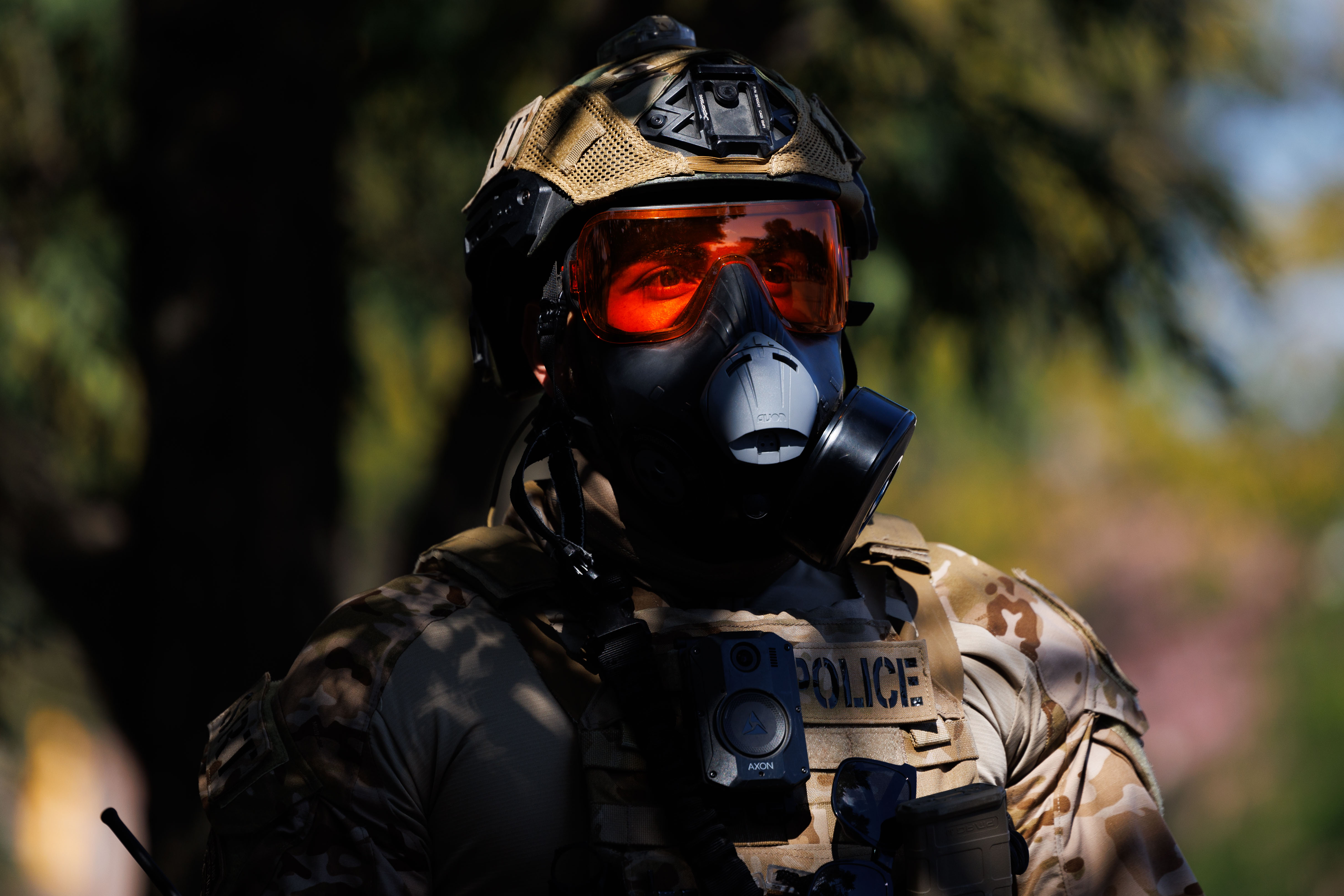
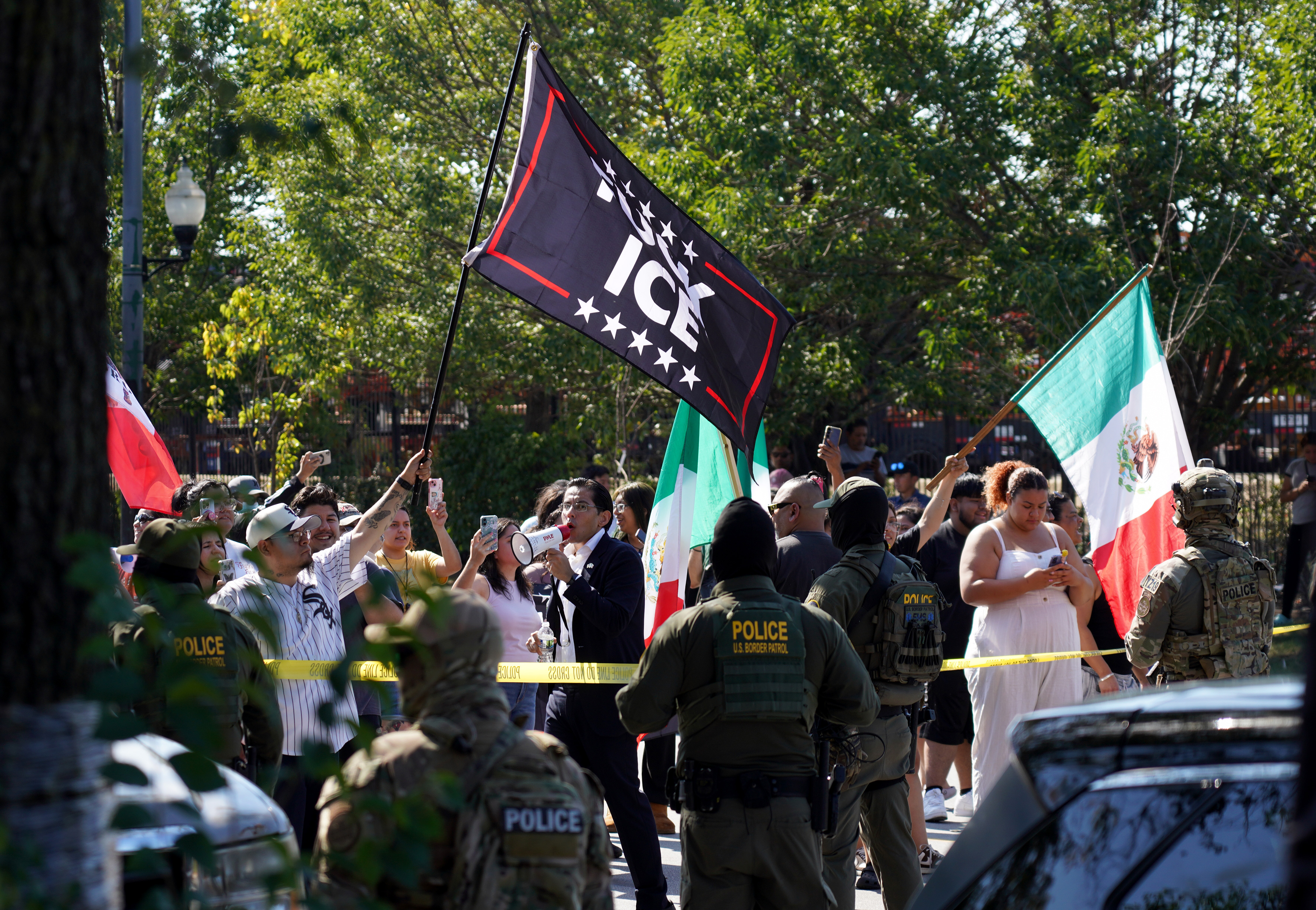
Federal officers detain a person while community members and activists protest near the 3900 block of South Kedzie Avenue on Oct. 4, 2025, in Chicago. (Armando L. Sanchez/Chicago Tribune)



Show Caption
1 of 24
Federal officers detain a person while community members and activists protest near the 3900 block of South Kedzie Avenue on Oct. 4, 2025, in Chicago. (Armando L. Sanchez/Chicago Tribune)
While federal prosecutors dropped charges against the woman and have launched a separate criminal probe of the shooting, policing experts say it’s hard to judge how agents responded because the facts remain in dispute. Beyond that, there have yet to be any best-practices developed for the relatively unique scenario in Chicago of protester caravans trailing law enforcement caravans from operation to operation.
But there are protocols for what happened next, after a crowd of protesters predictably gathered at the scene of the shooting to complain about the federal agents’ actions.
Policing policies have evolved to focus on de-escalation: trying to be as open as possible to community leaders and calm down the crowd. It’s not just about seeming to be a warm and fuzzy police department. The calmer a crowd, the less likely it is to fuel agitators within it to start throwing rocks or bricks that can hit and hurt officers, experts said, and spur wider melees that get even more people injured on both sides.
And an early video of the incident appeared to show one unmasked federal agent doing that, as he convinced some people to back up, saying “You can all stay right here. That’s totally fine. … Thank you.”
And, in general, Bovino told reporters that safety was agents’ primary concern: “We’re always concerned about our agents and the public — because that violence can also spill into places we don’t want it to.”
But in Brighton Park that day, over four hours, as the crowd grew from about two dozen to around 200, a court ruling recounted how DHS took actions that agitated the crowd. Witnesses said agents drove recklessly near protesters, dropped flash-bang grenades and began shooting pepper balls at them.
Along the way, a bearcat — a type of armored vehicle — drove into the scene with a federal agent’s head popping out of a hatch, a weapon trained on protesters. Policing experts said that type of vehicle is typically used only in situations where officers are being fired upon or believe they risk it — such as rescuing a hostage or a fallen comrade amid a gunbattle. They say its use at a protest risks making things more volatile.
DHS has justified its response by claiming Chicago police refused to quickly help — an assertion the Trump administration has included in its pitch to the U.S. Supreme Court to try to justify Trump putting troops in Chicago. Chicago police counter they showed up quickly, backed up by a New York Times investigation.
Regardless, as Chicago police were already at the scene trying to calm protesters, federal agents tear-gassed the crowd on their way out, including the Chicago police officers who’d come to help them depart.
Beyond the constitutional concerns, that type of tear-gassing is a poor tactic, the experts said.
Tear gas should be a last resort — not used liberally anytime protesters make things uncomfortable for agents, the experts said. Tactically, the gas may spread out protesters, but they can come back, angrier, with more people and gas masks, making them even harder to control. Beyond that, the gas can float to all sorts of areas — not just the lungs of protesters but anyone else who happens to be downwind such as babies, asthmatics and the elderly.
It for sure immobilized many of the police officers who’d come to help the federal agents.
“When they’re throwing tear gas, and you have 20 Chicago police officers that don’t have masks and are getting gassed themselves, I mean it’s pretty clear that they’re not handling things properly,” Kerlikowske said.
DHS, in its statement, broadly defended its tactics handling protests: “When faced with violence or attempts to impede law enforcement operations, our officers will take legal and necessary steps to ensure their own safety and that of bystanders, up to and including use of force.”
‘PIT’ and tear gas
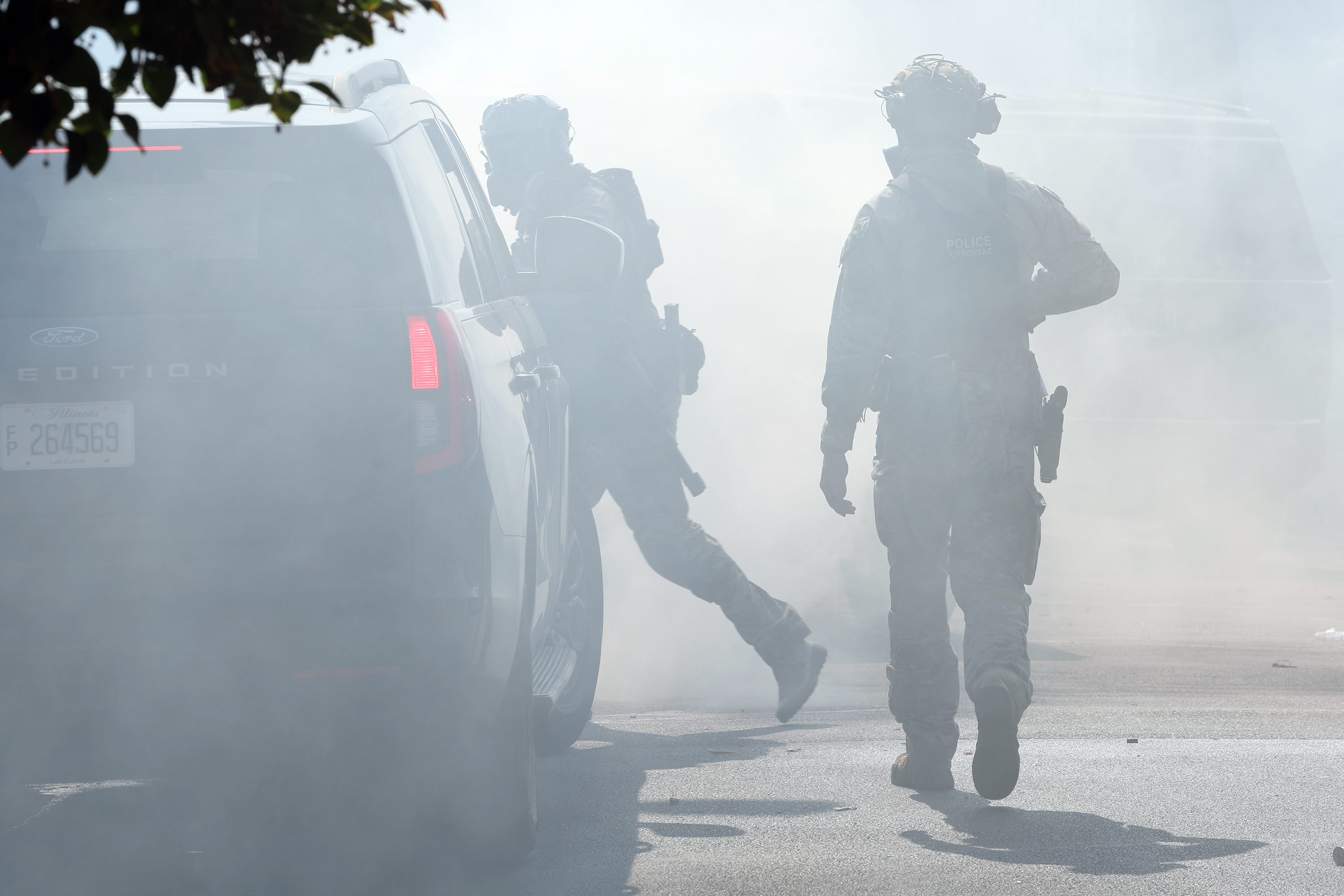
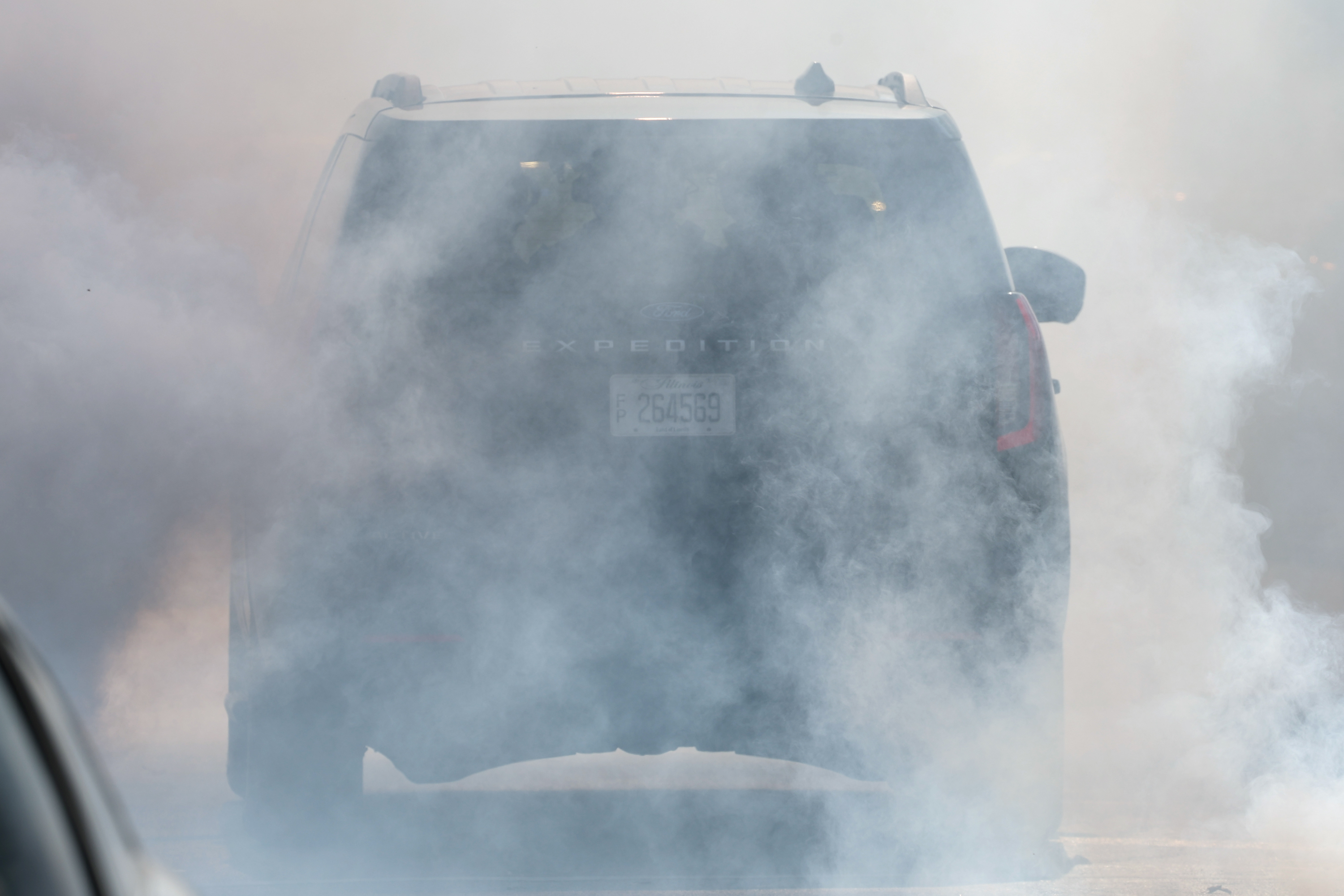
In a scene pieced together from court records and videos, CBP agents tried to stop two “suspicious” men in a Ford Escape Oct. 14 but the Escape drove off, allegedly hitting the agents’ rental car. So the agents gave chase.
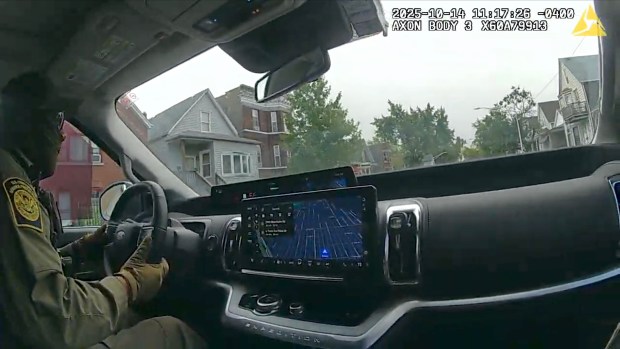 A body camera worn by a federal agent captures, from inside the government’s rental SUV, parts of an 18-minute vehicle chase around an East Side neighborhood on Oct. 14, 2025. The chase ended when the agent driving the SUV purposely crashed into the suspects’ vehicle and sent it careening across an intersection into a parked car, while the force set off the air bags in the agents’ SUV. (Loevy & Loevy)
Over 18 minutes in a dense East Side neighborhood, federal agents sped down alleys, blowing red lights and stop signs, and careened around corners with so much G-force that the agent in the passenger seat at times held on to the Ford Expedition’s handles with both hands. More troubling: the agents’ rental had no emergency lights or sirens — meaning passersby had even less warning to get out of their way.
Desperate for help from other federal agents, but complaining they hadn’t gotten enough, the agent driving the rental Expedition decided to use a “PIT” maneuver on the Escape, despite the agent acknowledging he wasn’t certified to do it. Video broadcast by WGN shows the collision sent the suspects’ Escape spinning across an intersection and into a parked car.
Luckily, no one else was hit, but an angry woman at the scene later screamed at agents that she was almost hit, and that agents should “be ashamed” for their actions causing the dangerous crash.
“You will chase anybody. You don’t give a (expletive) what’s in front of you. You almost hit me. There could be kids,” she shouted, later adding: “Driving like maniacs in our (expletive) community is not allowed.”
Policing experts agree that chases are inherently dangerous for cops and passersby so they should be limited to only the most serious cases using the most caution — particularly in dense urban neighborhoods.
“Doing it in the middle of the street, there’s not really a lot of room for that car to spin,” Corey said.
In its statement, Homeland Security said the PIT maneuver is a “standard law enforcement technique” used only once in Chicago to “stop a pursuit and dangerous situation” where agents said they were rammed.
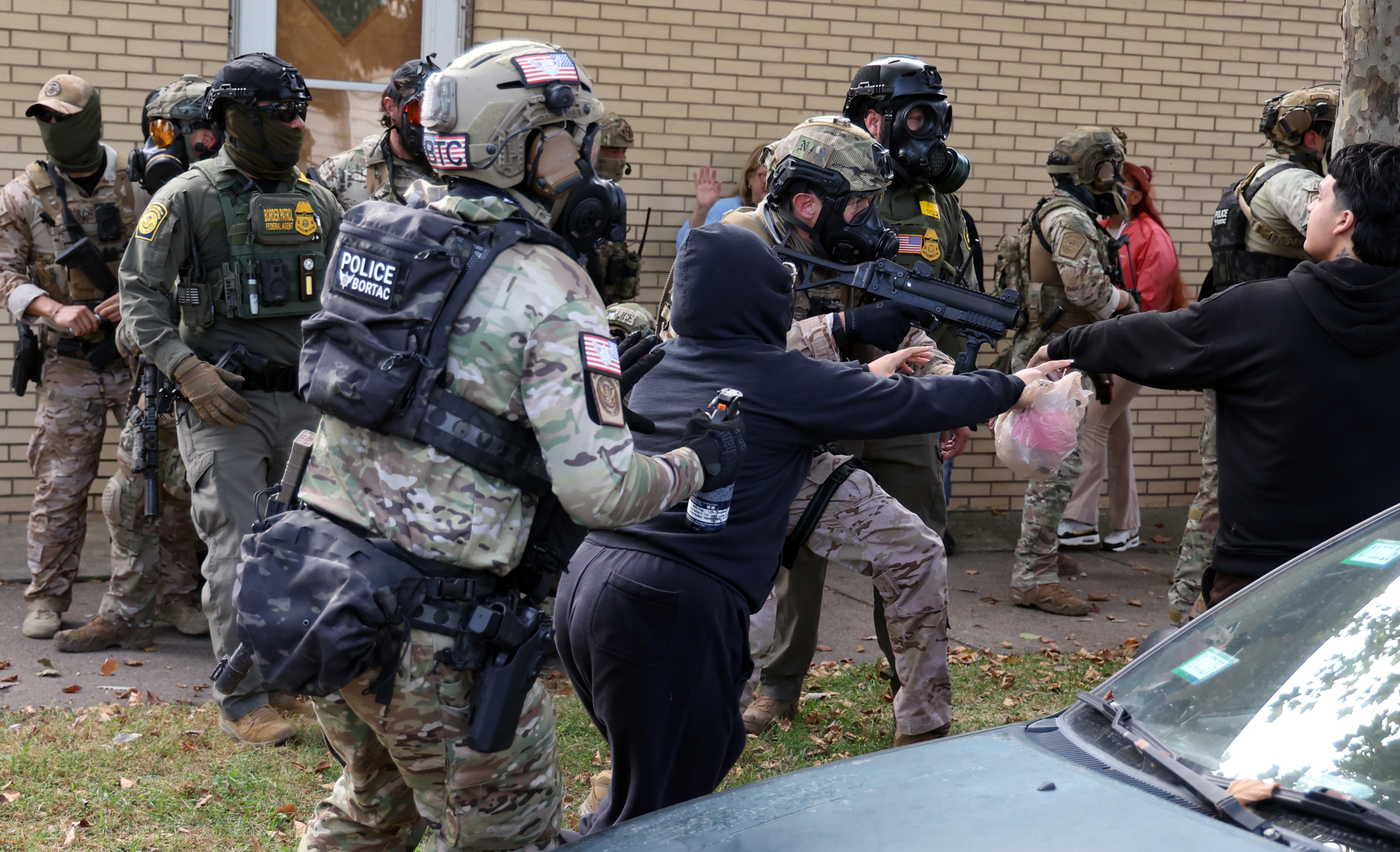
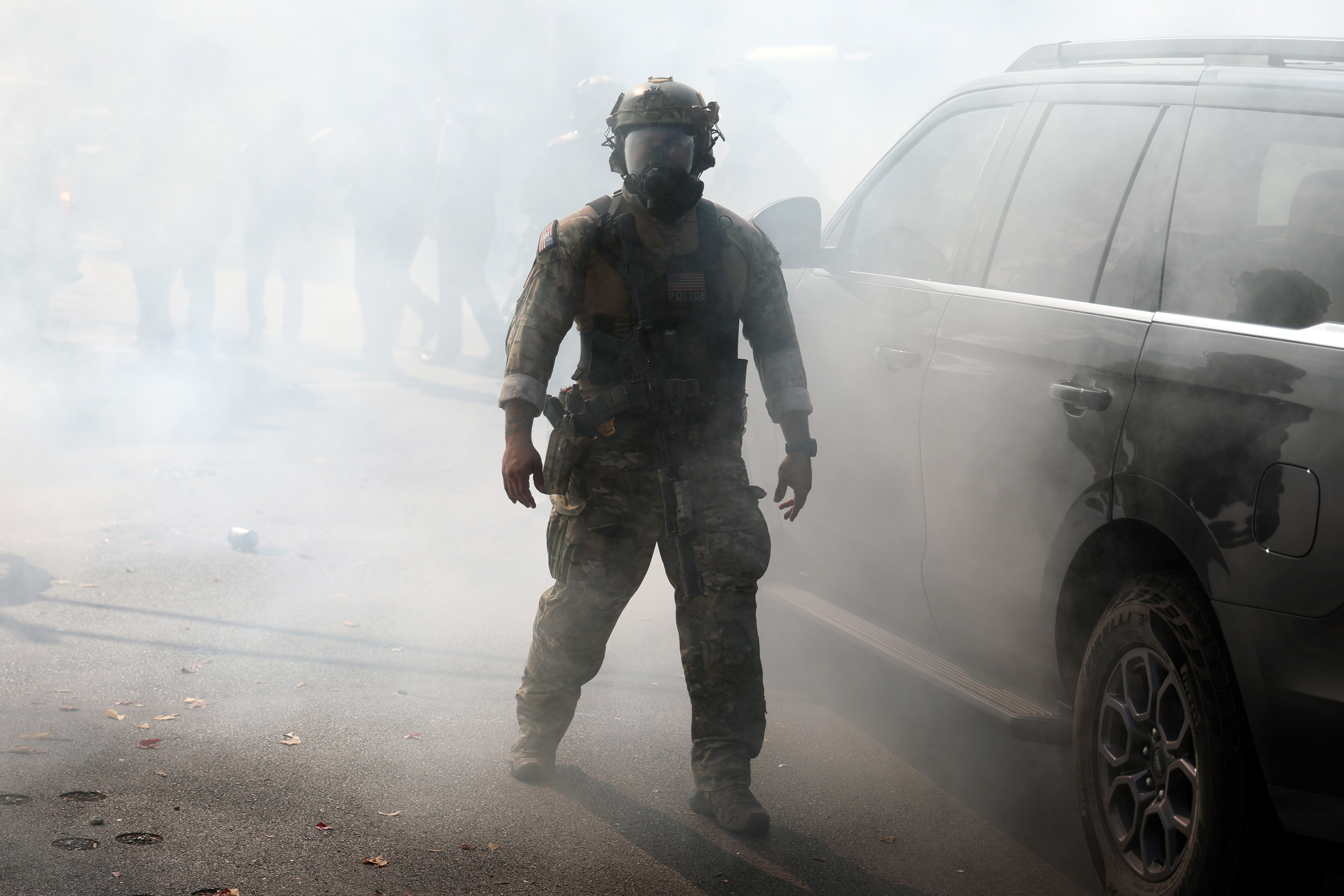
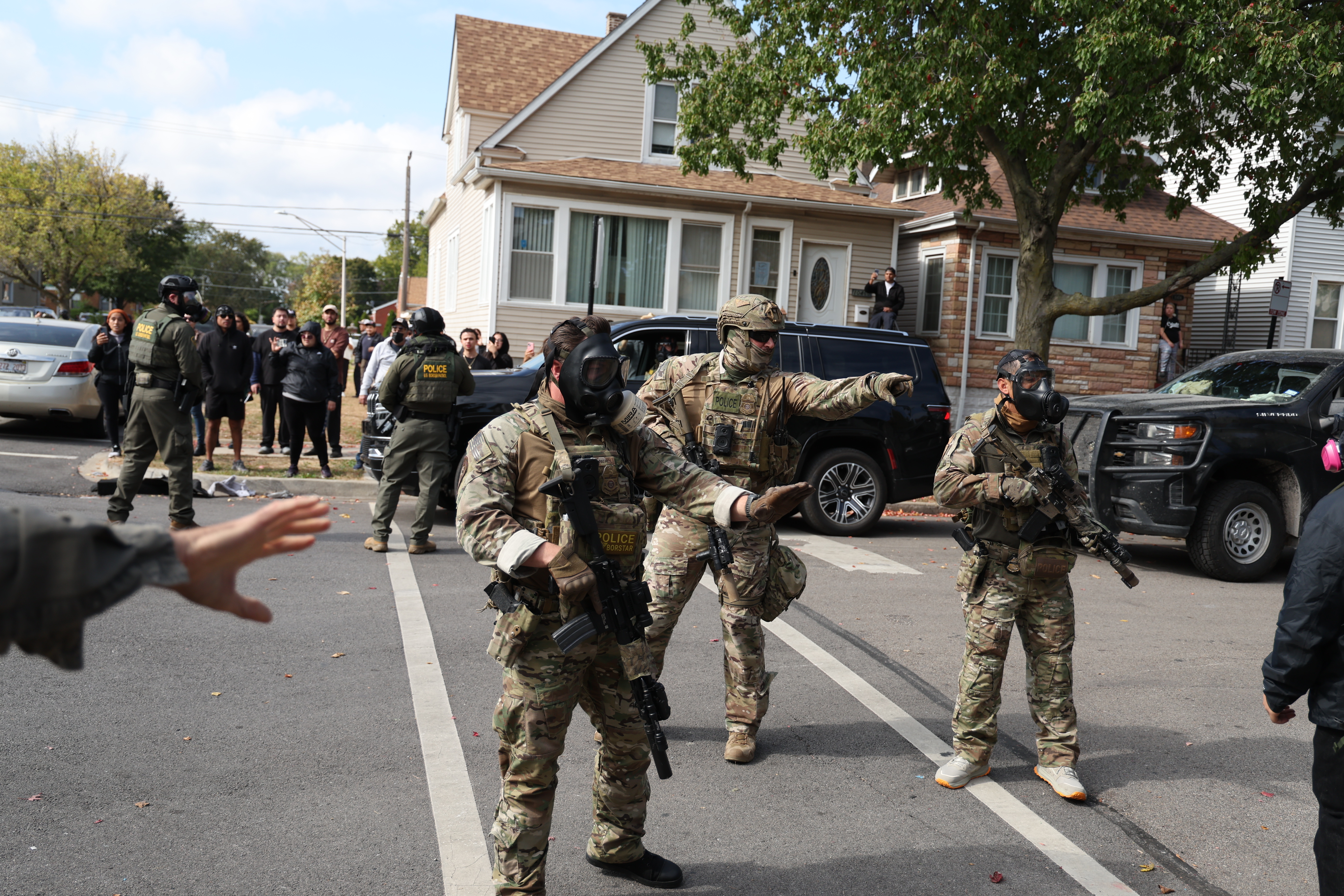
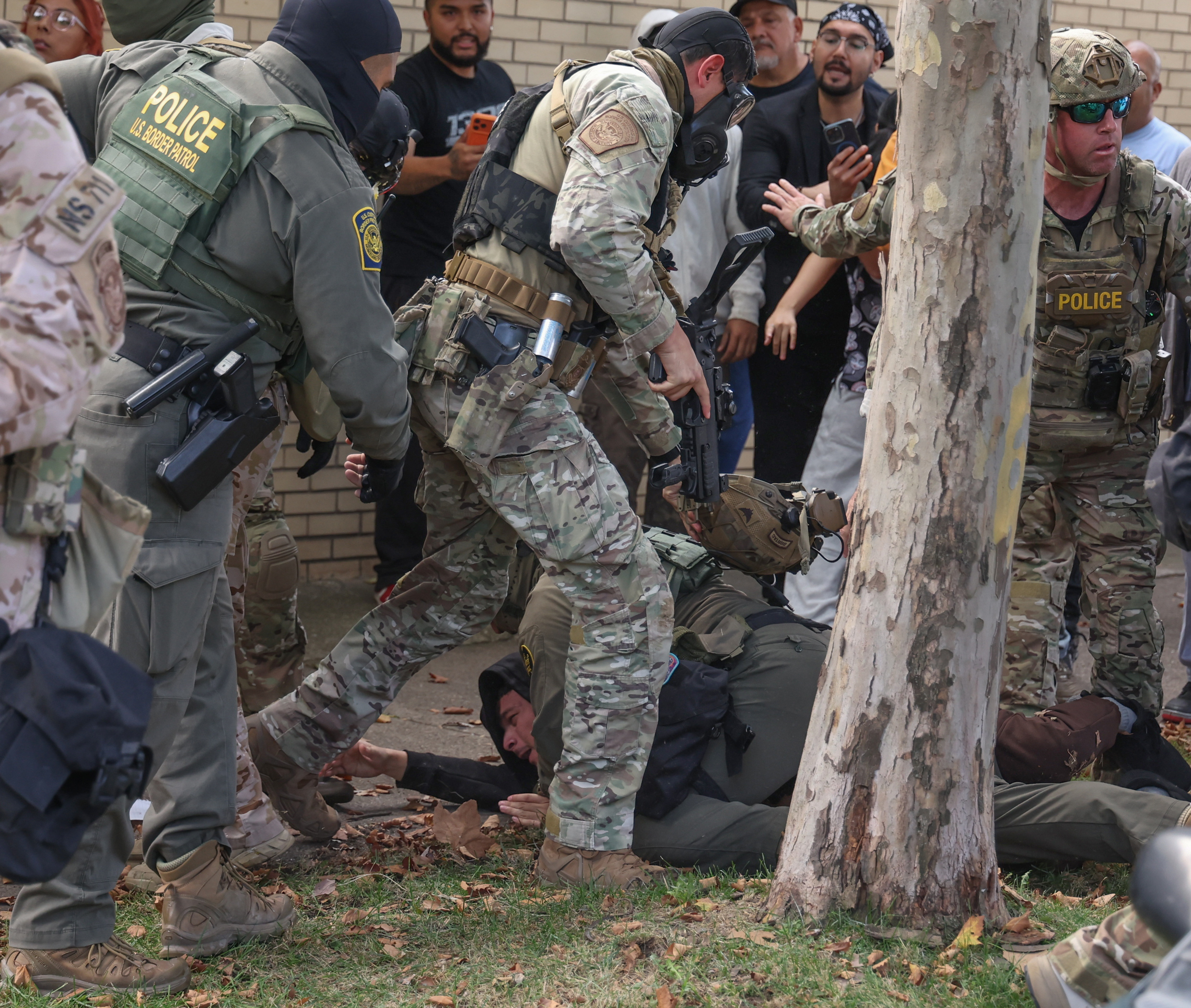
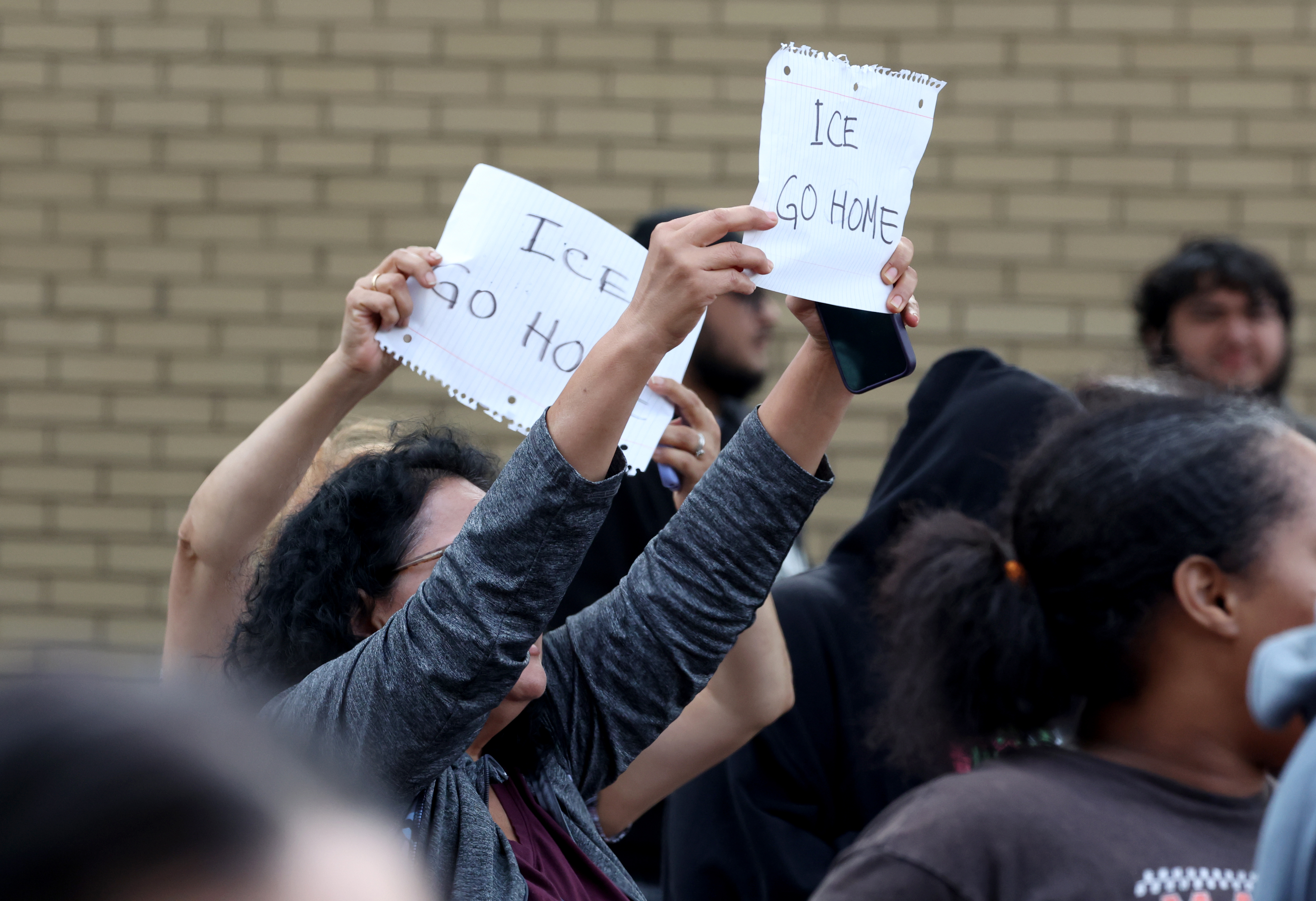
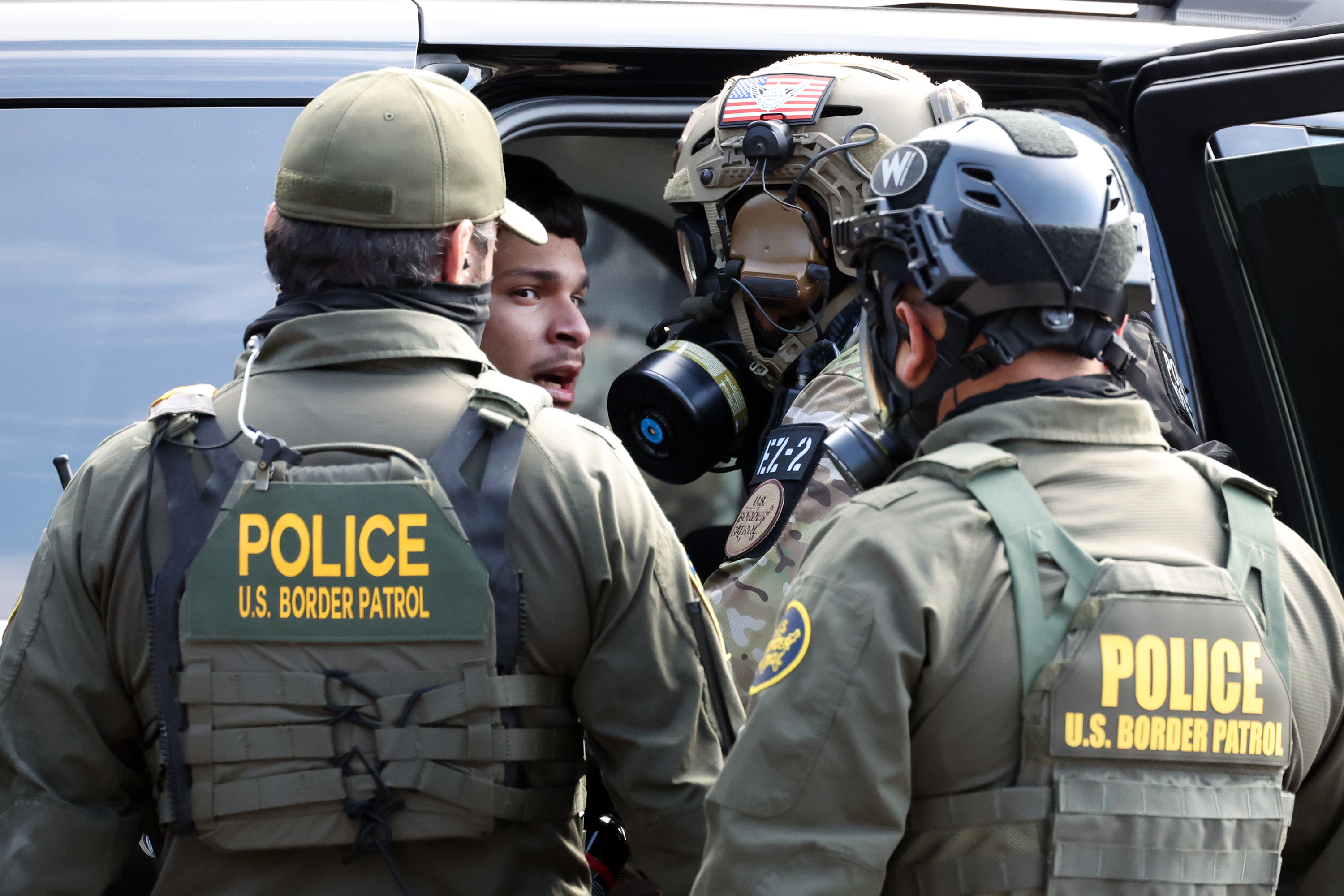
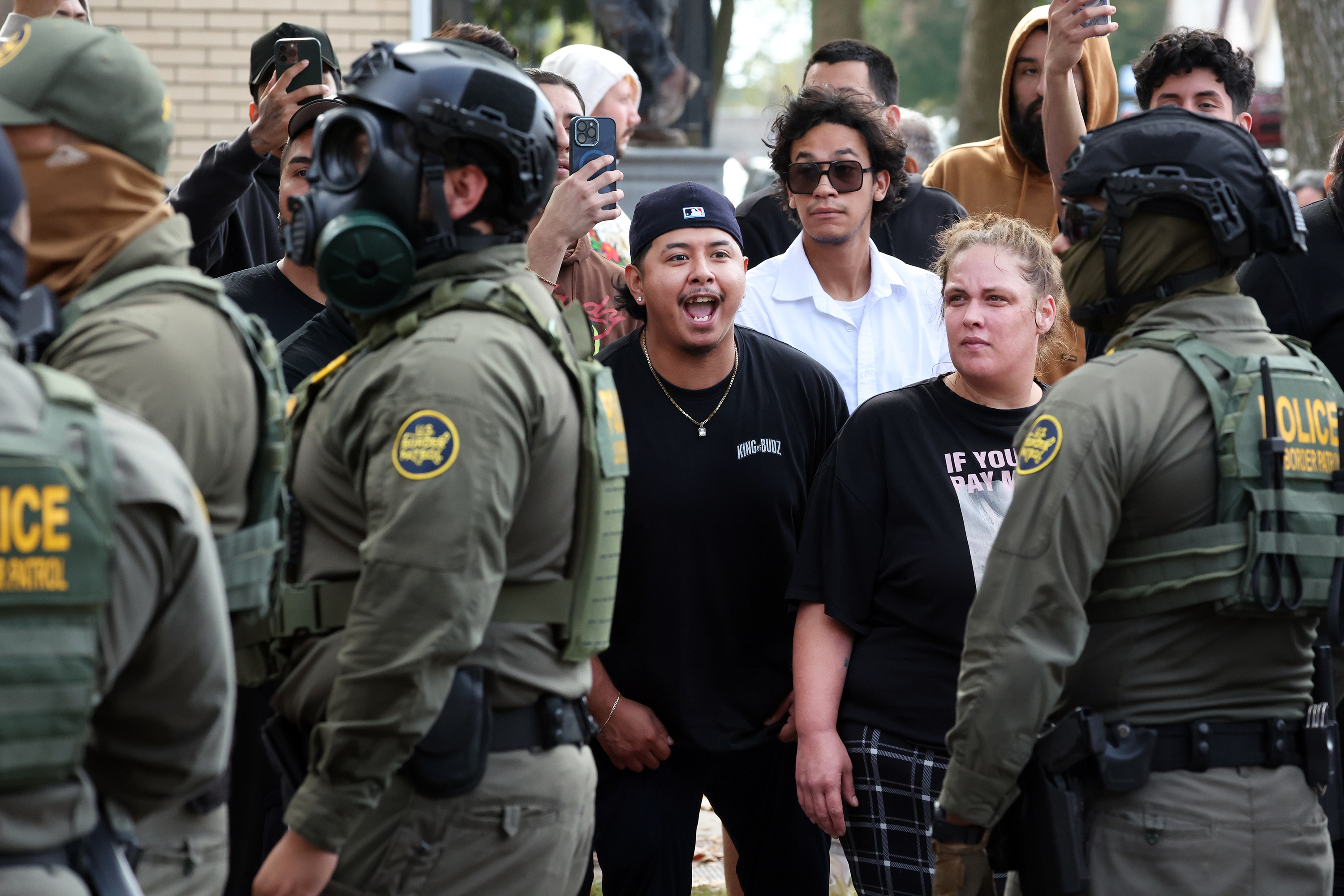
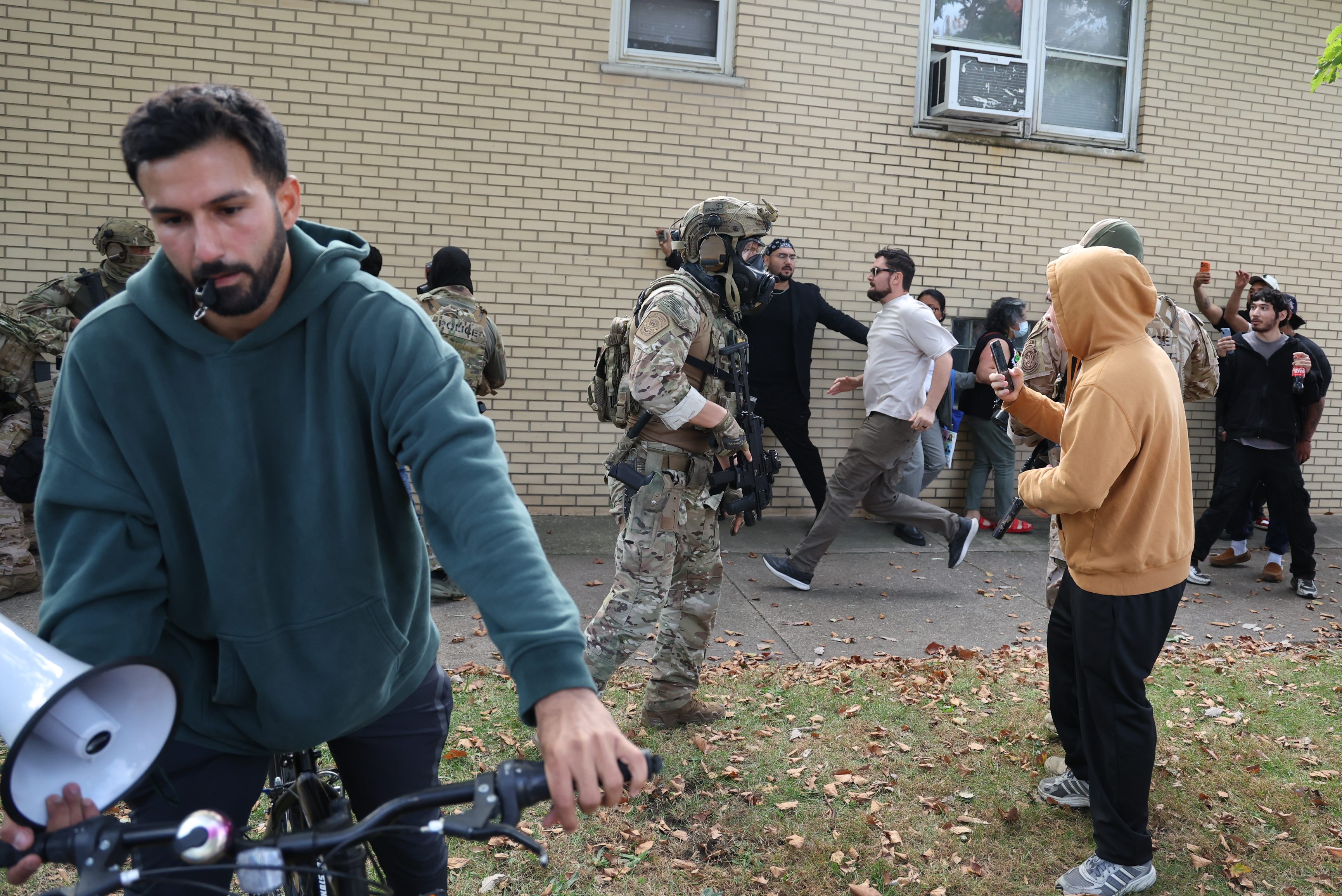
After the crash, much like in Brighton Park, a crowd of protesters gathered and there were some signs of agents’ de-escalating — trying to calmly talk to some in the crowd — but the incident ultimately ended with another head-shaking tactic.

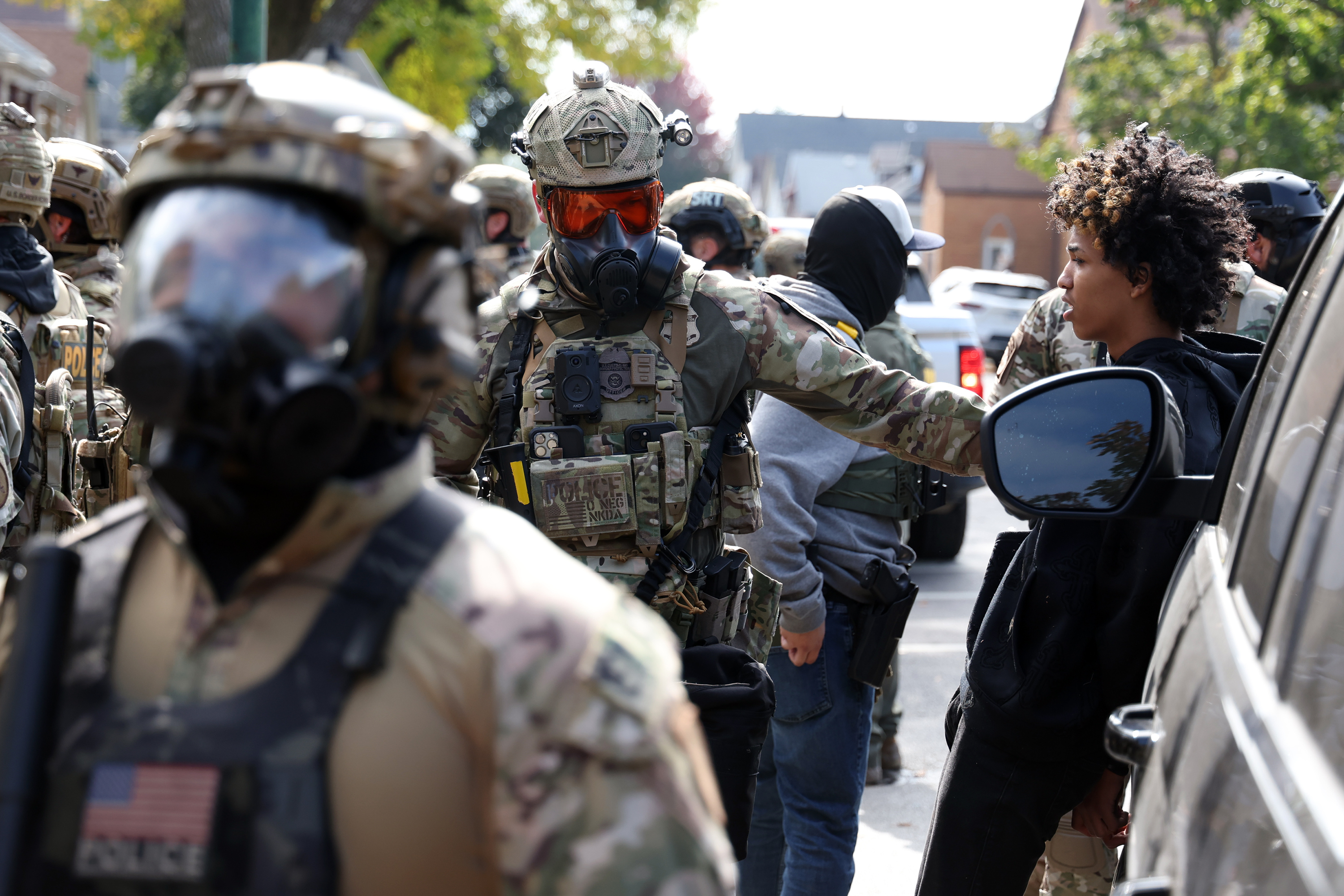
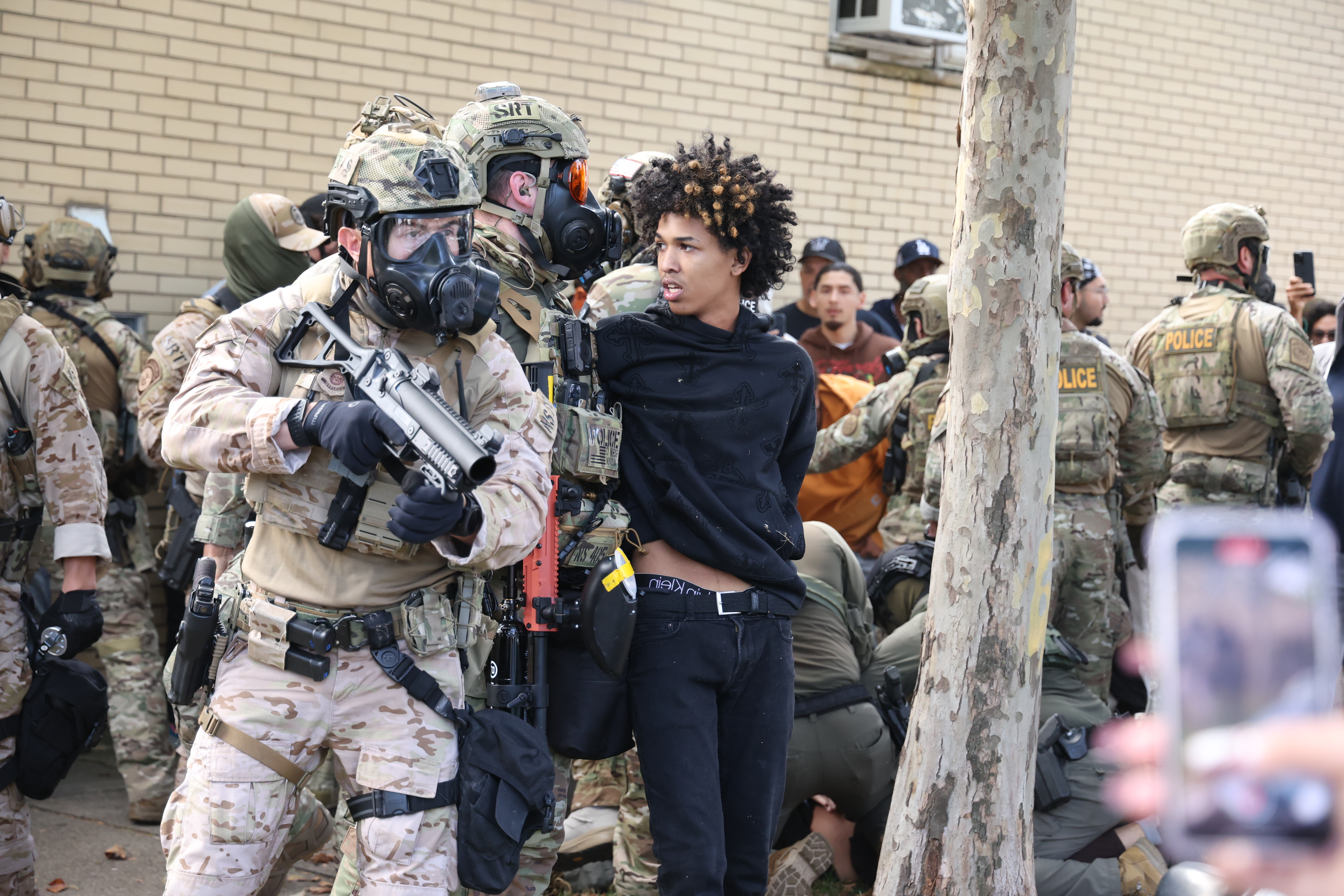
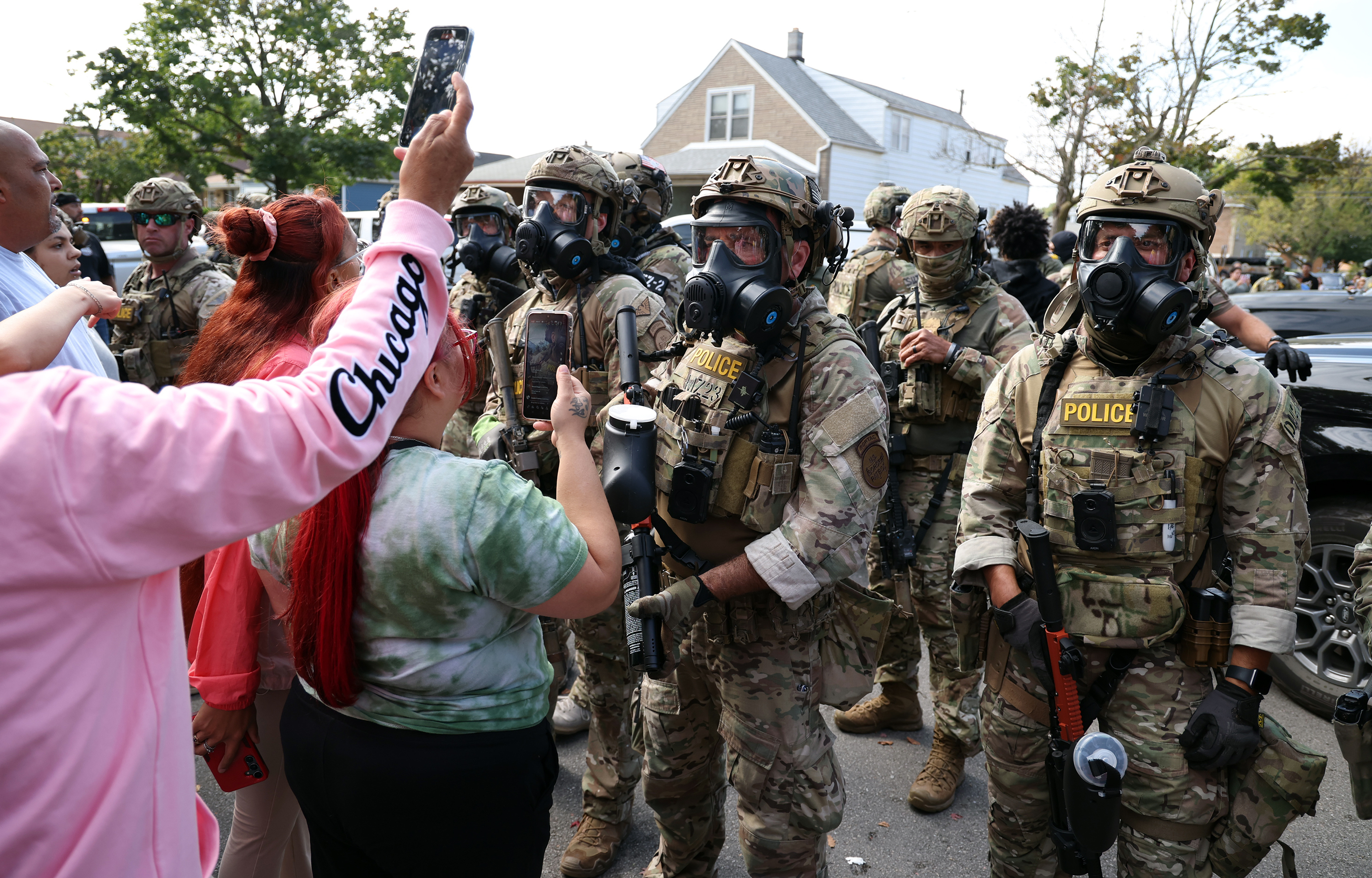
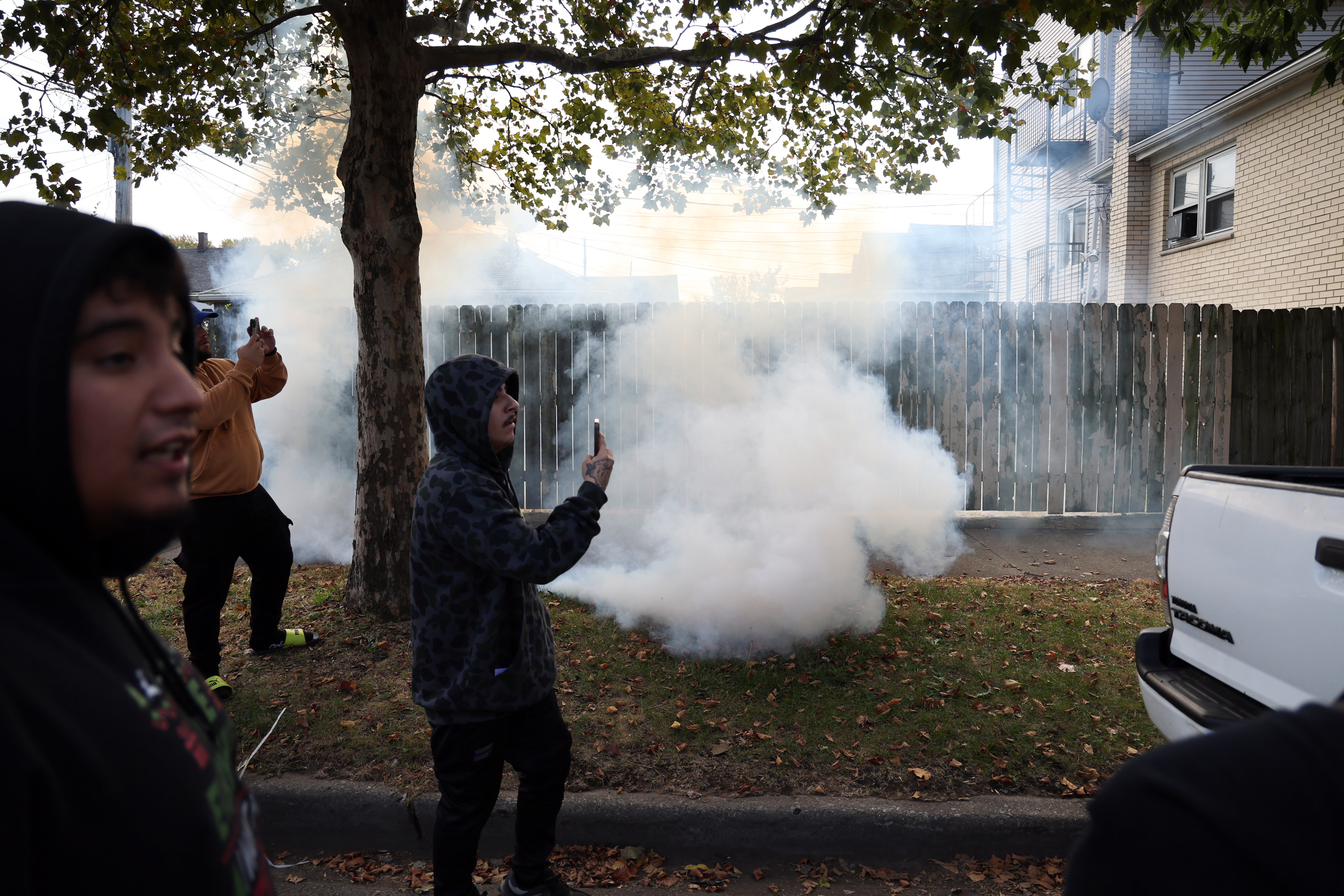
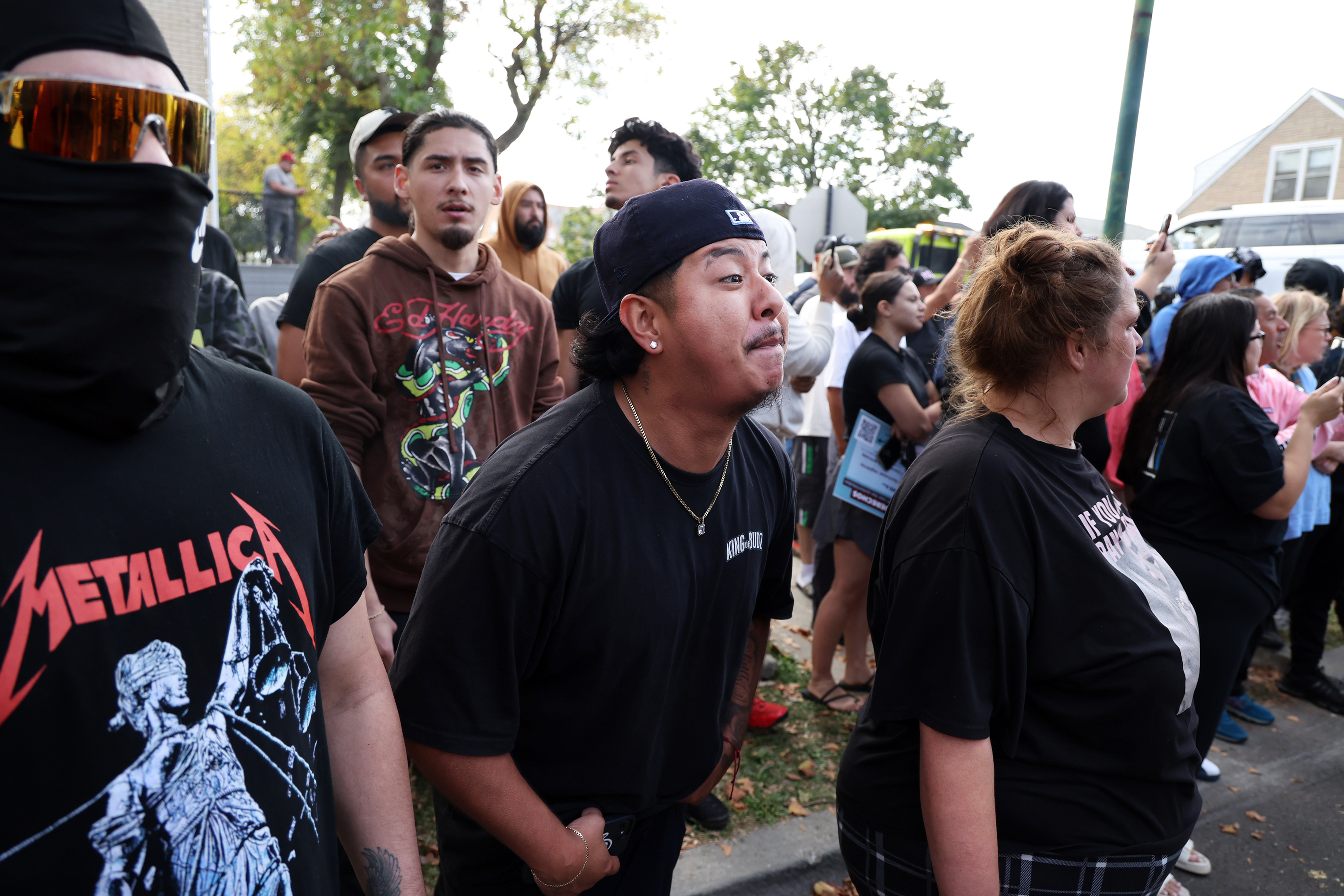
Border Patrol agents face off against community members at 105th Street and Avenue N in Chicago, Oct. 14, 2025. (Terrence Antonio James/Chicago Tribune)


Show Caption
1 of 18
Border Patrol agents face off against community members at 105th Street and Avenue N in Chicago, Oct. 14, 2025. (Terrence Antonio James/Chicago Tribune)
Chicago police responded to try to keep the crowd at bay and clear a path for other responding Border Patrol agents and tow trucks to deal with the two heavily damaged vehicles. The Chicago officers had a simple ask: Don’t deploy gas. But DHS body cameras recorded how federal agents had already begun forming plans to “gas” the crowd, with one agent saying “We’re definitely going to gas them when we get out of here.”
That’s what they did, throwing tear gas canisters mere feet from unmasked Chicago officers who’d lined up to protect the agents, and continuing to throw gas even after the crowd had begun fleeing. Once again, experts said, they not only used tear gas in dangerous ways, but did it in ways that affected fellow cops trying to help the agents.
Guns and cuffs
Throughout the operation, federal agents walked around in full tactical gear, sporting big pepper-ball rifles, tear gas canisters and sidearms that, like typical police officers, remained holstered.
But agents at times pulled their handguns and pointed them at protesters, the type of move that is inherently dangerous if someone isn’t a threat — and something police officers trained in crowd control try to avoid at all costs.
Not only can it lead to errant gunshots, or at least agitate the crowd more, it also means that — if an agent decides not to use the handgun during a confrontation — he or she has lost use of that hand.
“The gun’s already in your hand. So you’ve already lost control of the firearm. And if you’re not going to be discharging it, it’s pretty hazardous,” Kerlikowske said.
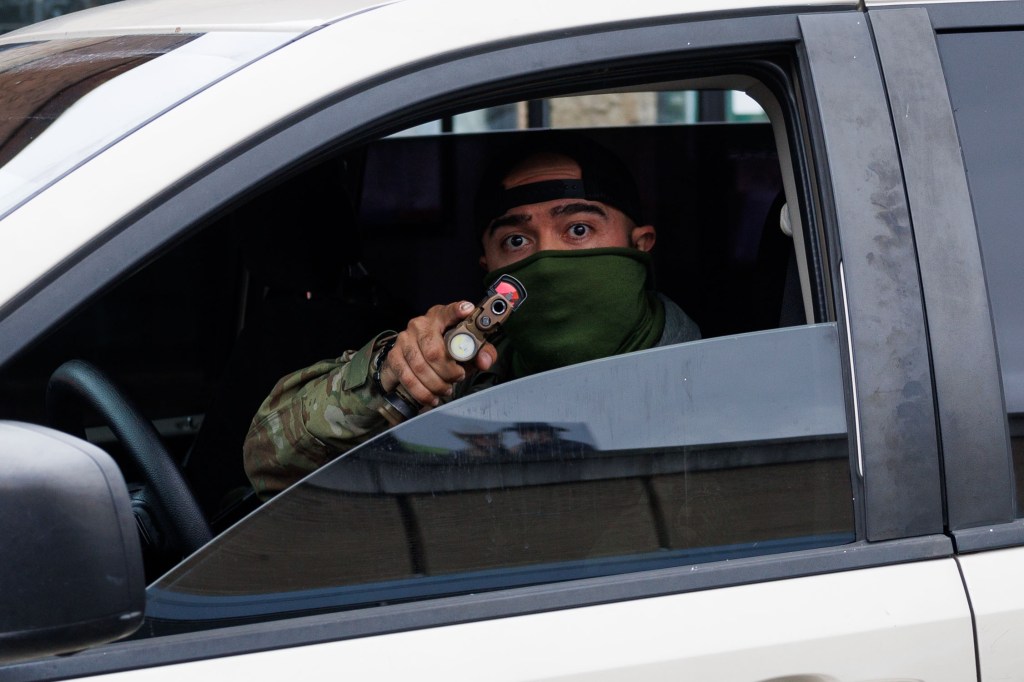
Worse yet, video and photographs caught federal agents pointing guns out of vehicles Nov. 8.
An agent in a driver’s seat was holding the gun sideways, which may look good in a rap video but in real life risks a gun jamming after one shot, experts said. Another agent, in a passenger seat, in a video posted by CBS 2, briefly points a gun while holding it outside a window, making it easy for someone to come from the side and push the arm against a door pillar to force the agent’s wrist open and take the gun.
“It wouldn’t take a whole lot of effort to do that,” Corey said.
Federal agents struggled even with handcuffs at times. In a Palatine parking lot Oct. 27, three ICE agents struggled to get cuffs on one man on the ground.
According to an after-action memo by Palatine police, a Palatine officer arrived to find one agent kneeling with her weight on the back of the suspect and holding handcuffs the wrong way to get them to work right.
The officer “realizes the agents’ lack proper training” and “are resorting to dangerous tactics,” according to the report, with the local officer fearing that agents are suffocating the man on the ground.
“(The officer) believes at this moment if he does not act and do something, the individual will be seriously injured,” according to the report.
So the officer helped handcuff the suspect and prompted agents to sit up the suspect to ensure he could breathe. As protesters taunted the agents, a female agent responded by “blowing kisses” to the crowd, a final questionable tactic that Palatine police complained made it harder for them to calm down the crowd once federal agents left.
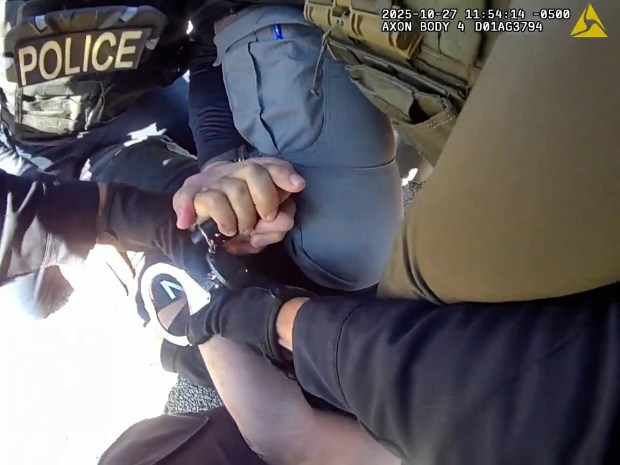 Body camera footage obtained in a Freedom of Information act request depicts a Palatine police officer participating in a federal immigration arrest on Oct. 27, 2025. Village officials said the officer acted in order to ensure the safety of the man being arrested, the federal agents and the crowd, but others have questioned whether the officer’s actions violated state law. (Palatine police)
Even in the biggest, arguably most planned raid — at a South Shore mid-rise, which DHS turned into a slick social media video — tactical experts questioned why DHS would have agents rappel from a helicopter to get onto the roof. Helicopters are loud, meaning you lose an element of surprise, plus can crash in a tight urban environment or, more likely, get agents injured jumping down from ropes.
It’s fine tactically to secure a roof — to limit the chance of someone taking shots or throwing things at law enforcement, the former police leaders said. But if the goal is to get the roof fast and quietly, the stairs are a much safer route, particularly in a pre-dawn raid counting on the element of surprise.
“Instead of using a helicopter, we (Chicago police) would have simply went in the building and sent people up a stairwell to be on top of the roof — if we thought that was necessary,” said Johnson, who ran Chicago’s department for 3 ½ years.
Snack run
By early November, the daily pattern had long been set. Immigration agents would depart on missions roving around parts of the city and suburbs.
Protesters — many dubbing themselves part of “rapid response” teams — would document agents’ moves as best they could. A subset would follow the agents in vehicles, honking horns and blowing whistles.
And when agents stopped anywhere, protesters would gather around, at times encircling agents — the intensity ratcheted up the longer agents lingered in one place.
In short, police experts said, it was the type of environment where agents could best succeed by precise, quick, well-planned operations that minimized where they stopped, and how long they stayed.
Even Bovino, in speaking with The Associated Press earlier this year, talked about being careful to plan operations to limit the ability of protesters to disrupt them.
And yet, federal agents had a habit of stopping at gas stations and convenience stores to grab snacks, like a family making a pit stop during a road trip. One of times came during a particularly intense day — Nov. 6 — when a federal judge had ruled agents’ heavy-handed enforcement actions “shocks the conscience” and said Bovino had lied about his past use of force.
That afternoon, the federal convoy stopped at a Gage Park convenience store, with reporters trailing behind Bovino, who offered an impromptu interview beside the aisle with Slim Jims. Roughly 50 people stood outside, many blowing whistles and filming on phones. Others soon arrived — the group screaming at agents and blocking traffic – as some agents waited, weapons in hand, in the shadow of the gas pumps. Inside the station, Bovino described the day as “very violent.” He explained his primary concern was for the safety of “our agents and the public.” Then he referred to the crowd that had formed outside.
“I mean, look at what’s happening here just to go use the bathroom and get something to eat, that’s even a safety concern here in many areas,” he said.
But policing experts said there’s a simple solution to that: In the heat of violent, intense operations drawing protests, find a safer place to take a restroom break and grab a snack — such as a secured federal facility. The FBI, for one, has a gated headquarters about 20 minutes from that gas station.
“You’re not stopping at the convenience store to use the bathroom and buy snacks in that environment,” Corey said. “You’re going to go back to the office. You’re going to go to someplace that’s much more friendly territory. You’re certainly not going to go in by yourself. Everything about it is just like, ‘This is not what you’d do.’”
Chicago Tribune’s Sam Charles contributed.