(Credits: Far Out / Alamy)
Sun 7 December 2025 16:42, UK
For all the accolades The Beatles garnered throughout their career, there’s a good chance George Martin deserves even more than they did.
He is rightly considered the ‘Fifth Beatle’ when looking back at the context of the group, and it is a position he earned with hard work and commitment to the cause. When the four likely lads from Liverpool, arrived at his studio, there’s a good chance that he wanted to slam the door on their cherubic faces.
Martin was happy to play the role of elder statesman when it came to this new group of pop icons in the making. With a sincere knowledge of arrangement and a devotion to perfecting sound, Martin would weave his talents alongside the quartet to create a powerhouse team.
As much as the group managed to put together fantastic music, Martin’s knowledge of music theory led to him making arrangements that should have justifiably counted as songwriting if royalties were divided justly. In terms of raw performance, though, Martin still thought that one of his most significant contributions to the band’s repertoire came from ‘Being for the Benefit of Mr Kite’.
Then again, Martin was tested as a producer when they started working on Rubber Soul. Whereas the studio was known as a stop-gap between touring when working on albums like Beatles for Sale, Martin helped the group see what they could do outside of conventional songwriting structures. They could stick with guitars if they wanted to, but it wouldn’t be the worst thing in the world for them to use an oboe now and then or a few classical musicians.
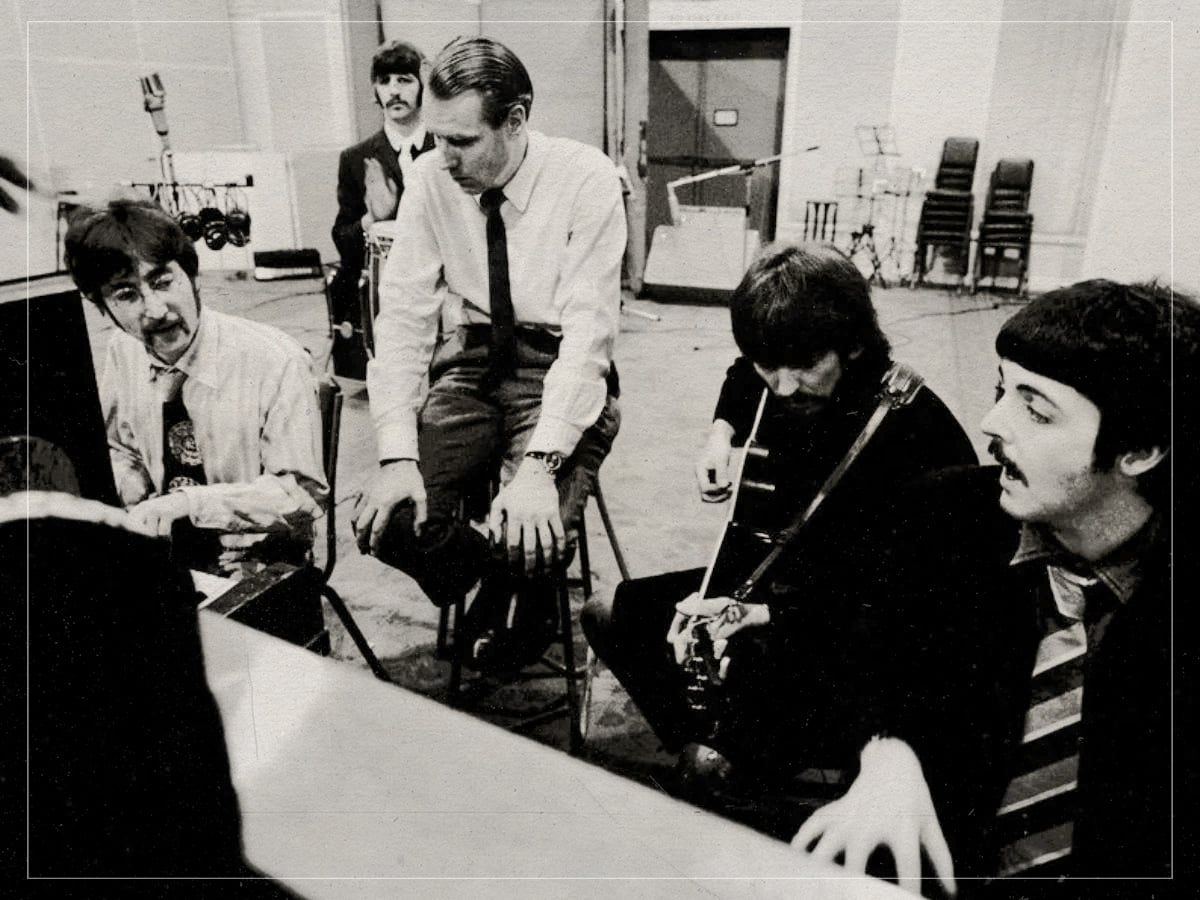
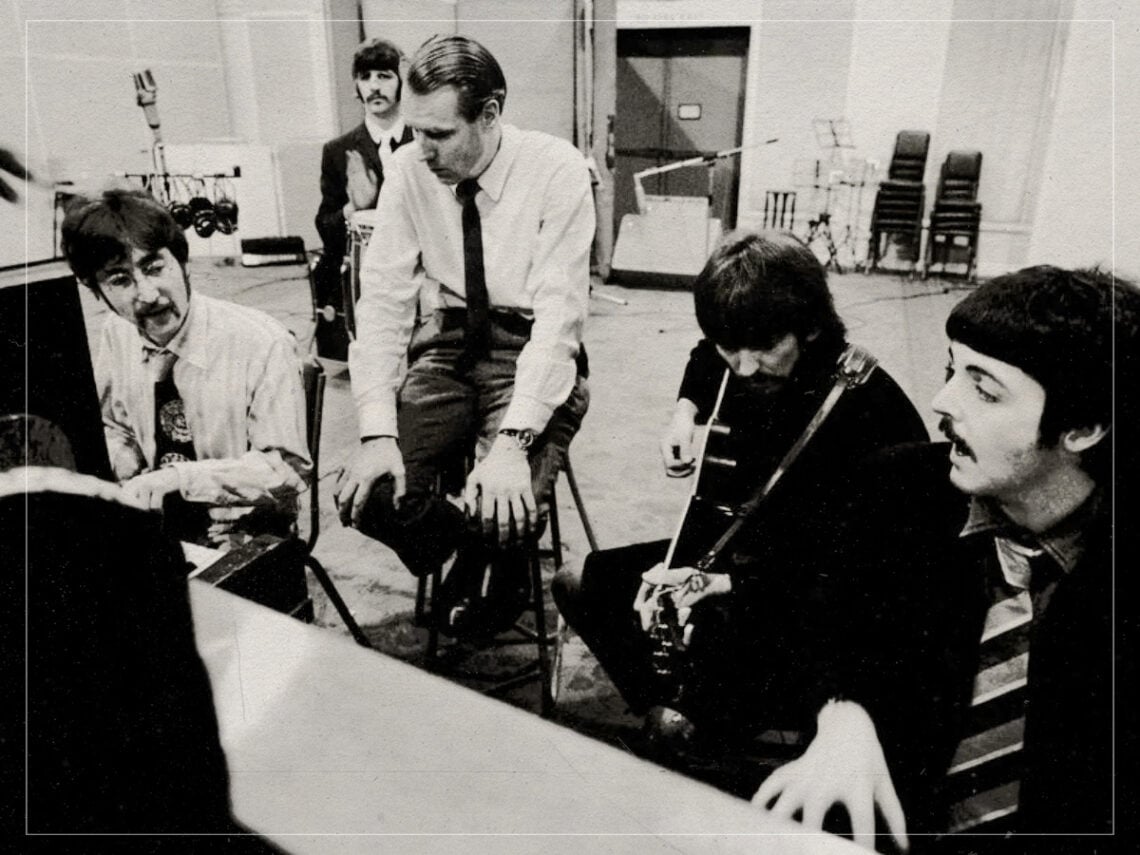
 George Martin in the studio. (Credit: Alamy)
If Revolver was the point where the band intentionally tried to make things sound messed up, Sgt. Pepper set the template for the next phase of their career. Since Paul McCartney had the idea to create this imaginary band, half of the songs were bold leaps forward, including the slinky jazz of ‘Fixing a Hole’ or the acid dream inside ‘Lucy in the Sky With Diamonds’.
Even with years of hindsight, ‘Being for the Benefit of Mr Kite’ might be the weirdest song on the record. Yes, even more than ‘A Day in the Life’. Whereas the group had worked with conceptual songs before, hearing John Lennon create this piece from a passing fairground poster that he found in a shop meant that they needed to set the scene without using any visuals.
Instead of having the traditional means of making a song, the midsection of the track is practically a trip into an acid-soaked rabbit hole, featuring Martin pumping away on the organ until he was physically exhausted. It was certainly difficult for everyone to master, but when asked about it later, Martin admitted that it was one of the proudest sessions he ever did.
Discussing the entire album, Martin considered ‘Mr Kite’ one of the true highlights of the piece, saying, “I suppose the one that I am most proud of is ‘Being for the Benefit of Mr Kite’ because I was part of putting that together as a collage. That really worked and I was very happy about that. It was the happy days before the strife set in”.
Considering everything happening in the background, the recording was almost as chaotic as ‘I Am the Walrus’. Whereas Lennon wanted his later single to be intentionally weird, the circus sound collage in the middle came about through complete randomness, including Martin throwing bits of tape up in the air and rearranging them so they sounded completely different. For a producer who was known for being sophisticated in almost every aspect of his life, ‘Being For the Benefit of Mr Kite’ is the sound of Martin operating as a studio madman.
What Beatles songs did George Martin hate?
One of the reasons Martin was such a good addition to the band is that he could listen to some of their outlandish suggestions for songs and help them find form. Whether that meant using large string sections, unique recording techniques, or fleshing out a track, the Beatles’ willingness to experiment is what made them such prolific songwriters. However, when you are that willing to push the boundaries of music, not everything you do will sound fantastic.
For Martin, tracks like ‘Only A Northern Song’, ‘Within You Without You’, ‘Revolution 9’ and more represented some of the more unwanted moments of the band’s back catalogue. “When I first met them in 1962, their material was terrible,” said Martin, “Their songs were… I mean, ‘One After 909’? What the hell was that? It was silly stuff. Not very good, really.”
Related Topics