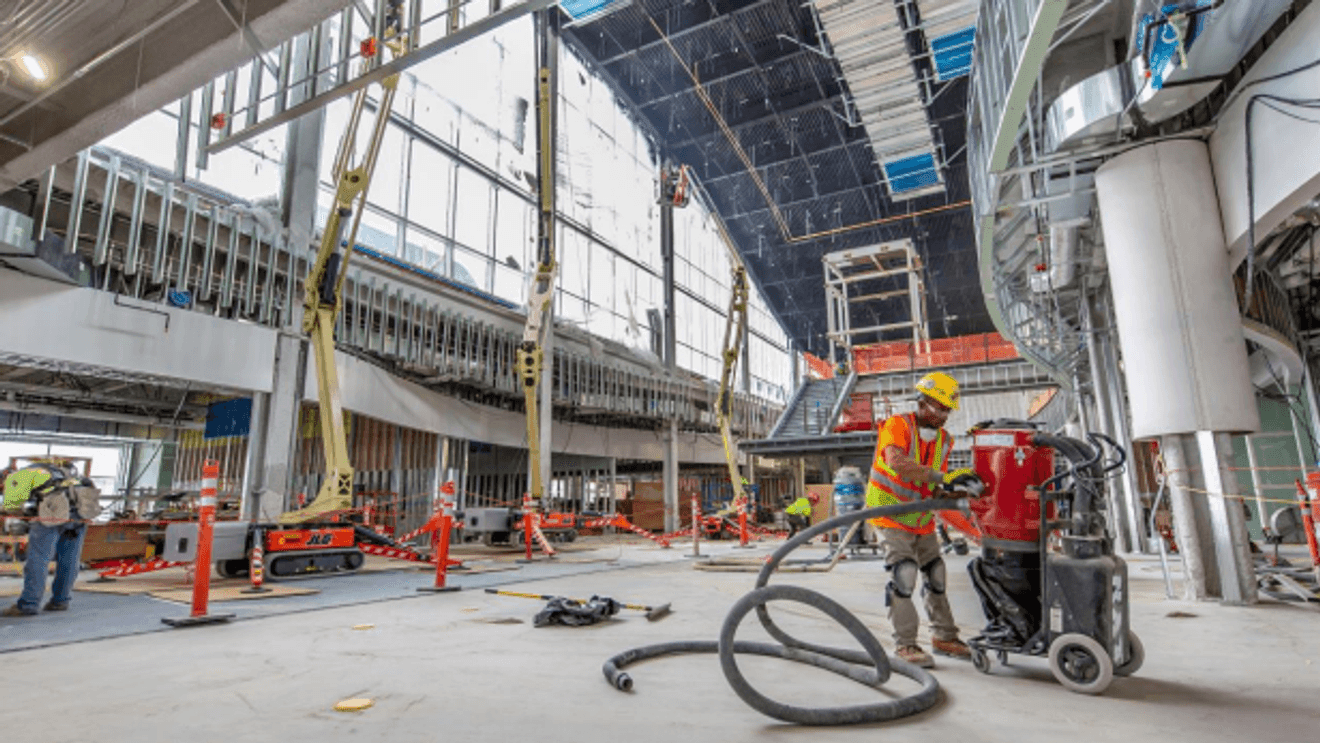
SEATTLE — Three South King County cities are asking a federal court to overturn the Federal Aviation Administration’s approval of a major expansion plan at Seattle-Tacoma International Airport, arguing the agency signed off on the project despite significant impacts on surrounding communities.
In a petition filed Nov. 24 with the 9th U.S. Circuit Court of Appeals, the cities of Burien, Des Moines, and SeaTac seek review of the FAA’s September decision issuing a Finding of No Significant Impact/Record of Decision (FONSI/ROD) for the airport’s Sustainable Airport Master Plan (SAMP) Near-Term Projects.
SEE ALSO | SEA Airport unveils revamped checkpoint with improved layout, digital signage
The petition challenges the FAA’s conclusion that the 31 near-term projects, including a new terminal, 19 additional gates, taxiway expansions, cargo facilities, fuel tank additions, roadway reconfigurations, and other large-scale construction, would not produce significant environmental or community impacts requiring a full Environmental Impact Statement.
The projects are designed to allow the airport to accommodate 56 million annual passengers and growing cargo volumes, upgrade aging airfield infrastructure, meet updated FAA design standards, and increase fuel storage capacity, according to the FAA’s environmental assessment.
While the FAA found the expansion would increase noise, traffic, greenhouse gas emissions, and air pollution compared with the “no-action” alternative, the agency determined none of those impacts would reach significance thresholds under federal regulations. The plan would increase the area inside the 65-decibel noise contour and add hundreds of additional homes and residents to the zone by 2032 and 2037, but the FAA said the growth would not trigger significant adverse noise impacts.
The FAA also cited mitigation measures the Port of Seattle would be required to implement, including stormwater upgrades, wetland compensation, transportation improvements, construction noise controls, habitat protections, and groundwater monitoring.
The cities did not outline their detailed arguments in the petition, which serves as a formal notice of challenge, but have long raised concerns about increased aircraft noise, environmental impacts, and cumulative effects from continued Sea-Tac expansion.
The petition was filed on the final day of the statutory 60-day deadline for contesting FAA orders. A briefing schedule has not yet been set.
The FAA’s decision allows the Port of Seattle to advance the near-term projects into design and construction phases, though portions of the plan still require additional permits, funding approvals, and coordination with federal and state agencies.