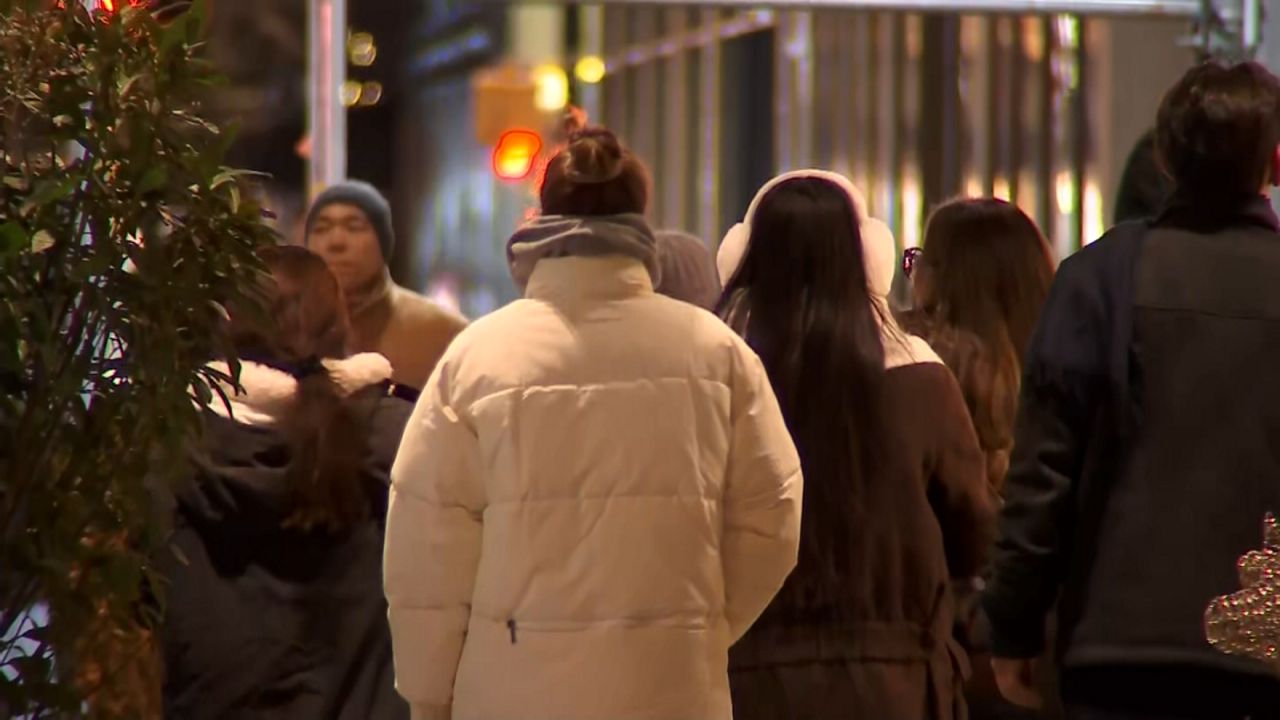
For people whose jobs require them to be outside, they have to be ready for whatever the weather brings.
Temperatures are running about 15 degrees below average, and it’s not even officially winter yet. The temperatures seen on Monday across the five boroughs are more common in January than December.
What You Need To Know
- Temperatures are running about 15 degrees below average
- This is the second arctic blast New York City has experienced in the past four days
- The city’s Department of Homeless Services issued a Blue Code warning which means shelter is available system-wide for anyone brought to a shelter by outreach teams or for walk-ins
Dr. Laura Santos, the medical director of the Pediatric Intensive Care Unit at Hassenfeld Children’s Hospital at NYU Langone, says it’s important to layer up properly.
“If you could do three layers like a thin moisture wicking layer and then maybe like a wool layer and then a windproof or a waterproof outer layer is really the best and making sure that your head, your hands and your ears and your feet are all well covered because these are the areas that lose heat the fastest,” she said.
She also explained that infants require extra care.
“They should always have one extra layer than adults would have when inside,” Dr. Santos said. “And every time they’re in a car seat, you should really take off those puffy coats because the harnesses aren’t really nice and snug and they don’t protect as well when the puffy coat is in the way. And what you do is you put the coat over sort of like a blanket.”
The city’s Department of Homeless Services issued a Blue Code warning, which means shelter is available system-wide for anyone brought to a shelter by outreach teams or for walk-ins.
Dave Giffen, the executive director of the Coalition for the Homeless, says being outside in these temperatures can be unsafe.
“The reason that we have a right to shelter in New York City is because it is dangerous,” Giffen told NY1. “It can threaten your life to sleep out exposed to the elements and especially on nights like tonight.”
This is the second arctic blast the city has experienced in the past four days.
Dr. Santos says you should limit your time outside to 20 to 30 minutes, and if you see anyone at risk, especially those living on the street, you can call 311 to help connect them to an outreach team.
Other tips to stay safe and warm in these freezing temperatures include staying hydrated, having an asthma action plan if asthmatic as the cold temperatures can trigger asthma attacks and dressing in layers.