
Lily Huynh/ The Cougar
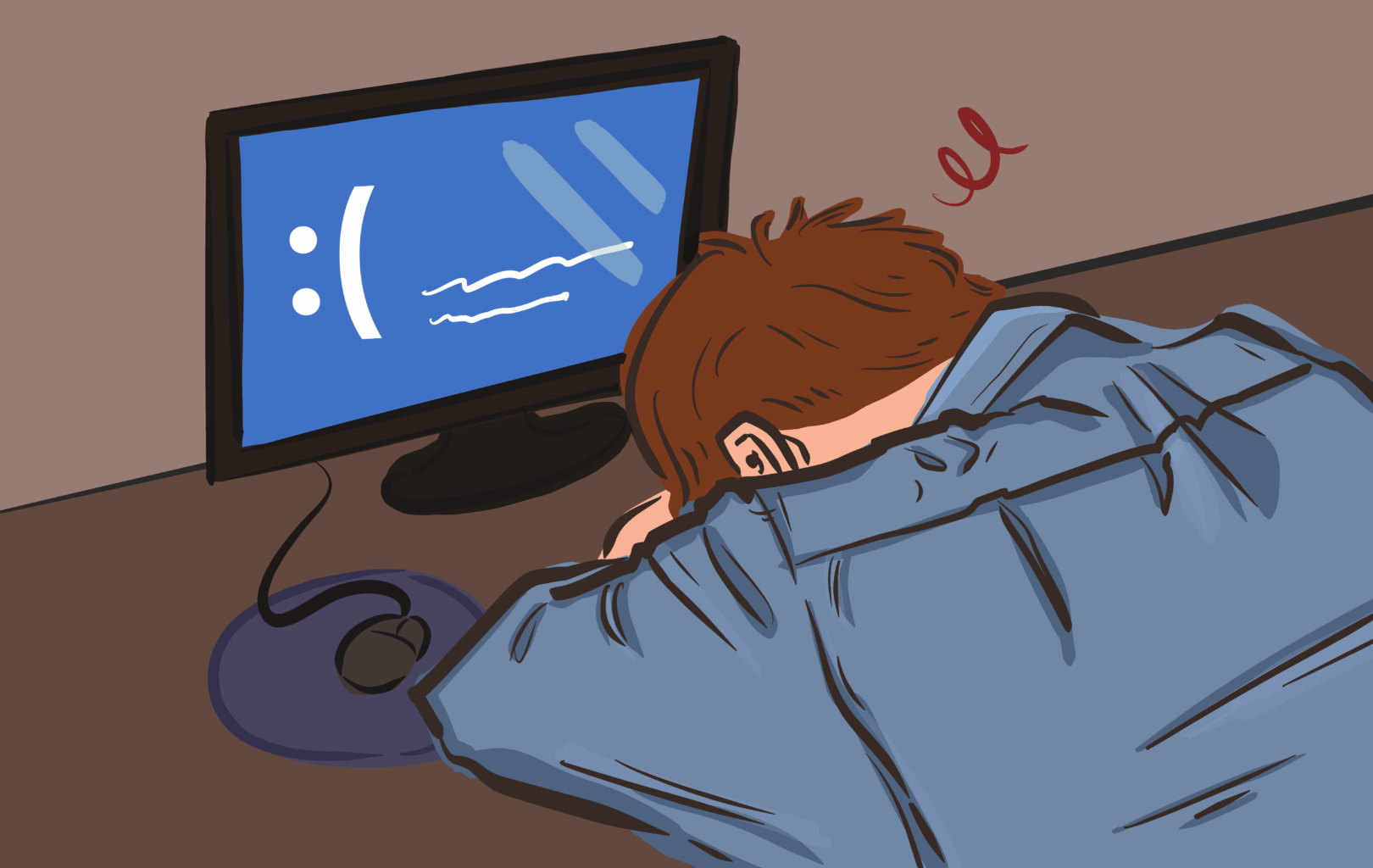
Earlier this August, the New York Federal Reserve Bank reported that Computer Science majors faced a 6.1% unemployment rate upon graduation. This is the 7th-highest among all majors reported, and above fields that many would consider “dead,” such as journalism and philosophy.
To combat this weariness, the University of Houston must adapt its program to the shifting job market and set current and future students up for success.
Days Past
Computer Science was, for a period, the “it” major for incoming college students; it was a must for any college student seeking a high salary and lucrative benefits. The phrase “learn to code” was the catchphrase for thousands of career advisors. Those days are a forgone memory.
Many blame the expansion of AI tools for the decrease in opportunities and jobs available, but that is nothing more than a red herring for a larger issue. In reality, employment for software developers is projected to grow by more than 17% by 2033, according to the Bureau of Labor Statistics.
What matters more is the enormous growth of CS degrees, which increased by 4.9% annually from 2019 to 2024, while Big Tech entry-level employment rates dropped 50% from pre-pandemic levels in 2019.
Furthermore, only 40% of computing instructors say their graduates are sufficiently prepared to enter the workforce.
Oversaturation and lower hiring rates make one thing clear: the program needs to change. UH needs to better prepare students and transform the course catalog to meet industry demands across various subfields of Computer Science.
In addition, there is a need for greater availability of high-demand classes such as artificial intelligence programming and security analytics.
Adapting to the times
The computer science curriculum and course catalog have remained largely untouched since the early 2010s, a contrast to the ever-changing field of computer science. Classes like operating systems, data structures and database systems will remain pillars of the science forever.
Having said that, it is also important to consider the employment landscape when deciding to add or remove courses from the course catalog.
Artificial intelligence, for example, is a field experiencing astounding growth, with a 25.2% from 2024 to 2025. The computer science program currently offers a Fundamentals of Artificial Intelligence course, but for the upcoming spring semester, there is only one class available that many upperclassmen are scrambling to get into.
Cybersecurity is another booming field facing the same dilemma, with only one class available this spring. Cloud computing is another ever-growing subfield for which the department fails to provide adequate courses.
The field is expected to grow by 25% over the next decade; UH would be doing a disservice to its students by not offering a cloud computing course or other thriving areas in computer science.
An emphasis on specialization and tracks within the program would also benefit students’ employability by enabling them to have a deeper understanding of a CS subfield.
Building pathways for the future
Currently, the computer science degree plan requires students to take nine core computer science courses totaling 30 hours, plus 15 credits of electives. A decrease in the number of required base classes, along with an increase in elective hours available, would allow students to build stronger expertise.
The capstone system, while intended to fulfill that function, is too limited in senior sequences to serve that purpose fully. Many universities in direct competition with UH, such as UTSA, have computer science programs with multiple tracks and a deep course catalog for each pathway.
Meanwhile, the number of available capstone paths at UH has increasingly become slim, with the recent elimination of the cybersecurity capstone. An easy way to expand the elective course catalog is to add courses from other majors closely related to computer science. Remote sensing and Introduction to Data Science and Machine Learning are two such courses closely connected to the field.
The field of computer science is facing an uncharacteristic rough patch in its otherwise rich existence. The department, students and professors must work together to transform the program to match the inherently shifting demands the field is advancing towards. In times of great change, those who fail to adapt are left unrewarded. We must meet the moment.
opinion@thedailycougar.com