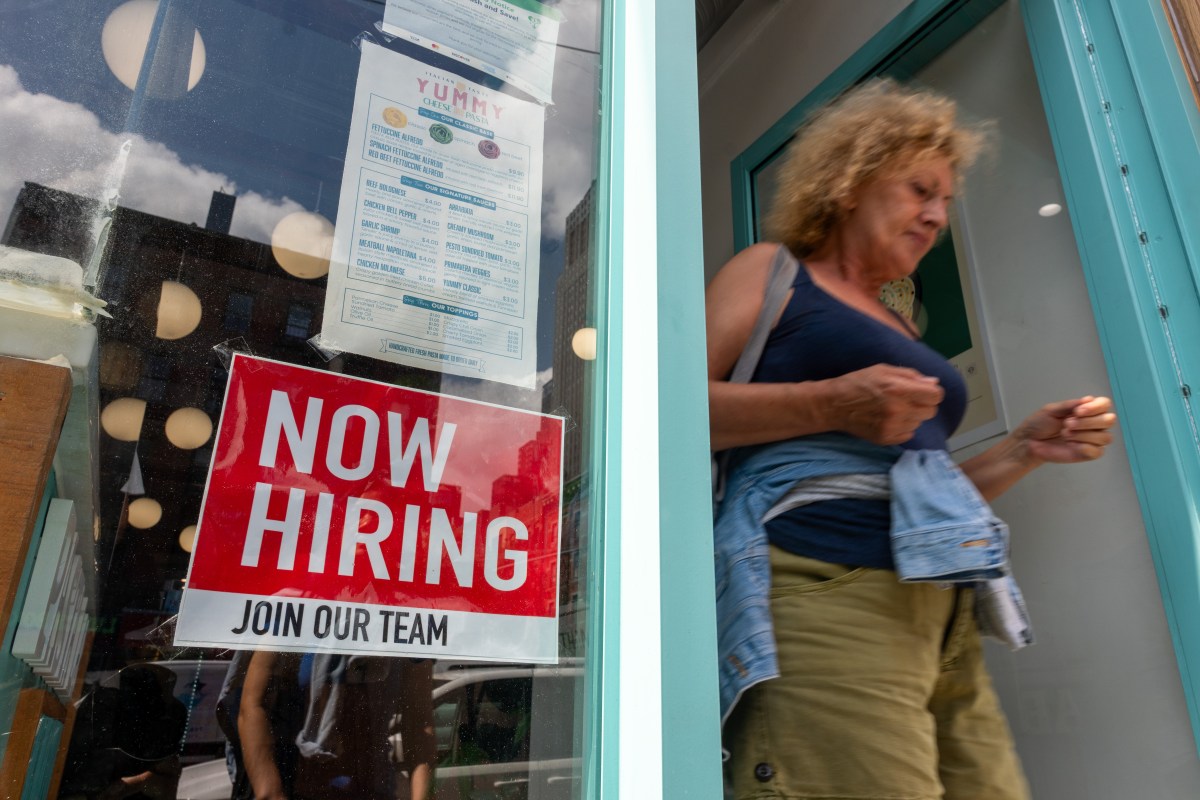
Layoffs have hit a five-year high as over a million Americans have lost their jobs this year, according to a new Challenger report.
The number marks the highest since 2020 and the most since 2009, except for during the coronavirus pandemic.
Why It Matters
President Donald Trump and Republicans have touted the GOP as good for the economy, but amid the surge in layoffs and among other factors, including affordability costs, recent polling numbers show that the president could be losing Americans confidence on economic issues.
According to the Federal Reserve Bank of New York, 38.97 percent of Americans said they’ll be worse off financially next year. The last time Americans polled that high on that question was in November 2023.
 What To Know
U.S.-based employers announced 71,321 job cuts in November, up 24 percent from the 57,727 job cuts announced in the same month last year, according to the report.
The total from November is the highest for the month since 2022, when 76,835 job cuts were announced.
“Layoff plans fell last month, certainly a positive sign. That said, job cuts in November have risen above 70,000 only twice since 2008: in 2022 and in 2008,” said Andy Challenger, workplace expert and chief revenue officer for Challenger, Gray & Christmas, in the report.
Through November, employers had announced 1.17 million job cuts, an increase of 54 percent from the 761,358 announced in the first 11 months of 2024.
Year-to-date job cuts were also at the highest level since 2020 when 2.22 million cuts were announced through November. It is only the sixth time since 1993 that job cuts through November had surged past 1.1 million.
“Consumer spending is slowing as people grapple with higher costs and stubborn interest rates,” Michael Ryan, a finance expert and the founder of MichaelRyanMoney.com, told Newsweek. “Companies are betting on AI and automation to do more with less. And a lot of businesses that hired aggressively after the pandemic are simply correcting course. They overestimated how much staff they’d actually need.”
Ryan said a large issue is that recent job booms were initially built on shaky ground.
“What we’re seeing now is a structural cooling, not just a temporary sector-specific dip. It’s widespread, which means it matters to everyone,” Ryan said.
What People Are Saying
Alex Beene, a financial literacy instructor for the University of Tennessee at Martin, told Newsweek: “After years of lower unemployment rates and plentiful jobs in most sectors of the economy, America has in the past year seen numerous cracks in that sturdy wall, but it’s too early to tell if the fissures being created are permanent. Obviously, AI is the source of most of the finger-pointing when it comes to some of the employment cutbacks, but it’s important to note demand for products and services in many sectors have fallen in the last year, as well.”
Michael Ryan, a finance expert and the founder of MichaelRyanMoney.com, told Newsweek: “If you work, job security is shakier than it’s been in years, even in fields that have historically weathered downturns. That makes flexibility and constant learning non-negotiable. You also need a real financial cushion. Not someday, now! If you’re managing household finances, planning just got harder. When both your paycheck and your housing costs feel uncertain, the old advice to avoid over-leveraging and keep cash on hand suddenly feels urgent rather than cautious.”
HR consultant Bryan Driscoll told Newsweek: “These layoffs signal uncertainty. Companies are pulling back because they’re bracing and reacting to the ripple effects of Trump’s policies and rhetoric. In business, when you’re not growing, you’re retreating, and when you retreat, that means cutting staff. So we’ve got this weird split where the labor market is still creating some jobs, but employers are acting like a downturn is already here.”
Kevin Thompson, the CEO of 9i Capital Group and the host of the 9innings podcast, told Newsweek: “Some say it’s payback from the pandemic where companies that held on to workers and got government support are now trimming the fat. Others see it as a response to uncertainty. When things feel shaky, the first move for many businesses is to cut overhead.”
What Happens Next
As inflationary pressures for American consumers have been steadily increasing in recent years, Beene said it was only a matter of time before they started to severely scale back their spending.
“If those same consumers continue to struggle with affordability in 2026, there’s not much optimism for a reversal in this downward trend for employment,” Beene said.