President Donald Trump denounced The New York Times for what he said was its “fake” reporting on his health, which he suggested was “treasonous.”
Newsweek contacted the Times for comment via email late Tuesday night.
Why It Matters
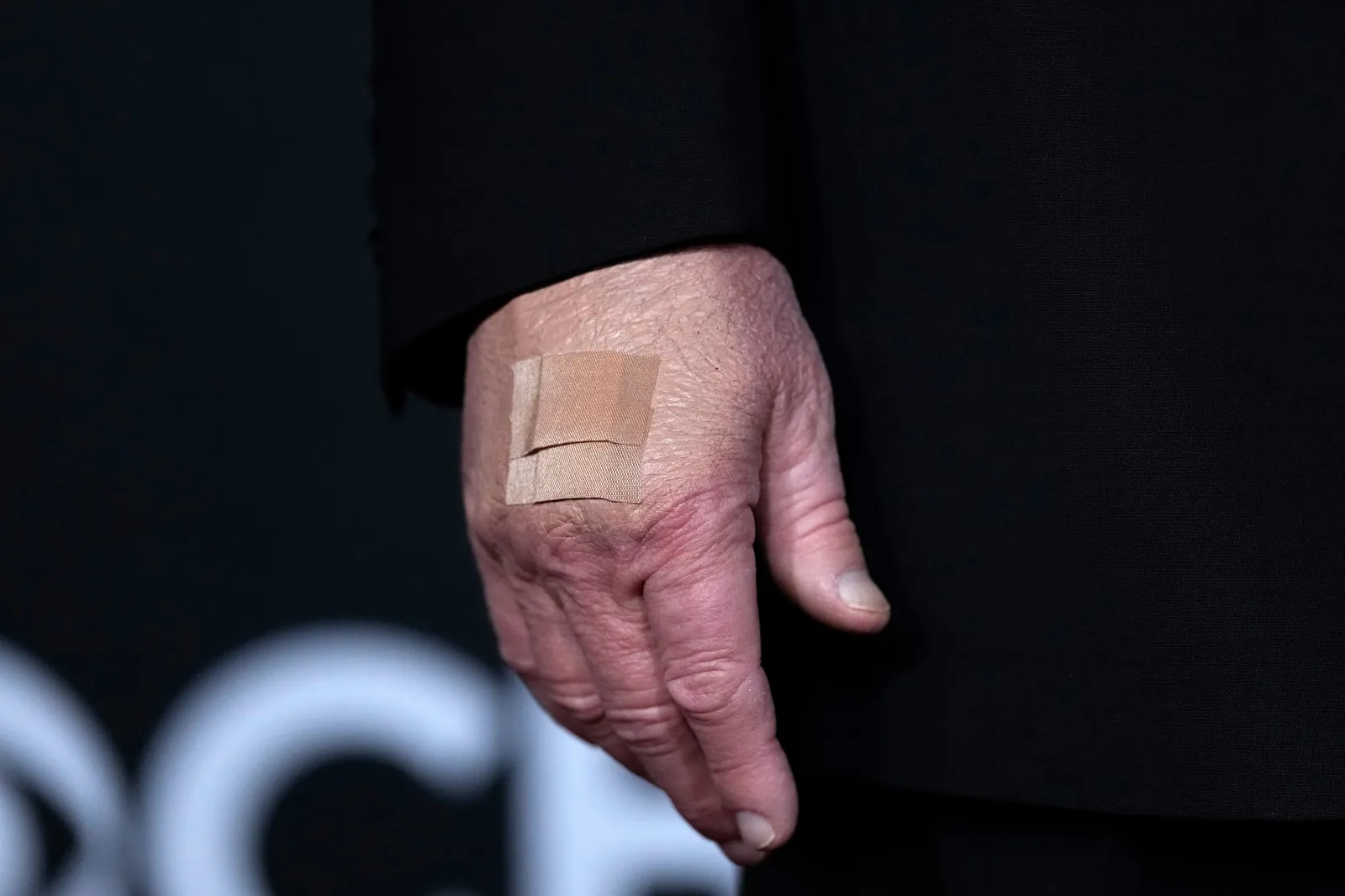
Trump, 79, and his officials have long insisted he is in top health, despite concerns raised about bruising on his hand, potential signs of fatigue and moments during briefings and other public events where he has appeared to doze off or his eyes have drooped.
The president’s recent admission that he received an MRI scan drew more questions, as Trump is the oldest person inaugurated as U.S. president.
What To Know
Trump, in a post to his Truth Social page, said he undergoes extensive medical examinations for which top doctors have given him “PERFECT Marks.”
He said he had taken a cognitive examination three times “and I aced all three of them in front of large numbers of doctors and experts.”
“Despite all of this, the time and work involved, the New York Times, and some others, like to pretend that i am ‘slowing up,’ and maybe not as sharp as I once was, or am in poor physical health, knowing that it is not true, and knowing that I work very hard, probably harder than I have ever worked before,” he said.
“After all of the work I have done with the Medical Exams, Cognitive Exams, and everything else, I actually believe it’s seditious, perhaps even treasonous, for the New York Times and others to consistently do FAKE reports in order to libel and demean THE PRESIDENT OF THE UNITED STATES,” Trump added.
The president told reporters last month that he received an MRI while at Walter Reed National Military Medical Center in October as part of a “very standard” physical. He characterized the procedure as routine but said he had “no idea what they analyzed.”
The White House later released some details about the MRI, describing the results as “perfectly normal” and part of his routine executive physical.
MRI scans, or magnetic resonance imaging, are non-invasive imaging techniques used to examine a patient’s organs, tissues and skeletal system, typically to assess brain and spinal health. The scans are often used to check for aneurysms of cerebral vessels, conditions of the eye and inner ear, multiple sclerosis, spinal cord conditions, stroke, tumors and brain injury from trauma. They can also be used to check heart health and other major organs.
MRI scans are not typically completed during routine health checks. That said, unlike other scans, such as X-rays or CT scans, MRIs do not use radio waves or magnetic fields, making them among the safest imaging techniques.
According to a summary from Physician to the President Sean P. Barbabella, advanced cardiovascular and abdominal imaging was conducted as a preventive measure common for men in Trump’s age group.
The report said there was no evidence of arterial narrowing, inflammation, clotting or abnormalities in the heart, major blood vessels or any abdominal organs, all of which appeared healthy and functioning within normal limits. The physician said the findings confirm that Trump “remains in excellent overall health.”
The president’s wellness has come under scrutiny during the past year, notably after pictures emerged repeatedly of bruising to his right hand. In July, the White House released a memo explaining that Trump had been diagnosed with chronic venous insufficiency (CVI), which his physician described as “benign and common.”
The Times recently reported that the president had appeared to fall asleep during a White House event, saying “his battery shows signs of wear.”
What People Are Saying
Trump, in his post: “I will know when I am ‘slowing up’ but it’s not now!”