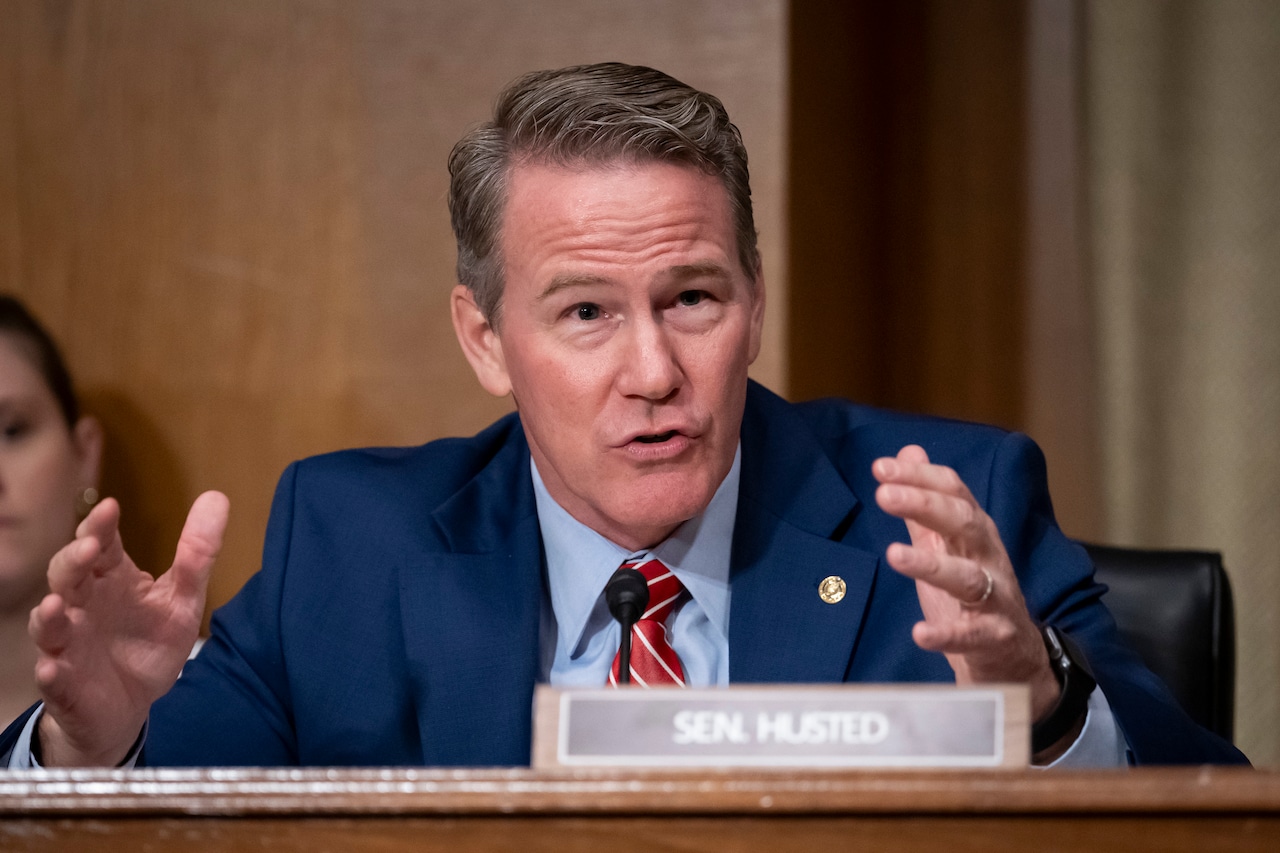
WASHINGTON – U.S. Sen. Jon Husted introduced legislation Tuesday that would extend enhanced Affordable Care Act premium subsidies for two years while implementing new restrictions aimed at reducing fraud.
The Accountability for Better Care Act represents the Columbus-area Republican’s response to the expiration of enhanced premium tax credits at year’s end, an issue that has become a flashpoint in his competitive re-election battle against former U.S. Sen. Sherrod Brown. Democrats have repeatedly attacked Husted on health care, making the issue central to the campaign.
“I wasn’t in Congress when Democrats created the broken ACA system or the Biden COVID subsidies, but I’m working to be part of the bipartisan solution to make health care more affordable for American families,” said a statement from Husted.
The bill comes one day after Ohio’s other Republican senator, Bernie Moreno, introduced his own legislation to address the subsidy expiration.
Husted’s legislation would:
Extend subsidies for two years. The bill would extend enhanced premium tax credits through 2027, providing what Husted describes as “a runway for Congress to address the root causes of higher health care costs.”
Require minimum monthly premiums. All enrollees would pay at least $5 per month, eliminating zero-premium plans. Husted argues that zero-dollar plans “invited fraud at the taxpayer’s expense.”
Expand eligibility to higher earners. The bill would extend subsidies to households earning up to 600% of the federal poverty level—$192,000 annually for a family of four—with gradually increasing premium contributions as income rises.
Fund cost-sharing reductions. Beginning in 2027, the bill would appropriate funding for cost-sharing reductions, which Husted’s office estimates could lower premiums by 10-20%.
Restrict coverage to citizens. Enhanced premium tax credits would only be available to U.S. citizens, ending eligibility for non-citizens who are lawfully present.
Include abortion restrictions. The bill incorporates Hyde Amendment protections, preventing qualified health plans from covering abortions except in cases of rape, incest, or when the mother’s life is in danger.
Comparison with Moreno’s bill
The proposal that Moreno unveiled Monday with U.S. Sen. Susan Collins of Maine has some significant differences from Husted’s proposal.
Moreno’s Consumer Affordability and Responsibility Enhancement Act would cap subsidy eligibility at $200,000 in household income and require a $25 monthly minimum premium for ACA health plans. Husted’s bill sets a different income threshold – $192,000 for a family of four (600% of the federal poverty level) – and requires only a $5 monthly minimum payment.
Both bills would extend subsidies for two years and eliminate zero-premium plans, though Husted’s minimum payment requirement is substantially lower. Husted’s proposal also includes the cost-sharing reduction and restricts eligibility to citizens—provisions not present in Moreno’s legislation.
The looming subsidy cliff
The enhanced premium tax credits, introduced in 2021 under the American Rescue Plan Act and extended through 2025 by the Inflation Reduction Act, have significantly reduced costs for marketplace enrollees. The subsidies have helped drive enrollment from approximately 11 million to more than 24 million people, according to KFF.
Without congressional action, these enhanced subsidies will expire at the end of 2025, potentially doubling premiums for many enrollees. An estimated 583,000 Ohioans could be affected.
According to KFF analysis, subsidized enrollees currently pay an average of $888 annually in premiums. If the enhanced tax credits expire, that amount would jump to $1,904 in 2026—a 114% increase.
The Congressional Budget Office predicts that without an extending the subsidies through 2026, the number of people without insurance will rise by 2.2 million in 2026, by 3.7 million in 2027, and by 3.8 million, on average, in each year over the 2026-2034 period.
Middle-income earners above 400% of the federal poverty level would be particularly affected by the return of the “subsidy cliff.” Under current enhanced subsidies, premium payments are capped at 8.5% of household income regardless of earnings. Without this cap, many middle-income families could see their monthly costs more than double.
Political context
The introduction of Husted’s bill comes as health care has emerged as a central issue in his re-election campaign. Democrats in Ohio have repeatedly put out press releases that describe the upcoming expiration of subsidies as “Husted’s health care crisis.”
For example, a November press statement from the Democratic Senatorial Campaign Committee blamed Husted for skyrocketing health insurance costs and the prospect that hundreds of thousands of Ohioans will lose health coverage.
“In 2026, Ohioans will hold Husted accountable for his toxic price-spiking agenda and the damage he has done,” said the statement from DSCC spokesperson Maeve Coyle.
A statement from Husted said his new bill would allow Congress to address the root causes of higher health care costs while providing Americans with stable insurance premiums.
“American health care is not underfunded; it is under-accountable,” Husted said.
Whether either Ohio senator’s bill can gain traction in Congress remains uncertain, with only weeks remaining before the current enhanced subsidies expire.