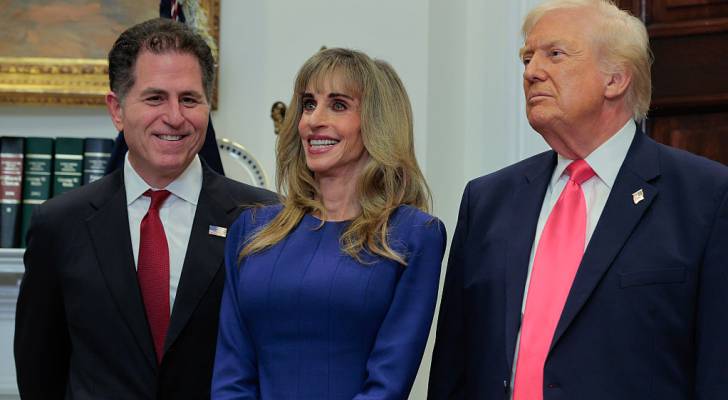
President Donald Trump recently suggested that the U.S. could learn something from Australia’s superannuation retirement system.
He didn’t announce any official policy, but did say the administration is studying how Australia handles retirement as the U.S. looks for answers to America’s rising economic and aging-population pressures (1).
How does Australia’s system work, and what could it mean for American workers?
Trump’s comments came during an event announcing a $6.25-billion gift from Michael and Susan Dell towards several initiatives, including so-called “Trump Accounts,” investment accounts for children born between 2025 and 2028. (Michael Dell founded and still chairs Dell Technologies, the maker of Dell computers). These accounts are said to help kids build early wealth, but they won’t change retirement structures for adults (1).
The superannuation comment was part of a broader discussion about long-term savings, and brings up questions about whether retirement saving in the U.S. should be automatic.
Australia’s superannuation program has been around since 1992. According to the Australian government:
Employers must contribute 12% of a worker’s ordinary earnings into a retirement fund. They can typically choose what fund the money is invested in. Workers can contribute more on top with a cap, but the 12% is automatic. The money stays invested until retirement age, and there are penalties applied if funds are accessed illegally (2).
Because nearly every employer participates, the system captures almost the entire workforce. As a result, Australia now has one of the largest pension asset pools in the world (3), at roughly $4.1 trillion according to The Australian Prudential Regulation Authority (4).
It’s not a perfect system. The rules can be complicated, and contributions are locked until retirement, and because it’s a defined-contribution system, individuals are still exposed to market risk (5). There’s also the worry that the super system could leave some older Australians in a tough spot, especially if they can’t tap their savings until a set age and are dealing with health issues or cognitive decline (6).
Story Continues
However, the mandatory structure means workers build savings whether they actively plan for retirement or not.
In the U.S., on the other hand, retirement savings depend heavily on voluntary behavior; whether your employer offers a 401(k), how generous the match is, and whether you personally contribute enough to take advantage of it. According to Pew, nearly half of the private workforce, or about 56 million individuals, don’t get work-related retirement benefits (7).
According to a 2024 Social Security trustee report, Social Security can only pay full benefits until 2033 unless the U.S. Congress passes Social Security reform (8).
Read More: Vanguard reveals what could be coming for U.S. stocks, and it’s raising alarm bells for retirees. Here’s why and how to protect yourself
So when Trump said the administration is looking “seriously” at the Australian model, while it doesn’t necessarily mean a looming policy shift, it does highlight how fragmented the American system has become.
If the U.S. explored a mandate like Australia’s, here’s what could change:
Workers might end up with larger nest eggs, especially low-income earners who don’t, or can’t, save consistently. Employers could face higher costs, especially small businesses who may already be stretched thin on payroll. Mandatory contributions could reduce reliance on Social Security over time.
While nothing is actually on the table yet, the idea raises big questions. Would this sit on top of 401(k)s, or would it replace them? How would wages be affected?
You don’t need to wait for a policy change to improve your retirement outlook. Here’s what you can do:
-
Maximize your employer match: If your job offers a match and you’re not grabbing the full amount, you’re leaving money behind. Whether it’s mandatory or not, that’s retirement growth that you can participate in (9).
-
Recheck your contribution rate: Many workers set a contribution number once, and then don’t revisit it. Consider bumping it up regularly and checking back in more frequently, to help you mimic some of the “forced savings” effect Australia has (10).
-
Understand your plan’s fees and investment options: The U.S. doesn’t have a cap on fees on pensions, and high fees can quietly eat away at decades of returns (11).
-
Stay alert to policy discussions: Retirement reform can be slow, but it’s smart to stay in the loop. Even early conversations can shape future employer obligations or tax incentives.
Trump’s consideration of Australia’s superannuation system doesn’t automatically mean a 12% retirement mandate is coming to America. But it does shine a spotlight on a bigger issue: most U.S. workers still have the full responsibility of saving for their future, and many aren’t saving enough. Until anything changes, the smartest move is to focus on what you can control: Your contributions, your investments, and your long-term planning.
We rely only on vetted sources and credible third-party reporting. For details, see our editorial ethics and guidelines.
Newsweek (1); Australian Taxation Office (2); Investment Magazine (3); Australian Prudential Regulation Authority (4); Australian Prudential Regulation Authority (5); UNSW (6); Pew (7); SSA (8); DOL (9); Morgan Stanley (10); OECD (11)
This article provides information only and should not be construed as advice. It is provided without warranty of any kind.