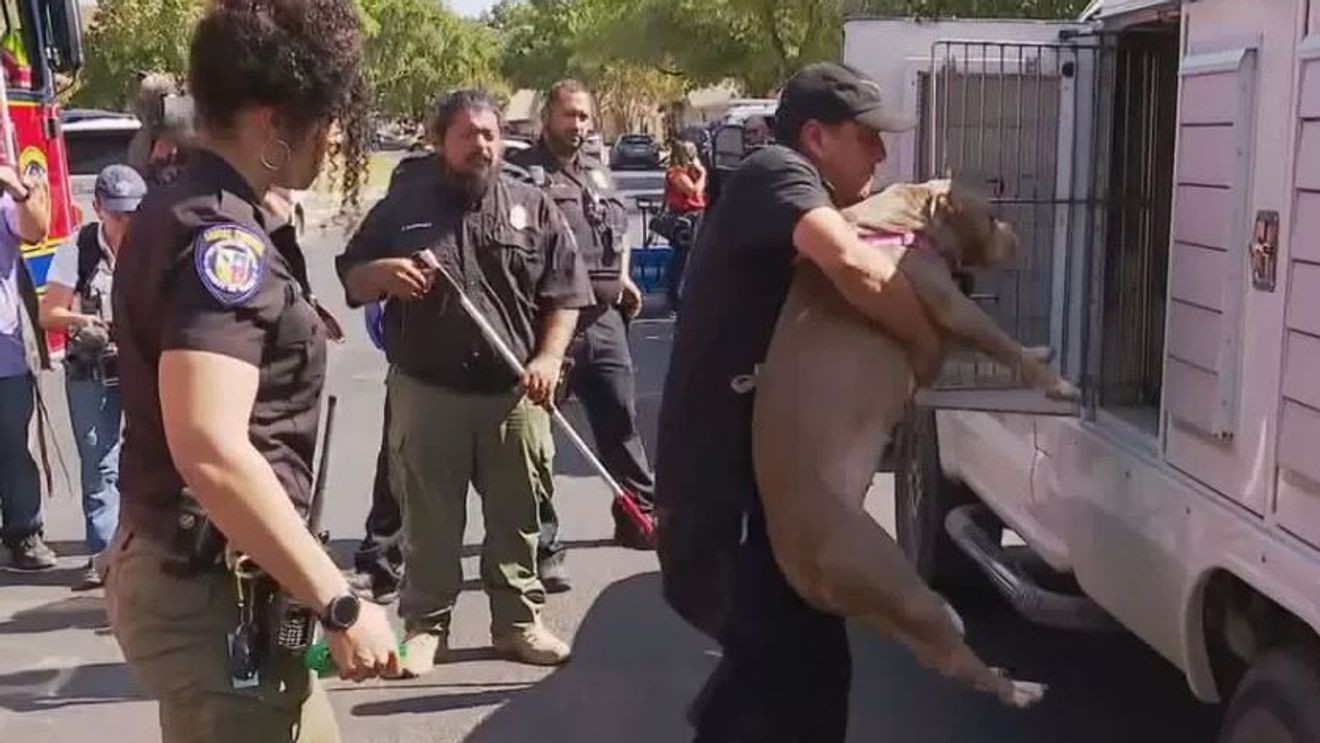
SAN ANTONIO —San Antonio residents are filing far more complaints about dangerous dogs than they used to, and Animal Care Services says the sharp rise has kept officers busy.
ACS Director Jon Gary says the number of dangerous dog affidavits coming into the department has doubled in just one year, jumping from about 300 to nearly 600.
“It’s been a busy year for our officers working those cases,” Gary said. “But it had its desired effect. People now know what their options are.”
Gary says the surge caught the department off guard, but also proved that their messaging to the public was working.
ACS has slowly grown its staff and enforcement capacity in recent years.
RELATED | Residents report improvements after one year of new dangerous dog enforcement policies
“It’s been challenging as we’ve grown and how we manage that workload,” he said. “We did not expect a double amount coming out of that something we weren’t really prepared for, necessarily. But we’ve done a good job.”
The rise in affidavits means more formal investigations and more dogs being officially labeled as dangerous.
Right now, 217 dogs in San Antonio are officially classified as Dangerous, according to ACS data. Gary says that the number has grown proportionally to the jump in affidavits.
“We have seen an increase in the number deemed as well,” he said. “The majority of cases that are brought forward to us, as we evaluate them, a lot of them are deemed dangerous.”
He added that there are still cases that don’t meet the criteria, but the trend tracks closely with the increase in community reports.
You can see where the registered dangerous dogs are in your neighborhood at this link.
The registry shows aggressive and dangerous dogs, so you can filter to examine each category.
Keeping Up With Compliance
Once a dog is labeled dangerous, owners have to meet strict requirements, things like secure housing, proper signage, and microchipping.
ACS is maintaining an 80% compliance rate, similar to what was reported earlier in 2025, which Gary says is right where they want to be.
RELATED | Mail carrier recovering after pit bull attack; judge orders animal euthanized
“We have about an 80 percent compliance rate,” he said. “Sometimes dogs are released back, and the owners move and don’t tell us. But that’s actually our goal, to keep up with that 80%.”
He says every dangerous dog released back to their owner in the community must be compliant at that time.
RELATED | Dog rips toddler’s front teeth out during attack
Earlier this year, we asked Gary why the goal wasn’t 100% compliance for these owners.
“100 would be hard,” Gary told us in May. “Sometimes it’s just a matter of us not being able to even reach the person to try and get them into compliance. They’re very good at avoiding us when they’re not in compliance.”
An ACS spokesperson added, “Unfortunately, there will always be non-compliant owners, and it is our continued intention to reduce that number as effectively and as quickly as possible.”
Residents Can Use Pseudonyms
In a few cases, residents filing affidavits have opted to use pseudonyms out of concern for their safety.
In FY25, three people did so.
That’s part of a 2024 city measure that increased penalties for repeat dog bites, allowed ACS to sterilize loose animals, and attempted to prevent retaliation for people who report their neighbors’ animals.
Gary says he expected more people to use pseudonyms, but people are showing that they’re willing to put their name on the affidavits and attest to what is happening around them.
How to report a dangerous dog:
If you feel a dog near you should be considered dangerous, you have to submit a sworn affidavit or statement.
Then, investigators will gather evidence and determine if the dog meets state requirements to be designated as dangerous.
All dangerous dogs have to be licensed, wear special collars, have a secure enclosure, be muzzled outdoors, have a microchip, and be spayed or neutered.
Dangerous dog owners have to have liability insurance, post a warning sign, attend a pet ownership class, and allow annual inspections.
ACS has resources available on its website that tell you what you can do to defend yourself against dog bites, and some of the signs that a dog might be ready to attack.
Here is a link to the 311 website to report a loose or aggressive dog…