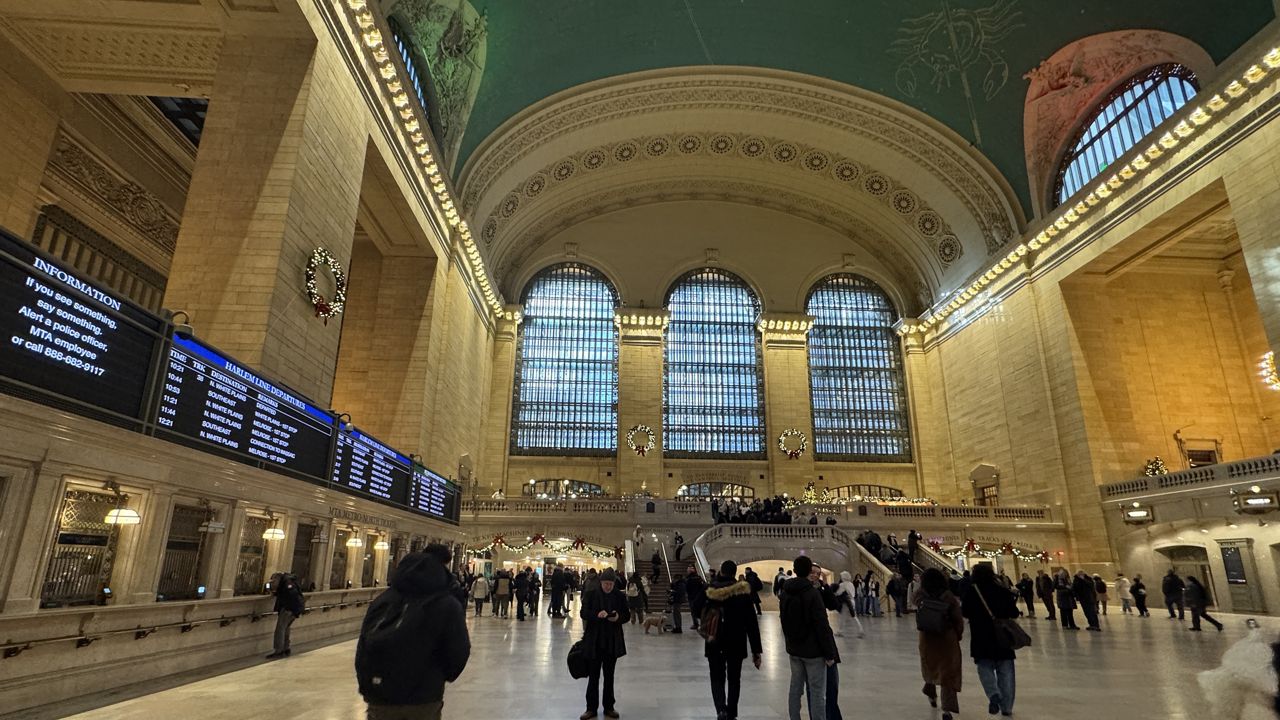
On a walk through Grand Central Terminal, even commuters in a rush may glance up at the celestial ceiling mural.
Up there, they might be able to glimpse a small dark patch, which was left after the 1990s renovation of the massive transit hub. The whole ceiling was that color after years of air pollution before it was cleaned.
What You Need To Know
- The Municipal Art Society of New York has re-launched tours of Grand Central Terminal
- The organization was instrumental in preserving the landmark transit hub
- The society was founded in 1893, a civic association that works towards a more livable city
“I think it’s a great reminder of what happens to our buildings, but also a reminder of the power of historic preservation and how lucky we are to still have this structure today,” said Wendy Felton, a Grand Central docent and tour leader with the Municipal Art Society of New York (MAS).
The society has re-launched tours of the Midtown terminal that opened in 1913. MAS was part of the campaign to stop construction of a Marcel Breuer-designed building above the terminal.
Breuer designed the original Whitney Museum building on the Upper East Side. MAS President Keri Butler says the society’s relationship with Grand Central really began with the demolition of another Manhattan train depot.
“When Penn station was demolished in the early 1960s, many preservationists, including MAS, really rallied to create the landmarks law, and we helped preserve this building in 1967 with landmark status,” said Butler, who noted that it still took years to truly stop the plan.
The effort received a big boost from former First Lady Jacqueline Kennedy Onassis, who became one of the faces of the campaign to save Grand Central. It finally happened with a U.S. Supreme Court decision in 1978 that upheld the building’s landmark status.
“She had read about our work, so she then attended rallies, wrote letters to elected officials,” said Butler of Kennedy Onassis’ involvement in the effort, which led to a plaque being dedicated to her inside a terminal entrance.
The rest, as they say, is history, which is what the tours are all about. For instance, ever wonder why there are so many exposed light bulbs in the terminal?
“Grand Central, when it opened in 1913, was among the first fully electric public buildings in the world, so the New York Central Railroad, which built the terminal, really wanted to make sure the public knew that and saw how technologically advanced and innovative the structure was,” Felton said.
And there’s a lot more where that came from. To find out more about Grand Central tours, including a December special savings of $10, head here.