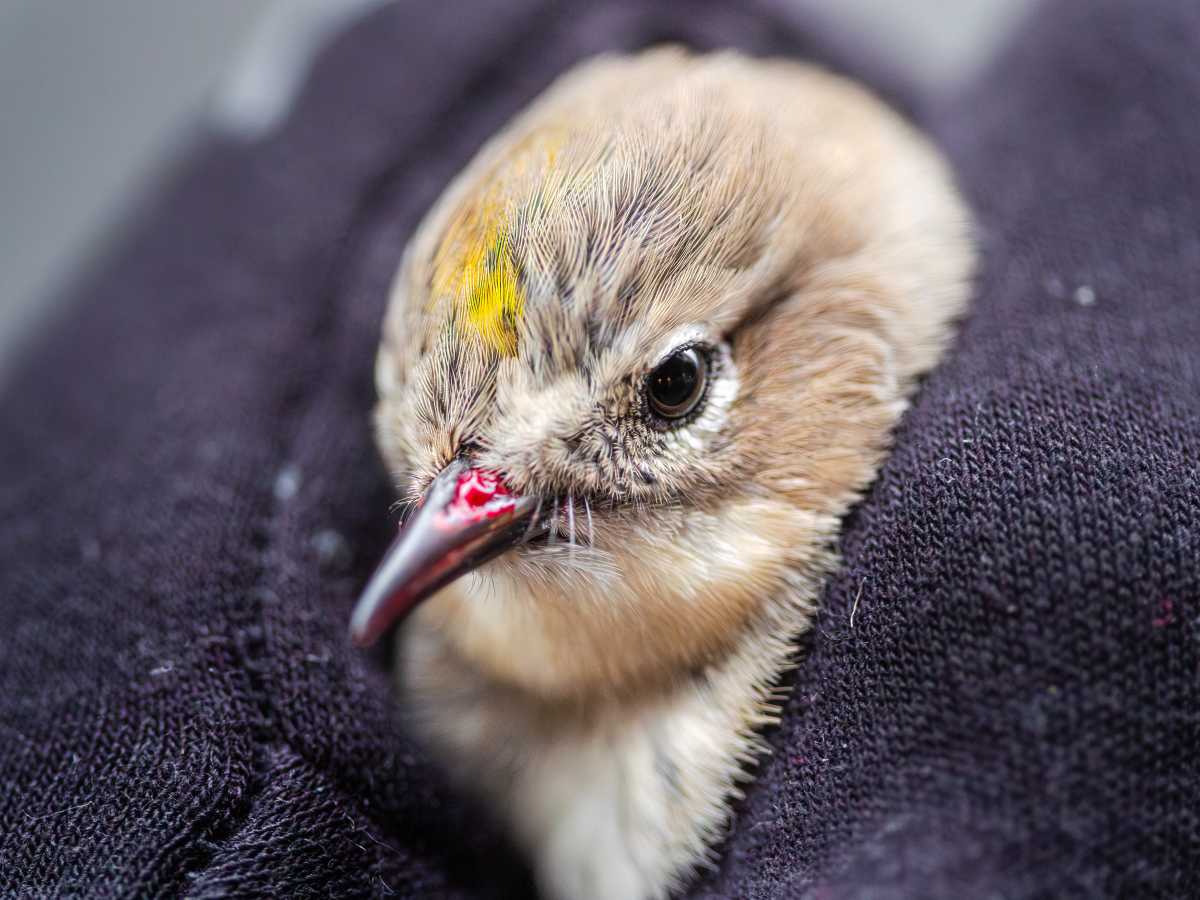
Too often, New Yorkers encounter injured birds. It can be startling to see fluttering feathers on a sidewalk, a small, struggling figure in the grass of Central Park or even a heartbreaking scenario of a bird hitting the windshield of a car during an afternoon drive. What can a person do—if anything—to help an injured bird in NYC?
Bird and wildlife professionals, offering their expertise, have provided clear and easy instructions that New Yorkers can use to help save an injured avian. The recommendations cover everything from immediate, basic precautions to the important contact information for specialized rescue organizations, guiding New Yorkers on the most effective steps to take to help save a hurt avian in NYC.
What do do with an injured bird in NYC
Which birds are most at risk of injury?
Small songbirds and pigeons. And it is usually after they collide with glass, one of the biggest threats birds face in the city. In fact, experts say up to a quarter million birds are killed by building collisions in New York every year.
The reason for the collisions is that birds do not see clear or reflective glass.
“Glass reflectivity and transparency create a lethal illusion of clear airspace that birds do not understand as a barrier,” the U.S. Fish & Wildlife Service explains on its website. “During the daytime, when most collisions occur, birds collide with windows because they see reflections of the landscape in the glass, or they see through glass to perceived habitat or to habitat or the sky on the other side.”
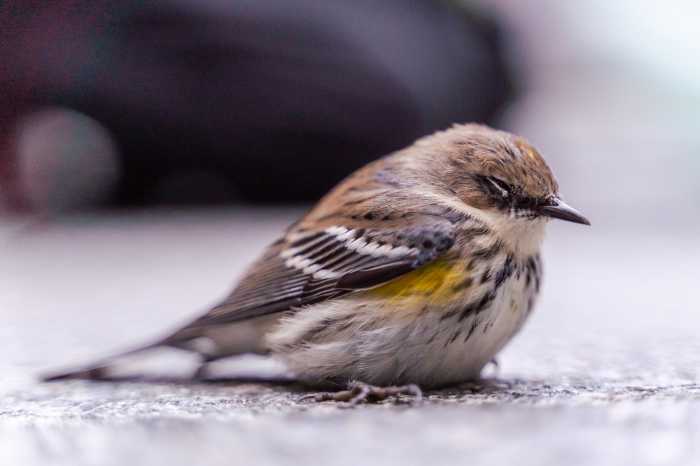 The reason for collisions is that birds do not see clear or reflective glass.Photo by Winston Qin
Collisions happen when the sun goes down, too.
“At night, during spring and fall bird migrations when inclement weather occurs, birds can be attracted to lighted structures resulting in collisions, entrapment, excess energy expenditure, and even exhaustion in some situations,” the agency says.
Saving the bird once you find it injured
The most helpful thing a person can do for saving injured small birds is to gently contain them, and get them to a licensed wildlife rehabilitator, Katherine Chen, senior manager of community science and collision reduction at NYC Bird Alliance (formerly NYC Audubon), said.
- Approach the animal calmly, place it in a small paper bag or ventilated box, and find a wildlife rehabber to take it. (An extensive list of rehabbers is on NYC Bird Alliance’s website.)
- If a rehabber can not come out to take it, New Yorkers can also bring injured birds to the Wild Bird Fund on the Upper West Side. The organization is a full-time rehab center dedicated to wild birds.
Most collision victims can be handled this way, but things get tricker for larger birds, like raptors and waterfowl.
“For a raptor—hawk, falcon, owl—waterbirds like heron, swan, goose, gull, duck, and raven, or crow, do not approach the bird,” Chen explained. “Keep a distance and email us immediately.” (The email to use is injuredbird@nycbirdalliance.org).
Help birds nationwide in under two minutes
There is a public site that everyone can use that logs coast-to-coast collision reporting throughout the United States. If you find an injured bird, add it to the database, Chen recommended.
“We also ask people to log every dead or injured bird they find at dbird.org, our crowd‑sourced collision database, because those reports help NYC Bird Alliance and conservation organizations all across the country research the causes of bird injury and mortality and develop solutions to prevent them.”
Focusing on prevention
In New York City, one of the top reasons people encounter injured adult birds is that they’ve tragically hit glass.
The NYC Bird Alliance and National Audubon Society’s Lights Out initiative is a nationwide effort to prevent bird strikes in part by reducing the use of excess lighting during bird migration months.
“Partnering with building owners on bird‑friendly glass retrofits and advocating for bird‑safe materials and Lights Out policies that reduce nonessential lighting between 11 p.m. and 6 a.m. during migration—measures that have cut collisions at some buildings by 90% or more,” Chen explained. “These are simple solutions any building can adopt to prevent the unnecessary killing of birds.”
Saving birds
Experts say birds are one of the best ways for New Yorkers to connect with nature. Despite more than 350 species that migrate through NYC, research from science organizations including Cornell and Audubon, show that “we’ve already lost more than a quarter of North America’s birds in the last 50 years,” Chen explained.
“Protecting wild birds is ultimately about protecting our own future too, because when our city is safer for birds, richer in trees, darker at night, and kinder to migrating birds, it’s healthier, cooler, and more livable for people as well,” Chen said.