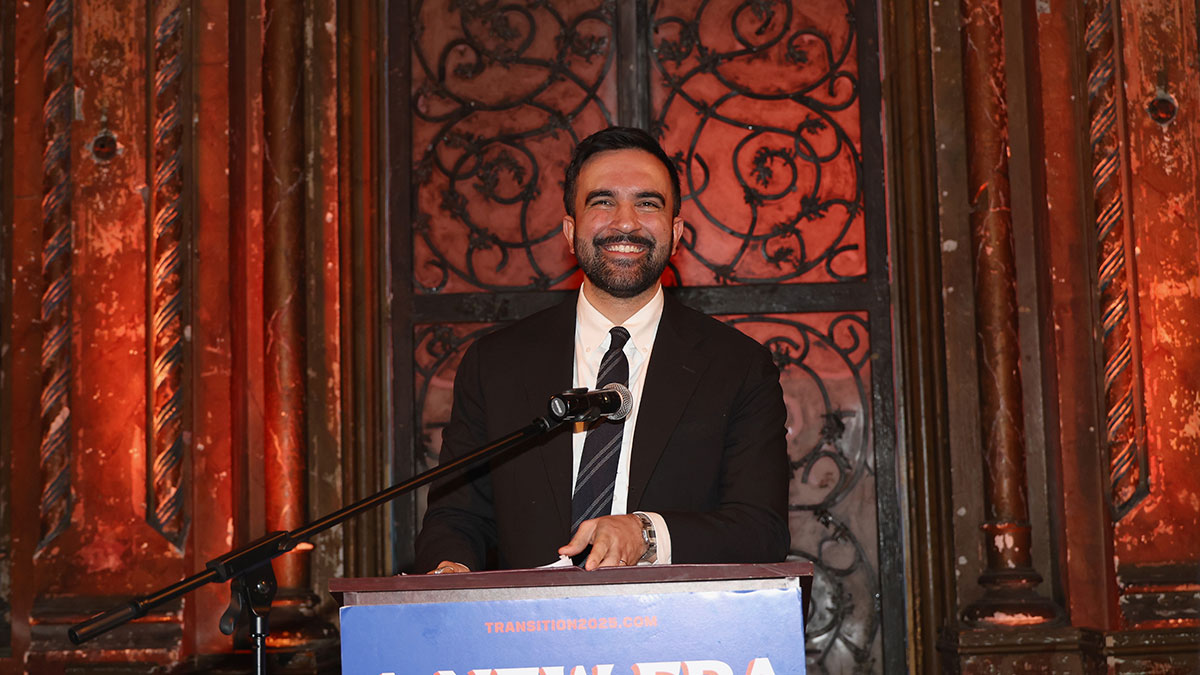
Zohran Mamdani won New York City’s mayoral election with the narrowest majority in almost a quarter-century, securing barely 50 percent of the vote as the Democratic nominee in an overwhelmingly Democratic city. That’s hardly a sweeping mandate—nearly half of all voters cast their ballots for one of Mamdani’s rivals.
Many of these frustrated New Yorkers are looking to Albany—or even Washington—for help. They understand that New York State’s constitutional structure gives Albany more power than any of the state’s local governments, including that of New York City.
Finally, a reason to check your email.
Sign up for our free newsletter today.
But the nearly half of New York voters who oppose the newly elected democratic socialist don’t have to wait for Albany to come to their rescue. They possess an effective legal tool to rein in the excesses of the Mamdani administration: amending the New York City Charter through voter-initiated referenda.
Unlike voters in the Western states, New Yorkers have few opportunities to make laws through direct democracy. Californians, for example, regularly vote on proposals for new laws or amendments to their state constitution that began as statewide petitions.
Placing these propositions, known as initiatives, on voters’ ballots was a key goal of the Progressive movement. While Progressives saw many of their proposals for political reform adopted in the Western states, few states east of the Mississippi River—including New York—followed suit.
Over the years, proposals to allow this form of direct democracy at the state level have been introduced in Albany. None gained much traction. But New York State permits more citizen-initiated lawmaking at the local level than many realize.
New York State’s Municipal Home Rule Law (MHRL) allows voters to petition to amend their city’s charter, or even to adopt an entirely new one. Under this law, a petition with 30,000 city voters’ signature triggers a general election vote on a charter amendment. If a city council, through inactivity, prevents this amendment from reaching the ballot, citizens, by submitting a second petition signed by 15,000 voters, can bypass the council and force the amendment to a vote on a general election ballot.
The New York City Charter also includes a more limited amendment process. If 50,000 Gotham voters sign a petition to amend the charter on matters related to elected officials’ powers or their manner of election, that amendment will appear on the city’s general election ballot.
While it’s not easy for voters to get a charter amendment on the ballot through these methods, it’s not impossible, either. In 1993, New York voters approved a charter amendment through the MHRL process, which proposed term limits for city elected officials. Though the city council relaxed these limits to allow Mayor Michael Bloomberg to run for an additional term during the 2008 financial crisis, they remain in effect today, over 30 years after New Yorkers initially approved them.
Still, citizen-initiated referenda in New York face a major hurdle: mayors. Current law allows mayors to form a charter revision commission and propose commission-approved amendments that “bump” citizen-initiated charter amendments off the ballot. This is only a temporary roadblock, however, as bumped citizen-initiated amendments appear on the following year’s ballot.
And mayors’ ability to use this mechanism to stall citizen-initiated amendments might be coming to an end. Earlier this year, the New York State legislature approved a bill stripping city mayors of this power. While Governor Kathy Hochul ultimately vetoed this proposal, the state legislature could consider and pass a new version during its 2026 legislative session.
For New Yorkers worried about an extremist Mamdani administration, citizen-initiated amendments to the city charter could be a key tool. Given that nearly half of the city’s voters cast ballots for someone other than the incoming mayor, such measures will likely enjoy an enormous base of support.
What might those reforms look like? Several have been floated in recent years, including nonpartisan elections and scrapping ranked-choice voting for primaries. Citizens concerned about the new mayor and the growing political power of his progressive comrades are likely to propose other ideas.
Those worried about the Big Apple’s prospects under a committed democratic socialist are unlikely to find much relief from Albany. Governor Hochul, concerned about her own political future and desperate to keep the Democratic Party’s far Left happy, has spent the last three months cozying up to Mamdani.
But New Yorkers shouldn’t fret. While Albany may show indifference, the citizens of New York, through the process of direct democracy, possess a powerful and legally established instrument to halt the excesses and radicalism of the incoming Mamdani administration.
Joseph Burns is a partner at Holtzman Vogel and former Deputy Director of Election Operations at the New York State Board of Elections.
Photo by Johnny Nunez/WireImage
City Journal is a publication of the Manhattan Institute for Policy Research (MI), a leading free-market think tank. Are you interested in supporting the magazine? As a 501(c)(3) nonprofit, donations in support of MI and City Journal are fully tax-deductible as provided by law (EIN #13-2912529).