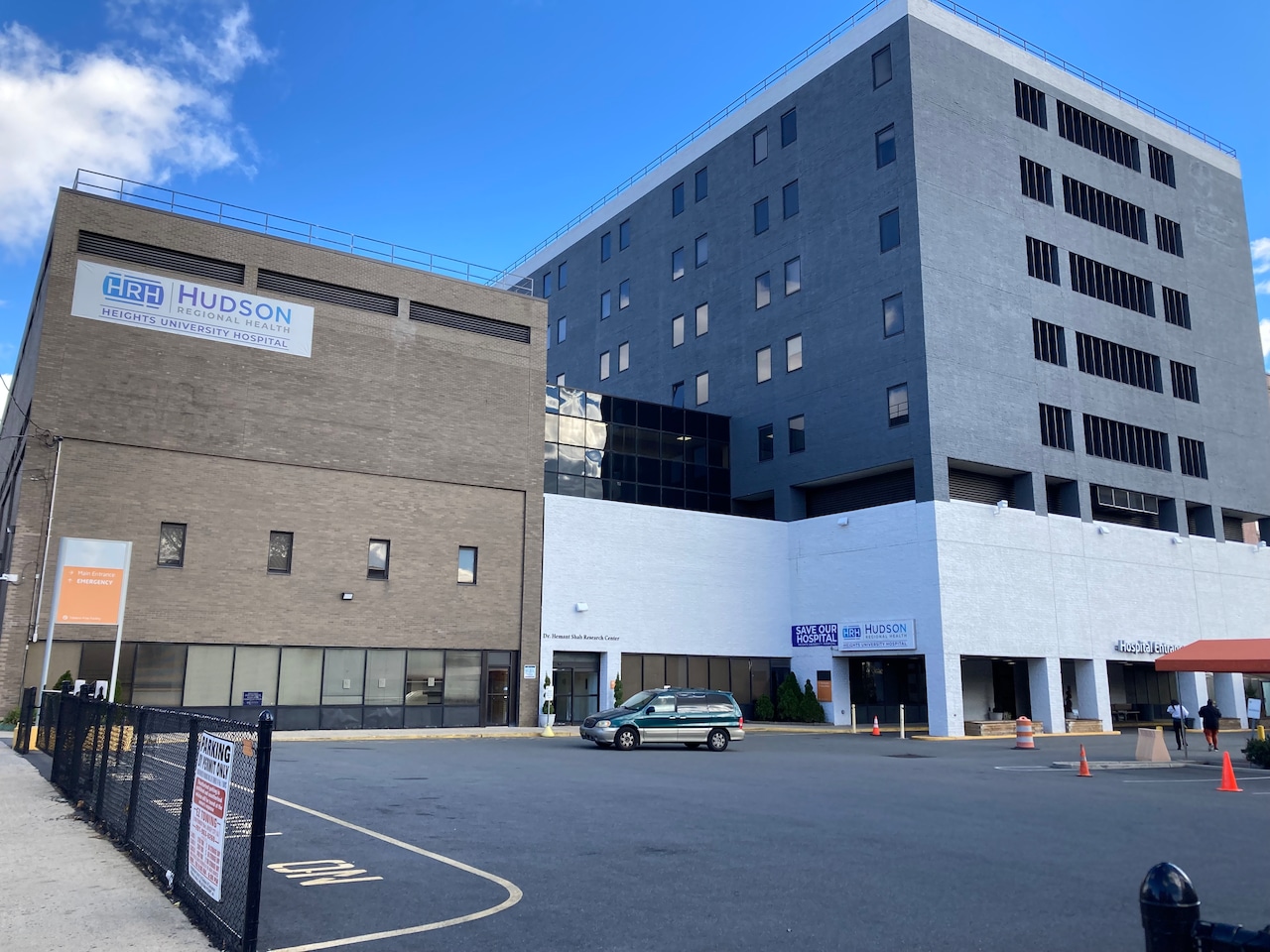
Jersey City officials took steps this week to prevent the troubled Heights University Hospital from being turned into senior housing, citing concerns about the city’s dwindling hospital services.
The city council voted 8-0 Wednesday night, with one councilperson abstaining, to adopt an ordinance that prevents senior housing and assisted living residences from being built in the city’s medical zone. Officials said they were motivated to pass the ordinance after the owners of Heights Hospital, formerly Christ Hospital, announced preliminary plans for a residential development on the land.
Urgency to pass the ordinance intensified in November when the hospital’s owner, Hudson Regional Health, announced that the facility would be closing after more than 150 years. The hospital will continue to operate a standalone emergency department and provide other health care services out of its auxiliary building. But the areas where there are no services will be shut down.
“Passing this ordinance makes it clear that they can’t build luxury-only housing, that anything that would come in the future would have to be negotiated with the city, and we will guarantee and make sure that there’s real acute care that is on that site,” said Mayor-elect James Solomon during Wednesday’s meeting at City Hall, which was livestreamed.
Hudson Regional Health, which took over Heights Hospital from CarePoint Health System just eight months ago, appears open to negotiating the hospital’s future with city officials.
“Hudson Regional Health and its landlord appreciate the City Council’s desire to maintain health care access in the Heights and Jersey City, a vision that HRH strongly shares,” said Vijay Chaudhuri, a spokesman for Hudson Regional and former chief of staff for Hoboken Mayor Ravi S. Bhalla.
“While we believe the adopted ordinance has flaws, we have frequently mentioned that a redevelopment plan that creates an environment for significant health care investments is the best way to achieve this objective. HRH looks forward to working collaboratively with Mayor-Elect Solomon, his administration and the City Council on the future of healthcare in the Heights and Jersey City, and looks forward to an ongoing dialogue,” Chaudhuri said in a statement on Thursday.
More than 20 Jersey City residents spoke in support of the ordinance at Wednesday’s meeting. Many speakers said they were worried about the hospital land being sold to developers for condominiums. Others expressed frustration with the loss of yet another hospital.
Debbie White, president of the Health Professionals and Allied Employees, urged city officials to “force” Hudson Regional to continue operating the facility as an acute care hospital complete with an emergency department, dialysis, mental health care, addiction treatment and inpatient beds.
“As I speak to you tonight, hundreds of healthcare workers are without work and the community is without a hospital,” said White, who added that the union is challenging the action “on many fronts,” arguing Hudson Regional violated labor laws.
“Don’t let Christ Hospital simply become high-rise condos,” said White, using the hospital’s former name.
Ward C Councilman Richard Boggiano said on Wednesday that he was disappointed things got this far and that state officials failed to step in.
“I spoke to the governor about this, Governor Murphy. I spoke to other people. And I thought surely something would be done, but evidently nothing has been done. And I think it’s a damn disgrace that this hospital is closing. We used to have five hospitals in Jersey City,” said Boggiano.
The city council adopted the ordinance without considering recommendations from the city’s planning board and planning director.
“I don’t necessarily believe that the city council’s proposal meets the master plan 2020 as it’s written,” said Jersey City Planning Director Tanya Marione during a Nov. 25 planning board meeting. “I believe that the 2020 master plan really considered the fact that residential should be mixed with these medical uses and the way to do it was not to remove the uses from those areas but to encourage them to be developed together.”
Instead, Marione recommended revising the master plan to stipulate that any future assisted living facility or senior housing must exist within a hospital or a rehab center, to accommodate the city’s medical needs.
Solomon said that while he understood the planning board’s intent, he didn’t support adopting their recommendation.
“…Under the current circumstances, the city council must take steps to ensure that the original purpose and intent of the medical district is satisfied and that the zoning ordinance is not compromised,” said Solomon.
Solomon will succeed Jersey City Mayor Steven Fulop, who did not seek a fourth term as mayor and lost in the Democratic primary for governor.
“This body has a duty to ensure sufficient health care services for the residents of Jersey City, which must take priority here,” said Solomon.
State officials have expressed disappointment with the owners of Heights Hospital for failing to save the facility as promised.
In November, a spokeswoman for the New Jersey Department of Health said that good faith efforts were made to support Heights Hospital, including $2 million in October to assist with payroll and prevent closure.
“Despite all of these efforts, Hudson Regional Hospital has failed to fund their payroll this week and failed to fully perform as it represented in its Plan of Restructuring, which was approved by the Bankruptcy Court as a condition of exiting bankruptcy. And it has not followed through on its commitments to the community it serves and to the State to turn things around after taking over the hospital,” said Dalya Ewais, a spokeswoman with state Department of Health, in a statement.