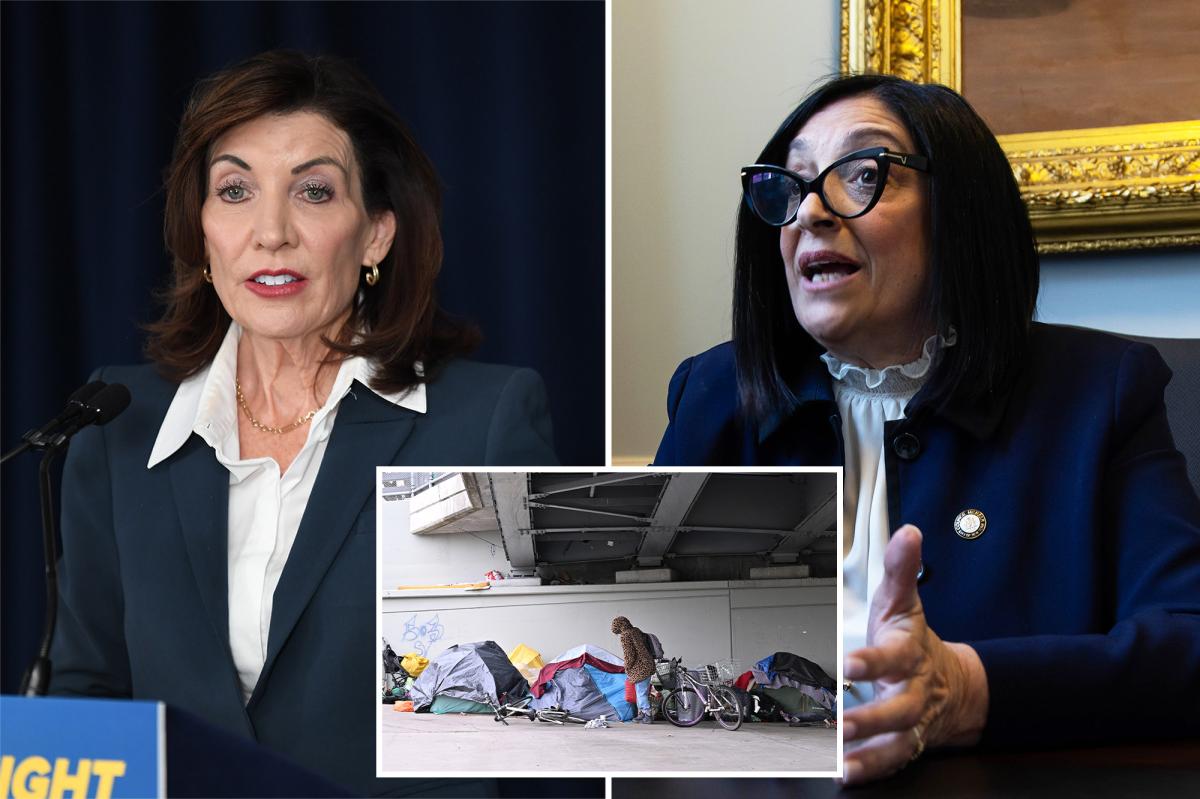
New York City lawmakers are ramping up pressure on Gov. Kathy Hochul to reopen long-shuttered psychiatric hospitals, arguing a severe shortage of long-term beds is feeding the city’s homelessness and public safety crises.
The City Council’s Common Sense Caucus, a group of bipartisan lawmakers, sent a letter to Hochul Wednesday urging her to bring back large state-run facilities in the five boroughs to ease the strain on the Big Apple’s shelter system.
“Removing the mentally ill from the shelter system would .. help other unhoused New Yorkers to feel safer when entering the system, and would enhance public safety by decreasing the amount of mental health calls our police and EMTs need to respond to every day,” the group wrote.
The lawmakers argued that the current capacity at psychiatric hospitals leaves vulnerable New Yorkers “wandering the streets and subways at all hours.”
A group of New York City council members are calling on the governor to add more state-run psychiatric hospital beds. Matthew McDermott
New York City’s latest HOPE survey found 4,504 people living on the streets, in parks and in the subway system on the night of Jan. 28, 2025. That one-night snapshot, the city’s main measure of street homelessness, marks a 9% jump from the 4,140 unsheltered people counted a year earlier.
“What we’re seeing on our streets is absolutely inhumane,” Council Minority Leader Joann Ariola said Thursday. “We have facilities across the state that can be reopened to provide real, long term care to the mentally ill, but Albany is refusing to allow it. This is shameful.
“Instead, the governor seems content to let those buildings rot, and allow our homeless population to continue to needlessly suffer,” the Queens Republican said.
The population of street homeless people in New York City has increased 9 percent from 2024 to this 2025, according to the HOPE survey. Paul Martinka
Ariola and the other city lawmakers want Hochul to reopen facilities including Pilgrim State on Long Island, Middletown State in Orange County, Manhattan Psychiatric Center on Wards Island and Holliswood Hospital in Queens.
For decades, New York has steadily shifted away from such large state psychiatric hospitals toward community-based care.
New York had just over 9,200 inpatient psychiatric beds across state facilities, private psychiatric hospitals and general hospitals, according to a report from the Manhattan Institute released in September.
Council Minority Leader Joann Ariola Joann Ariola said the lack of proper in-patient beds in New York City is “shameful.” Michael Nagle
At their peak, state psychiatric centers held more than 90,000 beds and consumed roughly a third of the state budget. But starting around the 1970s, New York governors began reducing the number of psych beds, diverting funds to local programs, according to the report.
Ex-Gov. Andrew Cuomo’s “Transformation Plan” alone eliminated more than 700 state hospital beds by 2021, with his administration instead steering money into outpatient and community programs.
“This isn’t 1972 any more,” Ariola said. “We’ve come a long way when it comes to proper care for our most vulnerable, and we need to stop letting the sins of a half century ago prevent proper treatment for those in need today.”
Hochul has begun to reverse course with the first net statewide bed gains in decades. Her administration has added 1,000 beds since she took office, according to a spokesperson for the governor.
The spokesperson noted that the Office of Mental Health had open beds at the Manhattan Psychiatric Center and the Pilgrim Psychiatric center. Construction is also planned to add 100 new inpatient beds to Wards Island, the rep said.
But the council members said Hochul’s efforts didn’t go far enough.
“For many of those with the most severe mental health issues, supportive housing, short-term hospital stays, and out-patient programs do little to actually alleviate their plight,” the group’s letter said. “These individuals require constant, intensive treatment that only a dedicated, long-term psychiatric hospital can provide.”
The Common Sense Caucus made a similar request for Hochul to boost intensive psych care almost three years to the day from when it sent the new letter.
“This situation has only gotten more severe since then,” the pols said.