
Life as the child of military personnel is often a nomadic existence.
Moving from country to country, wherever their parents are posted, and from town to town and school to school, there is little opportunity to settle and put down roots.
Miles away from the larger family group ‘back home’, it could be a lonely way to grow up, but for many in such circumstances in Germany, an emotional connection to the domestic football scene was made that has remained to this day.
For the thousands of American and British “forces kids” raised in post-Second World War Germany, football became more than a pastime — it was a bridge between worlds, a way to belong in a place that was never fully their home.
Decades later, many of these people still support the German clubs that welcomed them as children, carrying a piece of that hybrid upbringing into adulthood and passing it on to their own kids along the way.
In 1945, after the end of the Second World War, what was left of Nazi Germany was an occupied state.
To the east, including half of Berlin, the Soviet Army took control. In the west, United States forces and British troops began the demilitarisation and reconstruction of a defeated nation, operating in zones — but that purpose shifted to defence and preparation for another huge conflict as the Cold War with the Russians loomed.
For decades, until the end of the Cold War and the reunification of Germany in the late 1980s and early 1990s, complex military and civilian communities were established and defined the German-Allied relationship. Operating under such a dark shadow of what was an ideological battle, but could escalate to become a nuclear conflict, there was little respite for the troops and their families who were making a foreign land into a temporary home.
At the height of the Cold War, in the 1960s, America had more than 400,000 troops in Europe, with a large concentration in West Germany. It was the country’s largest military presence outside the United States, while the British Army of the Rhine (BAOR) maintained about 55,000 personnel on German bases.
Having been pitted as mortal enemies for six years, it quickly became apparent that there were plenty of similarities between the local population and the American and British forces.
Music, popular culture and fashion all unified, but the shared love of sport, and particularly football, left an indelible mark on those who made Germany their new home.
Bundesliga matchdays became sacred occasions. For the British, loyalties to their own traditional clubs at home weren’t suspended but supplemented by adopted local German teams. For many of the U.S. forces and their families, a Saturday afternoon on the terraces was a completely new experience, and one many have cherished ever since.
The largest concentration of American troops and their families was the Kaiserslautern Military Community (KMC), located in the state of Rhineland-Palatinate in south-west Germany, and included Ramstein Air Base, the headquarters for the U.S. Air Forces in Europe and Africa. There are still more than 50,000 U.S. service staff on the base to this day.
Such a massive American presence has created a special link between the U.S. and FC Kaiserslautern (FCK), who have spent the past few seasons in the second-tier 2.Bundesliga but enjoyed great success previously, winning the German league championship four times between 1951 and 1998, and the DFB-Pokal (the country’s version of the FA Cup in England) twice.
The Fritz-Walter-Stadion, also known as the Betzenberg Stadion, or just Betz, holds nearly 50,000 fans, swelled by a significant American fanbase from the local military community.
Several U.S. men’s internationals have played for Kaiserslautern, most notably Thomas Dooley and Terrence Boyd, and an American consortium has owned 10 per cent of the club since 2022. FCK is making a strong claim to becoming ‘America’s team’ in Germany.
A dedicated supporters group also exists, the American 1.FC Kaiserslautern Fan Club, founded in 2008 by Dr George Brown, who tells The Athletic that the history between U.S. service personnel and the team goes back to those post-war years.
“In the early 1960s, U.S. military units in the Kaiserslautern area helped with heavy equipment to accelerate upgrades at Betzenberg so FCK could meet Bundesliga requirements,” he says. “Well into the early 2000s, fans on nearby U.S. posts could buy match tickets and club gear on base, and the weekly FCK magazine even featured English pages.
“The American connection back then was very strong; in almost every major U.S. city, you could find Roten Teufel (Red Devils) supporters.”
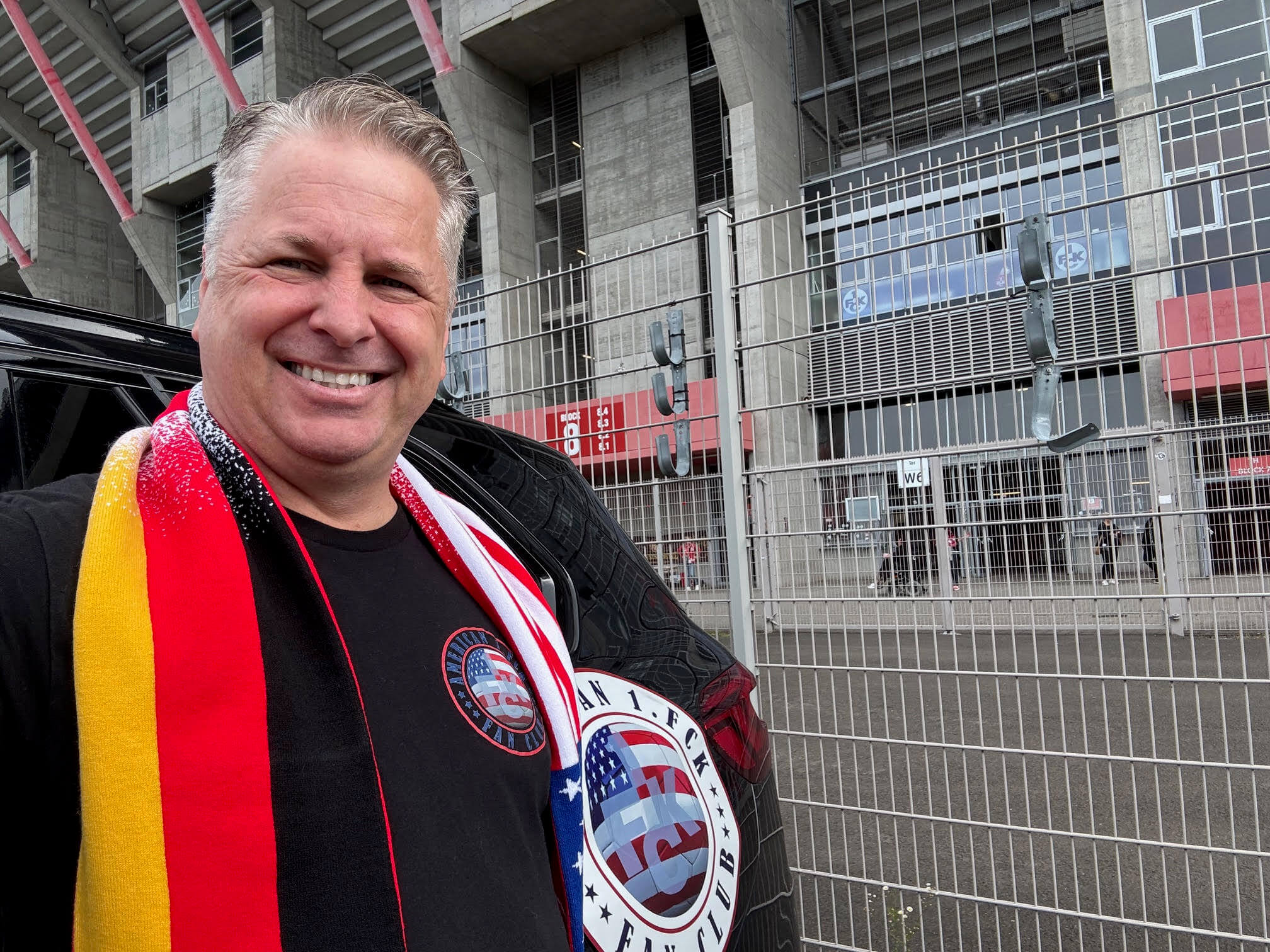
Dr George Brown outside Kaiserslautern’s Fritz-Walter-Stadion (Dr George Brown)
The club connects fans and helps them get tickets to enjoy the matchday experience.
Some ‘forces brats’, such as 42-year-old Michael Guyette, have made a life for themselves in the area, with the club playing a major role.
“I became a fan in 2000 when I went to my first game, against Borussia Monchengladbach,” he says. “I have lived here, on and off, for 25 years and work in the post office in Baumholder.
“FCK plays a huge role in our lives. My 12-year-old son, Kayden, is now in the FCK academy, and my nine-year-old son, Evan, is also a big fan.”
Cort Sikes, also 42, was introduced to football by the father of his local babysitter when his own dad, a fighter pilot, was stationed at Ramstein.
“He was a very good goalkeeper, but they told him he had to quit drinking and smoking cigarettes to get to the next level, and in true German fashion, he said, ‘I guess I’ll never play for the Red Devils, then’.
“When we left in 1988, we remained in touch with the family and visited them regularly, and FCK became a big part of my life. Military kids don’t have much to cling to when they move around because everything is always different and a new situation, but I have always clung to my Red Devils.”
When his father was posted back to Ramstein a decade later, Sikes returned to a cherished childhood memory.
“The walk to the stadium on the hill was magical,” he adds. “The chanting, from taking the train from my hometown of Obermohr, arriving in Kaiserslautern, each stop filling the train with more and more red and white, was amazing. The fans were fervent, and it was my family I had been missing for a decade.”
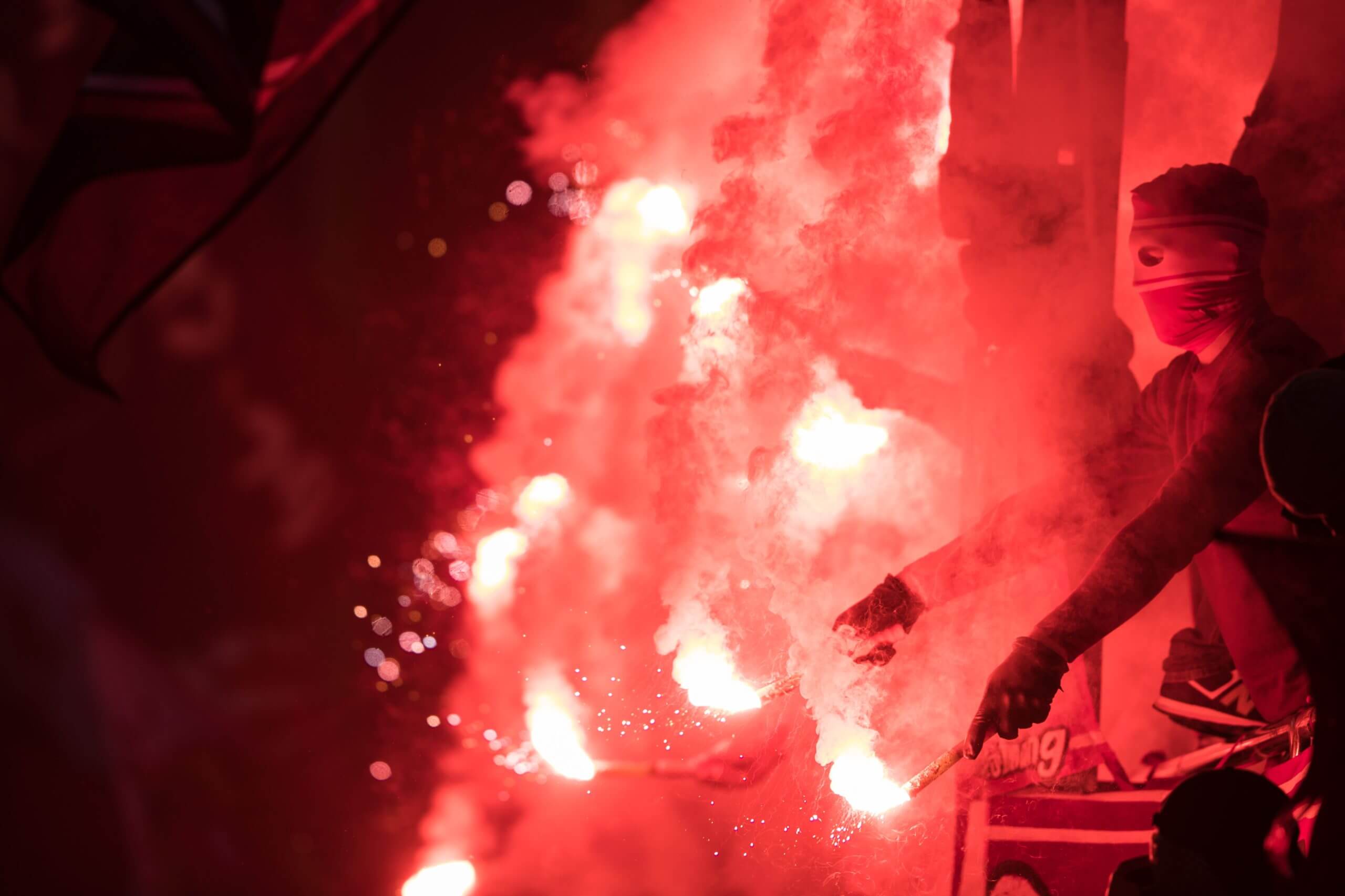
Kaiserslautern fans set off flares at a match against Stuttgart in 2017 (Simon Hofmann/Getty Images)
Marcus Winebrenner was raised in a village 25 miles outside Kaiserslautern with an American father and German mother.
“Growing up in that region, even as someone born to an American father, you just cannot escape the pull of the club,” he says. “It’s almost like a religion.
“My father took me to my first game when I was a young boy, though, just to have something to do, not because he was a supporter himself. From that moment on, I was hooked, and shortly after, I became a season-ticket holder for six or seven years before I moved back to the States.
“The fan culture is unlike anything I have experienced in the U.S. — the mood of the city changes based on the result of the club’s previous game. The Kaiserslautern fans don’t just support the club, they live for the club.
“I’ve gone to MLB, NHL, NBA and NFL games, and it just does not compare. Being in the supporters’ section and feeling the vibration of the chants ring through your entire body is just something else that I believe everyone needs to experience.”
Some ‘forces brats’ have even taken their introduction to football to another level, being inspired to become professional players.
Current USMNT star Weston McKennie learned to play football in the village of Otterbach, outside Kaiserslautern, while his father, John, was stationed at Ramstein. He went back to the U.S. and joined the academy at FC Dallas before returning to Germany with Schalke and then moving to Italian giants Juventus in 2021.
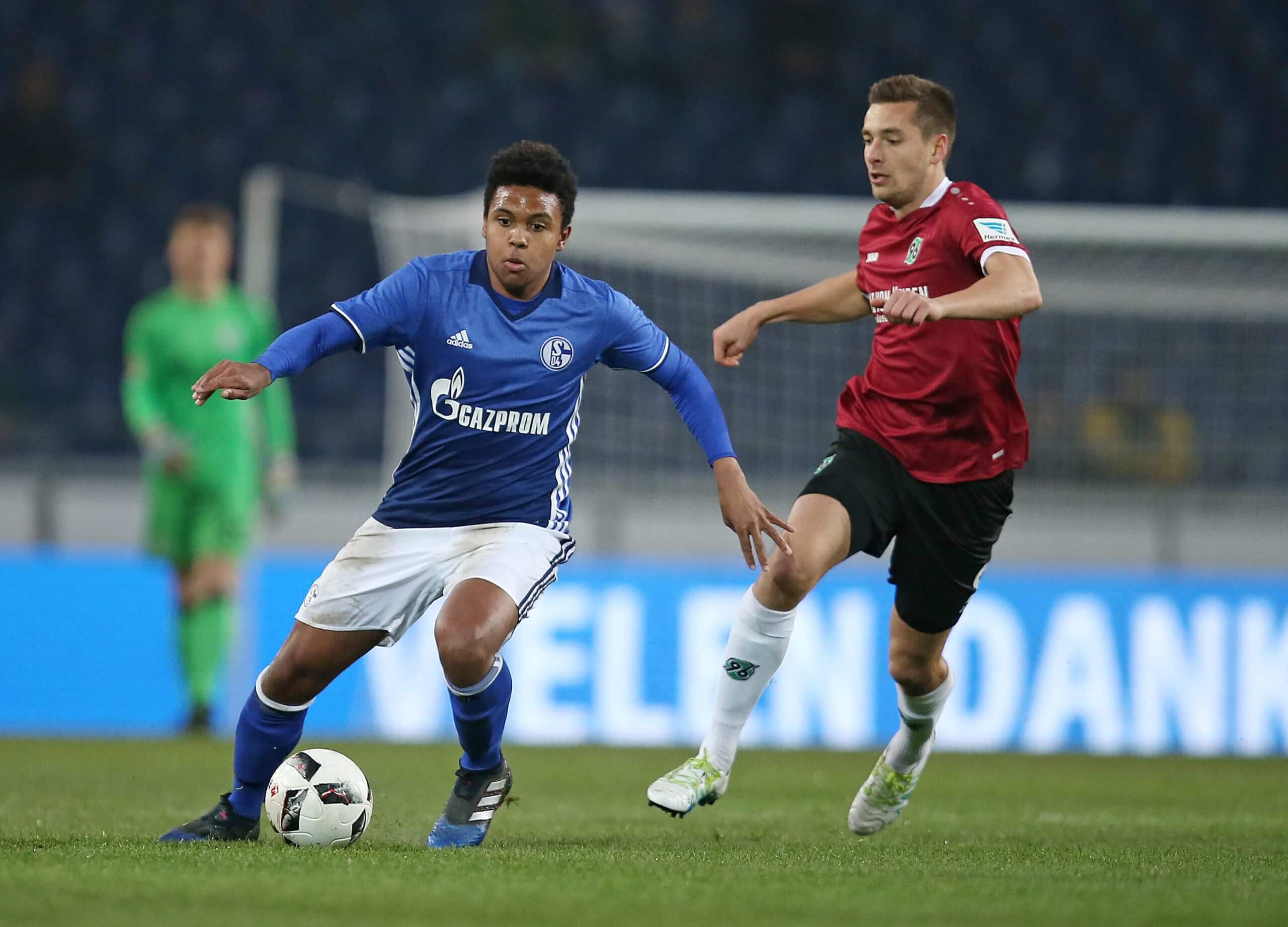
A young Weston McKennie in action for Schalke in 2017 (TF-Images/Getty Images)
Fabian Johnson, who was born in Munich while his father, Charles, was stationed in Mannheim, south of Frankfurt, enjoyed a 16-year career in Germany, including for Gladbach, and played 57 times for the USMNT.
It was a similar story for Lewis Holtby, son of a British soldier from the main BAOR base in Rheindahlen, just outside Monchengladbach.
He began playing locally and joined the Gladbach academy before enjoying a career with several clubs in England and Germany, including Schalke, Hamburg, Tottenham Hotspur and Blackburn Rovers. Capped three times by Germany, the country of his and his mother’s birth, Holtby is now playing in the Netherlands for NAC Breda.
Just as Kaiserslautern benefited from the large American military fanbase, so too have Gladbach, a club with strong links to the UK.
While the British also had significant garrisons at Herford, Bergen-Hohne, Paderborn and Gutersloh, Rheindahlen was by far the largest. Members of the 10,000 British service personnel and their children would get their football fix at the old Bokelberg Stadion and then Gladbach’s modern home, Borussia Park.
The UK Fohlen, formed in 2020 when a group of UK-based Gladbach fans began to connect, is the British fan club that organises tickets and trips to Gladbach games, home and away. Unlike many of their American counterparts, members of the British group have their own club affiliations in the UK game, but the link to Gladbach from their experiences living in the area always entices them back.
“The English football experience has been changed by money. It feels corporate, where the fans are seen as customers to be squeezed,” says Gladbach and Leicester City fan Chris Watson, who lives in London but regularly travels to Germany.
Simon King, the son of a RAF military police officer, lived in Monchengladbach for 15 years and regards it as his ‘home town.’
“A school friend played in the youth team and took me along for a training session,” he says. “I was lucky enough to play for Gladbach youth for seven years.
“We lived in Rheindahlen village and one of our neighbours for a few years was Stefan Effenberg (who played for Gladbach and later Bayern Munich and the German national team). He would give us the odd free ticket.”
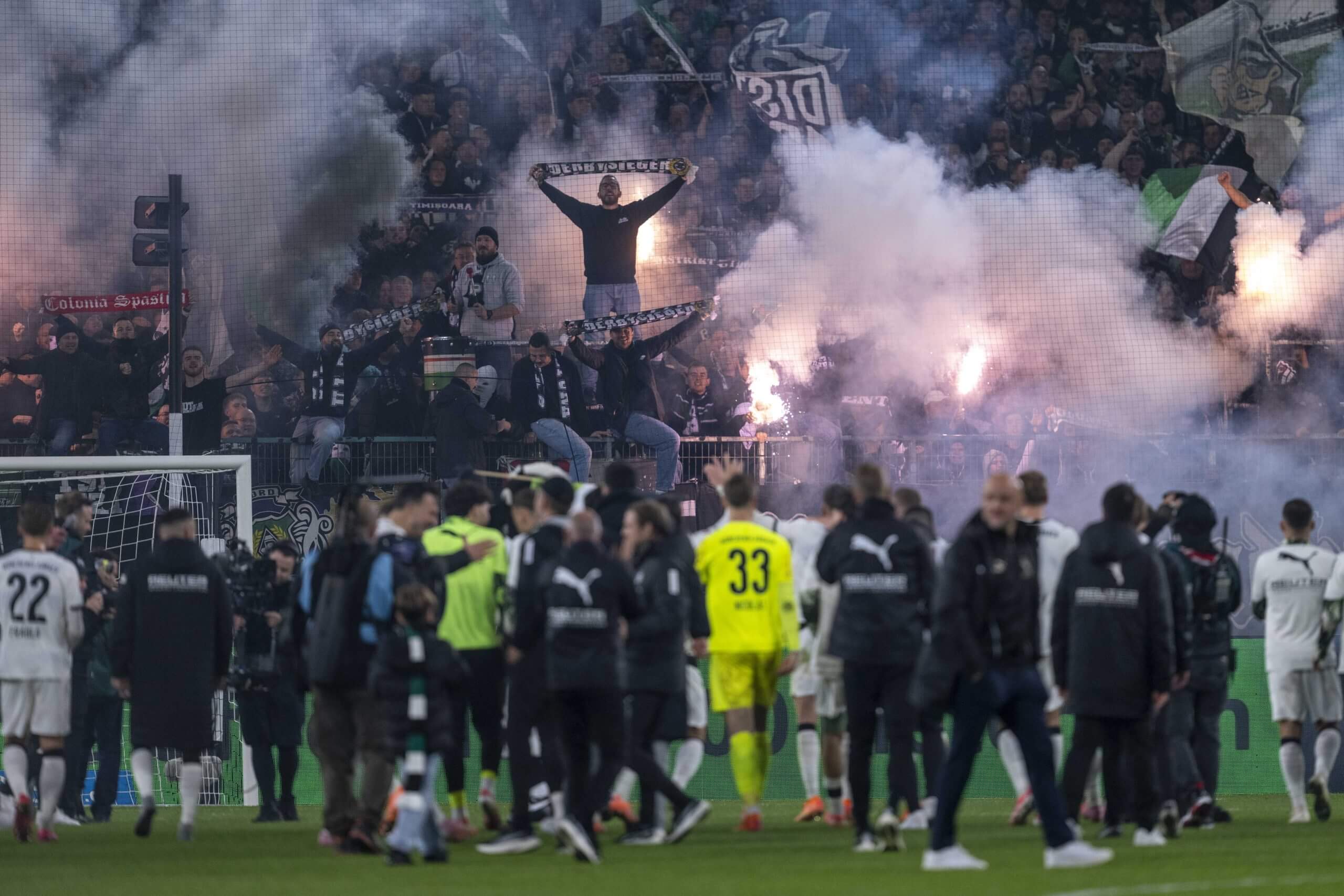
Borussia Monchengladbach fans celebrate victory over Koln with their players last month (David Inderlied/Getty Images)
Other German clubs have large English fanbases, including Schalke, Union Berlin, Koln, Stuttgart, Fortuna Dusseldorf and Borussia Dortmund.
Journalist Ben McFadyean lived in Dortmund in the 1980s and 1990s and formed the first Dortmund fan club in England.
“I went to the army school in Dortmund — the Cornwall School,” he says. “A lot of the soldiers would go to watch Dortmund at the weekends and over the years I have met so many supporters in the UK.
“Carsten Cramer (the club’s managing director) has said they have thousands of UK fans attending home games. I started the first UK fan club. Now there are nine.
“Germany underestimates the value of the Bundesliga, the amount of love and affinity that people feel for the Bundesliga because of what it is, because it’s so genuine and authentic, because you can have a beer and a smoke in the stands, because the tickets cost next to nothing and because you can really enjoy yourself as a fan.”
For many fans from the UK and America, the long-held affinities for German clubs are interwoven with cherished childhood memories.
They may have moved around a lot as they grew up in a military world, but their love of Bundesliga teams is anchored in those early experiences. For many, the clubs they still follow feel like a home from home.