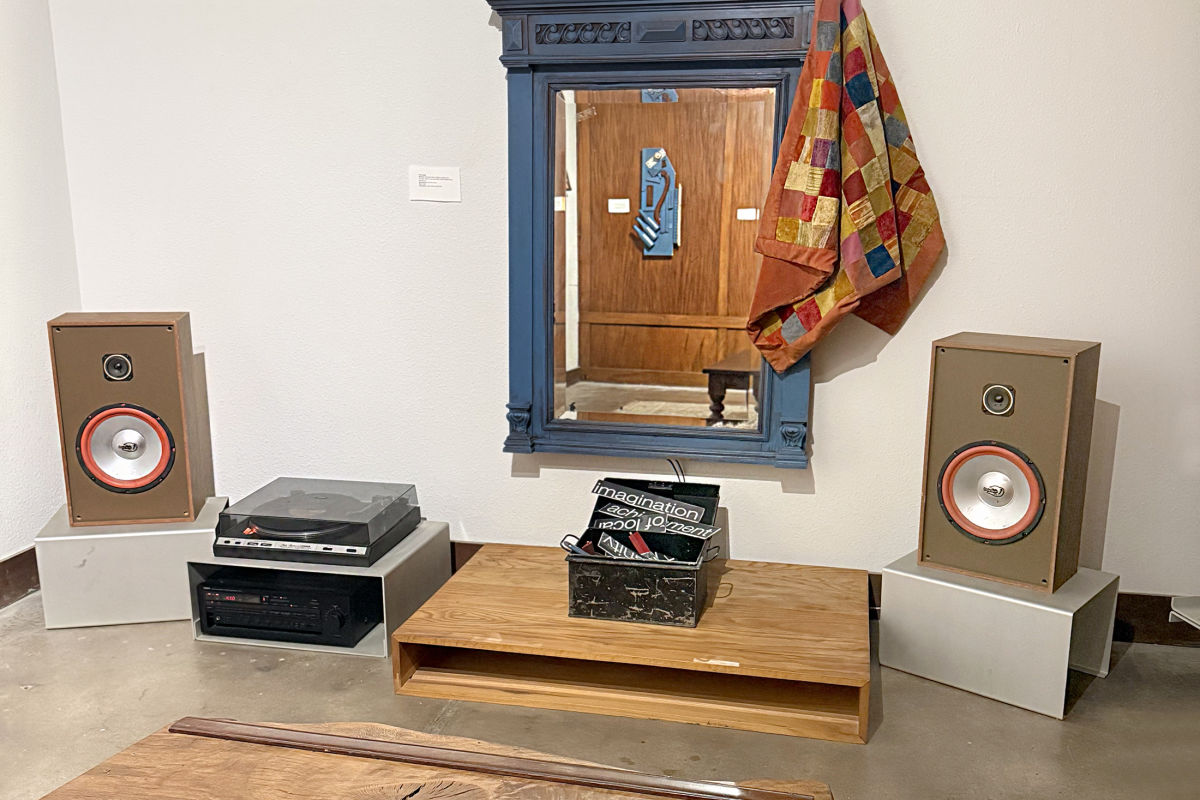
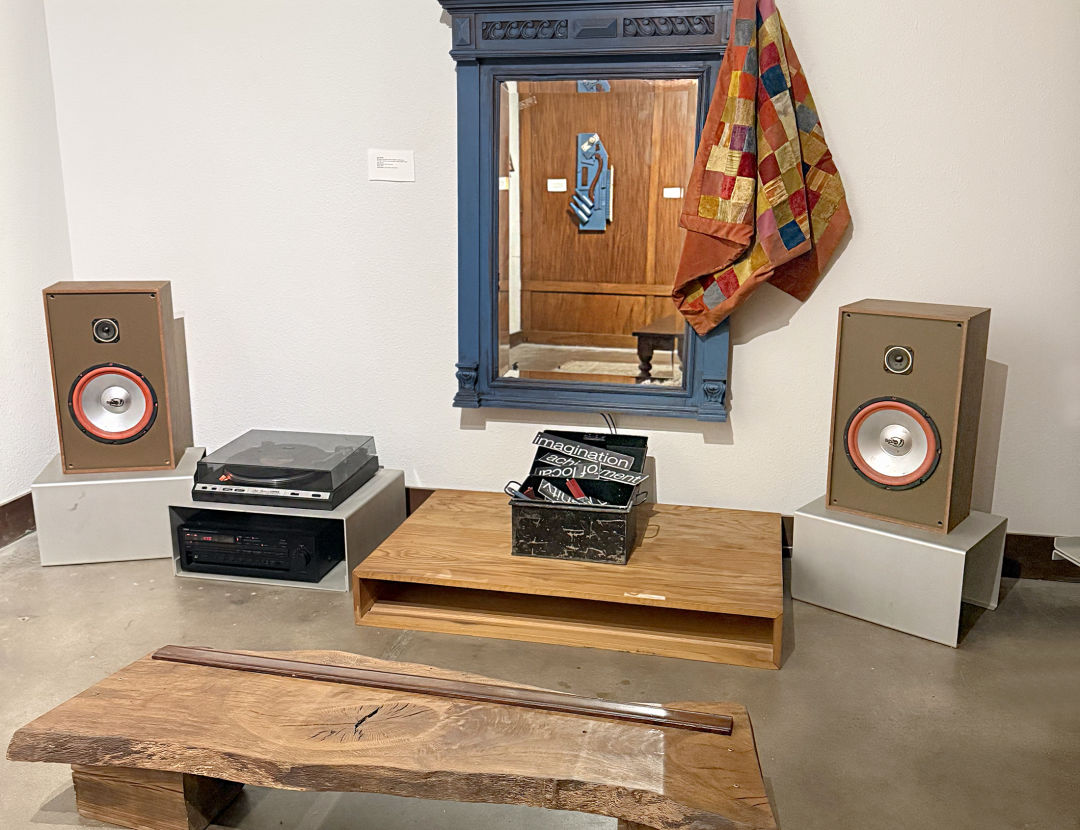
Marlon Hall’s found objects sculpture The Gaze features a reclaimed mirror that the artist uses to “embody the courage it takes to see and gaze it takes to learn about who we are.”
Houstonia’s The Must List tells you about something going on in Houston that you absolutely cannot miss.
To Marlon Hall, a door is never just a door. It’s a pathway opening up the possibility of becoming someone different along the journey to somewhere different. This love and appreciation for the symbolism of coming and going forms one of the core principles of his synthesized anthropological and artistic practices. “Every door has a story, and every story is a doorway,” he says.
In the form of repurposed windows and doors accented by other “found” objects, these portals have become the cornerstone for Hall’s current sculpture show, Unearthed Beauty from Brokenness, on view at East End gallery the List until January 14.
Each of the 23 featured works is constructed from materials Hall sourced during his globe-trotting through Nairobi, Kenya; Venice, Italy; Madison, Wisconsin; Tulsa, Oklahoma; his ancestral home of Homer, Louisiana; and Houston. Three-dimensional collages of discarded objects, including wallpaper, ceramics, furniture pieces, fabric scraps, glass, and—of course—doors and windows raise awareness of the past while challenging viewers to contemplate their present. The lives behind each piece matter. “I don’t work with any door that’s younger than 50 years old,” Hall says. “The found-object assemblages of the involved doors become portals through which people can experience a meditative practice of exploring a new way of seeing their lives.”
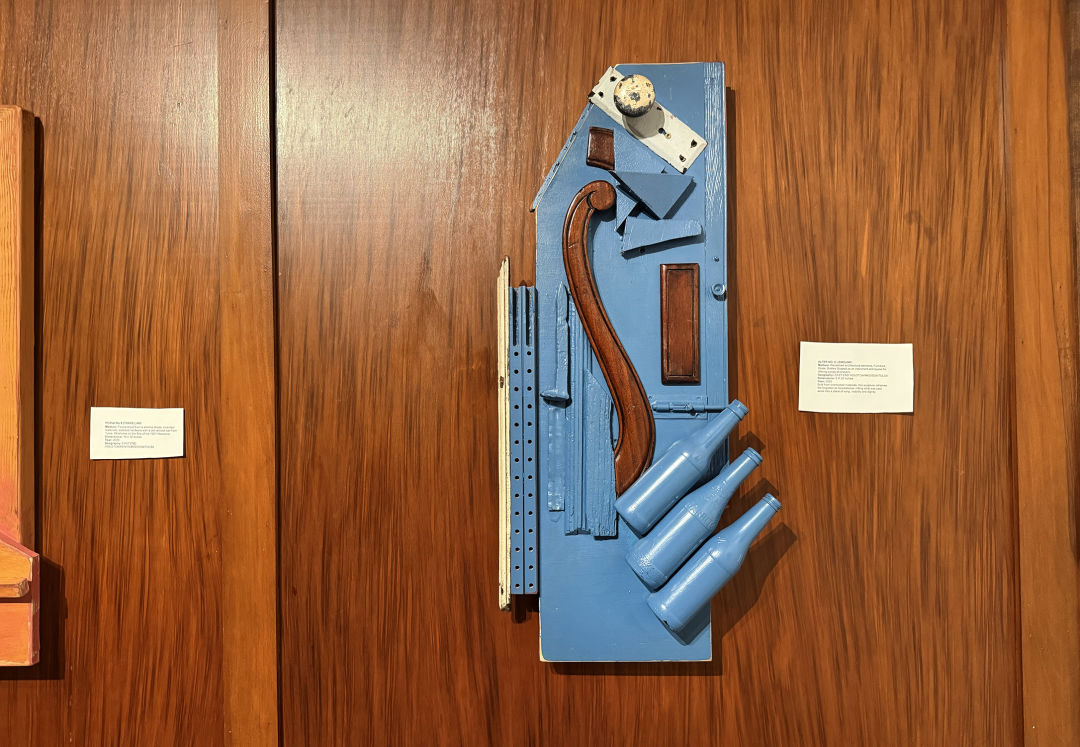
ALTER NO. 5: (SING)ING, which Hall describes as “refram[ing] the forgotten as foundational—lifting what was cast aside into a place of song, visibility and dignity.”
Unearthed Beauty from Brokenness also encompasses altars—sometimes paired with dismembered door parts in a single piece—reflecting Hall’s intent to craft “places where people can come to connect to who they are.” ALTAR NO. 5: (SING)ING, for example, is constructed from discarded furniture, blinds, and bottles, among other ephemera, collected from Tulsa, Madison, and Houston. Adorned in a soothing blue, the sculpture is positioned vertically, recalling both an abstracted musical instrument with visual nods toward strings and brass (no, you can’t play it) and a threshold of self-discovery.
The accompanying display card expresses Hall’s desire to reframe how people view broken, old, outdated, and otherwise forgotten items. His anthropological sensibilities don’t view them as mere junk. If doors and altars open up portals to humanity’s spirit, objecthood is what grounds us in our history, culture, and community.
“Even though on the surface, we may have this perceived brokenness in our communities or in our individual lives, with the right perspective and with good intention, we can transform those broken places into beautiful mosaics through which the light of goodness can shine to create a new vision for our world,” Hall says. “So, the brokenness is not an end, but a means to the end of beauty.”
He views even sites of horrific historic violence, such as the Greenwood District in Tulsa, as “not a graveyard, but a garden” where hope and healing may flower. Once considered the economically prosperous “Black Wall Street,” Greenwood was burned to the ground in 1921 by a racist mob armed with torches—a hateful event that lasted two days. Thousands were left injured, with death toll estimates reaching as high as 300 people. The oldest living survivor of the domestic terrorist attack, Viola Ford Fletcher, died only last month at the age of 111.
While the flames have subsided and the neighborhood has rebuilt itself, the residents still remember; memories passed down through oral and written histories help ensure no one living there forgets.
Hall first learned about the massacre from Project Row Houses founder Rick Lowe in 2018. The two men traveled back and forth between Houston and Tulsa to collect stories, create art, and speak with survivors and their descendants. Hall included images of these locals in his multimedia work with Lowe’s Greenwood Art Project. Yet he discourages viewing Tulsa solely as a place of tragedy and mourning. “The 1921 massacre also [came] with baskets to harvest,” he says. “Human resiliency, that is a fireproof and impenetrable force…. The human spirit cannot be burned.”
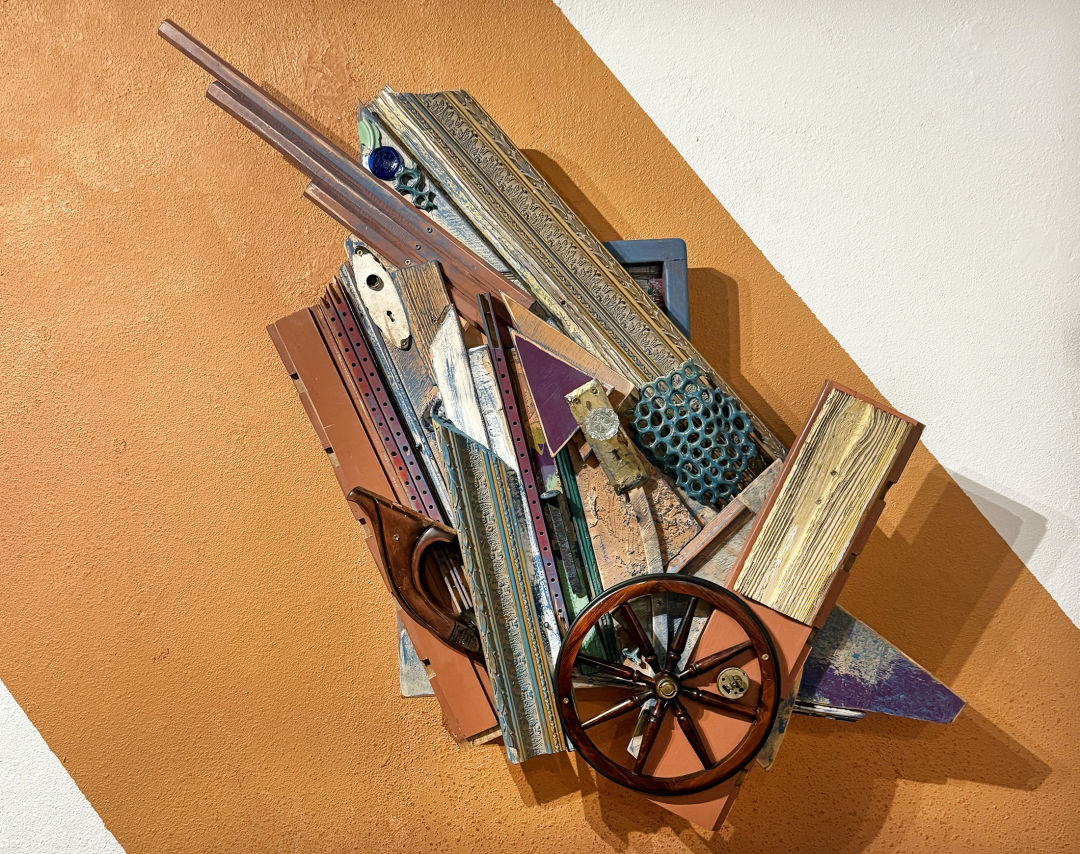
Named after Hall’s daughter, PHOENIX RISES reflects on how a “prayer laughs, sings, and dances…when God answers it.”
And so Tulsa arrives in Houston via Unearthed Beauty from Brokenness, in physical form as railroad nails and other artifacts (found by Hall or gifted to him), and in a more metaphysical form as part of the artist’s concepts and philosophies. Located on the second floor of the building that houses the List, the show welcomes visitors with PORtal No. 5: (SHEAD)ING. As visitors walk up the stairs, they immediately encounter this massive sculpture that combines oxidized hardware, reclaimed wood, and a railroad nail from Tulsa. It places the personal connection to doors in the political realm, urging viewers to pay attention to the world around us if we ever hope to truly become part of it. One can’t read Hall’s posted description of the integral role of surrender in transformation without pondering the significance of the specific reference to Tulsa.
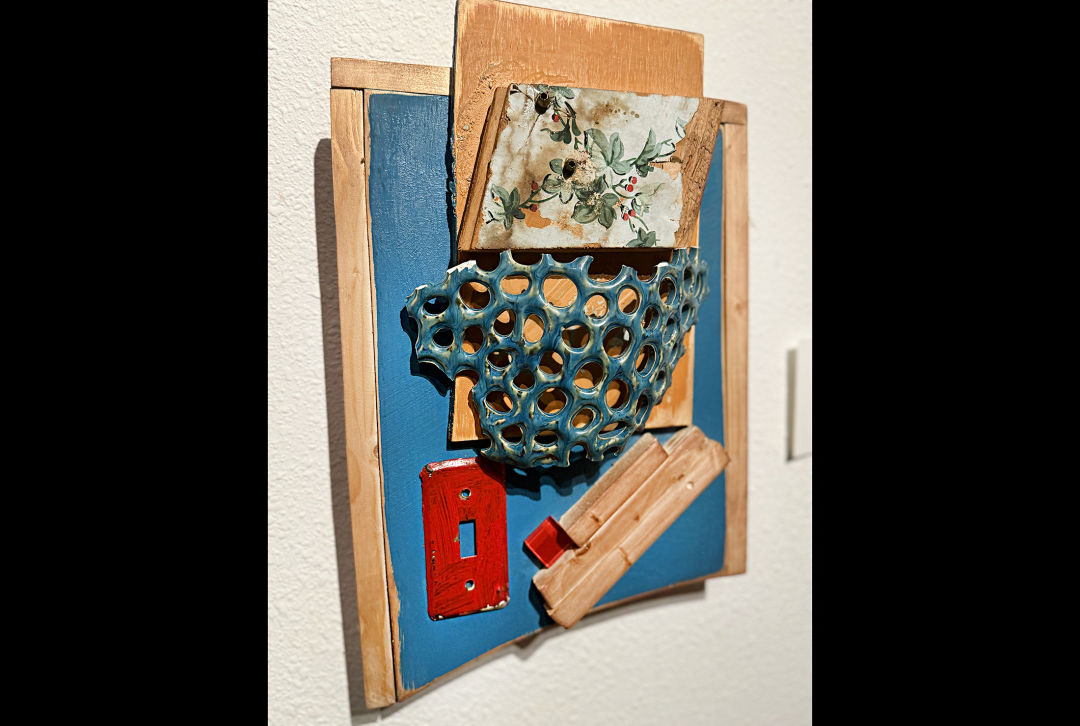
ALTER NO. 4: (MASK)ING takes wallpaper from Hall’s ancestral home in Homer, Louisiana and pairs it with found objects from as close as Houston and as distant as Kenya.
To deepen the relationship between the sculptures’ themes and those who pass through the List’s doors, both literally and metaphorically, Hall adds a community component to the gallery show. Unearthed Beauty centers on recognizing the gift of healing and rebuilding. On Tuesdays and Thursdays, Hall offers walkthroughs of the exhibition at 12:30pm and 5:30pm, during which he provides insight through a guided meditation. He also plans to host DIY classes on making sculptures with found objects, as well as yoga on Sunday at noon in the nearby Yoga Home, located at 1102 Delano St. Attendees can get up and get moving while enjoying what he calls a “micro-orchestra” performance. All these events will be free and open to the public, and since Hall’s own studio is located next door, he says there might be some spontaneous happenings as inspiration strikes him. Expect a visit to include prompts or questions about the self, as an individual and in communion with others.
“We are more resilient than we allow ourselves to be,” Hall says. “When we have the right tools, the crap of our past can turn into what fertilizes our future, individually and as communities.”
Know Before You Go
- When: December 5, 2025–January 14, 2026
- Where: The List, 201 Roberts St
- Cost: Free
- More Info: Marlon Hall’s Instagram