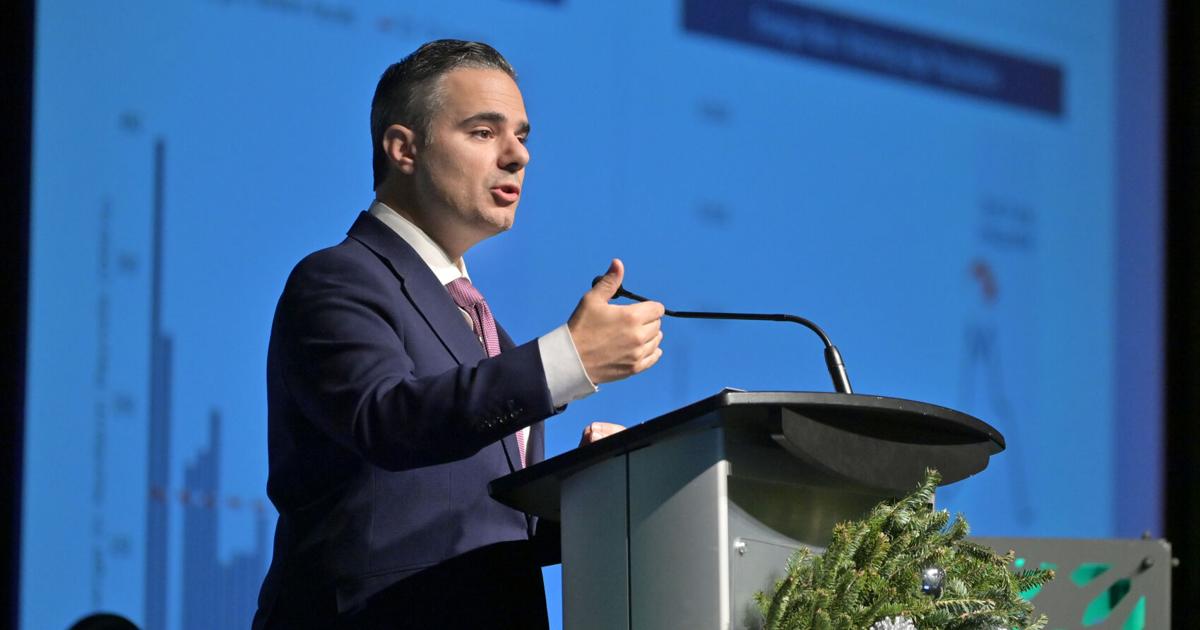
The unprecedented investment in artificial intelligence data centers will fuel the national and local economies in 2026 and beyond, experts said Friday during the Lancaster Chamber’s annual Economic Forecast Breakfast.
Steven Chiavarone, head of the Multi-Asset Group at Federated Hermes, an investment manager headquartered in Pittsburgh, expressed optimism for the future during the annual breakfast at the Lancaster County Convention Center.
Speaking to a crowd of about 435, Chiavarone said he expects the S&P 500 — which tracks the performance of 500 leading U.S. companies — to grow by about 11% in 2026.
But he acknowledged that with most of the growth occurring at the top, that outlook doesn’t match the experience of many Americans, particularly younger adults.
Close
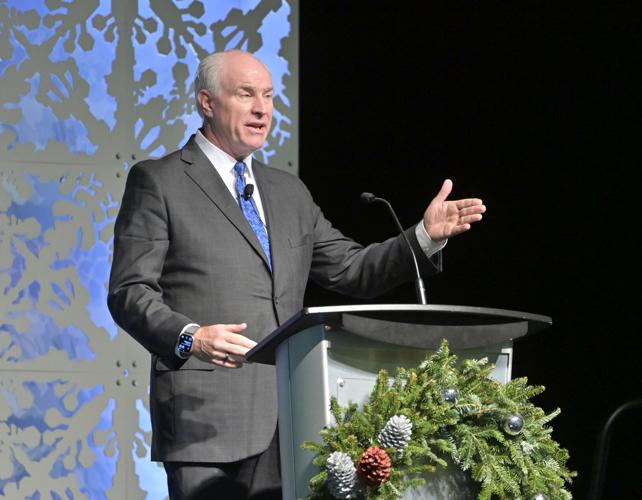
Dave Hanson, CEO at Fulton Financial Advisors/Fulton Private Bank, speaks during a Lancaster Chamber Economic Forecast Breakfast presented by Fulton Bank at the Lancaster Marriott at Penn Square on Friday, Dec. 12, 2025.
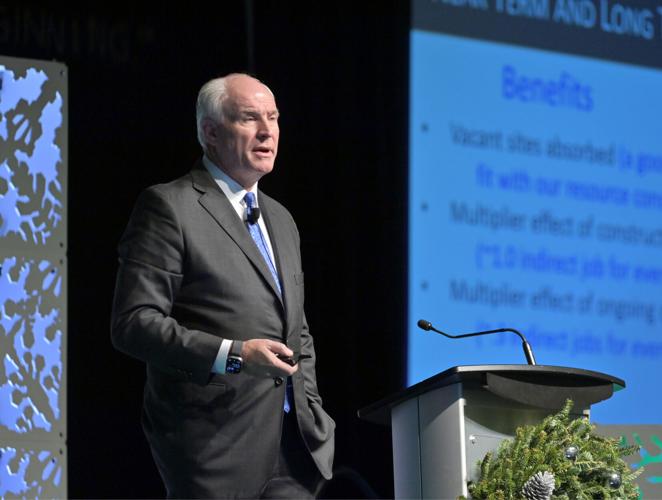
Dave Hanson, CEO at Fulton Financial Advisors/Fulton Private Bank, speaks during a Lancaster Chamber Economic Forecast Breakfast presented by Fulton Bank at the Lancaster Marriott at Penn Square on Friday, Dec. 12, 2025.
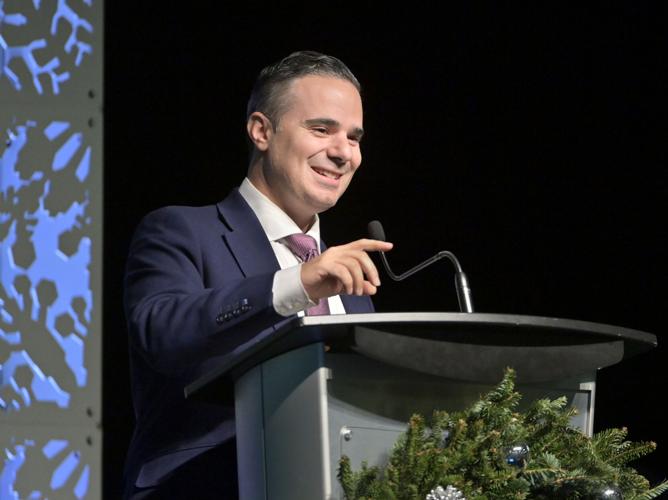
Steven Chiavarone, head of the Multi-Asset Group at Federated Hermes, shares a laugh as he speaks during a Lancaster Chamber Economic Forecast Breakfast presented by Fulton Bank at the Lancaster Marriott at Penn Square on Friday, Dec. 12, 2025.
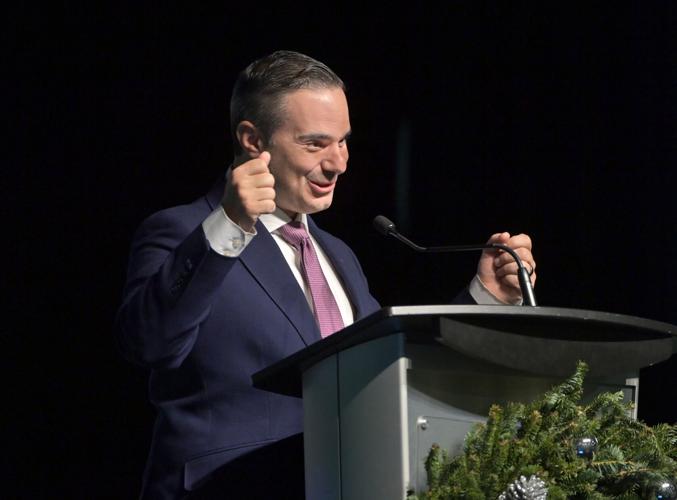
Steven Chiavarone, head of the Multi-Asset Group at Federated Hermes, shares a laugh as he speaks during a Lancaster Chamber Economic Forecast Breakfast presented by Fulton Bank at the Lancaster Marriott at Penn Square on Friday, Dec. 12, 2025.
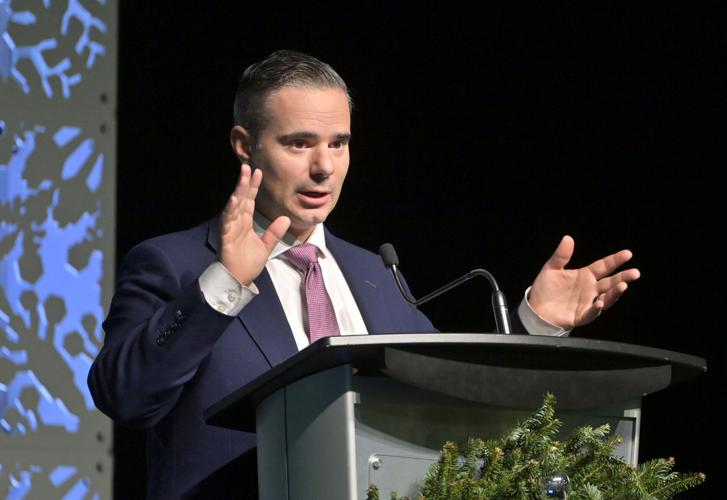
Steven Chiavarone, head of the Multi-Asset Group at Federated Hermes, speaks during a Lancaster Chamber Economic Forecast Breakfast presented by Fulton Bank at the Lancaster Marriott at Penn Square on Friday, Dec. 12, 2025.
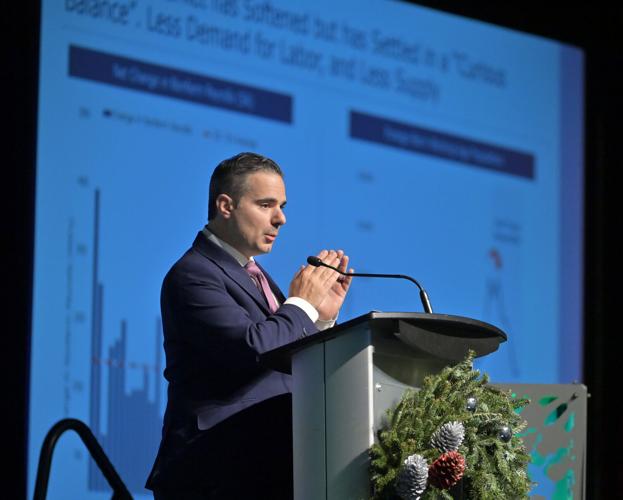
Steven Chiavarone, head of the Multi-Asset Group at Federated Hermes, speaks during a Lancaster Chamber Economic Forecast Breakfast presented by Fulton Bank at the Lancaster Marriott at Penn Square on Friday, Dec. 12, 2025.
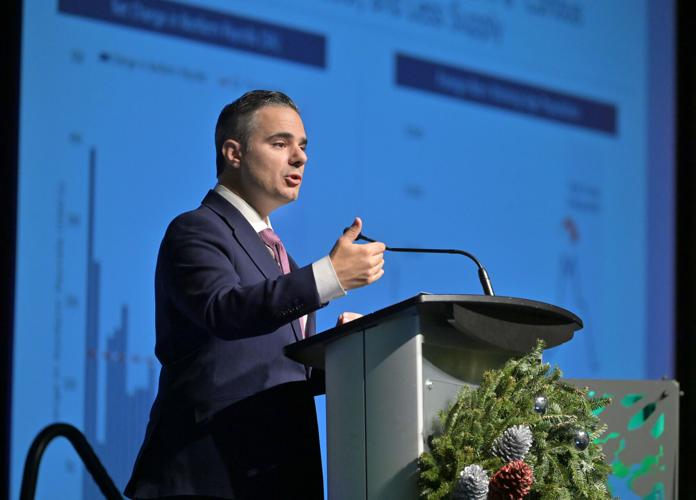
Steven Chiavarone, head of the Multi-Asset Group at Federated Hermes, speaks during a Lancaster Chamber Economic Forecast Breakfast presented by Fulton Bank at the Lancaster Marriott at Penn Square on Friday, Dec. 12, 2025.
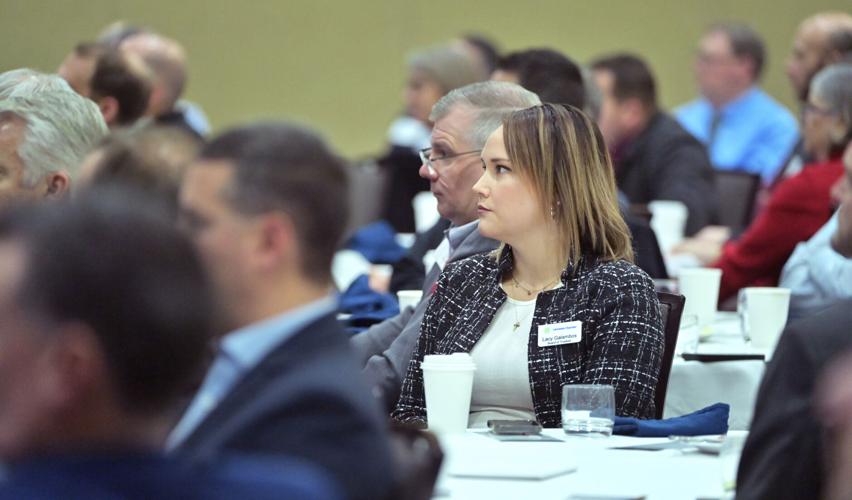
Larissa “Lacy” Galambos, chief financial officer, with Landmark Homes, and a board member of the Lancaster Chamber, listens to a speaker during a Lancaster Chamber Economic Forecast Breakfast presented by Fulton Bank at Lancaster Marriott at Penn Square on Friday, Dec. 12, 2025.
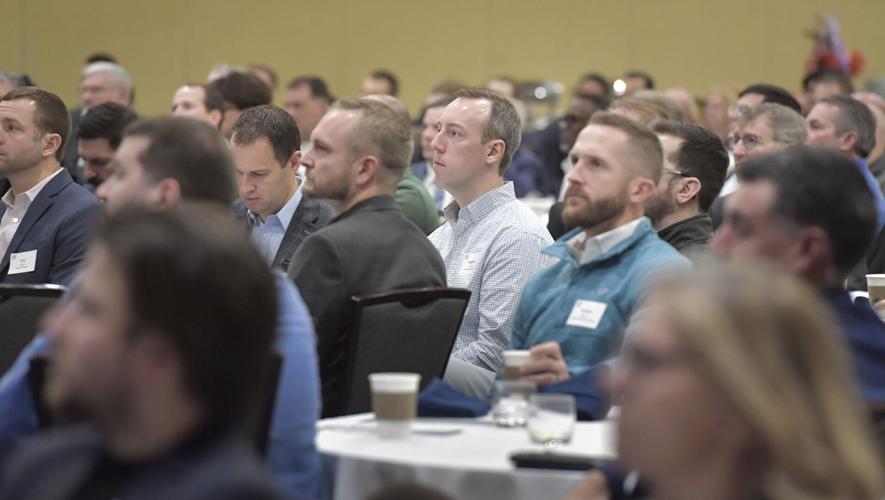
Stephen Reisser, finance and operations reporting manager with Garman Builders, center, listens to a speaker during a Lancaster Chamber Economic Forecast Breakfast presented by Fulton Bank at Lancaster Marriott at Penn Square on Friday, Dec. 12, 2025.
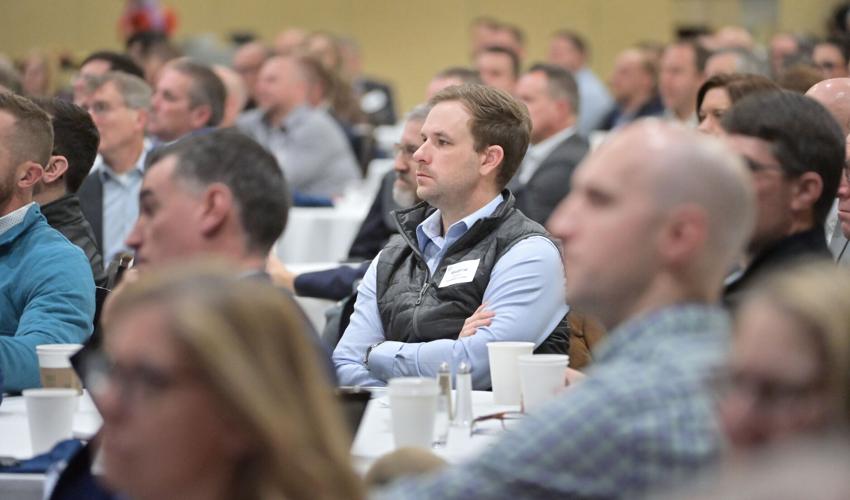
Matthew Turman, vice president with Susquehanna Insurance, center, listens to a speaker during a Lancaster Chamber Economic Forecast Breakfast presented by Fulton Bank at Lancaster Marriott at Penn Square on Friday, Dec. 12, 2025.
Dave Hanson, CEO at Fulton Financial Advisors/Fulton Private Bank, speaks during a Lancaster Chamber Economic Forecast Breakfast presented by Fulton Bank at the Lancaster Marriott at Penn Square on Friday, Dec. 12, 2025.
Dave Hanson, CEO at Fulton Financial Advisors/Fulton Private Bank, speaks during a Lancaster Chamber Economic Forecast Breakfast presented by Fulton Bank at the Lancaster Marriott at Penn Square on Friday, Dec. 12, 2025.
Steven Chiavarone, head of the Multi-Asset Group at Federated Hermes, shares a laugh as he speaks during a Lancaster Chamber Economic Forecast Breakfast presented by Fulton Bank at the Lancaster Marriott at Penn Square on Friday, Dec. 12, 2025.
Steven Chiavarone, head of the Multi-Asset Group at Federated Hermes, shares a laugh as he speaks during a Lancaster Chamber Economic Forecast Breakfast presented by Fulton Bank at the Lancaster Marriott at Penn Square on Friday, Dec. 12, 2025.
Steven Chiavarone, head of the Multi-Asset Group at Federated Hermes, speaks during a Lancaster Chamber Economic Forecast Breakfast presented by Fulton Bank at the Lancaster Marriott at Penn Square on Friday, Dec. 12, 2025.
Steven Chiavarone, head of the Multi-Asset Group at Federated Hermes, speaks during a Lancaster Chamber Economic Forecast Breakfast presented by Fulton Bank at the Lancaster Marriott at Penn Square on Friday, Dec. 12, 2025.
Steven Chiavarone, head of the Multi-Asset Group at Federated Hermes, speaks during a Lancaster Chamber Economic Forecast Breakfast presented by Fulton Bank at the Lancaster Marriott at Penn Square on Friday, Dec. 12, 2025.
Larissa “Lacy” Galambos, chief financial officer, with Landmark Homes, and a board member of the Lancaster Chamber, listens to a speaker during a Lancaster Chamber Economic Forecast Breakfast presented by Fulton Bank at Lancaster Marriott at Penn Square on Friday, Dec. 12, 2025.
Stephen Reisser, finance and operations reporting manager with Garman Builders, center, listens to a speaker during a Lancaster Chamber Economic Forecast Breakfast presented by Fulton Bank at Lancaster Marriott at Penn Square on Friday, Dec. 12, 2025.
Matthew Turman, vice president with Susquehanna Insurance, center, listens to a speaker during a Lancaster Chamber Economic Forecast Breakfast presented by Fulton Bank at Lancaster Marriott at Penn Square on Friday, Dec. 12, 2025.
“The economy can power through as long as the high-end consumer is doing well, and they are. But that doesn’t mean everything’s OK,” Chiavarone said.
It was Chiavarone’s first time as featured speaker at the breakfast. A regular guest on CNBC, Fox Business and Bloomberg, he replaced the recently retired Linda Duessel, another Federated Hermes executive who headlined the event for nearly 20 years. Dave Hanson, CEO of Fulton Financial Advisors and Fulton Private Bank, shared insights on the county’s economy.
Here are three takeaways from the event:
AI’s impact is reshaping the economy nationally and locally
The multitrillion dollar buildout of AI data centers across the country is the largest infrastructure investment in U.S. history, other than railroads, Chiavarone said. It is fueling the nation’s economy, and he thinks the innovation it creates should continue that growth.
While the CEO of AI firm Anthropic has predicted that AI could eliminate half of entry-level white collar jobs in five years, Chiavarone said he thinks it will lead to new jobs in other sectors of the economy. Historically, disruptive technologies like cars and personal computers destroyed jobs initially, but ended up creating many more by increasing productivity in other industries that use them, he said.
“There’s this belief that because we can’t envision what this creates, we can only envision what it’s going to destroy, that it won’t exist. I don’t believe that,” he said.
Chiavarone said he’s not convinced there is an AI bubble because the biggest players are U.S.-based tech giants like Nvidia, Meta, Google and Amazon – who have very little debt and cash flows that dwarf the rest of the companies on the S&P 500. He said the market is showing rational behavior by embracing their AI plans while punishing less-profitable companies with AI aspirations like Oracle.
“That’s a healthy expansion. That’s a sign of a boom, not a bubble,” he said, adding that the U.S. government is strongly in support of the AI buildout.
AI’s also having a historic impact on the local economy, Hanson said. The CoreWeave AI data centers planned in Lancaster city make up the largest single investment in the county’s history, totaling $10 billion according to their developer. Combined they’ll create more than 3,000 construction jobs, which is second only to the workforce that built the Safe Harbor Dam in 1930. That’s good for contractors, but it could push up labor costs for other projects in the area over the five years it will take to build the centers, Hanson said. Other potential downsides are an increase in the cost of electricity due to demand from data centers, though Hanson said that would occur whether they are built here or elsewhere in the region because Lancaster County is part of an electricity market that covers 13 states.
Between 200 and 300 permanent jobs are expected at the centers in Lancaster city when they are complete, which Hanson said is not a bad thing, given the county’s low unemployment rate.
Lancaster city will see increased property tax revenue and a $20 million contribution toward sustainable development and economic development programs.
“Buckle your seat belts, because I think we’ve got a pretty interesting four or five years as these things get built,” Hanson said.
Lancaster County’s perennial shortages persist
Workers, housing and industrial real estate all remain in short supply in the county.
The county’s unemployment rate has averaged 3.2% this year, up slightly from 2024 but still lower than the statewide and national averages, which are both higher than 4%.
Median sales prices for homes in Lancaster County continue to increase – reaching $350,000 in November. The addition of more than 1,200 new apartment units across the county in 2024 helped push rental vacancy rates up from their low of 2.3% in 2023 to nearly 7% this year, but most new developments are at the upper end of the rental market, Hansen said.
Indicators suggest growth
While job growth has slowed, Chiavarone isn’t concerned about unemployment because the number of job seekers has also decreased. He attributes that to immigration policy and more households with one parent staying home with children after the return to in-person work.
He expects inflation to hover around 2.5% in 2026, because of relatively slow wage growth and housing prices that have leveled off nationally – despite Lancaster’s hot housing market. Many homeowners remain “locked-in” by their outstanding mortgages that are well below the current mortgage rate of about 6%.
Other signs for optimism include reduced uncertainty over tariffs, which has increased investment in U.S. companies, Chiavarone said. The One Big Beautiful Bill Act, passed in July, should also spur economic activity among middle-class Americans, he said.
The Federal Reserve has cut its benchmark interest rate three times this year, in response to slowing jobs growth. Chiavarone said he hopes that rates will come down to 3% next year to help consumers who have been under the pressure of high interest rates for several years.
“If tech does slow, you want to be able to hand that baton over to the rest of the economy, and it needs some relief,” he said.

Success! An email has been sent to with a link to confirm list signup.
Error! There was an error processing your request.