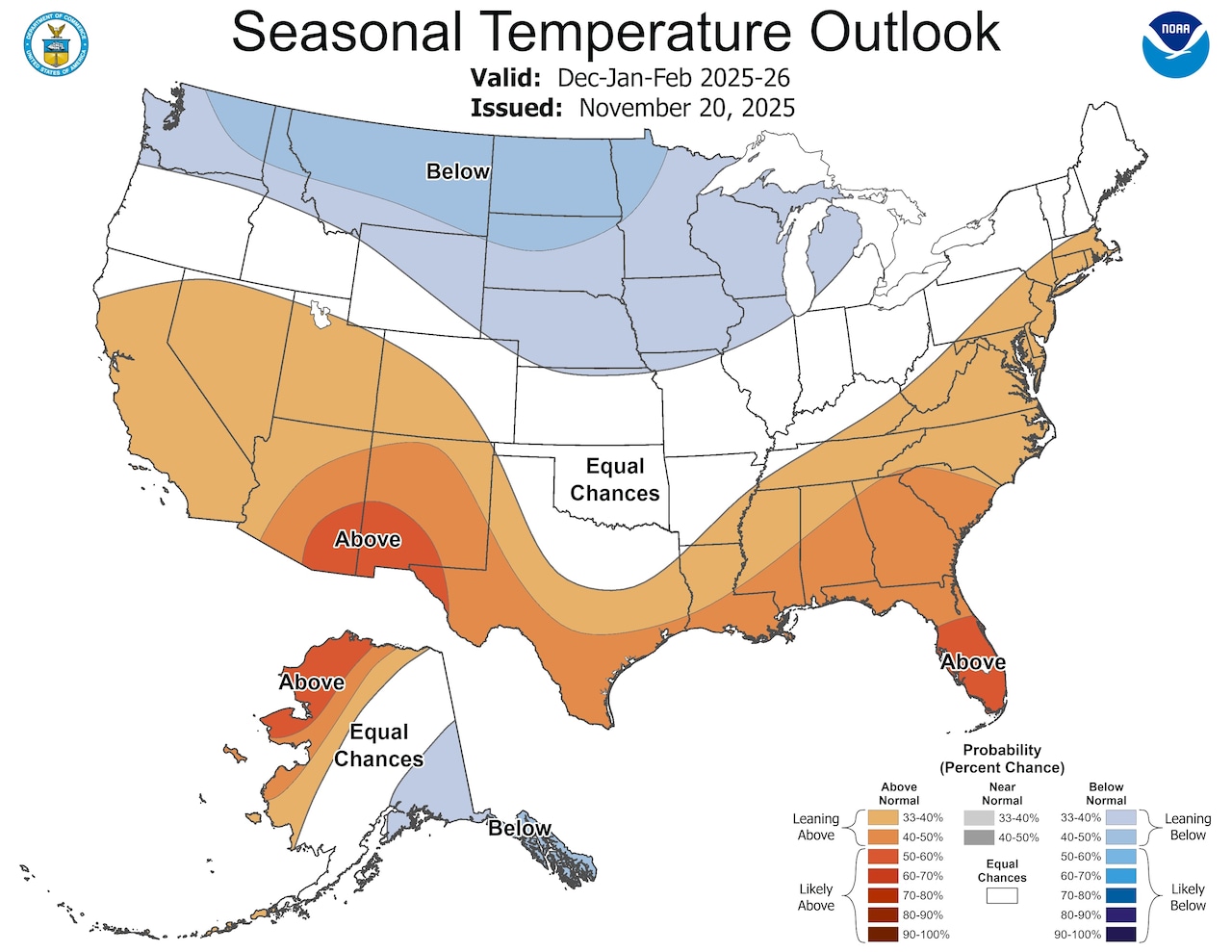
STATEN ISLAND, N.Y. — The most recent seasonal outlooks produced by the National Weather Service’s Climate Prediction Center indicate that the winter ahead will feature rather typical conditions for the majority of the state.
However, those in downstate New York can expect potentially warmer temperatures than usual this winter.
According to the Nov. 20 seasonal temperature outlook, New York City, Long Island and the Hudson Valley have a 33-40% probability of temperatures generally leaning above average from December through February.
Upstate New York has equal chances of predominantly recording above or below-average temperatures during that same three-month span.
For reference, Central Park’s mean average temperatures for December, January and February are 39.1, 33.7 and 35.9 degrees Fahrenheit, respectively, according to National Oceanic and Atmospheric Administration data from 1991-2020.
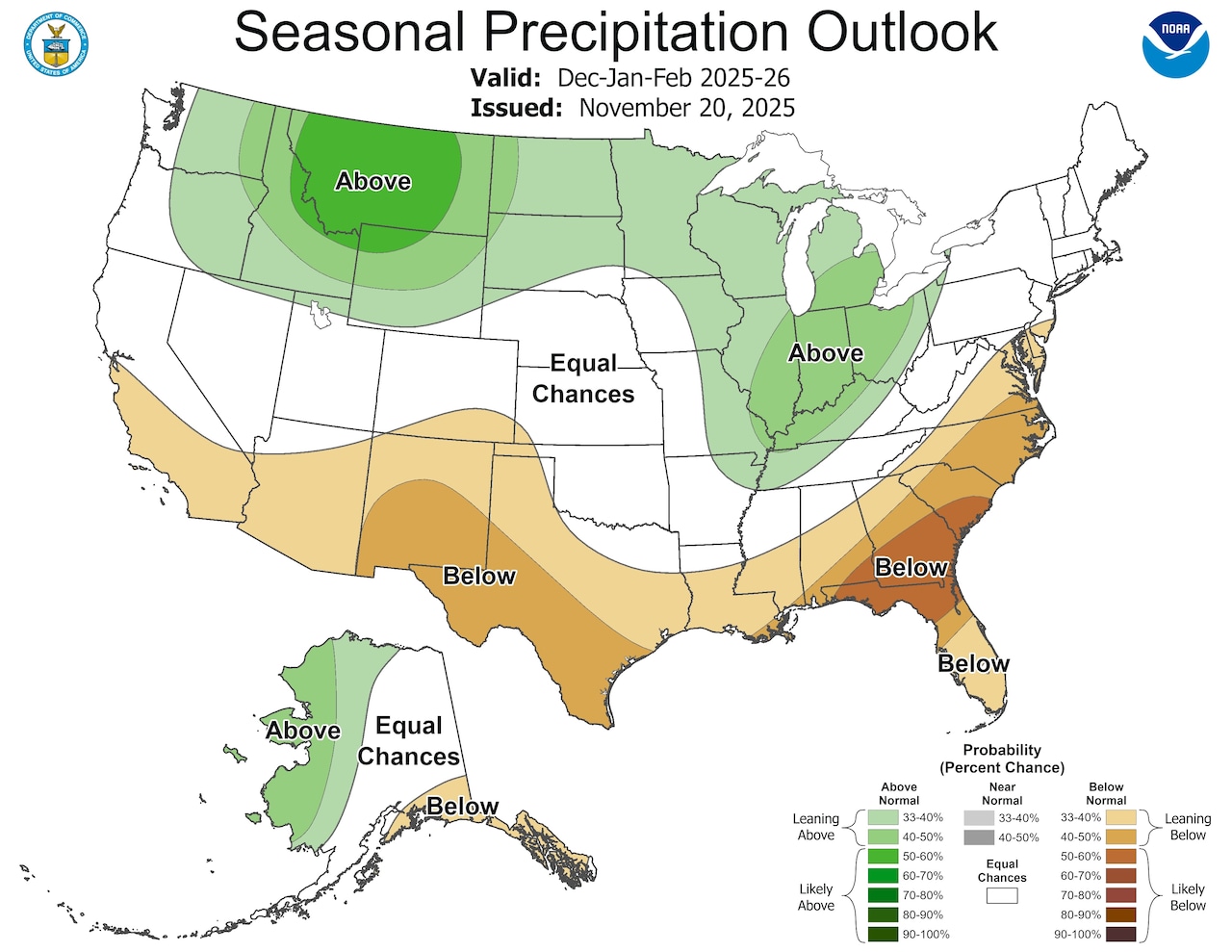 This seasonal precipitation outlook by the National Weather Service’s Climate Prediction Center shows most of the state has equal odds of experiencing above or below-average precipitation amounts this winter.(National Weather Service’s Climate Prediction Center)
When it comes to precipitation, nearly the entirety of New York has equal odds of experiencing more or less rainfall than usual from December through February.
The only exception to this outlook is the westernmost edge of the state, which has a 33-40% probability of precipitation amounts exceeding their average.
For reference, Central Park typically records 4.38, 3.64 and 3.19 inches of precipitation in December, January and February, respectively, according to National Oceanic and Atmospheric Administration data.
This latest outlooks were very similar to those which were issued in mid-October. The seasonal temperature outlook called for the same odds of above-average temperatures in downstate New York. Meanwhile, the seasonal precipitation outlook indicated that most of the state had equal odds of experiencing either above-average or below-average precipitation amounts.