The government announced the support program the following March, and that spring the first cheques arrived: a lump sum of $125,000, which was later doubled in 2019, along with an annual, lifelong pension of up to $100,000 and access to an ongoing medical emergency fund.
As of this December, 133 survivors were receiving annual pensions from the thalidomide support program. The Globe and Mail spoke with 14 of them this fall. They live in rural and urban communities, from one coast to the other. They include a lawyer, a librarian, a motivational speaker and several artists.
As a group, they experienced the most severe side effects of thalidomide. Almost all of them were featured in The Globe’s 2014 series that called attention to survivors’ stories as they fought for long-awaited recognition from a government that failed to protect them.
The 2015 deal was not perfect, Ms. Benegbi says. The package was substantially less than the amount recommended by the survivor association task force. And in its statement, the government walked the narrow line of acknowledging suffering, without legally taking responsibility.
But the program was far better than the one-off payments that Ottawa offered in 1991, which ranged from $56,000 to $83,000. To get that money, survivors also had to agree in writing never to ask for any more; Ms. Benegbi signed her name to that promise in pencil.
Years later, as executive director of the survivor association, she interviewed survivors and researched programs in other countries to build a case for more compensation. When the public campaign led to the House of Commons vote and the 2015 deal, no promise was made to close the issue forever. Indeed, a small group of survivors have continued the legal fight to increase the program to an amount closer to what was recommended by the task force.
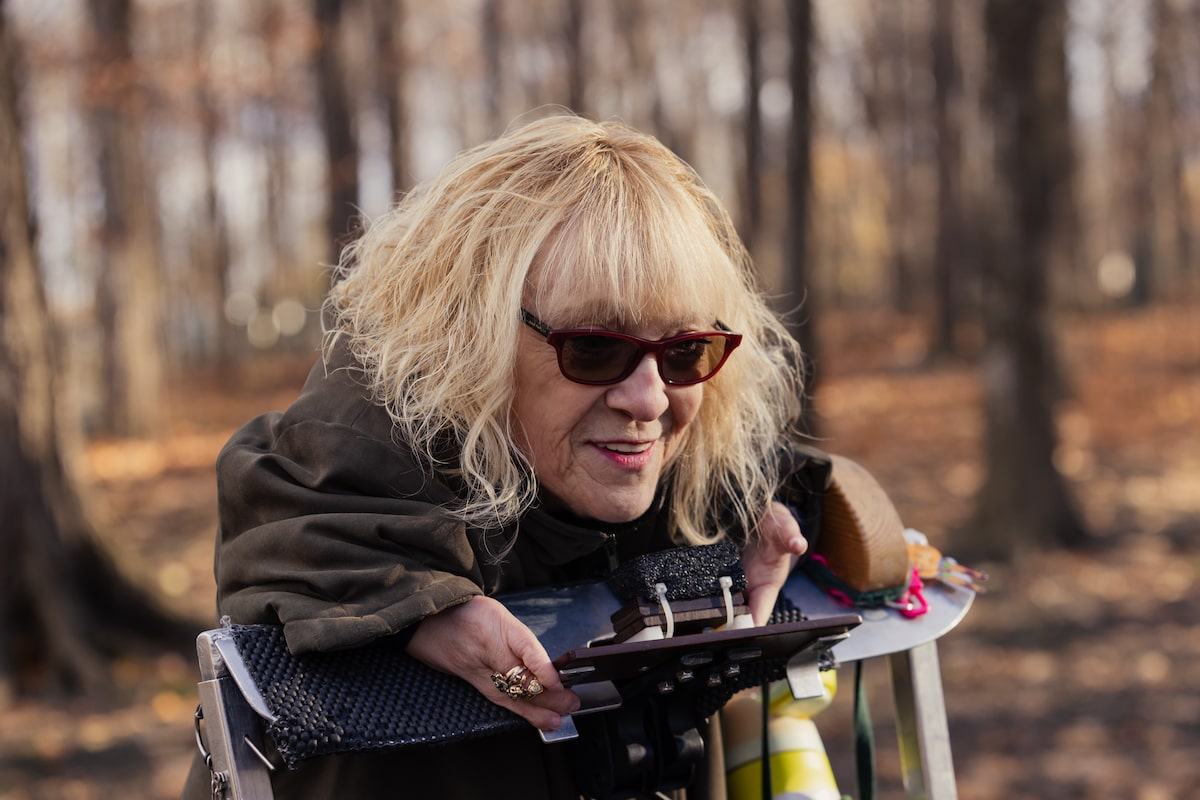
Alexandra Niblock, a survivor living on Pender Island, B.C., uses her teeth and feet to complete daily tasks – an adaption that has taken a toll on her body as she ages.Rachel Lenkowski/The Globe and Mail
Ms. Niblock, who has conducted extensive research into thalidomide, is one of the plaintiffs in a lawsuit seeking better compensation from the government for approving thalidomide despite a lack of safety evidence.Rachel Lenkowski/The Globe and Mail
No amount can restore arms and legs, says Ms. Benegbi. Money cannot heal the early childhood experiences of many survivors: long hospital stays away from their parents, painful experimental surgeries, unwanted trials with ill-fitting artificial limbs. And nothing can erase all those decades as adults spent largely forgotten by the government – many of them living in poverty, struggling financially to cover basic needs such as bathing, cleaning and cooking.
But Ms. Benegbi’s hope in 2015 was that the federal funds could make a difference right away, especially with thalidomide survivors aging into their fifties.
And today, the most survivors agree that the program, though imperfect, has relieved stress and worry. They’ve spent the funds on practical renovations and care, and they’ve used it to make long-impossible dreams happen.
“Our days will never be easy,” says Ms. Benegbi. But 10 years after their country finally stepped up to address a terrible wrong, the money has made hard days easier for her and so many survivors by delivering a life-changing measure of dignity.
For Susan Wagner-White of Perth, Ont., the federal funds have reduced stress and cleared her mind to focus on her pointillist paintings. To make life easier, she’s also DIYed a few solutions, including a loop of clothesline to open her car door from the inside.
John Kealey/The Globe and Mail
‘Life threw me into the deep end’
An easier life, as Susan Wagner-White will attest, begins with a bottom-warming, sweet-smelling, bells-and-whistles Japanese toilet.
Asked to name the favourite items she’s purchased with the government money, Ms. White grins, gently slides Peanut, her chihuahua, off her lap and says, “Come see my washroom.”
Upon approach, the toilet seat cover rises. The seat heats up to Ms. White’s desired level-five setting, the hottest it gets. She presses a button, and the bidet automatically sprays water, again at her preferred temperature. She uses her foot to flush. The toilet then cleans itself and freshens the air, prepped for the next visitor.
In her bungalow in Perth, Ont., she’s carefully designed every corner of the bathroom.
Across from the toilet, her bathtub has a ledge so she can get in safely from a seated position. Ms. White, 62, was born with arms that extend just a few inches from her shoulders and seven fingers between both hands, only two of which work well.
Attached to the wall of the walk-in shower is the Tornado, a floor-to-ceiling body dryer. Ms. White spins slowly for ten minutes while hot air blows out of tiny holes; she’s dry from head to toe before stepping on the bathmat.
BBQ tongs, dressing sticks, curved, long brushes – survivors such as Sue White use them as arm extensions.
John Kealey/The Globe and Mail
Showers with controls in easy reach, handles instead of doorknobs, bidet toilets and voice-activated lights – these were common early purchases with the government money.
“I don’t know how you would write this for the nation, but try imagining having to wipe your bum when you have no arms,” says Alvin Law, a thalidomide survivor and public speaker in Calgary, who was raised by loving foster parents after being given up for adoption days after he was born.
Following his first experience with a bidet, Mr. Law, 65, told his wife, “I may have discovered the nirvana of my life, honey.” More seriously, he says, “it’s a very poignant example of why that money matters.”
The support program allowed survivors to claim an essential ingredient of dignity: They could finally choose their own practical solutions to logistics that, as Nancy Blain in Alberta put it, “long-armed people” take for granted.
In North Vancouver, Gavin Bamber, who was born with both arms missing, lives in the childhood home he shared with his mother until she died in 1993. The memories are comforting, the neighborhood is familiar, his friends are close.
With the federal money, Mr. Bamber, 62, installed a dumbwaiter to carry items from the first to second floor, accessible counters and cupboards in his kitchen, and a chairlift on the stairs for when his legs are too weak to climb. “My life is centred in this house,” he says. Now, he can call it home for as long as possible.
Open this photo in gallery:Open this photo in gallery:
Gavin Bamber hopes his chair lift and dumbwaiter will allow him to age in place.
In addition to renovations for accessibility, the money meant survivors could hire people to shovel snow and do their laundry. They could afford healthy pre-made meals.
“Chopping carrots is an athletic event,” says Ms. Blain, who was born with severely shortened arms and three fingers on each hand. “Is boiling potatoes worth the risk of pouring scolding hot water all over your body?”
Other survivors acquired the financial means to move out of difficult housing situations.
In La Pocatière, Que., Nelson Emond, a good-humoured man who was born with organ damage, facial paralysis and missing his lower legs, was able to leave his semi-basement apartment and put a down payment on a house.
The move was significant: The rental was too cramped to accommodate his wheelchair, so Mr. Emond was forced to move around on his leg stumps. He had to strap on his prosthetics each time he needed to climb the five steps out of his apartment, even if it was just to take out the trash.
His new, single-family house is not only spacious enough for his wheelchair, but it has a garage and a heated walkway to the street so Mr. Emond doesn’t have to rely on others to dig him out of a snowstorm.
Nancy Blain carefully planned the home on her family’s land in rural Alberta to support her independence, including easier access to food and dishes in the kitchen.Leah Hennel/The Globe and Mail
For Ms. White, middle-aged comfort and financial security has been hard-won after growing up neglected in an unstable home. She spent chunks of her childhood in hospital, where doctors proposed amputating her left arm to make a prosthetic fit better. Her father, she recalls with gratitude, refused to let them.
Nobody intervened, however, when she was 14 years old and told to stand in her bra and underwear before a packed auditorium while a lecturing physician touched parts of her body. And she didn’t use a school washroom until Grade 10 because no teacher ever offered to help her.
Looking back now, she compares herself to a neglected house plant, left to live or die. Her father was an alcoholic, and her mother, who struggled with depression and never recovered from the guilt of taking thalidomide, was in and out of psychiatric care.
She navigated adolescence through trial and error. “Periods were a nightmare,” she says, echoing the sentiment of several female survivors.
At 16, with her mom hospitalized and her dad living with an unfriendly girlfriend, Ms. White slept in a car until a friend’s parent threatened to call the authorities if her father didn’t find her an apartment.
In her 30s, during the Great Ontario Ice Storm of 1998, she spent 11 days alone without power, staying warm by using her feet to flick logs into the wood furnace.
But on her own, she learned, like all survivors, to MacGyver everyday challenges: pressing her chin on the knife to slice hard vegetables, using a telescopic card holder to pay at drive-thrus and fashioning a loop of Gorilla-taped clothesline to get her car door open from the inside.
“Life threw me into the deep end,” she says. “Basically, it was a sink or swim, and so I swam.”
Survivors, such as Mr. Bamber, have spent a lifetime using their bodies in unique ways. It’s taken a toll: in their 60s, many suffer from chronic pain and joint issues, and are aging faster than the average population.
Tijana Martin/The Globe and Mail
‘Kings and queens of innovation’
Even with the support of family and friends, life without limbs requires a deep reserve of persistence and creativity. Mr. Bamber learned to type with his toes. Ms. Blain, 63, gingerly uses her teeth to carry her favourite container of won ton soup to the table, contents steaming.
“All thalidomiders are kings and queens of innovation,” says Alexandra Niblock, who lives on Pender Island in B.C.
Ms. Niblock, 63, was born with two severely shortened arms, a total of five usable fingers and no thumbs. A dressing stick helps her get ready in the morning. Underwear can be tricky: she wiggles them into place with her hips and feet. (A challenge she issues to anyone with the usual elbows and hands.)
Living alone, Ms. Niblock has mastered using BBQ tongs to retrieve items from the fridge and her toes to load and unload the dishwasher. “Lightbulbs are a challenge,” she says. It’s either live in the dark for a while, or risk a climb onto the counter. “We take our life in our hands just to maintain our independence.”
All the years of twisting and turning has taken a toll: the human body, it turns out, is not built for a lifetime of using toes to type, legs to double as arms and teeth to open jars and lug bags.
Now in their sixties, thalidomide survivors are aging faster than the general population. They increasingly struggle with debilitating arthritis, nerve damage and joint pain. They’ve needed hip replacements and knee surgeries earlier than usual.
Falling is a constant worry. Ms. White’s feet, once so nimble, are now numbed by neuropathy from years of overuse – a common issue among survivors. “I take every step with care,” she says. “I fall, and it’s like, okay, let’s not do that again for another 10 years.”
Numbness in her feet makes Ms. Wagner-White more cautious where she steps around her home in Perth, Ont.John Kealey/The Globe and Mail
A 2023 survey, detailed in the latest five-year review of Ottawa’s thalidomide support program, found that a significant number of survivors are struggling with mental health issues, and have difficulty accessing medical care. Like many Canadians, some struggle to find family doctors and linger on wait lists for surgeries. A majority of respondents worry about the level of assistance they will need in the future, and whether their pensions, which increase by 2 per cent each year, will be enough for long-term care.
Despite the circles of support many of them have found, life still happens. Family and friends age. Caregivers leave. Loved ones die.
In Dartmouth, N.S., Jane Rogerson is interviewing for a home care worker. Her partner, Carol Davis, has been diagnosed with Stage 4 cancer, and they need the help.
Ms. Rogerson, who was born with arms measuring six inches to the fingers, shoulders without working ball-and-socket joints, and no thumbs, tries to manage her grief so Ms. Davis doesn’t see. She’s mourning a future without the person she’s loved since university, and fears living alone for the first time since her twenties. She worries about Alzheimer’s, which runs in her family. “Is anyone going to notice if something happens to me?”
Bernadette Bainbridge and her father remember how the 2015 support program brought comfort to her mother, Anne Marie, before her death in 2021.Fred Lum/The Globe and Mail
In 2021, while pandemic rules prevented family from visiting patients in the hospital, Bernadette Bainbridge’s mother, Anne Marie, died from COVID-19.
Like so many women who took thalidomide while pregnant, Anne Marie never forgave herself. When Ms. Bainbridge was born paralyzed on her right side, with only one ear, her hands misshapen and her brain damaged, Charles Bainbridge says the shock and guilt destroyed his wife’s mental health. It weighed her down, even later in life.
In 2014, Anne Marie watched the House of Commons vote live on television, sitting on the couch in their Whitby, Ont., home with her daughter and husband; at the final count, her husband recalls, she wept as if all the years of worry and pain were pouring out of her.
When the money finally arrived, she and her husband secured an assisted-living apartment for Ms. Bainbridge, one with a view of a flowered courtyard. Mr. Bainbridge says his wife could finally fall asleep each night without being consumed by worry about her daughter’s safety and care when they were gone.
During one of their last phone conversations, Anne Marie made her husband promise to never, no matter what, give up that apartment. Ms. Bainbridge lives with her dad right now, but the apartment waits for her, as promised.
Nearly every Sunday, they visit Anne Marie’s grave. Ms. Bainbridge recites the Hail Mary, and tells her mom how much she misses her. Mr. Bainbridge plays “Annie’s Song” by John Denver on his phone, and dances as if his wife is in his arms.
“We hope you’re happy,” he tells her. “Bernie and I are fine.”
When the Bainbridges sat together to watch 2014’s parliamentary vote on thalidomide, more than 50 years had passed since Anne Marie took the drug at the advice of her family doctor in Quebec. The federal funds relieved her biggest worry: securing lifelong comfort and safety for her daughter, Bernadette.
Michelle Siu/The Globe and Mail
‘There’s no dignity in having to grovel’
The federal money made life more comfortable, but that doesn’t mean all is forgiven. Survivors are still angry that they had to fight so hard and long to be heard, that a fair offer in 1991 from then-health minister Perrin Beatty would have given them financial security two decades earlier, and that the 2015 amount was still less than many had expected – and came attached with complicated, sometimes demeaning application rules.
The House of Commons motion 10 years ago didn’t specifically mention the dollar amount the task force had proposed and, in any event, the unanimous vote was not binding on the government’s response. But when the lower pensions and lump sums were announced, many thalidomide survivors saw it as a broken promise.
For Ms. Niblock, the government’s response “felt like a betrayal.” She is one of six survivors named in a lawsuit seeking additional money from the government, including retroactive payments. (The Trudeau government eventually increased the lump sum and medical fund in 2019, but the reduced pension remained.)
Ms. Niblock uses her feet to pick one of the many supplements and medications she takes.Rachel Lenkowski/The Globe and Mail
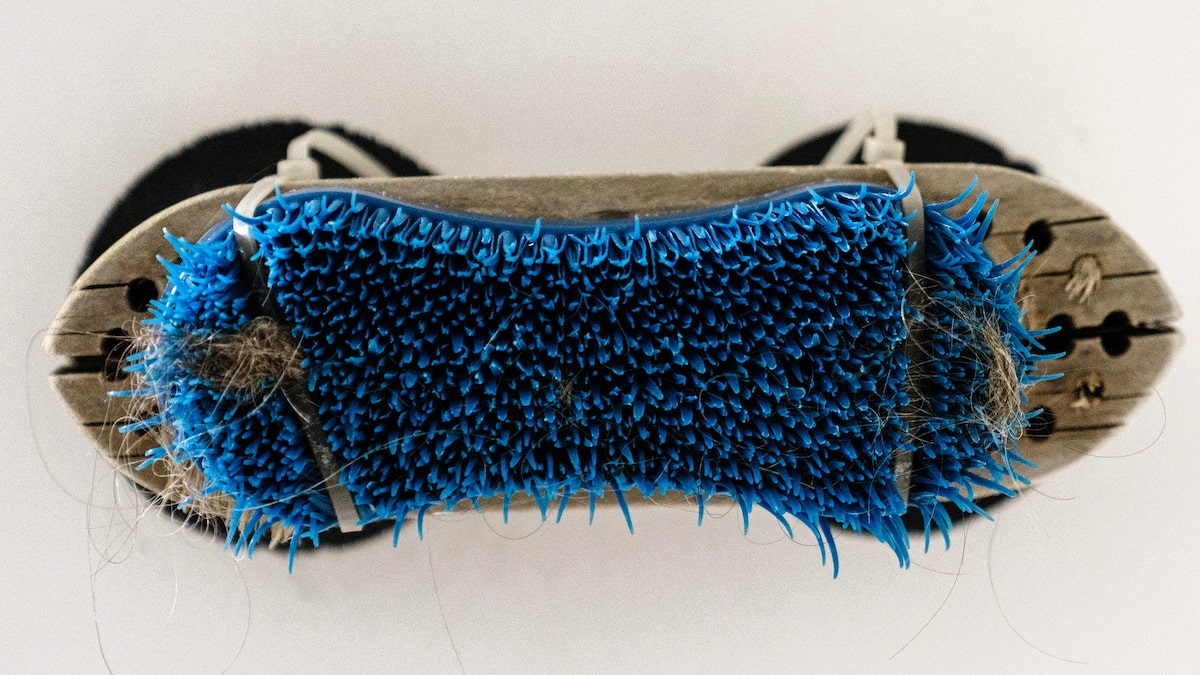
On her bathroom wall, Ms. Niblock still has the blue brush her father made so she could bathe more independently. Left to fend mostly for themselves, and with few storebought resources in the 1960s, families had to be inventive to find ways to make life accessible.
Rachel Lenkowski/The Globe and Mail
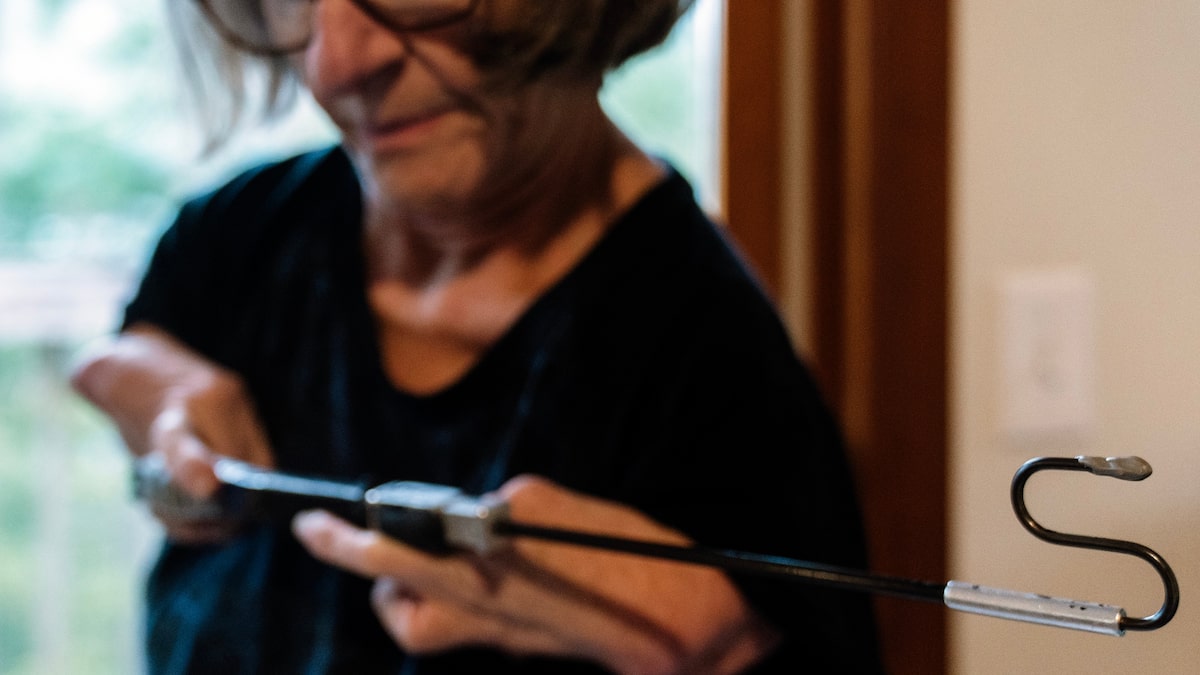
These S-shaped hooks are useful for getting dressed. Ms. Niblock cried when a friend from out-of-province gave her one: Some jurisdictions offer them to thalidomide survivors, but not B.C.
Rachel Lenkowski/The Globe and Mail
After the program was created, survivors had to prove they were disabled enough to merit the highest level of pension. Ms. Niblock clearly qualified – in addition to her shortened arms and missing fingers, she was born with club feet, a congenital hip dislocation and a partial paralysis in her throat that makes swallowing difficult.
But justifying her disability to the government felt too much like pleading for mercy from the same entity that had harmed her – a flashback to the horrible years in middle school when she’d been forced to ask the same girls who bullied her for help with changing clothes at gym class.
She refused to fill out the application forms, and for eight years received $25,000 less in her annual pension than she could have gotten.
In 2022, a trip to the dentist changed everything. She was told she needed to spend $70,000 to save her teeth; decades of using them to carry bags, turn keys, open bottles, even lift her baby by the clothes, had left them worn down and broken. She didn’t have the money, and she needed her teeth.
So she swallowed her pride and anger and went back to the private company hired by the federal government to manage the support program – an experience that still brings tears of frustration and shame.
She was eventually moved up to the highest pension level – though only after the additional insult of an appeal – and the Extraordinary Medical Assistance Fund covered roughly half of her dental expenses.
The federal funds have improved her life, Ms. Niblock says. “But there’s no dignity in having to grovel.”
Ms. Niblock thinks the best book on thalidomide is Michael Magazanik’s Silent Shock, which looks at litigation in Australia to compensate victims.Rachel Lenkowski/The Globe and Mail
The program has also been criticized for subjecting people looking to confirm themselves as thalidomide survivors to a lengthy approval process, and for creating onerous, time-consuming steps to access money from the medical expense fund. Survivors pointed to the requirement to get a witness signature for individual requests – finally removed this year – and having to agree to random “quality control” visits.
“Are we trusted?” says Mr. Bamber, who is not involved in the lawsuit. “It’s like asking your parents, ‘Can I have money for this or that?’ Except it’s a stranger on the phone who doesn’t know me.”
Last year, the government paid more than $1.5-million to a private company to manage the program – a cost that survivors such as Fiona Sampson, in Toronto, suggest could be reduced if they had more freedom to decide for themselves what counts as a medical expense.
Ms. Sampson, who works as a lawyer and is one of the plaintiffs in the case, compares the current arrangement to “a pauper being thrown breadcrumbs by the reigning monarch.” Survivors took what was offered, she argues, when they deserved much more.
‘A taste for living again’
A good life, the survivors say, requires more than resolving the practical business of living. It needs joy and creativity and adventure, and time with the people you love. This, too, the money has helped make possible.
Alie Vachon fulfilled a longtime dream last year. At the age of 61, she jumped out of an airplane. Falling toward Earth from 13,500 feet, grinning from ear to ear, she was overcome with a strange sensation: though she was plummeting downward, it seemed as if she was being lifted up.
“It felt like I could go higher than I’d always been told I could go,” she said. “The sky’s the limit.”
Growing up, Ms. Vachon was told by people in her life that her body was cursed. Her arms and legs were twisted and rigid, her hands misshapen. Before she reached adolescence, she’d undergone 12 operations that left a web of scars on her young body. In public, people stared. She responded, as an adult, by wearing black. “I wanted to erase myself.”
When The Globe interviewed Ms. Vachon in her Montreal apartment in 2014, she never smiled. Everyday tasks like washing her hair or sweeping the floor were a torment. It was too hard to reach behind her back to remove her bra, so she slept and showered in it, drying it off afterwards with a hair dryer.
Much has changed in the past decade. She still lives with enduring physical pain, but she’s found ways to cope with it: She has a hairdresser wash her hair at home, gets regular treatments from an osteopath and buys ready-to-eat meals to alleviate the physical stress of food preparation.
“I don’t have to hurt my body anymore,” she says, crediting the federal funding. “It gave me dignity and made me proud of the person I am today.”
Now, she makes greeting cards and goes bowling. She swapped black for bright pink. She flew to Disney World with her daughter in 2016, her first trip in 28 years.
Selena Phillips-Boyle/The Globe and Mail
For Ms. White, the government money quieted her mind enough to pursue her pointillism artwork, created from millions of tiny, painstaking dots; she‘s sold the paintings online to people around the world.
In Montreal, Johanne Hébert, 63, strolls her neighborhood with her custom-made walker, adapted so that her hands, which come directly out of her shoulders, can reach the handles. She operates the brake with her chin.
“Now, I can walk around and see people outside,” she says. “I say ‘bonjour’ to everyone. It’s changed my life.”
Ten years ago, during a visit from The Globe, Ms. Hébert was a portrait of pain. She spent most of her days lying flat on her couch, trapped by the raging aches that ransacked her body.
When The Globe met Johanne Hébert in 2014, she was straining to manage the 12 daily injections for her pain.Michelle Siu/The Globe and Mail
She is still paying thalidomide’s price. Every few hours, she injects herself in the thigh with powerful opioids, leaving behind an expansive map of purple bruising.
But Ottawa’s sums have given her the means to manage the pain. She takes a taxi every two months to a physician who injects cortisone into her lower back and other sore spots. She installed customized shelving and cupboards to make reaching things easier. She had dental work and got fitted with hearing aids.
The effect has been transformative. Now, Ms. Hébert posts videos of herself on social media singing karaoke and dancing in a fringed orange dress with her daughter’s boyfriend (“He led me as though I had long arms!” she writes). She chops mushrooms for a risotto, placing the knife handle between her chest and chin, explaining her moves like a celebrity TV chef.
After years in the shadows, Ms. Hébert has come into the light. “I used to be in agony. My pain was excruciating,” she says. “I’m suffering a lot less now. I have a taste for living again.”
Ms. Hébert’s teeth suffice for peeling the outer layers of an onion. To chop it, she has customized tools to hold it in place and balance the knife between her hands and chin.
Selena Phillips-Boyle/The Globe and Mail
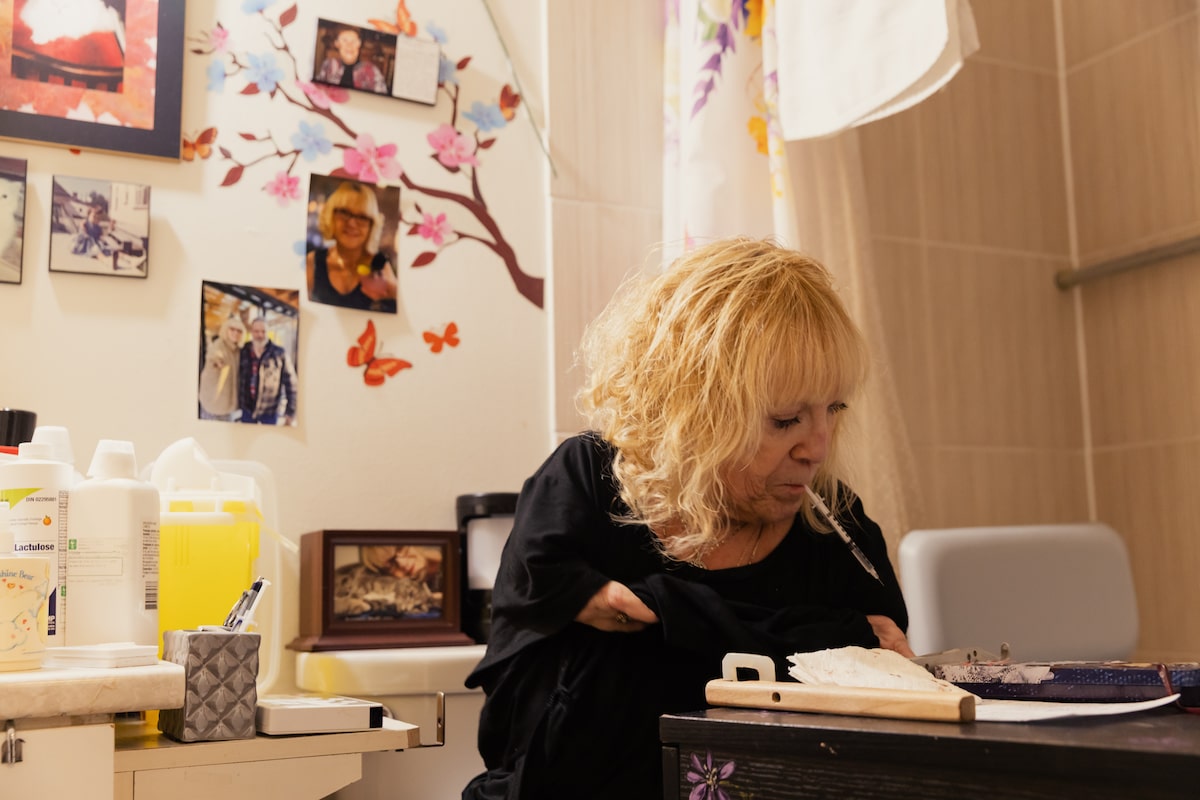
Special gear in the bathroom allows Ms. Hébert to hold and inject needles of pain medication at the same time.
Selena Phillips-Boyle/The Globe and Mail
The mobility aid allows for more regular walks in the park. Many of the pictures displayed in her home are from these outings.
Selena Phillips-Boyle/The Globe and Mail
As much as anything, the federal funds have allowed survivors to be kind to themselves, and savour life in their own unique ways.
Last summer, Mr. Bamber donned his red Starfleet shirt for the Star Trek Convention in Las Vegas, and met William Shatner – for the second time. (“Oh, it’s you again,” said the original Captain Kirk, to Mr. Bamber’s delight.)
Ms. Blain, who never married, bought herself an emerald ring; the sparkle, she says, reminded her of all the angels she encountered in life.
And Mr. Emond purchased a long-coveted three-wheel Can-Am Spyder, modified so he can brake the motorcycle with his hands.
This September, Mr. Emond drove to New Brunswick. As the Saint John River glistened into view, his Spyder kicking up leaves on the road, he forgot about thalidomide’s brute-force impact on his body.
“That day, I felt like I could go to the other end of the world.”
After receiving the money, Ms. Vachon booked a massage, a treat she’d always denied herself. When the massage therapist gently took Ms. Vachon’s misshapen left hand between her fingers, Ms. Vachon began to cry.
“Am I hurting you?” the therapist asked with alarm.
“No,” she replied. “This is the first time somebody’s being kind to my body. My body is thanking you.”
Massage therapy brought Ms. Vachon new comfort with hands that sometimes struggle to hold things.Nasuna Stuart-Ulin/The Globe and Mail
Ultimately, it’s these simple, mindful moments that the survivors return to again and again – the stress-free hair wash, a soak in a safe bathtub, a space adapted to them. The ease and security that adds up to self-determination. The freedom to try something new. To take a trip, once in a while.
“I can’t buy diamonds every week,” jokes Ms. Blain. But thanks to the money, she can volunteer without worrying about a salary, pay for the help she needs, and live mortgage-free in a “Nancy-friendly” house on her family’s land in rural Alberta.
Most importantly, she says, “I can live on my own.”
Sometimes people feel sorry for her, living alone in her isolated house. “That’s ridiculous,” she says. Her independence is a point of pride. “They have no concept how huge that is.”
This is the response of a survivor who learned to drive a tractor in her thirties so she could feed the cows in a snowstorm. Now, she’s the last Blain on the old farm, spending the days with two big dogs for company and good neighbours for fellowship, while scaring off random bears with her best Xena Warrior Princess battle cry.
“No money, nothing, will erase the suffering and pain,” Ms. Blain says. But there’s justice, she proposes, in creating better days, as often and as long as you can. “And not go away quietly into that good night.”
With reports from Ingrid Peritz