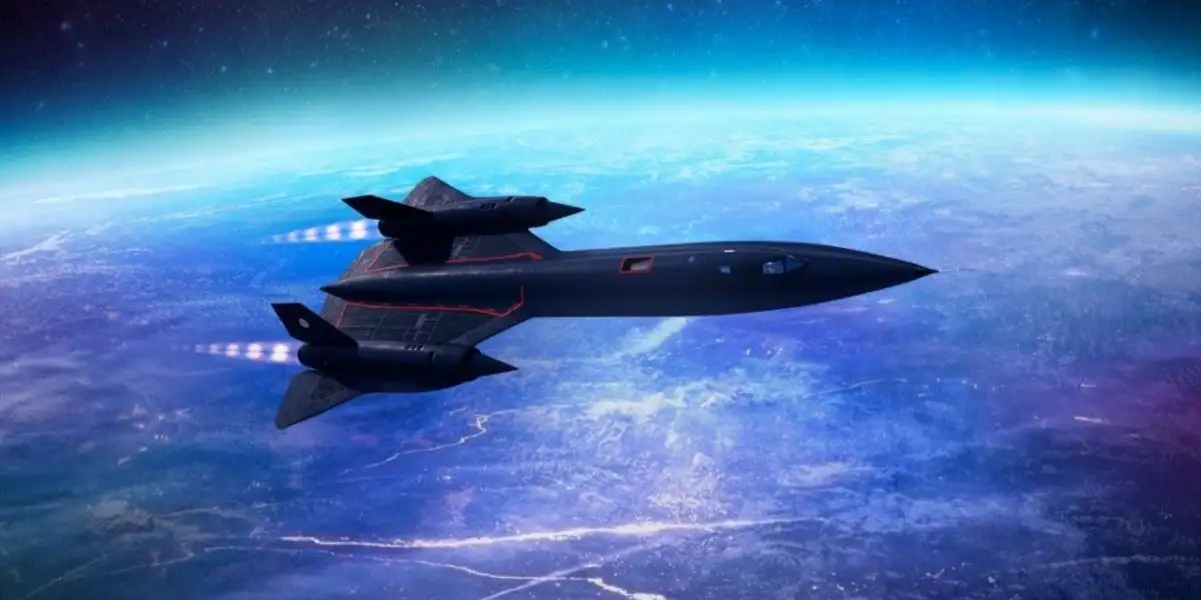
The world’s fastest and highest-flying operational aircraft
The SR-71, unofficially known as the “Blackbird,” is a long-range, advanced, strategic reconnaissance aircraft developed from the Lockheed A-12 and YF-12A aircraft. The first flight of an SR-71 took place on Dec. 22, 1964, and the first SR-71 to enter service was delivered to the 4200th (later 9th) Strategic Reconnaissance Wing at Beale Air Force Base, Calif., in January 1966. The US Air Force retired its fleet of SR-71s on Jan. 26, 1990.
Throughout its nearly 24-year career, the SR-71 remained the world’s fastest and highest-flying operational aircraft. From 80,000 feet, it could survey 100,000 square miles of Earth’s surface per hour.
However, in 1965 Blackbird pilot Capt. Pete Collins flew the SR-71 up beyond 90,000 feet with no simulator time to prepare him and no checklist!
The SR-71 pilot who flew the Blackbird beyond 90,000 feet
Stories about Pete Collins SR-71 Pilot from his son, Charles W “Petie” Collins Jr.
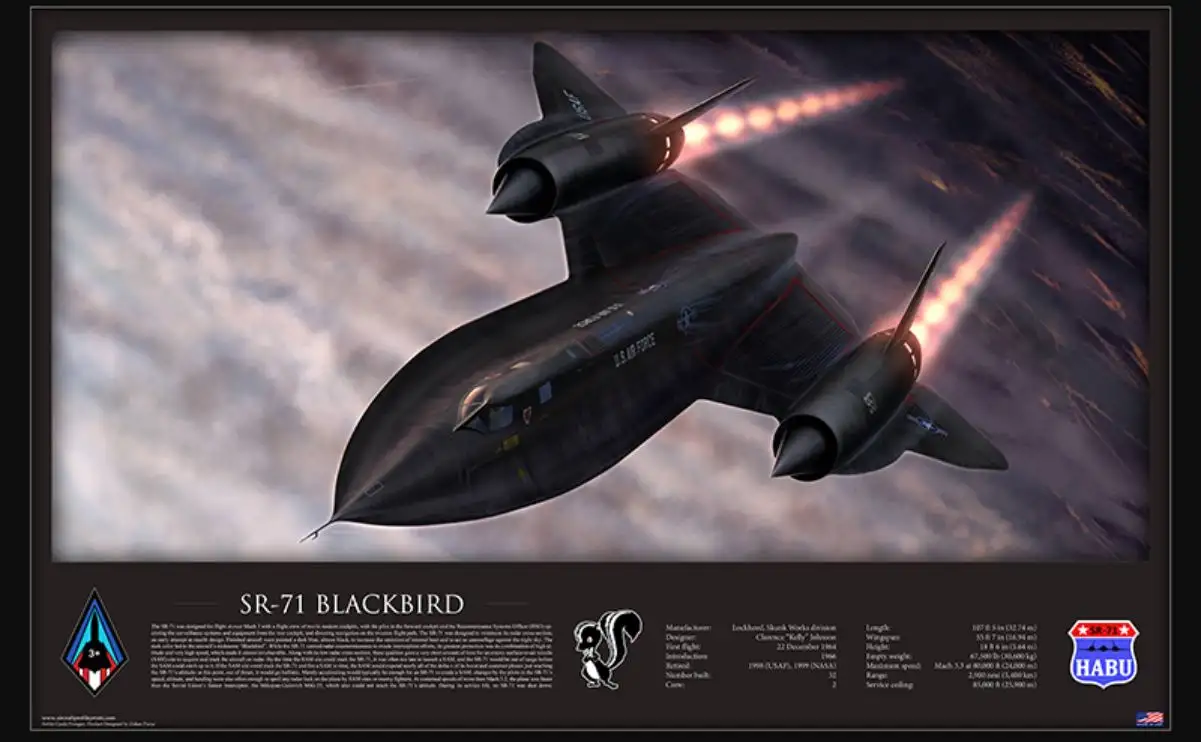 This print is available in multiple sizes from AircraftProfilePrints.com – CLICK HERE TO GET YOURS. Dawn at 80.000ft – SR-71 Blackbird
I had the honor of talking to the son of Charles W “Pete” Collins on the telephone a couple of times. “Petie” as he was called as a child was to differentiate between his father and himself.
During an early test flight, Kelly Johnson asked Pete to take the SR-71 up beyond 80,000 feet to at least 90,000 feet probably over that to see how it flew.
You have to remember that there was no checklist.
There was NO simulator time. The simulator was not yet ready.
It took one heck of a pilot using his exceptional skills to take it up to 90,000 feet and beyond and then later lose an engine and safely land. Kelly trusted this man Pete Collins with his multimillion-dollar baby.
Pete told his son Pete Jr. there wasn’t enough air at that altitude to keep the airplane steady.
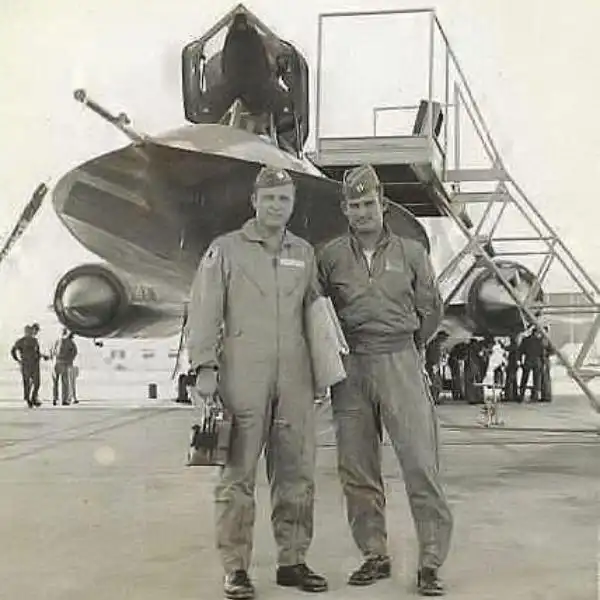 Butch Sheffield and Pete Collins.
Then it became wobbly.
He brought it back down and gave his report to Kelly. All of the men who were carefully selected, to fly the SR-71 in either cockpit had to pass the astronaut-like physical, which was extensive.
What most people may not know is that during the physical if they found out anything physically wrong with the men, they would be permanently grounded from flying, so it was risky.
Superstar
All of the men who passed and flew the SR-71 were stars in the Air Force.
Of all these stars Charles “W” “Pete” Collins was a superstar. Everyone thought highly of Pete.
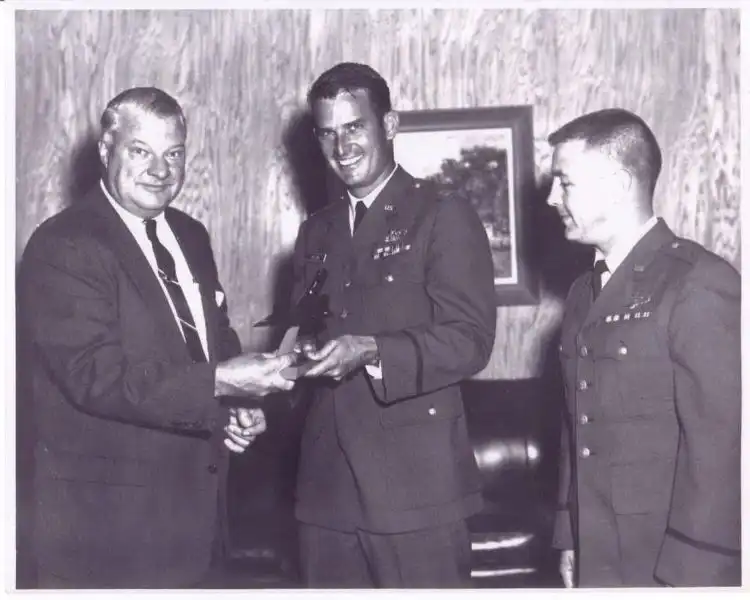 Kelly Johnson presents an SR 71 model to Pete Collins standing nearby is his RSO Conrad “Connie” Seagroves
Pete proved again how proficient and extraordinary his flying skills were along with his RSO/ navigator “Connie” Seagroves when they lost an engine. This was the first time this happened losing an engine early in the program.
This showed Kelly Johnson and the rest of the Air Force that the magnificent Blackbird could lose an engine and land safely. When the engine blew out, Pete and Connie were relieved to see that the turbine blades broke up and flew out the back of the engine without damaging the airplane.’
Richard “Butch” Sheffield, Charles W “Pete” Collins and Conrad “Connie” Seagroves, the heroes of the early SR 71 program have passed away. However, they are not forgotten.’
Be sure to check out Linda Sheffield Miller (Col Richard (Butch) Sheffield’s daughter, Col. Sheffield was an SR-71 Reconnaissance Systems Officer) Facebook Pages Habubrats SR-71 and Born into the Wilde Blue Yonder for awesome Blackbird’s photos and stories.
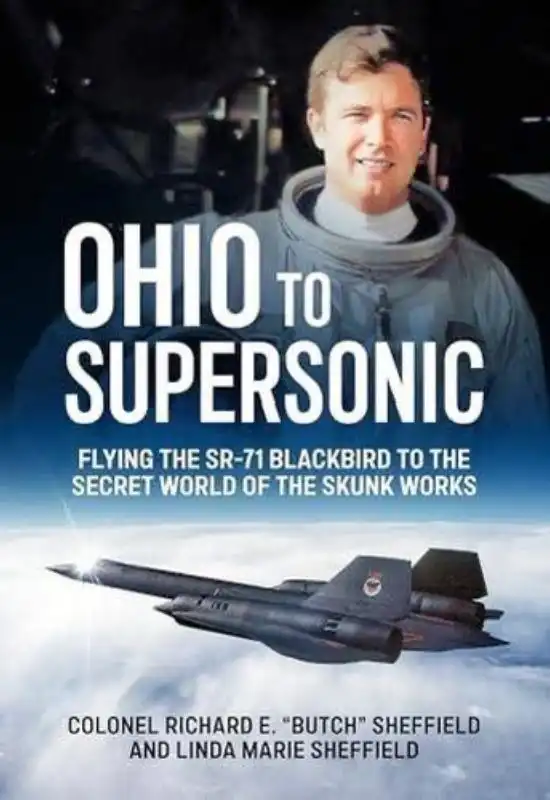 The book Ohio to Supersonic: Flying the SR-71 Blackbird to the secret world of the Skunk Works by Colonel Richard “E.” Butch Sheffield and Linda Marie Sheffield is available to pre-order here.
Photo credit: U.S. Air Force and Lockheed Martin