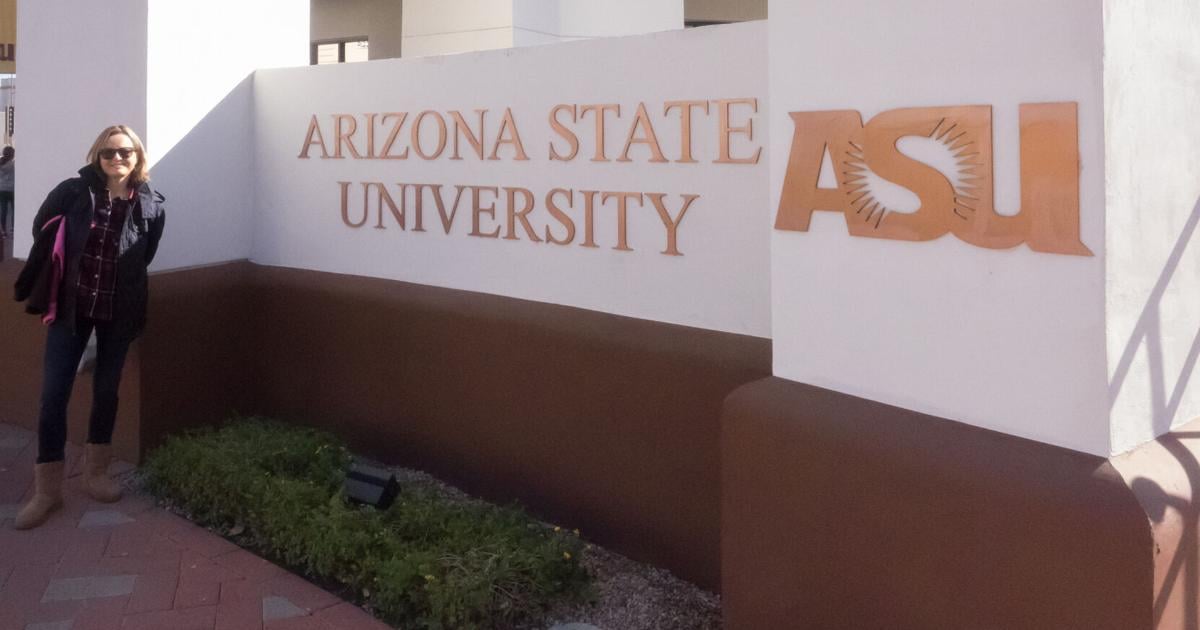
Arizona State University remains committed to supporting its global community amid federal immigration restrictions, which have caused a 3% drop in international enrollment, with 14,600 students enrolled this fall compared with 15,104 last fall, according to university officials.
“We work with local officials in Arizona to make sure they understand what international students do, and what the impact is, because it goes beyond them paying higher tuition,” said Daniel Hoyle, senior director of International Student and Scholar Experience at ASU.
On June 4, 2025, U.S. President Donald Trump signed a presidential proclamation restricting the entry of foreign nationals from 19 countries, including nonimmigrant student visa holders.
“The moment I stepped out with an approved visa, the first news I saw was that the U.S. had paused visa interview dates for all of India,” said Shreya Jayesh Londhe, an ASU graduate student from India.
“The administration has legitimate concerns about preventing fraud,” Hoyle said. “But there are many students who are doing this the right way, and we want to support them.”
To ensure students can still begin their academic journey, ASU allows students to start classes online or access ASU Cintana programs to help them begin their studies at different higher education institutions.
“We want students to know the doors are not closed,” Hoyle said.
But for certain international students, the process behind every visa approval or denial can be challenging.
Londhe described her experience: “It was really scary and overwhelming. I remember I used to spend every single day checking the portal three different times just to make sure I could get a slot.”
Both student visa approval and denial have financial implications for international students.
“Before my visa interview, I had already spent close to $700, the SEVIS fee, the interview fee and a housing deposit. Imagine losing all that money if the visa is denied,” said Sinafi Omanga, an ASU graduate student from Nigeria.
Omanga said he feels fortunate to be in the U.S., knowing peers who were admitted and granted scholarships yet were denied visas.
The Institute of International Education Open Doors Report recognizes Arizona State University as the No. 1 public university in the U.S. for hosting international students, with about 15% of the student body from 165 countries.
“We must protect the education community. We need to support students who genuinely want to invest time in their education; frankly, we need them,” said Jad Shahrour, a Hubert Humphrey Fellow from Lebanon at ASU.
ASU economists show the impact academically in their report, with 59% of U.S. international students being in STEM; the largest cohorts are from India (29%) and China (25%).
According to a report by NAFSA: Association of International Educators, the impact is not only felt in enrollment and academics, but also in the economy.
NAFSA reports that international students contribute more than $1 billion to Arizona’s economy, with higher out-of-state tuition, including $592.8 million from ASU students, supporting about 5,667 jobs.
Beyond economic and academic contributions, Londhe said, “Humanity and empathy are two big contributions that this huge chunk of international students is bringing into ASU.”
ASU’s International Student Office is also taking steps to support students with travel concerns as winter break begins.
“For those traveling, we make sure they have everything they need — updated I-20s, emergency phone numbers and access to legal support if necessary,” Hoyle said.
At the student level, concerns are present given the ongoing immigration restrictions.
“If you start your program and want to visit your family, you might not be able to return. You’ve invested time in your education, and suddenly you’re forbidden from continuing that mission,” Shahrour said. “We should always protect students so they can finish their education.”