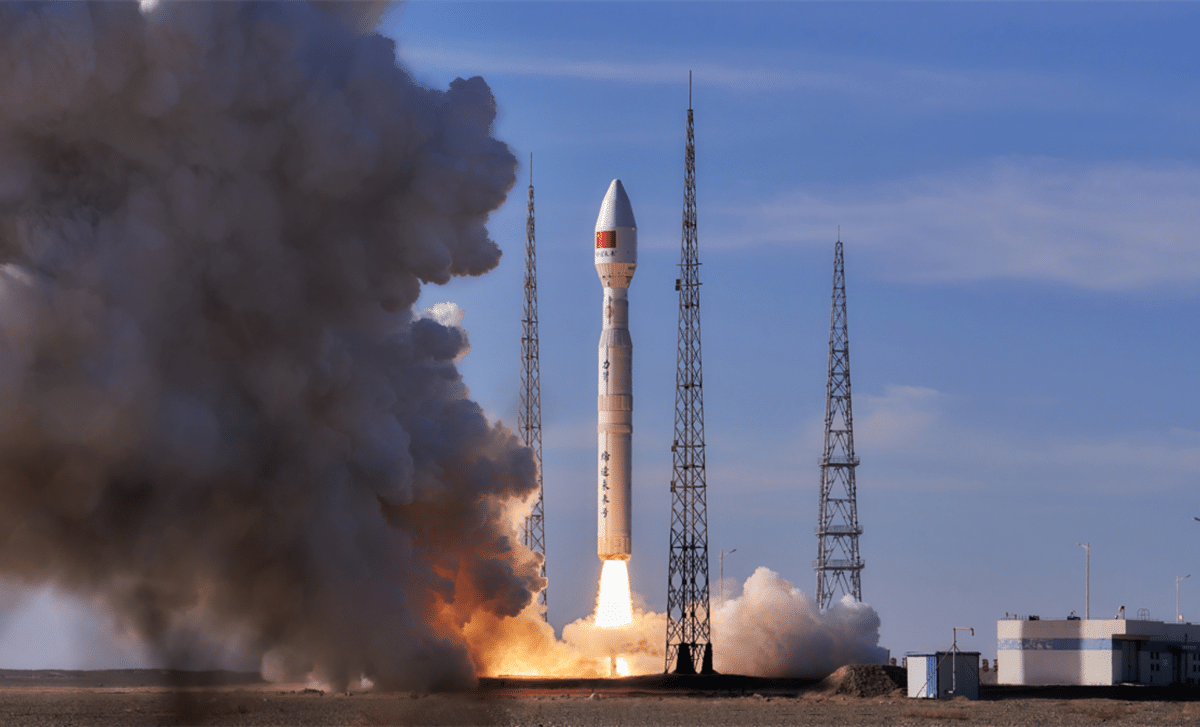
A recent incident involving a Chinese spacecraft and a Starlink satellite highlights growing concerns over the safety of Earth’s crowded orbit. The close encounter occurred when one of the satellites launched aboard a Kinetica 1 rocket on December 9, 2025, almost collided with SpaceX’s Starlink-6079. This near-miss underscores the critical need for better coordination between satellite operators to prevent potential disasters in the increasingly congested space environment.
The Growing Risk of Space Collisions: A Close Call
On December 9, 2025, a Chinese Kinetica 1 rocket launched from the Jiuquan Satellite Launch Center, deploying a variety of satellites into orbit. Among them, one spacecraft veered dangerously close to a Starlink satellite, prompting alarm from SpaceX. According to Space.com, the satellite, Starlink-6079, is part of the company’s ongoing mission to provide global internet coverage, and was positioned at an altitude of 560 kilometers. According to SpaceX, the newly deployed Chinese satellite came within a mere 200 meters of Starlink-6079, an unnerving proximity that raised serious questions about satellite coordination.
Michael Nicolls, Vice President of Starlink Engineering at SpaceX, emphasized the risk of operating in space when he stated,
“As far as we know, no coordination or deconfliction with existing satellites operating in space was performed, resulting in a 200-meter close approach between one of the deployed satellites and STARLINK-6079 (56120) at 560 km altitude.”
Nicolls went on to express his concerns about the broader implications for space safety, noting,
“Most of the risk of operating in space comes from the lack of coordination between satellite operators — this needs to change.”
CAS Space’s Response and the Importance of Coordination
CAS Space, the Chinese company responsible for the Kinetica 1 rocket, responded quickly to the concerns raised by SpaceX. They explained that their team follows stringent procedures to avoid collisions, using ground-based space awareness systems to track known satellites and debris before launching.
“Our team is currently in contact for more details. All CAS Space launches select their launch windows using the ground-based space awareness system to avoid collisions with known satellites/debris. This is a mandatory procedure. We will work on identifying the exact details and provide assistance as the LSP,” CAS Space said in a statement.
This exchange of statements highlights a growing divide in space operations. While SpaceX is pushing for improved coordination and transparency in satellite trajectories, some companies still believe their own tracking systems are sufficient. As the number of active satellites continues to climb, it becomes clear that a more collaborative approach to space traffic management is critical to avoid catastrophic outcomes.
Our team is currently in contact for more details. All CAS Space launches select their launch windows using the ground-based space awareness system to avoid collisions with known satellites/debris. This is a mandatory procedure. We will work on identifying the exact details and… https://t.co/eNajj5cJxh
— CAS Space (@cas_space) December 13, 2025
The Growing Congestion of Space: Is the Future Safe?
The near-miss between the Chinese spacecraft and Starlink-6079 raises a fundamental question: How can we manage the growing congestion in Earth’s orbit? As of 2025, there are approximately 13,000 active satellites orbiting the Earth, with the vast majority belonging to companies like SpaceX, which has launched nearly 9,300 Starlink satellites alone. The risk of collisions is climbing with every new launch, and while Starlink’s satellites are equipped with autonomous collision-avoidance systems, many other spacecraft are not.
The sheer volume of satellites makes it increasingly difficult to track every object in space. Even the most advanced space tracking systems can’t predict all possible close encounters, and smaller spacecraft, like those launched by CAS Space, may not be able to perform evasive maneuvers in time. This is especially concerning when one considers the potential for a single collision to create a chain reaction of debris—what experts call the Kessler syndrome.
Starlink’s Autonomous Maneuvering: An Edge in Collision Avoidance
One of the reasons Starlink satellites are able to avoid collisions so effectively is their ability to perform autonomous maneuvers. Starlink-6079, like other SpaceX satellites, is equipped with thrusters and systems that allow it to change its orbit if a collision risk is detected. In fact, Starlink satellites performed an impressive 145,000 avoidance maneuvers in the first half of 2025 alone, an average of around four maneuvers per satellite each month. This level of agility has been crucial for maintaining the safety of SpaceX’s constellation in the crowded space environment.
However, the Kinetica 1 incident demonstrates that not all spacecraft have this capability. Smaller operators, particularly those from less developed space programs, often lack the resources to equip their satellites with collision-avoidance technology. As more countries and companies venture into space, the need for standardized protocols and collaborative efforts to ensure the safety of all satellites becomes even more pressing.