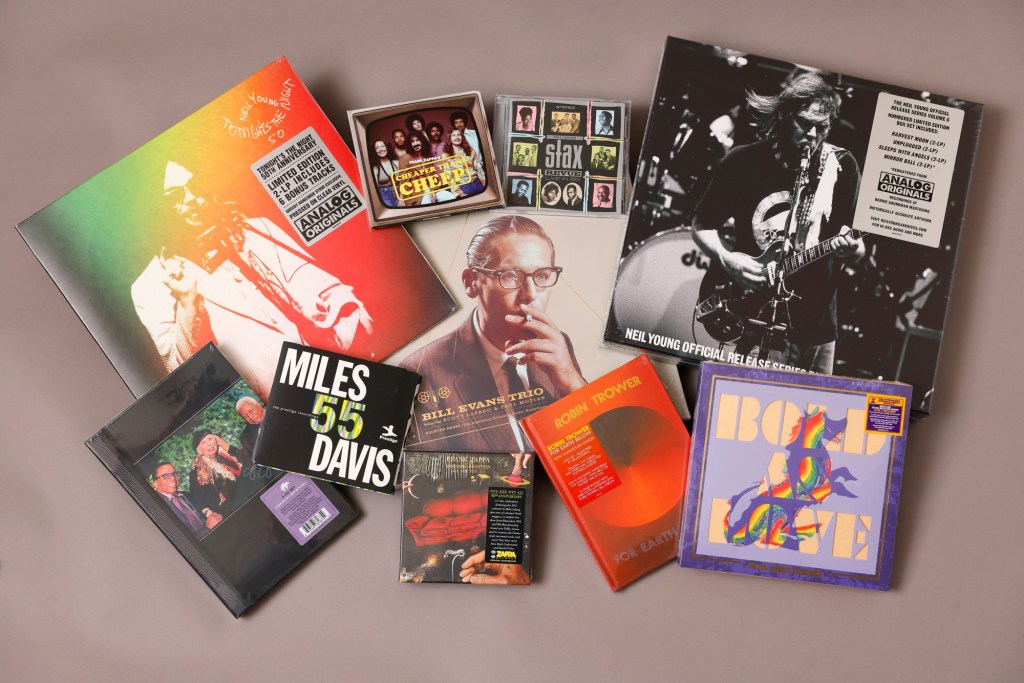
It’s been 40 years since Bob Dylan’s “Biograph” became the first CD box set to be released and there’s still gold to be mined, in some cases musically and most definitely financially. At least there is for Dylan and other veteran artists whose fans pay sometimes heady amounts for CD and vinyl box sets of both unreleased and previously released music. The demand has grown exponentially greater since 1985, much to the delight of those artists (and their record companies) whose back catalogs continue to be a seemingly endless mother lode.
This year’s key example is the Grateful Dead’s “Enjoying The Ride,” a limited edition, 60-CD collection of live recordings made between 1969 and 1994. It swiftly sold out all 6,000 copies despite a list price of $599.99. That may be a bargain, though, since copies of the Dead’s sold-out 2015 “Circles Around The Sun” set — which contains a whopping 80 CDs — have been re-sold for as much as $4,000.
But 80 CDs is chicken feed (well, almost) compared to 2017’s “Herbert Von Karajan Complete Box.” The 350-CD set of recordings by the legendary Austrian orchestral conductor has a total playing time of more than 405 hours. Only 2,500 copies of this voluminous set were made and swiftly sold out. It is currently going for up to $5,369.99 on eBay.
Intriguingly, prices for physical recordings by veteran artists are relative, even in a largely digital music world.retail
The one-penny-less-than-$600 cost of the Grateful Dead’s 60-CD “Enjoying The Ride” comes out to $10 per disc. That’s a bargain compared to both the $231.41 price on Amazon for Bruce Springsteen’s 7-CD “Tracks II: The Lost Albums” (the vinyl version costs $242.80, while the price to stream it is $69.99), and to Springsteen’s five-disc “Nebraska ’82: Expanded Edition,” which has a list price of $154.47.
“Tracks II” contains 88 songs that clock in at 5 hours and 20 minutes. The Dead’s “Enjoying The Ride” has more than 450 selections that clock in at over 60 hours. For those seeking both high quality and quantity, the bargain of the year may well be “Steve Reich Collected Works,” a 27-disc collection by the groundbreaking minimalist composer. Its list price of just $136 comes out to a smidgen over $5 per disc.
In a move designed to attract holiday shoppers, a number of box sets were released in late November or are only coming out this month — most too late to be included in this article.
Some high-profile examples include the 50th anniversary editions of Pink Floyd’s “Wish You Were Here” and Keith Jarrett’s “The Koln Concert,” the 40th anniversary editions of Dire Straits’ “Brother in Arms,” Prince’s “Around the World in a Day” and Motley Crue’s aptly named “Theatre of Pain,” along with the long-defunct Fine Young Cannibals’ career-spanning “FYC40.”
The outsized elephant in the room this year is The Beatles’ “Anthology 4.” It features 13 previously unreleased alternate takes, rehearsals and demo recordings of previously released songs by the Fab Four, alongside sonically improved versions of the justly fabled band’s previous 6-CD “Anthology” box set from 1995.
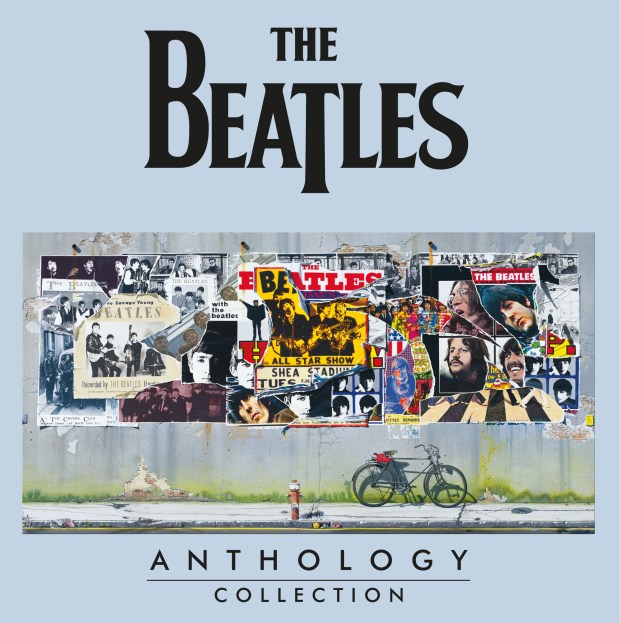 The Beatles “Anthology 4” box set is available in various configurations that range from a 2-CD set to an 8-vinyl albums package, all with enhanced audio quality (Apple Corps LTD)
This may be welcome news for obsessive fans of The Beatles — who, including this writer, are legion — despite a list price of $399.98 for the new 12-vinyl album version of all four editions in the “Anthology Collection” box set. But coming alongside new sets by the Paul McCartney-led group Wings and the John Lennon/Yoko Ono/Plastic Ono Band’s improbably bloated, 12-disc set “Power To The People,” “Anthology 4” feels like a needless money grab by the most important and influential band in rock history.
Get back! The Beatles’ only San Diego concert was 60 years ago this week
As in previous decades, the number of box sets showcasing largely obscure artists with small, niche audiences continues to grow. Some notable examples this year include: the 20-disc “The Charisma & Virgin Recordings 1971-1986” by Van Der Graf Generator band co-founder Peter Hammill; the 11-disc “Parts Of The Process: The Complete Godley & Creme” by former 10cc members Kevin Godley and Laurence Creme; the 6-disc “A Box of Scaffold” by The Scaffold (the proudly left-of-center pop, poetry and musical parody trio co-founded in the 1960s by Paul McCartney’s younger brother. Mike McGear); and the 5-disc “Enzyclopedia — Volumes One & Two” by the wonderfully quirky Australian art-rock band Split Enz.
For those who crave in-concert collections of a less daunting size and cost than the Grateful Dead’s 80-CD box set, there are other recent options. They include: UK boogie-rock perennials Status Quo’s 8-disc “Status Quo — Live!”; the pioneering Irish Celtic-rock band Horslips’ 5-disc set, “Horslips at the BBC”; and the sadly unsung prog-rockers Gentle Giant’s 4-disc “Playing The Fool: The Complete Live Experience.”
“Playing The Fool” first came out on vinyl as a double album in 1977. That was eight years before Bob Dylan’s “Biograph” became the first CD box set by any artist and opened the floodgates. This year’s “The Bootleg Series Vol. 18: Through the Open Window, 1956-1963” is the latest deep-dive archival set by Dylan. Its 8-discs feature 139 songs, 48 of which have never previously been released, much of it compelling.
The music mother lode continues unabated, at least for some artists.
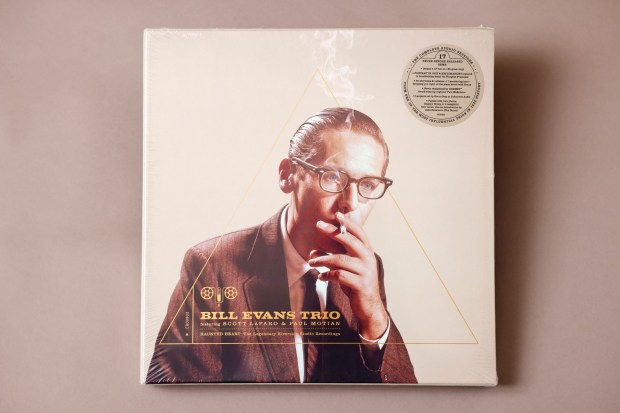 Bill Evans’ impact on jazz and on other pianists can still be felt today, 45 years after his death in 1980. (K.C. Alfred / The San Diego Union-Tribune)
Bill Evans Trio, “Haunted Heart: The Legendary Riverside Studio Recordings” (Craft Recordings)
Like few musicians before or after him, Bill Evans helped redefine the role and scope of jazz pianists. He did so not through acrobatic instrumental feats of derring-do, but with the exceptional sophistication, tender lyricism and deep introspection in his playing. His ingenious choice of notes and his ability to create colors and textures through unique chordal voicings reflected his command of both jazz and classical music.
It was these qualities and his delicate keyboard touch that inspired Miles Davis to make Evans a member of Davis’ famed quintet in 1958. Although Evans’ tenure with Davis lasted little more than a year, he made invaluable contributions to several of the trumpeter’s albums. The most notable of these is 1959’s landmark “Kind of Blue,” which changed jazz by featuring a modal approach in which the key of a song, not its chord changes, provided the basis for instrumental improvisations.
Evans died in 1980, at the age of 51, but his influence is still felt today. “Haunted Heart” does not include the two live albums he made for Riverside Records with his most famous trio, which featured drum ace Paul Motian and the game-changing bassist Scott LaFaro. But it does feature all 16 of the songs the trio recorded for their two classic Riverside studio albums, 1960’s “Portrait in Jazz” and 1961’s “Explorations.” Each has been restored and newly remastered on this deluxe, 5-album vinyl set, which is also available as a 3-CD set and includes 26 alternate versions and outtakes, 17 of which have never been released before.
Evans had a seemingly telepathic musical rapport with Motian and La Faro, who was only 25 when he died in 1961. LaFaro’s melodic ingenuity, richly articulated sound and expansive range elevated the bass to new levels in jazz, helping to transform it from serving primarily in a supportive role. Hearing their two classic studio albums anew with dramatically enhanced audio quality is rewarding. Ditto, the alternate versions and outtakes of such gems as “Nardis,” “Blue in Green” and “Witchcraft,” whose title captures the bewitching interplay Evans, Motian and LaFaro honed together so memorably.
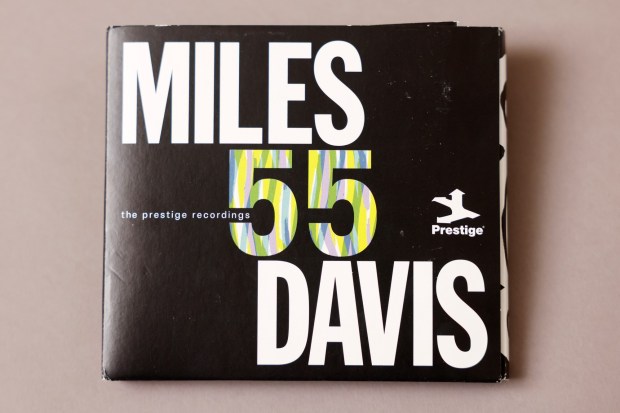 Miles Davis’
“55: The Prestige Recordings” is especially notable for including his first recordings with the then little-known saxophonist John Coltrane. (K.C. Alfred / The San Diego Union-Tribune)
Miles Davis, “55: The Prestige Recordings” (Craft Recordings)
An enduring musical giant throughout his nearly 50-year career — and now, 34 years after his death — Miles Davis was 30 in 1955 and four years into his five-year tenure with Prestige Records. Having kicked his heroin habit in 1954 and become an avocational boxer, he ignited as a singular trumpeter, band leader and artistic force whose music would repeatedly shape and reshape jazz.
Davis’ impact also extended far beyond jazz. The high-profile musicians who have cited his influence include Joni Mitchell, Lenny Kravitz, Radiohead, former Pearl Jam drummer Matt Cameron and the late David Bowie. “Miles genuinely did more than anyone to create what avenues you can dare to walk in music,” Bowie noted in a San Diego Union-Tribune interview. “He made extraordinary breakthroughs.”
An early breakthrough is chronicled on this two-disc, 16-song collection — also available as a 3-LP 180-gram vinyl box set — which features newly remastered selections from the albums “The Musings of Miles,” “Miles Davis and Milt Jackson Quintet/Sextet” and “Miles: The New Miles Davis Quintet.”
The latter of these 1955 recordings solidified the lineup of what would soon be hailed as his first great quintet. It included pianist Red Garland, bassist Paul Chambers, drummer Philly Joe Jones and then-29-year-old saxophonist John Coltrane, whose stay in the quintet would propel him to international acclaim as one of the most protean innovators in jazz history. Both Coltrane and Evans are featured on the Davis quintet’s most acclaimed album, 1959’s “Kind of Blue.”
Miles Davis’ ‘Kind of Blue’ is, at 65, a shape-shifting album that transcends time and genre
There are three piano-trio versions of “Blue in Green” — one of the standout selections from “Kind of Blue” — on “55: The Prestige Recordings.” Some of the other best-known songs on “55” are also standards, including “There Is No Greater Love,” “Just Squeeze Me” and “How Am I To Know?”
But there is nothing standard about their inspired performances here, which capture a band that soared at will. Davis’ playing is an exquisite combination of concision and emotional depth, be it on the wonderfully tender, blues-drenched “Green Haze,” a sultry reinvention of Dizzy Gillespie’s “A Night in Tunisia” or the joyous romp “Minor March,” which also features exemplary solos by pianist Garland, vibraphonist Milt Jackson and alto saxophonist Jackie McLean.
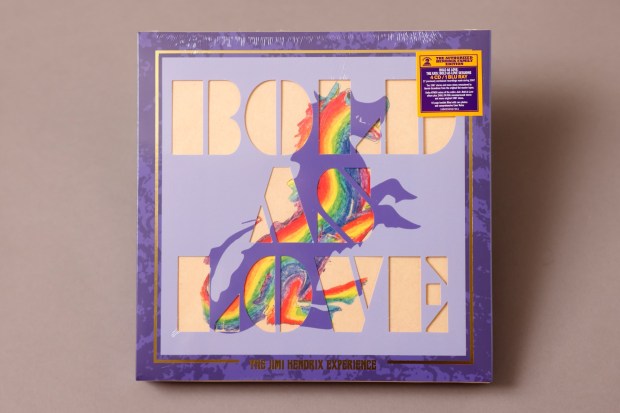 “Bold As Love” is an expanded version of the second album by the Jimi Hendrix Experience. (K.C. Alfred / The San Diego Union-Tribune)
The Jimi Hendrix Experience, “Bold As Love — The Axis: Bold As Love Sessions” (Experience Hendrix/Sony Legacy)
No matter how you do the math, Jimi Hendrix’s constantly burgeoning discography almost defies explanation. The trailblazing guitarist completed only three studio albums and one live collection before he died in 1970 at the age of 27. Since then, there have been more than 85 posthumously released albums by the hugely influential Seattle native.
Last year saw the release of “Electric Lady Studios: A Jimi Hendrix Vision,” a 3-CD box set that also included a documentary film on Blu-Ray. Now comes “Bold As Love: The Axis Bold As Love Sessions,” which qualifies as yet another act of questionable musical alchemy. How else to explain the transformation of the second album by his seminal power-trio, The Jimi Hendrix Experience, from a 13-song collection on one vinyl album into a 53-song box set that contains 4 CDs and a Blu-Ray disc?
Of the 40 bonus tracks, 27 are previously unreleased recordings that Hendrix made while he was recording the original “Axis” album in 1967. That a dozen of them are live recordings is no surprise — he, bassist Noel Redding and drummer Mitch Mitchell performed a staggering 265 concerts in 1967 in Europe and the United States. Even more remarkably, “Axis” was the band’s second album released that year.
Coming between “Are You Experienced?” and the epic 1968 double-album “Electric Ladyland,” “Axis” was a transitional album for Hendrix. He was evolving at a near-dizzying speed, but not without some bumps and misfires, and “Axis” captures all of it.
While not as startling as his debut album, “Are You Experienced?”, Hendrix’s second album finds him eagerly expanding his sonic palette and experimenting at will. “Burning of the Midnight Lamp” was his first song to feature the wah-wah pedal that would soon become synonymous with his name.
Some audiophiles may welcome having both stereo and mono versions of “Axis.” To these ears, the stereo mix suffices, especially since this set’s Blu-Ray disc offers an even-better Atmos mix. The more than two-dozen alternate takes enable listeners to hear how quickly these songs evolved in the recording studio, most notably “You Got Me Floating” and “Up From The Skies.”
At least some of the live recordings offered here have been available in previous Hendrix collections, and the in-concert recordings here focus on “Are You Experienced?” selections that he and his band were already outgrowing. Ultimately, though, it is the “Axis” songs here — in both their raw and completed iterations — that are the real draw as Hendrix and his band use their blues, rock and soul foundation as a springboard to a brave new psychedelic world of music that they would help to irrevocably change.
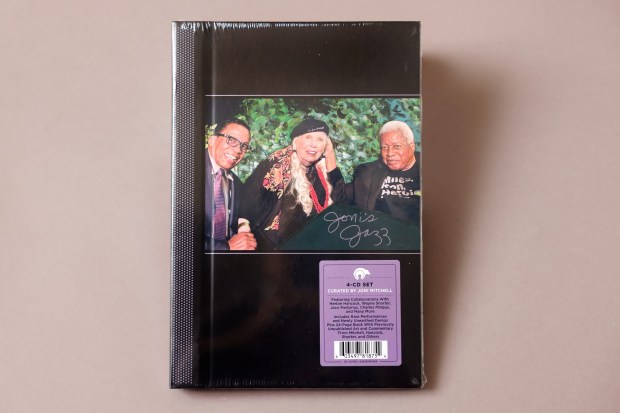 The cover photo on Joni Mitchell’s new box set, “Joni’s Jazz,” shows her with two of her closest collaborators, pianist Herbie Hancock (at left) and saxophonist Wayne Shorter. (K.C. Alfred / The San Diego Union-Tribune)
Joni Mitchell, “Joni’s Jazz” (JMA/Rhino)
Joni Mitchell’s love for jazz dates back to her teen years in Canada, specifically her enchantment with the bebop-driven vocal trio Lambert, Hendricks & Ross and with such storied Miles Davis albums as “Sketches of Spain” and “Kind of Blue.” Her vocal fluidity and innovative use of alternate guitar tunings were already evident on her 1968 debut album, “Song To A Seagull,” one of whose standout numbers — “Marcie” — is featured on this four-disc, 61-track collection.
Mitchell’s 1974 album, “Court and Spark,” was her first to team her with a jazz-oriented band, Tom Scott’s L.A. Express, which featured San Diego-bred drummer John Guerin. But Scott was also featured on her 1972 album, “For The Roses,” as was Jazz Crusaders’ bassist Wilton Felder. And for those paying attention, Mitchell’s wordless singing at the start of the title track of her classic 1971 album, “Blue,” was an homage to Davis’ impeccably crafted muted trumpet-playing on “Kind of Blue.”
“Joni’s Jazz,” which last month earned a Grammy Award nomination in the Best Historical Album category, combines selections from her studio and live albums with alternate takes and two previously unreleased demos, both from 1980. The first is a barebones duo run-through of “Be Cool” by Mitchell and Guerin. Far better is her superb trio version of “Moon At The Window,” which features Guerin and bassist Larry Klein. Mitchell’s wonderfully supple singing here is a joy.
“Joni’s Jazz” showcases songs from the increasingly jazz-inspired albums she made in the 1970s, including “The Hissing of Summer Lawns,” “Hejira,” “Don Juan’s Reckless Daughter” and “Mingus,” her collaborative album with the towering jazz bassist and composer Charles Mingus. There are also tracks from some of her subsequent albums, as well as her guest appearances on two stellar Herbie Hancock albums, “Gershwin’s World” and “River: The Joni Letters.”
Her musical rapport with such simpatico masters as pianist Hancock, saxophonist Wayne Shorter and, especially, bassist Jaco Pastorius is thrilling to behold. And hearing such songs as “Paprika Plains,” “The Man I Love”” and “God Must Be A Boogie Man” in one package is a treat.
Here’s some of what missing: Mitchell’s 1974 London concert performance of “Twisted” with Annie Ross of Lambert, Hendricks & Ross; the never-released “Mingus” album sessions Mitchell recorded with drum great Tony Williams, guitarist John McLaughlin and saxophonists Phil Woods and Gerry Mulligan; or even a single number from her final U.S. concert tour in 2000 with Hancock, Klein and a band that also included trumpeters Wallace Roney and Mark Isham. Here’s hoping a second edition of “Joni’s Jazz” is in the works.
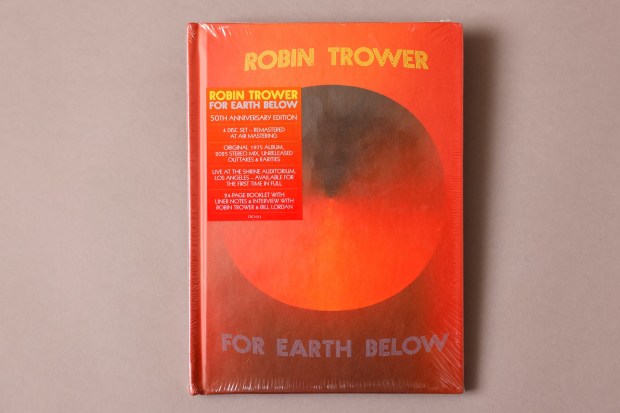 English guitarist Robin Trower’s new box set, “For Earth Below,” features recordings made in 1975. His band at the time included drummer Bill Lordan, who at the time was a resident of Lemon Grove. (K.C. Alfred / The San Diego Union-Tribune)
Robin Trower, “For Earth Below — 50th Anniversary Edition” (Chrysalis Records)
Like everyone from Lenny Kravitz, Christone “Kingfish” Ingram and Orianthi to Gary Clark Jr., Pearl Jam’s Mike McCready and Red Hot Chili Peppers’ John Frusciante, Robin Trower was profoundly inspired as a young guitarist by Jimi Hendrix. But Trower, who turned 80 in March, is the only one to have shared concert stages with Hendrix, who died in 1970 at the age of 27. And Trower is the only one who jammed with him in 1967 at a London nightclub, where Hendrix joined Trower’s band, Procol Harum, for a version of Tim Rose’s “Morning Dew.”
Some of Trower’s later recordings with Procol Harum had a distinct Hendrix-like sound and feel to them, in particular 1971’s “Song For a Dreamer.” It was the direction he pursued full-throttle after launching his solo career in 1973. His second album, 1974’s Hendrix-fueled “Bridge of Sighs,” propelled Trower to international stardom. The intense Hendrix influence was nearly as pronounced on his next album, 1975’s solid, if less visceral, “For Earth Below.” It was the second of four consecutive Trower albums to earn gold-record status for selling more than 500,000 copies each.
The “For Earth Below — 50th Anniversary Edition”” box set includes a remastered version of the original album on one disc. A second features a new 2025 stereo mix of the same eight songs, although six are slightly longer than on the remastered version. What makes this set more than just a rehash is the inclusion of two more discs with 28 additional tracks. The first 15 include five studio outtakes — including “Happy” and “The Moody One,” which are not on the original album — and six songs and two interviews recorded in London in 1975 for two BBC radio shows. A seventh number, an instrumental jam, dates from late 1974.
The fourth disc was recorded in early 1975 at the Shrine Auditorium in Los Angeles. It features three songs from “For Earth Below,” six from “Bridge of Sighs,” three from Trower’s debut solo album, “Twice Removed From Yesterday,” and a bristling version of B.B. King’s “Rock Me Baby” — all released here for the first time. There’s also a 24-page book with liner notes and an interview with Trower and his then-drummer, Sly & The Family Stone alum Bill Lordan, who is a former Lemon Grove and Del Mar resident.
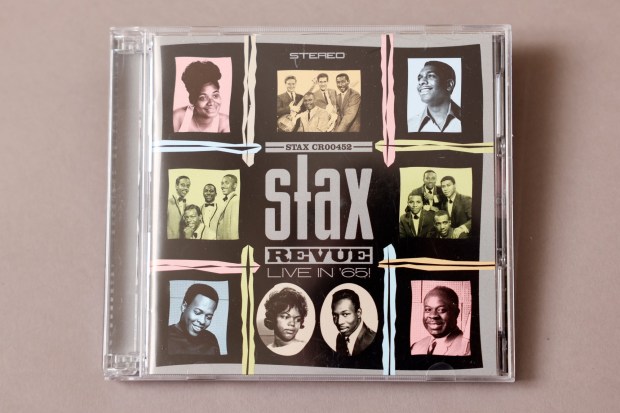 “Stax Revue: Live in ’65” features 21 concert performances by such soul and R&B greats as Booker T. & The MG’s Wilson Pickett, David Porter and Carla Thomas. (K.C. Alfred / The San Diego Union-Tribune)
Various Artists, “Stax Revue: Live in ’65!” (Craft)
Recorded in the summer of 1969 at Club Paradise in Memphis and the 5-4 Ballroom in Los Angeles, “Stax Revue: Live in ’65” offers a zesty feast of Southern-fried soul music and R&B. The lineup of performers includes some of the standout artists on the roster of Memphis-based Stax Records and its sister label, Volt, including Wilson Pickett, William Bell, David Porter and Booker T. & The MG’s, who also serve as the house band, with contributions from The Memphis Horns.
The bare-bones recording quality is more raw than refined, as is some of the music. But these artists skillfully infuse every note with passion and gritty elan. And, 60 years since they were recorded, many of these performances still bristle with power.
Booker T. & The MG’s were Stax’s biggest act at the time. They are accorded six songs here, including the prophetic “You Can’t Sit Down,” “Boot-Leg” and the chart-topping “Green Onions.” The audience erupts when Pickett rips into his breakthrough hit “In The Midnight Hour.” It was co-written by MG’s guitar great Steve Cropper, who died just 11 days ago at the age of 84.
It’s unclear why Pickett is accorded only one song here. But he stretches “Midnight Hour” to nearly 9 minutes of gospel-tinged fervor, buoyed by the taut accompaniment of The MG’s. It’s a master class in how to build and sustain dynamic tension.
Other highlights include Porter’s blues-drenched “You Don’t Miss Your Water,” Rufus Thomas’ dance-happy “Walking The Dog” and his 19-minute version of the boogaloo-infused “The Dog,” which mixes Thomas’ gruff vocal and bawdy stage patter with biting guitar work by Cropper.
What makes “Live in ’65!” doubly enjoyable is the inclusion of performances by some of the lesser known Stax/Volt acts. These include: The Mar-Keys’ brassy rave-up, “Last Night”; The Astors’ sweet street-corner vocal harmonies on “What Can It Be”; and Wendy Rene’s suitably sizzling “Bar B-Q.”
Stax would soon rise higher with timeless hits by Otis Redding, Sam & Dave, Albert King, Isaac Hayes and other artists whose bodies of work would have a resounding impact. But that doesn’t diminish the unvarnished charm of the two-disc “Live In ’65!”
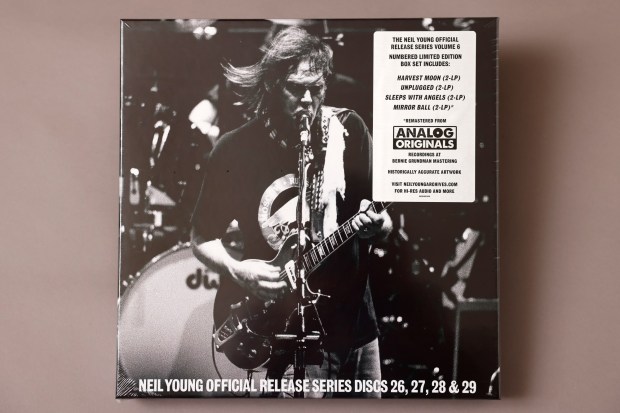 Neil Young’s newest box set features newly re-mastered versions of his albums “Harvest Moon,” “Unplugged,” “Sleeps With Angels” and “Mirror Ball.” (K.C. Alfred / The San Diego Union-Tribune)
Neil Young, “Official Release Series Discs 26, 27, 28 & 29” (Reprise Records)
At last count, Neil Young has released at least 25 albums and seven box sets since 2000. His newest set, “Official Release Series Discs 26, 27, 28 & 29,” features four albums: 1992’s “Harvest Moon”; 1993’s “Unplugged”; 1994’s “Sleeps With Angels”; and 1995’s “Mirror Ball,” his 11-song collaboration with the members of Pearl Jam.
Each is now presented in newly mastered form on this limited-edition box set, which devotes 2 vinyl discs to each of the four albums. The lack of any bonus material may disappoint some, but the exemplary sonic quality underscores Young’s tireless devotion to high fidelity. This, after all, is the same Neil Young who in 2015 underwrote Pono, a portable digital media player and music download service he created to offer audio excellence to fans who shared his aversion to the audio compression endemic to digitized music.
Pono folded in 2017. Young debuted his Analog Originals series earlier this year and has vowed all his new archival releases will use their original analog master recordings to ensure his music is heard as he intended it to be heard. His recently released “Tonight’s The Night 50” is also part of his Analog Originals series.
“Official Release Series Discs 26, 27, 28 & 29” is a testament to Young’s attention to detail as a musician who is also an uncompromising audiophile. “Harvest Moon” and “Unplugged’ are both lilting works whose predominantly acoustic instrumentation and warm vocals are well-suited to intimate, campfire sing-alongs.
Recorded with his band, Crazy Horse, “Sleeps With Angels” is by turns hopeful and despairing. Its poignant title track finds Young mourning the drug-fueled loss of Kurt Cobain, Nirvana’s doomed singer, guitarist and principal songwriter. Young sings its lyrics with the world-weary resignation of a survivor who has seen the needle and the damage done more times than he would ever care to recall.
“Mirror Ball” remains an interesting but flawed album. On paper, the teaming of Young and Pearl Jam was rich with potential. But the band’s lead singer and driving force, former San Diegan Eddie Vedder, only contributes to one song and his absence robs the album of a greater degree of multigenerational collaboration.
Some of its songs, most notably the surging “I’m The Ocean,” still sound potent now, several decades after it was recorded. Happily, “I’m The Ocean’s” key line — “People my age, they don’t do the things I do” — is as true today for the 80-year-old Young as it was when he first made that musical declaration back in 1995 when he was a young pup of only 50.
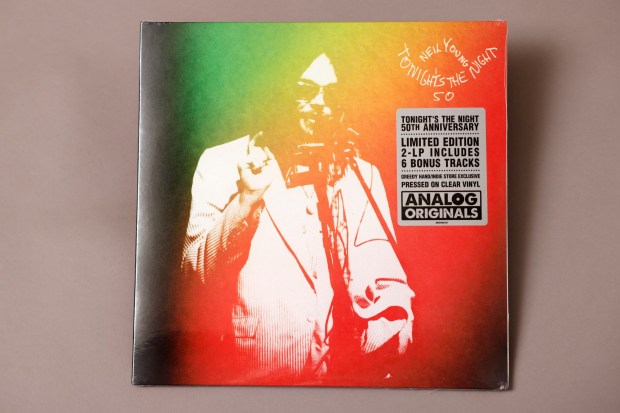 Neil Young’s “Tonight’s The Night 50” is pressed on clear vinyl and includes six bonus tracks. (K.C. Alfred / The San Diego Union-Tribune)
Neil Young, “Tonight’s The Night” — 50th Anniversary” (Reprise Records)
With the possible exception of Scott Walker’s chill-inducing 1995 album, “Tilt,” and San Diego-bred vocal marvel Diamanda Galas’ 1991 epic, “Plague Mass,” it is difficult to think of any other album by a major veteran artist that is as harrowing, deeply affecting and ultimately cathartic as Neil Young’s “Tonight’s The Night.”
Suffused with soul-sapping images of loss and lamentation, drug-ridden decay and death, “Tonight’s The Night” is so bleak Young’s record company, Reprise, delayed its release until two years after the recording was completed in 1973. Young responded a short while later that year by mounting a tour featuring the songs from the album, undaunted by the fact his audiences had not heard any of them before.
The fatal overdoses that inspired much of the album are grim realities. Danny Whitten, the guitarist in Young’s band, Crazy Horse, died in 1972. Bruce Berry, a road-crew member for Young and Crosby, Stills, Nash & Young, died the following year.
Reeling from their losses, Young and the remaining members of Crazy Horse commenced a series of late-night, booze-soaked recording sessions that yielded such haunted songs as “World On A String,” the frazzled “Borrowed Tune,” the plaintive “Tired Eyes” and “Tonight’s The Night’s” darkly ruminating title. Other songs, such as the country-rocking “Come On Baby Let’s Go Downtown” and “Lookout Joe,” invoke good times in a past gone bad, as captured in the couplet: “Havin’ a ball rollin’ to the bottom.”
This 2-vinyl album set, also available on CD and digitally, includes a rough-and-tumble early version of “Lookout Joe” and an alternate take of “Tonight’s The Night” that seems to come from another dimension. Three of the six bonus cuts here — “Everybody’s Alone,” the Joni Mitchell-penned-and-sung “Raised On Robbery” and the lurching, fall-off-your-stools “Speakin’ Out Jam” — were also featured on Young’s 10-disc box set, “Archives Vol. II (1972-1976).”
For audiophiles, the real draw is the exclusive limited edition vinyl version of “Tonight’s The Night 50.” Pressed on clear vinyl. It sounds pristine even when the music is at its most raw and anguished.
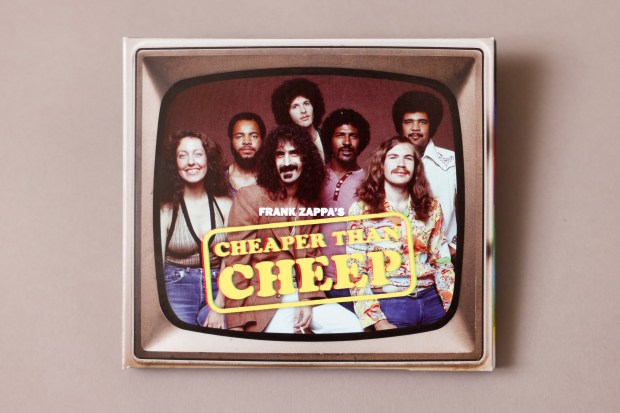 Frank Zappa and The Mothers of Invention’s “Cheaper Than Cheep” was filmed and recorded in June, 1974. It captures the former San Diego music maverick in peak form with one of the finest bands of his career. (K.C. Alfred / The San Diego Union-Tribune)
Frank Zappa, “Cheaper Than Cheep” (Zappa/UME)
In contrast with Jimi Hendrix, who completed only four albums between 1966 and 1970 in his short 27 years on earth, Frank Zappa recorded nine studio albums in the same four-year time span. Zappa was so prolific that the 62 albums of his multifarious music released during his lifetime have been surpassed by the 70 more that have come out posthumously since his death at the age of 52 in 1993.
With such an abundance of his work available and with his recording and performing career so well-documented, it seems almost unthinkable there could be any surprises — big or small — remaining in the Zappa vaults. Enter “Cheaper Than Cheep,” which Zappa described as: “The world’s cheapest Television special.”
Make that the world’s cheapest television special that has only now emerged, 50 years after it was filmed on June 21, 1974, in front of a live audience at Zappa’s Hollywood rehearsal hall. Because of a major technical snafu, the audio was out of sync with the video on which this just-over two-hour “special” was shot. The entire project was promptly shelved. All the audio recordings and video footage were put in storage, with no identifying information other than the June 1974 date.
It was only in the last decade that Zappa vault master Joe Travers discovered what has now been released as “Cheaper Than Cheep.” Years of quiet, behind-the-scenes work then ensured to correct the syncing issues that had doomed the original undertaking 50 years ago. It was well worth the wait.
This long-overdue box set features a Blu-Ray disc, “Cheaper Than Cheep: The Movie,” and two CDs with the more than two dozen songs featured in the film. Zappa is in visibly good spirits as he leads his one-woman, five-man band, The Mothers of Invention, through a dazzling array of what were then relatively new numbers, including “Cosmic Debris,” “Montana” and “Apostrophe.” There are also several early Mothers favorites, including “I’m Not Satisfied,” “Wowie Zowie” and “How Could I Be Such A Fool?”
Zappa, who attended high school in the San Diego communities of La Mesa and Pacific Beach, was an astute judge of talent. The many iterations of his bands over the years featured such immensely gifted young musicians as guitarist Steve Vai, drum marvels Chad Wackerman and Terry Bozzio, and San Diego’s Mike Keneally on guitar and keyboards.
But to my ears, the band on “Cheaper Than Cheep” was very likely the most versatile and enjoyable ensemble Zappa ever led. Percussionist Ruth Underwood, keyboardist-singer George Duke, saxophonist-singer Napoleon Murphy Brock, drummer Chester Thompson, guitarist-vocalist Jeff Simmons and bassist Tom Fowler performed Zappa’s most deviously intricate compositions with equal poise and panache.
Duke, Brock and Thompson were also among the most jazz-savvy musicians in any Zappa band. The combination of swing, improvisational ingenuity and sheer joy they brought to his music is palpable.
Highlights include: Underwood’s dazzling marimba solo on “RDNZL”; Duke’s incisive electric piano solo on “Inca Roads”; and the band’s lithe ensemble work on “Village of the Sun,” which at times sounds like the best Steely Dan song that is not actually by Steely Dan. As an added bonus, Zappa drums alongside Thompson and Underwood on an ebullient version of “Penguins in Bondage.”
A notorious taskmaster and perfectionist, Zappa smiles and grins frequently during “Cheaper Than Cheep” as his band negotiates even the trickiest and most demanding passages with admirable aplomb. It’s clear that he recognizes just how talented this group is and how uniquely well suited these players are to elevate his music. Chances are good you’ll be smiling along as well.
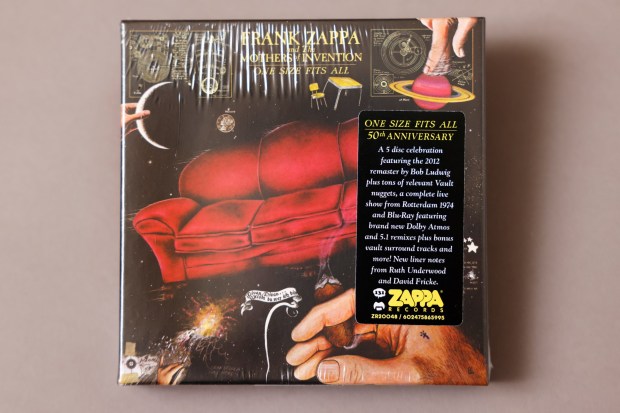 Frank Zappa and The Mothers of Invention, “One Size Fits All — 50th Anniversary” box set features four CDs and one Blu-Ray disc. (K.C. Alfred / The San Diego Union-Tribune)
Frank Zappa and The Mothers of Invention, “One Size Fits All — 50th Anniversary”
At almost any other time, the 50th anniversary edition of Frank Zappa and the Mothers of Invention’s “One Size Fits All” might be welcomed by fans.
This holds especially true since this 5-disc box set includes 18 live recordings from September 1974 that are spread over two discs and showcase the same outstanding one-woman, five-man band that also performs on the newly released “Cheaper Than Cheep” set.
But for Zappa devotees on a budget, the previously unseen two-hour-plus concert film included in “Cheaper Than Cheep” makes choosing between the two fairly easy, even with the two bonus videos on “One Size.”