NASA’s Curiosity rover made an intriguing discovery on Mars, adding another layer to our understanding of the planet’s ancient history. While exploring a new location in Gale Crater, the rover uncovered unexpected findings that are already sparking fresh discussions among scientists. As detailed in NASA’s official mission blog, this discovery offers new clues about Mars’ geological past and hints at a story that’s more complex than we once thought.
Curiosity Rover Unveils Unprecedented Findings Beneath Mars’ Surface
NASA’s Curiosity rover has always been at the forefront of Martian exploration, but its recent findings have raised the bar for what we know about the Red Planet. After navigating the rugged Martian terrain for years, Curiosity has now settled in one of the most secure locations on Mars. According to NASA’s official mission blog, this strategic position in Gale Crater has allowed the rover to begin a series of new, high-precision scientific operations, uncovering clues that may change our understanding of Mars’ past.
With each mission phase, Curiosity continues to delve deeper into Mars’ geological and environmental history, revealing complex mineral patterns and fracture systems that suggest ancient water flows beneath the surface. These findings, as detailed in the latest updates, open up the possibility that Mars once had conditions suitable for life. By studying these rock formations, scientists are learning more about Mars’ evolution and its potential to harbor life in its distant past.
Key Science Operations and New Targets
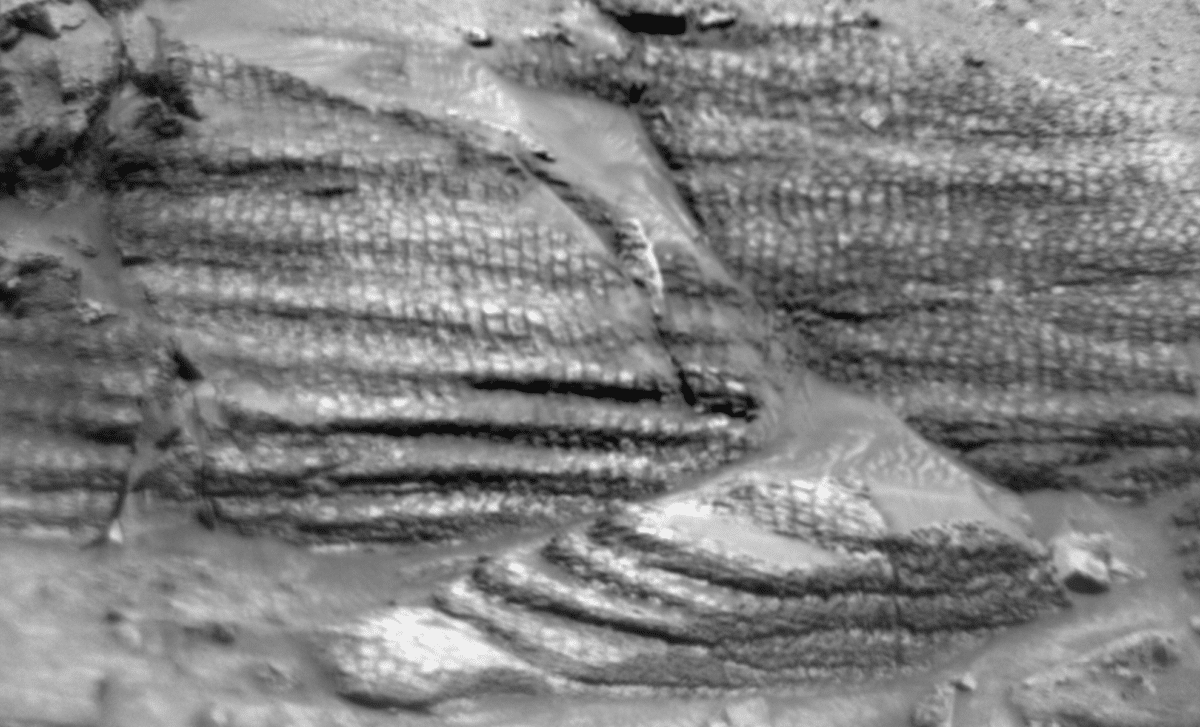
The rover’s latest work involves analyzing the bedrock target, named Tarija, which features unique lattice-like mineral formations. These “boxwork” patterns provide valuable insights into past water activity on Mars, which scientists believe may have once flowed across the planet’s surface. The discovery of these mineral features is not only exciting in its own right, but it also helps support Curiosity’s ongoing mission to uncover Mars’ ancient habitability.
One of the most significant aspects of the rover’s new location is its ability to conduct detailed and careful imaging of nearby landscapes. The team is particularly focused on linear ridges located just to the north of Curiosity’s position, which could be the result of geological stress patterns or fluid movement beneath the surface. These ridges may hold the key to understanding how Mars’ environment evolved, offering a deeper glimpse into its past conditions, and potentially, the reasons it lost its once-habitable climate.
The Search for Past Habitats: Fractures and Fluid Deposits
Curiosity has also turned its attention to a site known as Laguna del Bayo, which holds the potential to reveal fracture-fill features. These are locations where mineral-rich fluids may have been trapped in cracks in the rock long after the rock itself formed. Studying these fractures can provide crucial insights into the chemical environment of Mars’ past, including the types of substances that may have been present on the planet long before it became the cold, dry world we see today.
The rover’s ability to revisit sites like Mishe Mokwa, where previous data was collected, is also crucial. By revisiting these sites, Curiosity can compare new data to older records, allowing scientists to track subtle changes over time. This ongoing monitoring can shed light on the planet’s environmental stability, which is a key factor in assessing its potential for past habitability.
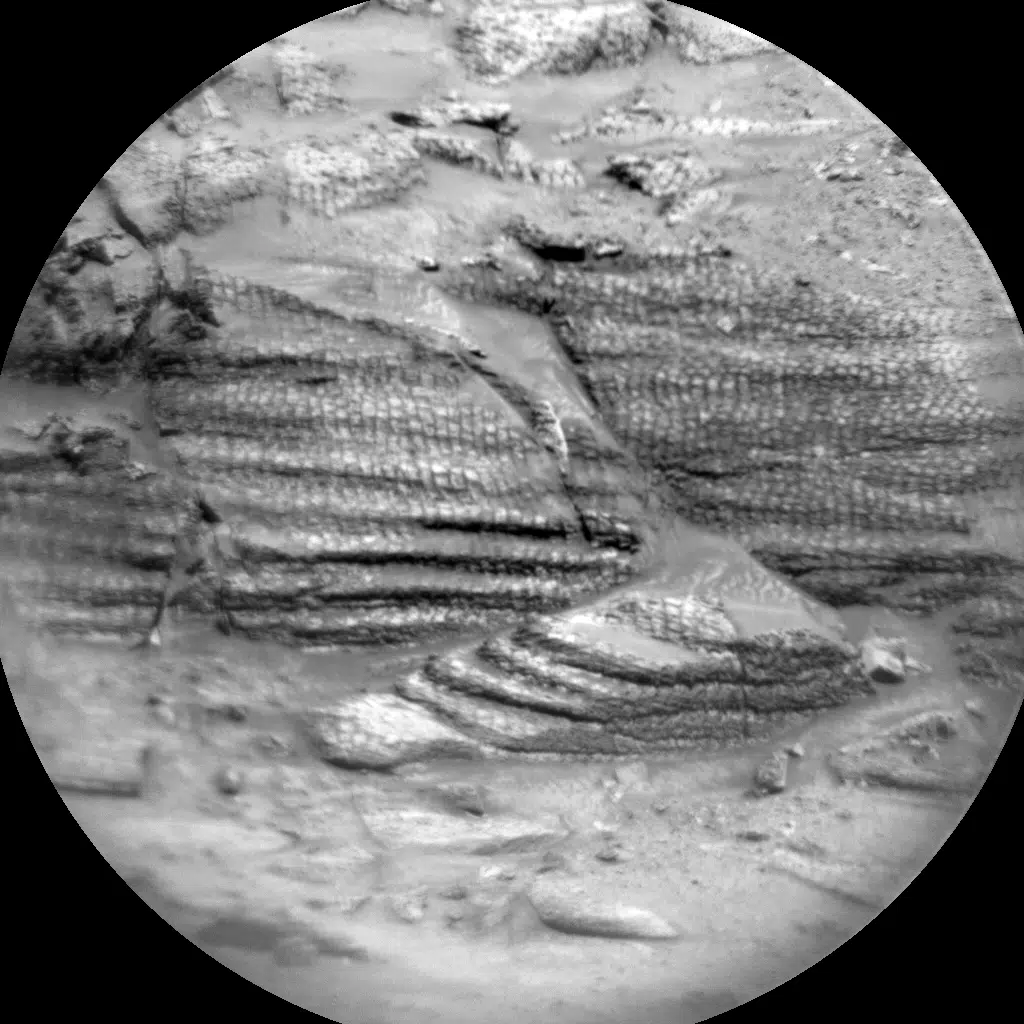 NASA’s Mars rover Curiosity acquired this image of interesting textures exposed in an outcrop at the base of the “Mishe Mokwa” butte, ahead of the rover, using its Chemistry & Camera (ChemCam) Remote Micro Imager (RMI). Curiosity captured the image on June 13, 2025 — Sol 4569, or Martian day 4,569 of the Mars Science Laboratory mission — at 17:53:55 UTC.
NASA/JPL-Caltech/LANL
A New Phase in Exploration: Autonomous Science Selection
As Curiosity moves forward, its mission will enter a new phase of exploration. In the coming weeks, the rover will embark on a 54-meter (177 feet) drive to a new location, once again using its precise navigation systems to land on stable ground. Once there, Curiosity will switch to an untargeted science mode, allowing its instruments to autonomously select interesting surface features for analysis. This shift in strategy marks a significant step forward in the rover’s capabilities, allowing it to gather data from regions of Mars that have never before been studied in such detail.
The rover’s ChemCam instrument will play a key role in this autonomous exploration, automatically selecting and analyzing rocks that appear promising. Additionally, the Mars Descent Imager (MARDI) will take images beneath the rover to provide a clearer understanding of the terrain, while other environmental sensors will continue to monitor the Martian atmosphere, including dust levels and the occurrence of dust devils. This combination of geological and atmospheric studies will contribute to a richer understanding of the Martian environment.