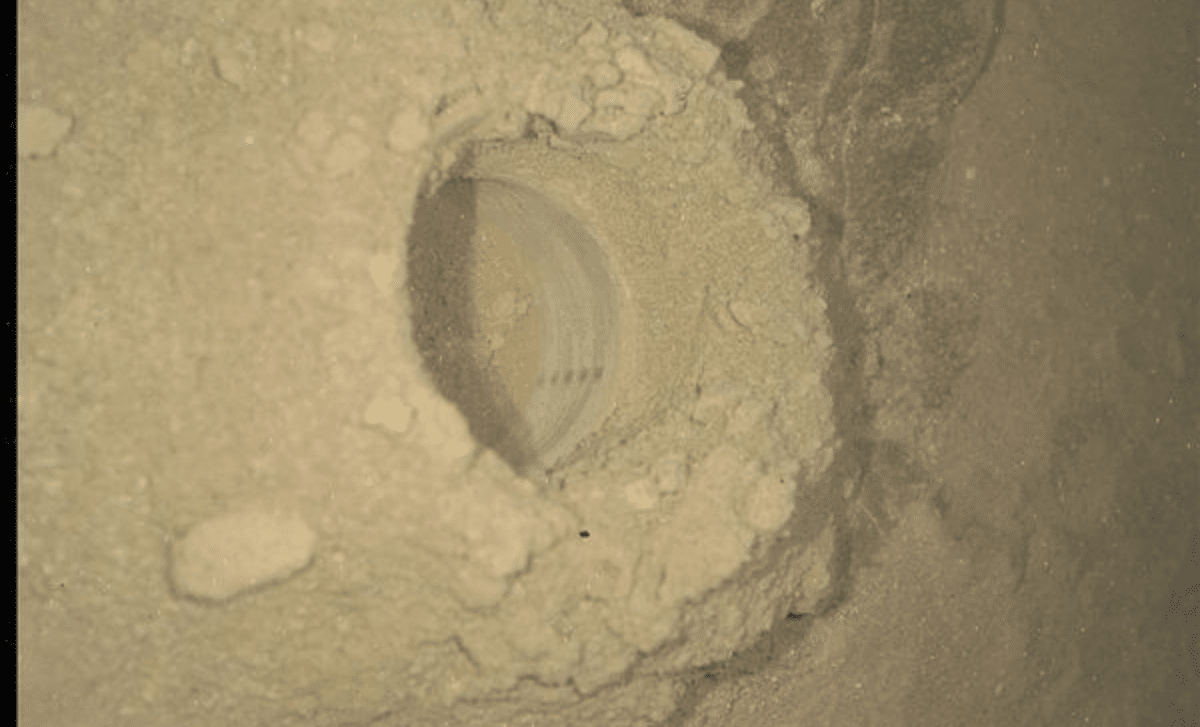
In a recent update from the Mars Science Laboratory, Curiosity’s activities during Sols 4731-4742 have marked a significant step in the rover’s ongoing exploration of Mars. The team at NASA’s Jet Propulsion Laboratory (JPL) has completed a series of detailed observations at the Nevado Sajama drill site, including a breakthrough in imaging technology and sample analysis.
The Road to a Complete 360-Degree View of Nevado Sajama
One of the most ambitious goals during this phase of the mission has been the creation of a high-resolution 360-degree stereo mosaic of the Nevado Sajama drill site. Unlike typical panoramic imaging, which often uses only one camera, this task required a dual-camera setup. The Curiosity team utilized both the wide-angle M34 Mastcam and the 100mm telephoto Mastcam camera, creating a more detailed and comprehensive view of the Martian landscape. These images are invaluable for future analyses, enabling scientists to better understand the geological features of this area.
As the rover continued its work, it collected hundreds of frames over several sols, piecing them together into a panoramic view. This method was not only time-consuming but also demonstrated the team’s commitment to producing the highest quality images. The effort is also notable because the team broke up the scene into smaller chunks, allowing them to collect data over multiple days. This meticulous approach shows the complexity of Curiosity’s tasks and the advanced technology involved in capturing Mars in its full splendor.
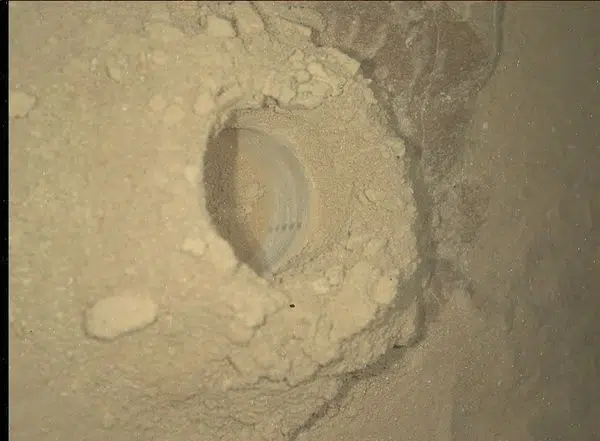 NASA’s Mars rover Curiosity acquired this image — a “MAHLI after dark” image of the Nevado Sajama drill hole — using its Mars Hand Lens Imager (MAHLI), located on the turret at the end of the rover’s robotic arm. The drill hole in this scene is illuminated by the small LED lights surrounding the MAHLI camera. ChemCam LIBS spots along the side of the drill hole wall are visible as well, in this image captured on Dec. 6, 2025 — Sol 4740, or Martian day 4,740 of the Mars Science Laboratory mission — at 18:46:45 UTC.
NASA/JPL-Caltech/MSSS
Breaking New Ground in Organic Material Detection
A major scientific milestone during this mission phase was the delivery of the last drilled sample from Nevado Sajama to the SAM (Sample Analysis at Mars) instrument for a detailed analysis of organic compounds. Curiosity’s SAM tool uses a gas chromatograph/mass spectrometer (GCMS) to detect and analyze any carbon-containing material in the samples, which could provide clues about Mars’ past habitability.
The analysis was successfully completed and marks another key piece in the puzzle of understanding whether Mars could have supported life. By looking for organic molecules, the team hopes to detect the fundamental building blocks of life, or at least learn more about the planet’s chemical processes. Given that Mars’ past environment may have been more hospitable to life, these findings could be revolutionary for astrobiology. The excitement surrounding these results is palpable, with every sample analyzed adding depth to the mystery of Mars’ potential to host life in its distant past.
The Return of Nighttime Imaging for the Drill Hole
Curiosity’s drill site at Nevado Sajama has provided another intriguing opportunity. “We’re also planning to do something we haven’t done for a long time — take images of the walls of the drill hole at night using MAHLI’s built-in LEDs as an illumination source,” said Abigail Fraeman, the Deputy Project Scientist at NASA JPL. The rover has rarely used its cameras to capture nighttime images of drill holes, mainly because previous holes have had poorly consolidated walls that didn’t provide valuable data. However, the Nevado Sajama drill site is an exception, as the drill hole walls here appear unusually clean and stable.
This return to nighttime imaging reflects the growing sophistication of Curiosity’s observational techniques. The MAHLI camera’s LED lighting will reveal more intricate details of the drill hole’s walls, providing a clearer 3D view of the material the rover extracted. This new approach not only gives scientists an enhanced view of the Martian soil but also proves that there are still exciting, untapped avenues of exploration for the rover, even after years of operation.
Curiosity’s Continued Journey and Upcoming Plans
After completing the final observations at Nevado Sajama, Curiosity is preparing to move on. But the journey won’t be far. As Fraeman mentioned,
“After collecting our final observations of the drill hole, we’ll pack up and drive away. But we’re not going far. The science team has identified some important observations we’d like to collect nearby before the holidays, so we’ll spend the next couple of plans collecting these data.”
The rover’s scientific mission is far from over, and the team continues to explore new locations to gather further information.
In the coming sols, Curiosity will remain active, collecting crucial data that will continue to inform our understanding of Mars. Even as the holidays approach, there is no slowing down for this hardworking rover. Stay tuned for more updates from the Curiosity mission as it presses forward into the next chapter of its journey on the Red Planet. The mission’s ability to adapt to new challenges ensures that each day brings new discoveries and insights.