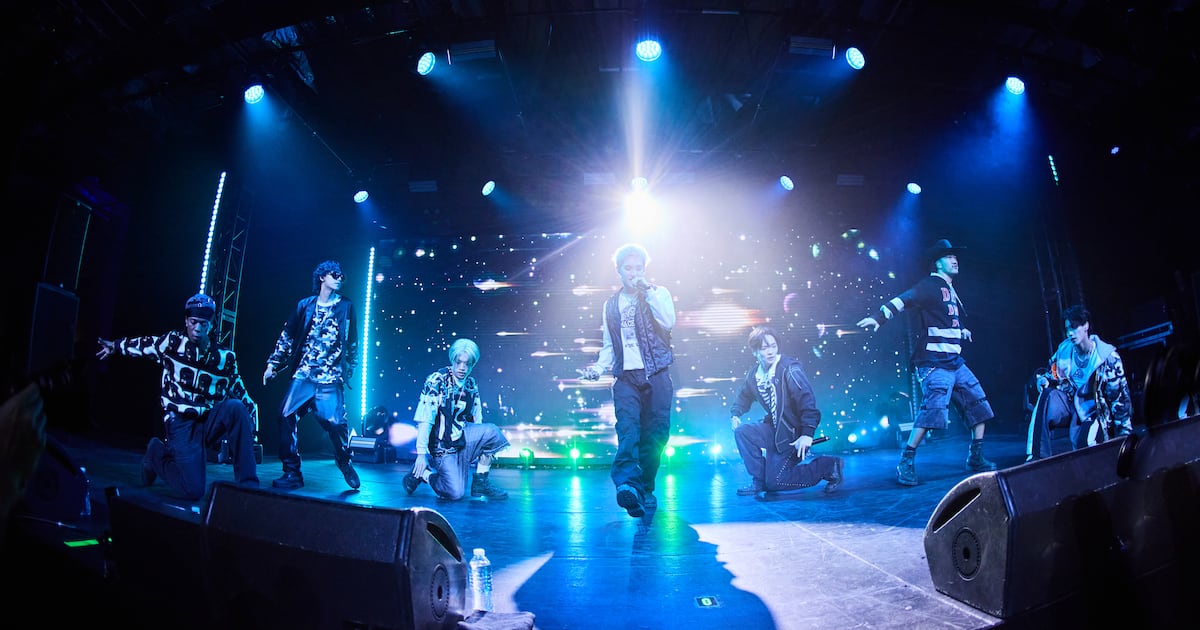
Attendees packed themselves shoulder to shoulder in a former warehouse tucked away near Northern Chinatown, lit only by a large paper lantern hanging from above. This gritty, industrial space served as the perfect backdrop for artists, hungry for international recognition, to show why they deserve it.
On Dec. 2, Japan’s Culture and Entertainment Industry Promotion Association and Toyota Group hosted the music and culture festival ennichi’25, following the matsuri’25 festival hosted in March. ennichi’25 featured traditional carnival games, authentic food vendors and rising musicians, together giving Angelenos a taste of Japanese culture for the evening.
Following Taiko drum performances and a tuna-cutting demonstration to set the festival atmosphere, up-and-coming experimental idol group F5ve opened the night, much to the audible excitement of their fans in attendance.
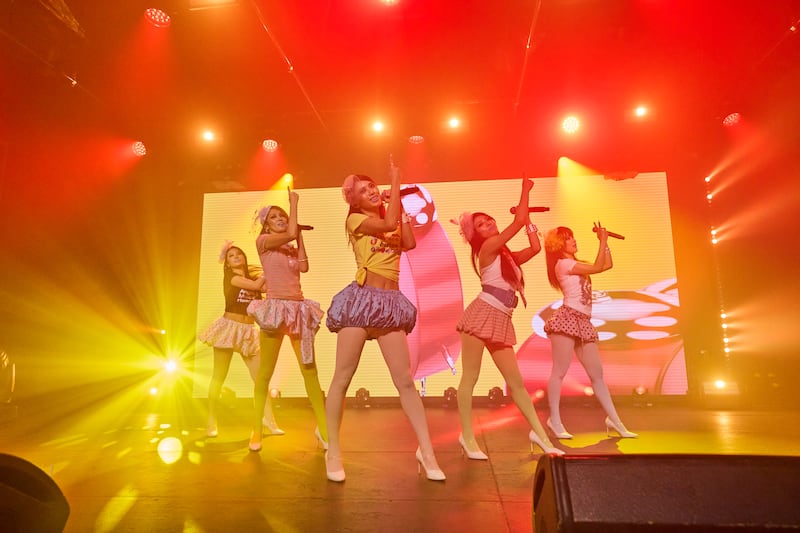 F5ve performing their single “Magic Clock” and its accompanying dance. (Photo courtesy of YURI HASEGAWA)
Despite only being their second performance in Los Angeles, their first being May’s album release show, the group said their return had felt nothing short of welcome, with fans recognising them in public and sharing their enthusiasm. Group leader Kaede said she felt “so much love” from American fans throughout the year.
“The connections we made with creators and fans around the world … is what shapes F5ve today,” Kaede said to press the day before the festival. “[in ennichi ‘25] we’ll be sharing the possibilities of Japanese pop culture.We hope you enjoy the show with us.”
The girls played the hits of their small but mighty discography, from “Sugar Free Venom” to “I Choose You,”all while dancing with precise coordination. Despite the small size of the warehouse venue, the girls performed the fan engagement of a stadium show, interacting with the audience constantly and earning incredible energy in return.
Existing somewhere between PC Music and Perfume, F5ve’s music, with its pounding bass, glitchy textures and sugar-rush spirit, feels like a simultaneous reclamation of the digital maximalism that defined early J-pop and trickled down to the modern sounds of hyperpop.
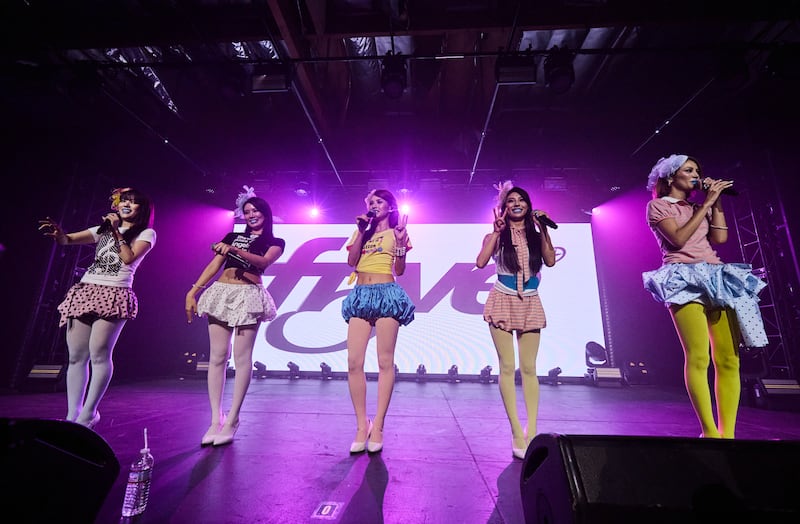 Left to right: Miyuu, Ruri, Rui, Sayaka, Kaede address the crowd between songs. (Photo courtesy of YURI HASEGAWA)
Rappers JP THE WAVY and Awich followed with high-energy performances, expressing their Japanese identity. JP THE WAVY kept the lights low and the passion high, showing off a modern, trap-flavored flare and spouting lightning-fast rhymes over tracks like “Bushido” and a remix of Teriyaki Boyz’s iconic “Tokyo Drift.” Awich presented a classic boom bap tinged style reminiscent of the sounds of New York, fitting considering her last project, “Asian Wish Child,” was executively produced by RZA of the legendary Wu-Tang Clan.
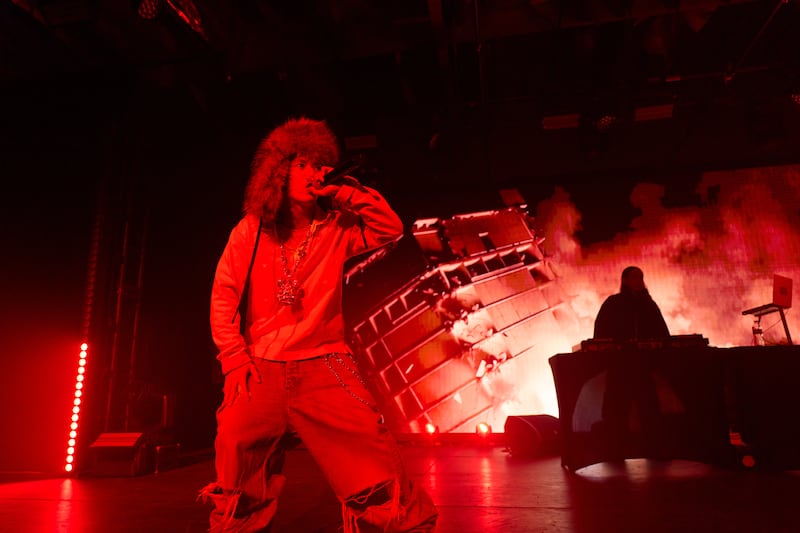 JP THE WAVY delivers his raps over intense visuals. (Photo courtesy of YURI HASEGAWA)
In between performances, Awich talked about her unique American-Okinawan identity. Okinawa was surrounded by American military bases, and in turn, Awich said her life was full of American pop culture, inspiring her to pursue a career in rap.
“There’s a love and hate relationship, but I feel like [America] has something big … We don’t know what it is, but I love the people of this country, no matter what the system has,” Awich said. “That’s why I came to America and just released an album fully in English.”
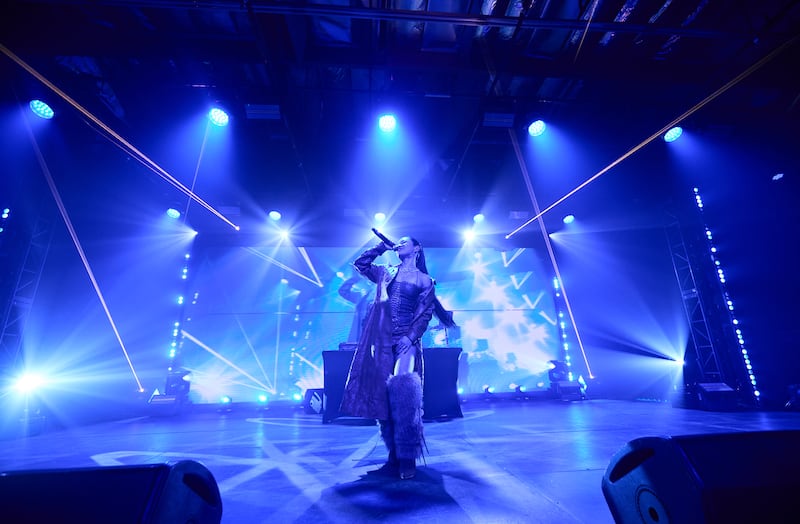 Awich commands the stage in style. (Photo courtesy of YURI HASEGAWA)
Following a guest appearance from Chicago legend Lupe Fiasco performing “Wax on Wax Off”, Awich closed her set with the song “Fear Us” from her latest album “Okinawan Wuman.”She said the song was about the need for global social change regardless of cultural differences.
“On the other side of the world, we have the same frustration and we have the same trouble, and that’s how this song came about,” Awich said. “This song is about social change and coming together in education.”
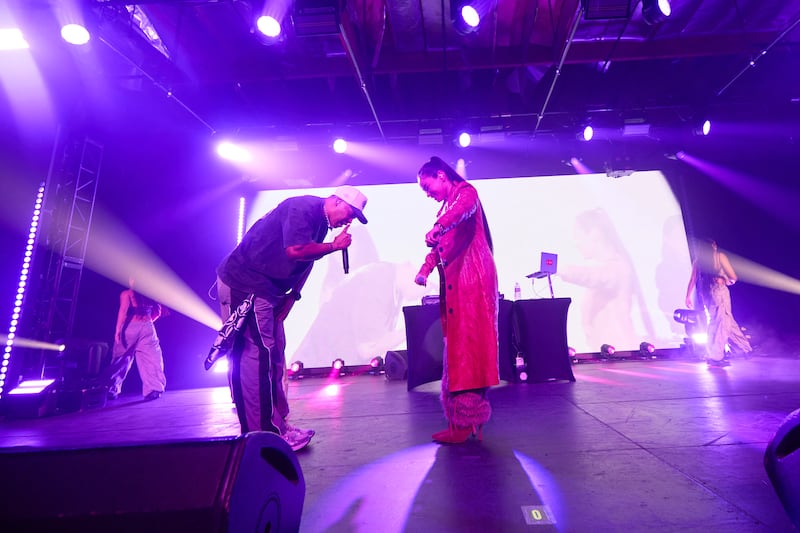 Lupe Fiasco bowing to Awich following their joint performance. (Photo courtesy of YURI HASEGAWA)
The night ended with an electric performance by Psychic Fever from Japanese artist collective Exile Tribe. While the crowd remained lively the entire night, each artist earning a strong audience response, Psychic Fever garnered the most animated response. The group danced with passion rivaled only by the audience’s, all while maintaining clear, stable vocals. Serving up an onslaught of hits like “Paradise” and “Just Like Dat,” which was performed alongside fellow performer JP THE WAVY, Psychic Fever showed off the energetic fun of idol music and served as a bombastic conclusion to an unforgettable display of the power of Japanese art.
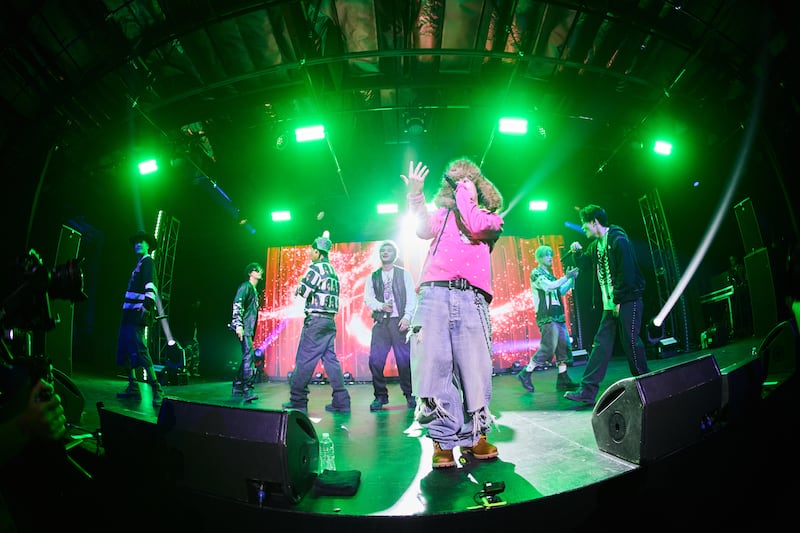 JP THE WAVY performing his guest verse on “Just Like Dat” alongside Psychic Fever. (Photo courtesy of YURI HASEGAWA)
Throughout the festival, attendees stopped by colored tents and played anything from yo-yo tasuri (yo-yo fishing) to super ball scooping. Japanese street food vendors were open all night, featuring barbeque skewers from Honda-Ya, chicken karaage from Tenkatori, takoyaki from Tsukiji Gindaco and Boba tea from UMACHA. As an extra treat, sushi vendor Soma Suisan showcased live cutting of their fresh tuna in addition to selling tuna rice bowls.
Attendee Cady Cole said she enjoyed ennichi ‘25 as it reminded her of the festivals and the carnival games her Japanese high school used to have. Another attendee, Cecilia Forero, also said she and Cole both watched F5ve during their first LA show. Forero said the first concert venue was both hot and cramped compared to ennichi‘25 where she could focus on F5ve’s performances and the community.
“In [ennichi ‘25], I love the fans, the energy of them, and they’re just the best,” Forero said.
ennichi‘25 is a part of a larger initiative called “MUSIC WAY PROJECT,” wherein CEIPA and Toyota hope to promote Japanese music towards a global audience. In an exclusive press panel, music producer Jeff Miyahara, Japanese pop star Kyary Pamyu Pamyu (Kiriko Takemura), Japanese DJ and record producer Taku Takahashi and music producer Peyote Beats (Armen Zabounian), discussed the challenges and successes of promoting Japanese music in America.
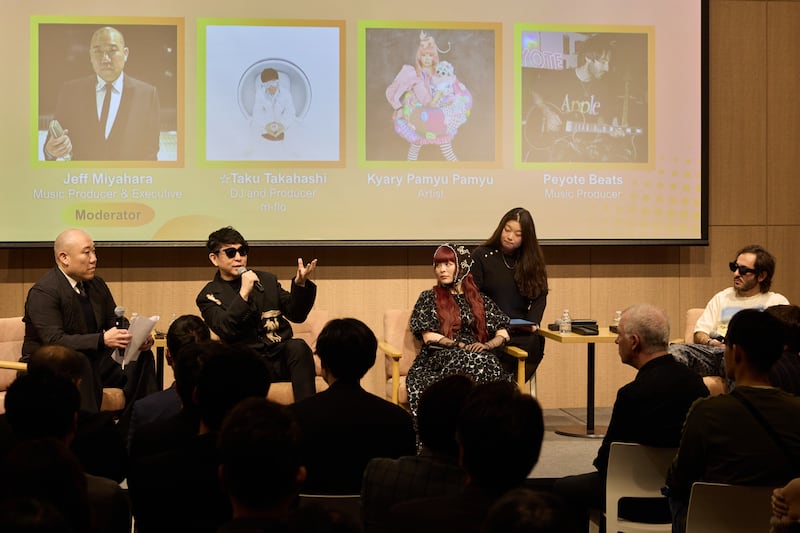 Jeff Miyajara, Taku Takahashi, Kyary Pamyu Pamyu, and Peyote Beats discussing the rising popularity of Japanese music in the West. (Photo courtesy of YURI HASEGAWA)
“One of the things that are missing in the Japanese market is that global reach,” Peyote Beats said.
Takahashi recalled performing at Crypto.com Arena for the first time and said how impressed he was seeing fans sing his songs, despite not understanding the language. After realizing how much Americans listen to Japanese music — whether it be through his concerts or through anime and video games –-Takahashi said there has always been demand for Japanese music in the West.
Even so, Takahashi said the Japanese music industry had “a lot of missed opportunities” to expand into the global market. He said American fans complained about how they could not buy his CDs locally or listen to him on YouTube.
“Japan has lost so many opportunities,” Takahashi said. “Now they’re here [in America]. They finally woke up.”
However, Miyahara said there has been a recent “paradigm shift” in the West, as people are more accustomed to Japanese culture globally.
“We’re having a massive explosion with Japanese culture content, and we finally get to ride that wave,” Miyahara said.