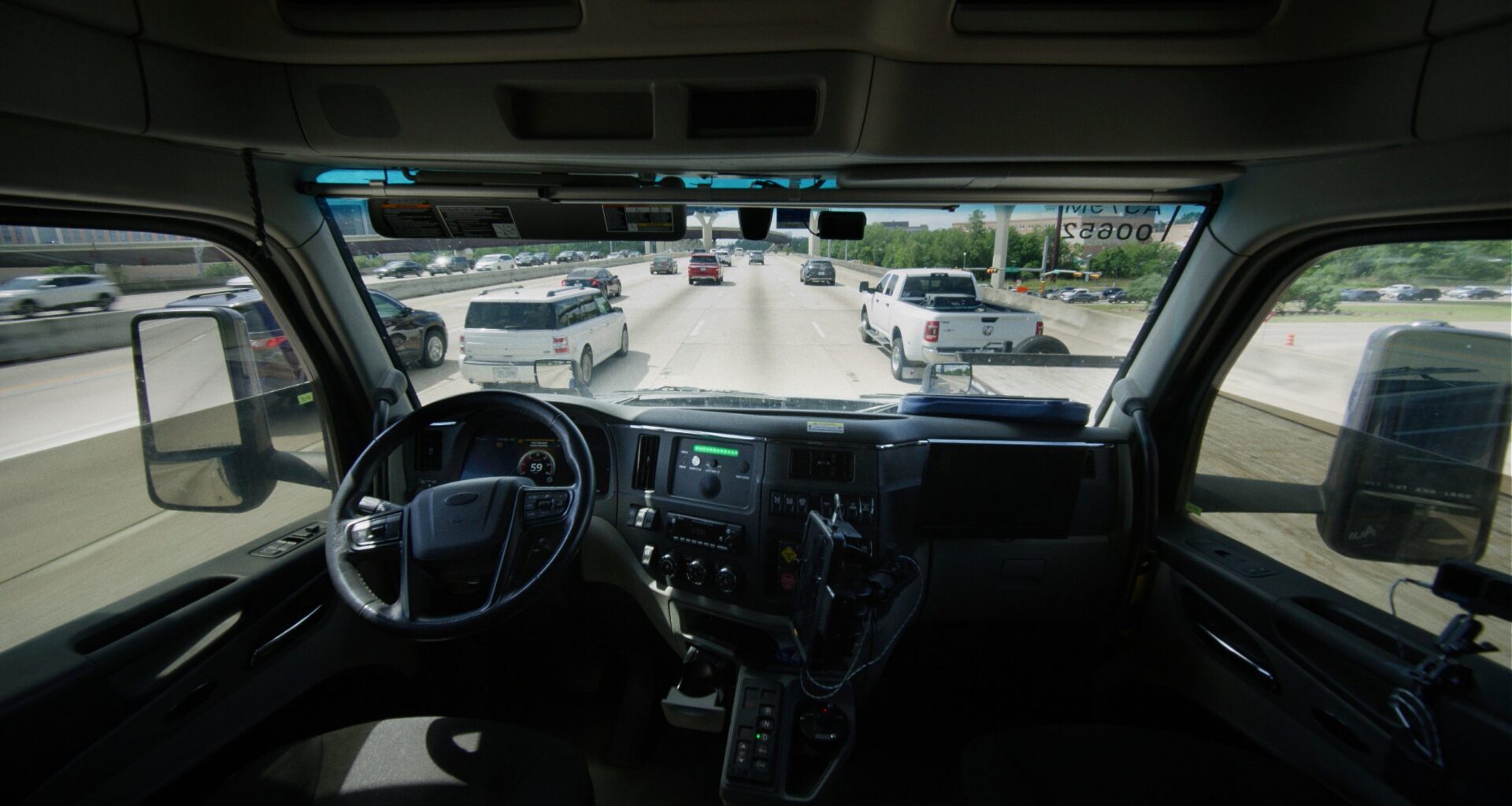
Hundreds of driverless trucks will be on Fort Worth-area roads soon following the creation of a new statewide route to El Paso.
The push for more autonomous vehicles in North Texas comes as the Fort Worth City Council in November created a new district in the Alliance area for the deployment of semi- and fully autonomous semitrucks.
The technology is of interest to Alliance’s nearly 600 customers, many of whom have looked into autonomous trucking technology, said Ian Kinne, leader of the Mobility Innovation Zone within AllianceTexas.
“We see in the future, autonomous trucking could be a big part of the infrastructure story here,” Kinne said.
Aurora Innovation Inc. announced the route in October after a successful, limited trial of its new autonomous truck hardware between Dallas and Houston in April. The course was the first regular long-haul run in the country.
The company announced plans to add hundreds of trucks to its fleet in 2026, according to a press release. The newest hardware doubles their lidar sensors’ detection range and allows the trucks to operate in harsher weather conditions.
Aurora also plans to extend the El Paso route to Phoenix spanning about 1,000 miles and 15 hours of driving from their terminal just west of Fort Worth on I-20.
Vehicle safety
Autonomous vehicles have rapidly grown in popularity across the United States. But public trust remains low due to safety concerns. Most U.S. adults feel unsafe in and around driverless vehicles, according to a 2024 YouGov survey.
However, the trucks’ consistent travel speeds, vigilant detection software and ability to gather traffic data could help ease roadway traffic and make roads safer, said Natalie Bettger, a North Central Texas Council of Governments senior program manager.
“This technology can help from a safety as well as a congestion standpoint,” Bettger said.
Aurora’s trucks use cameras, radar and a laser to detect the vehicle’s surroundings and software to assess which actions to take.
Since 2022, Aurora’s self-driving Peterbilt semitrucks have been involved in four collisions with other vehicles, according to data from the U.S. National Highway Traffic Safety Administration.
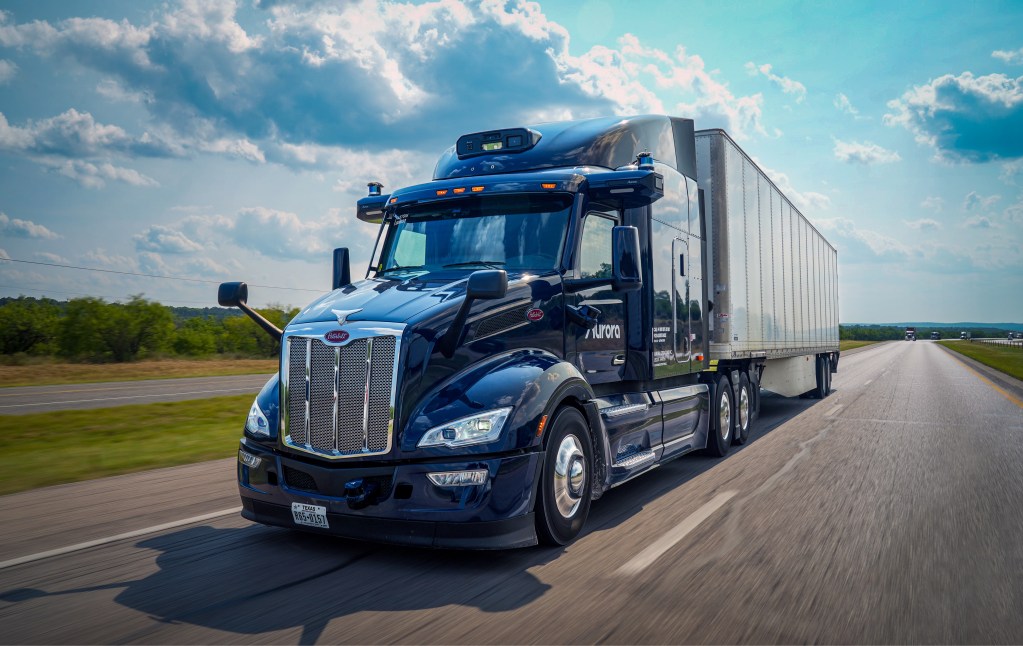 Driverless vehicle software company, Aurora, aims to put hundreds of driverless trucks on the road by 2027. (Courtesy photo | Aurora)
The incidents involved manually operated vehicles that merged or swerved into the truck’s lane. In each case, the autonomously operated Aurora truck moved to avoid the collision. No injuries were reported.
Other incidents included debris kicked up by other vehicles that damaged the truck and two animals struck by the trucks in autonomous driving mode.
In each incident, vehicle operators assumed manual control of the vehicle and pulled over to assess the incident. During all reported incidents, the Aurora truck was traveling at an average speed of 64 mph.
Easing traffic
The average commuter in the Dallas-Fort Worth area spent 69 hours last year sitting in traffic, costing over $1,600 per person from productivity loss and gas waste, according to the Texas A&M Transportation Institute.
Traffic patterns have also changed due to hybrid work schedules, online shopping and other changes to daily life, according to the institute’s annual report.
Autonomous trucks could offset road congestion by traveling overnight when fewer cars are on the road, said Stephen Mattingly, a University of Texas at Arlington professor who focuses on transportation.
No requirement exists for driverless trucks to travel overnight, but the possibility has been discussed, Bettger said. Municipal policies would be needed to mandate such travel restrictions, she said.
 Cars pass on Interstate 30 during rush hour traffic in Fort Worth on Sept. 16, 2025. (Maria Crane | Fort Worth Report/CatchLight Local/Report for America)
The route driverless trucks are traveling matters as well, Mattingly said.
Aurora’s terminal sits west of Fort Worth along Interstate 20 where Aurora Driver-powered trucks could avoid urban traffic.
“If I was going to choose someplace to have the trucks that would certainly be an ideal location,” Mattingly said.
Along the route between Fort Worth and El Paso, customers of autonomous trucks can expect increased traffic through Weatherford, Bettger said. The city encompasses both I-20 and U.S. Highway 180 and is a big traffic concern along the route, she said.
Data gathered by Aurora’s trucks could help customers proactively maneuver their truck fleets around traffic, weather and other obstacles with information provided from every truck on the road, according to Aurora’s website.
The future of freight
DFW is becoming a hub for the autonomous trucking industry.
AllianceTexas currently works with about 10 autonomous trucking companies, Kinne said, including Torc Robotics which is establishing a regional hub.
Texas permits autonomous vehicle testing with minimal rules and oversight, making the state enticing to developers.
But the industry still has a long way to go, Kinne said.
“We’re a very long way off from replacing a big percentage of the current trucks that are on the road,” he said. “It’s going to work very well with some of these very specific and defined routes.”
The autonomous truck market is in its early days but is expected to grow, Kinne said.
“Over the next two to five years, you’re going to start to see more and more of these trucks on the interstates,” Kinne said. “You probably drive by them every single day here currently, and have no idea.”
John Forbes is a reporting fellow for the Fort Worth Report. Contact him at john.forbes@fortworthreport.org.
At the Fort Worth Report, news decisions are made independently of our board members and financial supporters. Read more about our editorial independence policy here.
This <a target=”_blank” href=”https://fortworthreport.org/2025/12/15/fort-worth-emerges-as-hub-for-driverless-vehicles/”>article</a> first appeared on <a target=”_blank” href=”https://fortworthreport.org”>Fort Worth Report</a> and is republished here under a <a target=”_blank” href=”https://creativecommons.org/licenses/by-nd/4.0/”>Creative Commons Attribution-NoDerivatives 4.0 International License</a>.<img src=”https://i0.wp.com/fortworthreport.org/wp-content/uploads/2021/04/cropped-favicon.png?resize=150%2C150&quality=80&ssl=1″ style=”width:1em;height:1em;margin-left:10px;”>
<img id=”republication-tracker-tool-source” src=”https://fortworthreport.org/?republication-pixel=true&post=330018&ga4=2820184429″ style=”width:1px;height:1px;”><script> PARSELY = { autotrack: false, onload: function() { PARSELY.beacon.trackPageView({ url: “https://fortworthreport.org/2025/12/15/fort-worth-emerges-as-hub-for-driverless-vehicles/”, urlref: window.location.href }); } } </script> <script id=”parsely-cfg” src=”//cdn.parsely.com/keys/fortworthreport.org/p.js”></script>