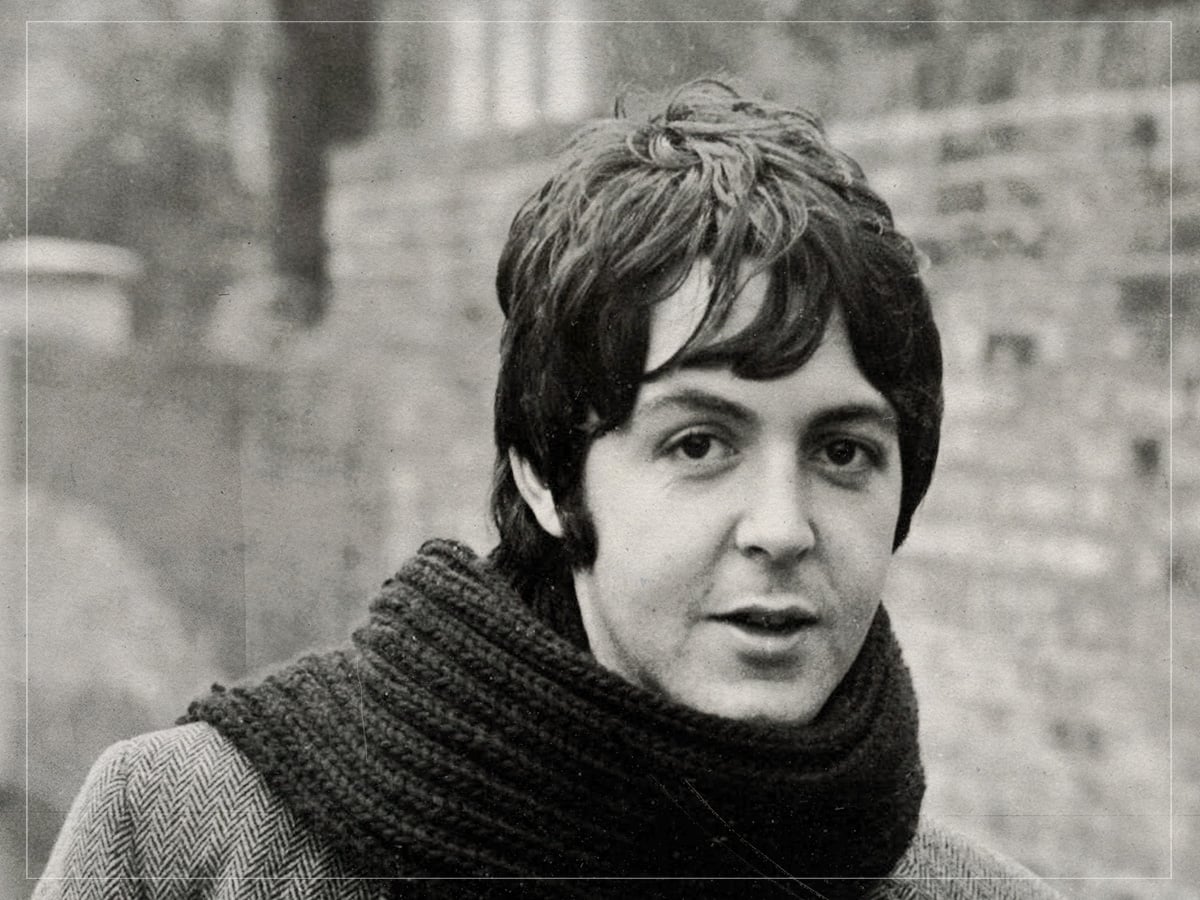
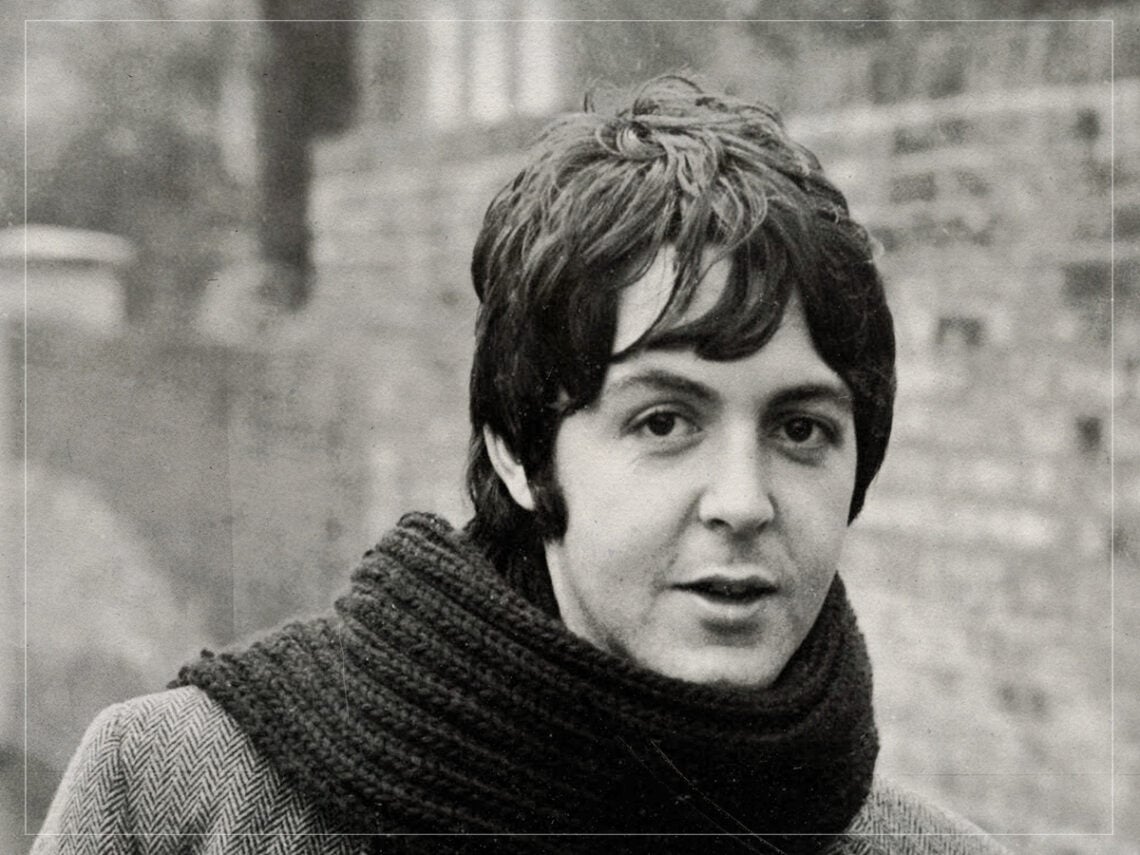
(Credits: Far Out / Alamy)
Tue 16 December 2025 16:00, UK
While promoting The White Album in 1968, Paul McCartney said that the main focus for The Beatles was “playing more like a band this time”.
This statement is especially interesting when you consider that, where Sgt Pepper focused on a unified, psychedelic concept, The White Album sought to show off the individuality of each member, an end goal that often resulted in frictions and disagreements behind the scenes, and as we now know, however, this also resulted in some of their best work, even if it all felt a little more dispersed both inside and outside the studio.
During one particular interview in 1968, McCartney broke down some of the record’s best tracks while explaining what they did differently compared to their previous material. “On Sgt Pepper, we had more instrumentation than we’d ever had,” he told Radio Luxembourg, saying that it had “more orchestral stuff than we’d ever used before, so it was more of a production.”
He added, “We didn’t really want to go overboard like that this time, and we’ve tried to play more like a band this time, only using instruments when we had to, instead of just using them for the fun of it.”
While he also said that the only concept was “the concept of playing together”, it became clear that this was also the moment that they each began to become estranged from one another, often writing separately on ideas and then sometimes having to push to get their ideas over the line afterwards. Unlike before, McCartney and Lennon more often than not wrote separately, resulting in a sound that revealed more about their freyed dynamics than anything else they set out to achieve.
As Lennon later admitted, “the break-up of The Beatles can be heard on that album”.
 Paul McCartney, John Lennon, Ringo Starr and George Harrison in 1963. (Credits: Far Out / Alamy)
That said, some of the songs on the record are some that McCartney regarded as his favourites, or at the very least, were ones that he believed proved his unmatched diversity in the band, like ‘Back in the U.S.S.R’, ‘Ob-La-Di, Ob-La-Da’, ‘Martha My Dear’, and ‘I Will’. Part of what helped him to avoid painting himself into a corner was that he could follow any thread of thought and execute it well, whether it was a simple idea or something more complex or innovative.
And some of his simpler compositions are the ones that stand out the most, like ‘Blackbird’. In fact, McCartney admitted at the time that, sonically, there was barely anything to it, clashing with the subtle social commentary beneath the surface that suggested otherwise. “It’s simple in concept because you couldn’t think of anything else to put on it,” he said. “There’s nothing to the song. It is just one of those ‘pick it and sing it’, and that’s it.”
He went on, “The only point where we were thinking of putting anything on it is where it comes back in the end, sort of stops and comes back in, but instead of putting any backing on it, we put a blackbird on it. So there’s a blackbird singing at the very end. And somebody said it was a thrush, but I think it’s a blackbird!”
Elsewhere, McCartney explained that the idea for the song came from ruminating on racism in the southern states, and that the symbolism of the blackbird itself was a conduit for suffering and oppression, with its simplicity allowing enough space to appreciate its underlying message about resilience, while also allowing for more ambiguous interpretations.
Its timeless appeal also proves how much McCartney was still at the top of his game, even as the group were on the brink of completely falling apart, and at the time, each member was focused on establishing themselves as separate entities, but McCartney seemed to do it a little bit easier than everybody else, striking gold every single time with words that resonated with people from all over.
Related Topics
The Far Out Beatles Newsletter
All the latest stories about The Beatles from the independent voice of culture.
Straight to your inbox.