Car buying patterns in 2025 have been all over the place as consumers and the industry have adjusted to the automotive tariffs that dominated the conversation this year.
While the U.S. eventually got tariff burdens down to 15% for most of its trade partners, for much of the year, importers were paying 25% on autos and auto parts.
While carmakers made it clear that they would not raise prices in response to the tariffs, the threat of increased prices caused consumers to flock to car dealerships.
Ford used incentives and the fear of tariffs to become the top-selling brand in the U.S. during the year’s first half. Ford said total sales in the second quarter rose at a rate seven times that of the overall auto industry.
It sold 1.1 million units in the first six months, a 6.6% year-over-year increase.
In the third quarter, GM reported a 17% market share, its most substantial presence in the U.S. since 2017.
However, while carmakers have failed to keep the same sales pace in the fourth quarter, they have been able to increase sales from last year, with one U.S. original equipment manufacturer taking home the 2025 sales crown.
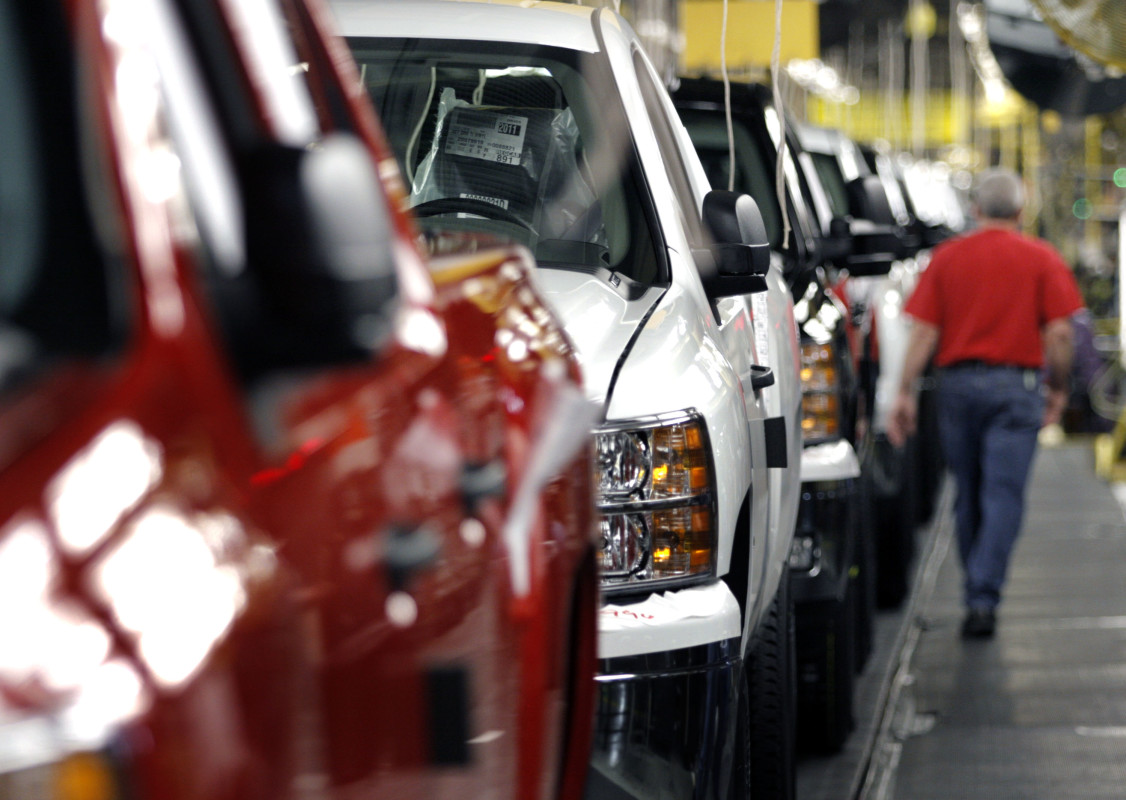
 Photo by Bloomberg on Getty Images
The U.S. car industry is limping to the finish line as car buyers have failed to keep up the torrid purchase pace from earlier this year.
While new vehicle sales in December are expected to show an uptick from the previous months, the December seasonally adjusted annual rate of sales is expected to finish near 15.9 million, down from last year’s 16.8 million pace but up from November’s 15.6 million pace.
Related: General Motors makes a harsh decision as EVs falter
-
GM: 2.83 million vehicles (+5.1% yoy); 17.3% market share
-
Toyota: 2.52 million vehicles (+8.4% yoy); 15.5% market share
-
Ford: 2.18 million vehicles (+5.6% yoy); 13.4% market share
-
Hyundai: 1.84 million vehicles (+7.9% yoy); 11.3% market share
-
Honda: 1.42 million vehicles (+0.6% yoy); 8.8% market share
-
source: Cox Automotive
General Motors is forecast to end the fourth quarter with over 685,000 vehicles sold, an 8.7% year-over-year decline, giving it the 2025 sales crown with more than 2.8 million vehicles sold this year.
GM sold 5.1% more vehicles than it did a year ago, reaching 2.7 million, as its market share rose 0.5% to 17.3%.
Toyota came in second for the second year in a row, selling 2.5 million vehicles. The 8.4% year-over-year increase was accompanied by a 1% rise in market share to 15.5%.
Car buyers may have been nervous about prices after President Trump’s “Liberation Day” tariff announcement, but carmakers have eased those concerns by offering incentives.
“Automakers are providing healthy incentives to keep sales flowing. Prices are trending higher, but just as we are seeing in the broader retail markets, there’s sufficient demand and generous incentives out there, and that’s driving the market,” said Cox Automotive Executive Analyst Erin Keating.
Related: Shipping costs add to car buyer pricing pain
Nearly half of the vehicles GM sold in the U.S. in 2024 were imported, CNBC reported. GM sold 1.23 million imported vehicles in the U.S. in 2024.
GM imported more vehicles than Toyota. Meanwhile, Stellantis sold 564,600 imported vehicles and Ford sold only 419,000.
Despite this discrepancy, GM is a fan of the tariffs.
“There was not a level playing field. I think there has been a lot done with tariffs to have a more level playing field. For years we faced either tariffs, or non-tariffs trade barriers,” GM CEO Mary Barra said.
GM was paying a 25% to 50% export fee to get its vehicles to China, while China paid just 2% tariffs, according to Barra. For Europe, GM paid 10% compared to the tariffs of 2% to 2.5% paid by European car companies here.
“I think getting to a more level playing field is definitely better for all of the American OEMs as we move forward,” Barra said.
Related: GM stock rides positive update to strong close
This story was originally published by TheStreet on Dec 18, 2025, where it first appeared in the Automotive section. Add TheStreet as a Preferred Source by clicking here.